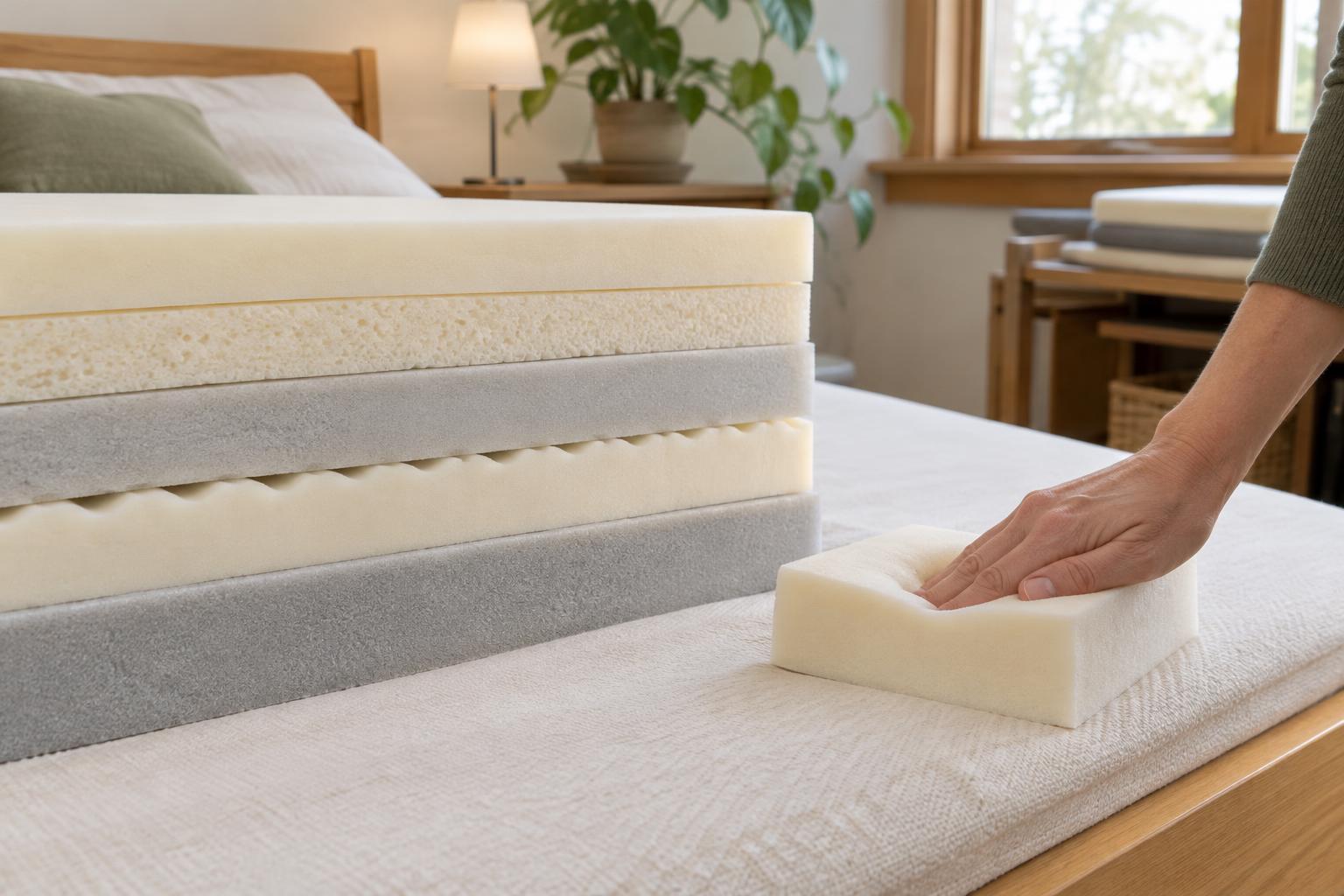
What the numbers measure
Mattress specifications sometimes give a foam layer an ILD or IFD rating. ILD stands for indentation load deflection; IFD stands for indentation force deflection. Both describe the force needed to press into a foam sample by a specified amount. In broad terms, a higher number indicates that the sample resists that indentation more strongly. The rating describes a measured response, not a promise that the finished mattress will feel firm.
The conditions behind the number matter. The sample’s dimensions, how far it is compressed, the equipment used and the testing procedure can all affect the result. If two product descriptions list firmness numbers without explaining how they were obtained, treat a direct comparison cautiously. A number is most useful when it comes with a clear testing method and refers to the particular layer you want to compare.
Firmness is not the same as density
A foam’s firmness rating describes its resistance to a particular indentation. Density describes how much material occupies a given volume. A denser foam is not automatically firmer, and two foams with similar firmness ratings may have different densities. Neither figure, by itself, tells you everything about how a layer will respond after extended use.
Materials can also feel different at a similar stated firmness. Slow-responding memory foam may allow a gradual sink, while conventional polyfoam or latex may spring back more readily. Even within one material family, formulations and processing can change the feel. When comparing specifications, first identify the material and the layer’s purpose. Then use its firmness rating as one detail rather than as a shortcut for overall quality.
Why the finished mattress can feel different
You do not lie on an isolated foam sample. A mattress cover, quilting, comfort layers and the support core all influence what you feel at the surface. A thin firm layer beneath a thick, soft layer may be hard to notice when you first lie down. That same layer may become more apparent as your weight compresses the material above it. Layer thickness and placement therefore matter alongside firmness ratings.
Your experience can also change with position and movement. Sitting concentrates weight in a smaller area than lying down, and a mattress may feel different when you turn over than it does when you remain still. Rather than trying to calculate a whole-bed firmness from individual ILD or IFD figures, use the figures to ask more precise questions: Which layer has this rating? How thick is it? What sits above and below it?
For ideas about other bedroom elements that can affect everyday comfort, you can browse Home Comforts · Dawn Living Journal. Those choices are worth considering separately from a mattress foam rating.
How to use firmness ratings when shopping
When two mattresses publish detailed layer specifications, check whether their ratings refer to comparable materials tested under comparable conditions. If the methods are unclear, ask the seller what the numbers apply to rather than assuming that matching figures mean matching beds. A plain-language description of the construction can be more useful than an isolated number: look for each layer’s material, thickness and position in the mattress.
Keep your own priorities in view. If you are deciding between a gently cushioned surface and a more responsive one, a foam’s behavior and its place in the construction may tell you more than its firmness rating alone. If you can try a mattress, pay attention to how easily you change positions and whether its feel remains comfortable in the positions you normally use. A brief tryout is informative, though it cannot settle every question about longer-term preference.
For broader home ideas, browse Dawn Living Journal; for more ways to think through a purchase, browse Thoughtful Shopping · Dawn Living Journal. An ILD or IFD figure is best treated as a useful specification with limits: it can help clarify how one foam sample responds, but it cannot choose a mattress for you.