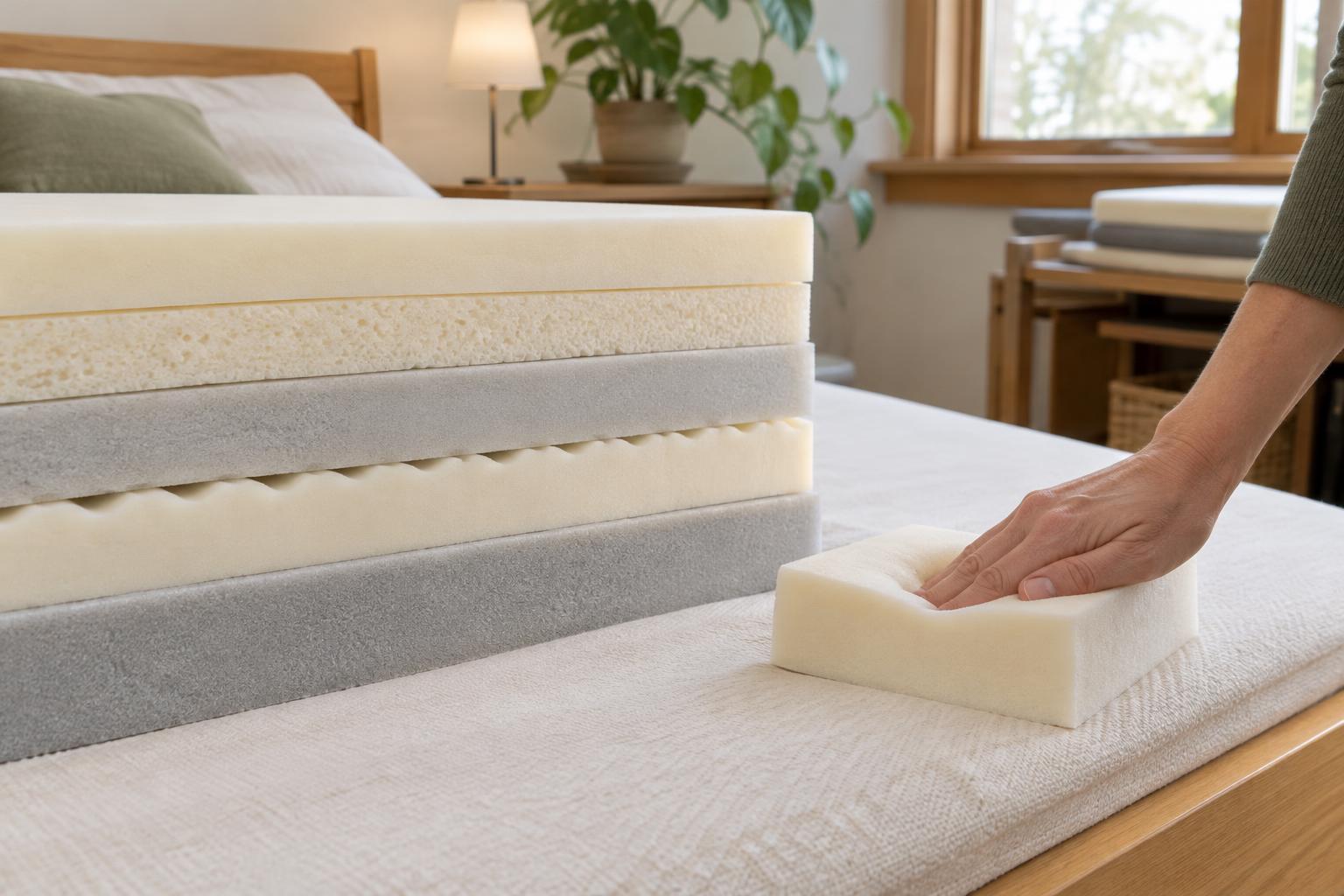
Mattress MaterialsILD and IFD describe how much force it takes to compress a foam sample under specified conditions. Learn why the numbers can help you compare layers, but cannot predict how an entire mattress will feel.
Read article · 3 min↗
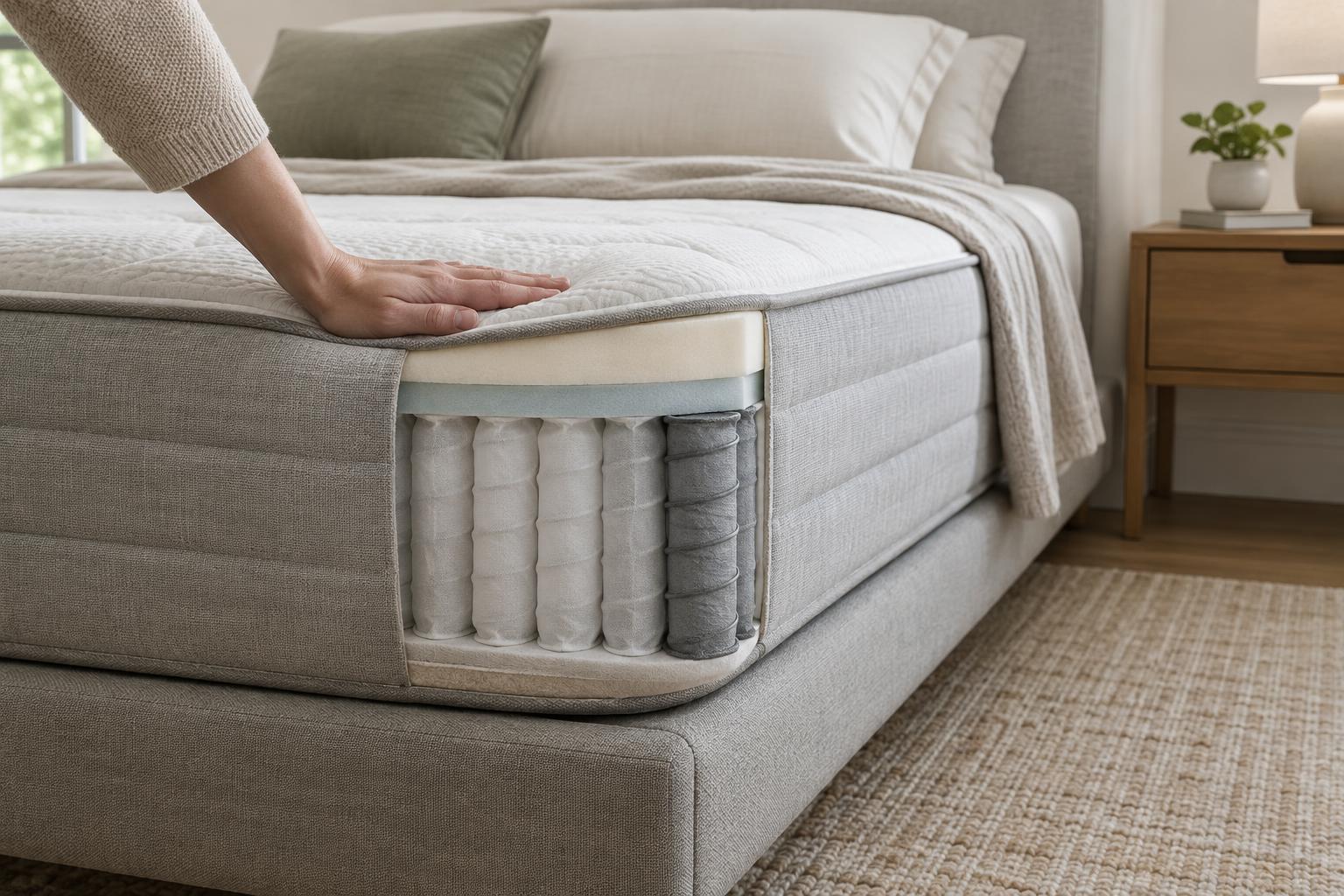
Mattress MaterialsA mattress edge may be reinforced with firm foam, stronger perimeter coils, or no separate border at all. Learn what these designs can change, what they cannot guarantee, and how to assess the edge when shopping.
Read article · 4 min↗
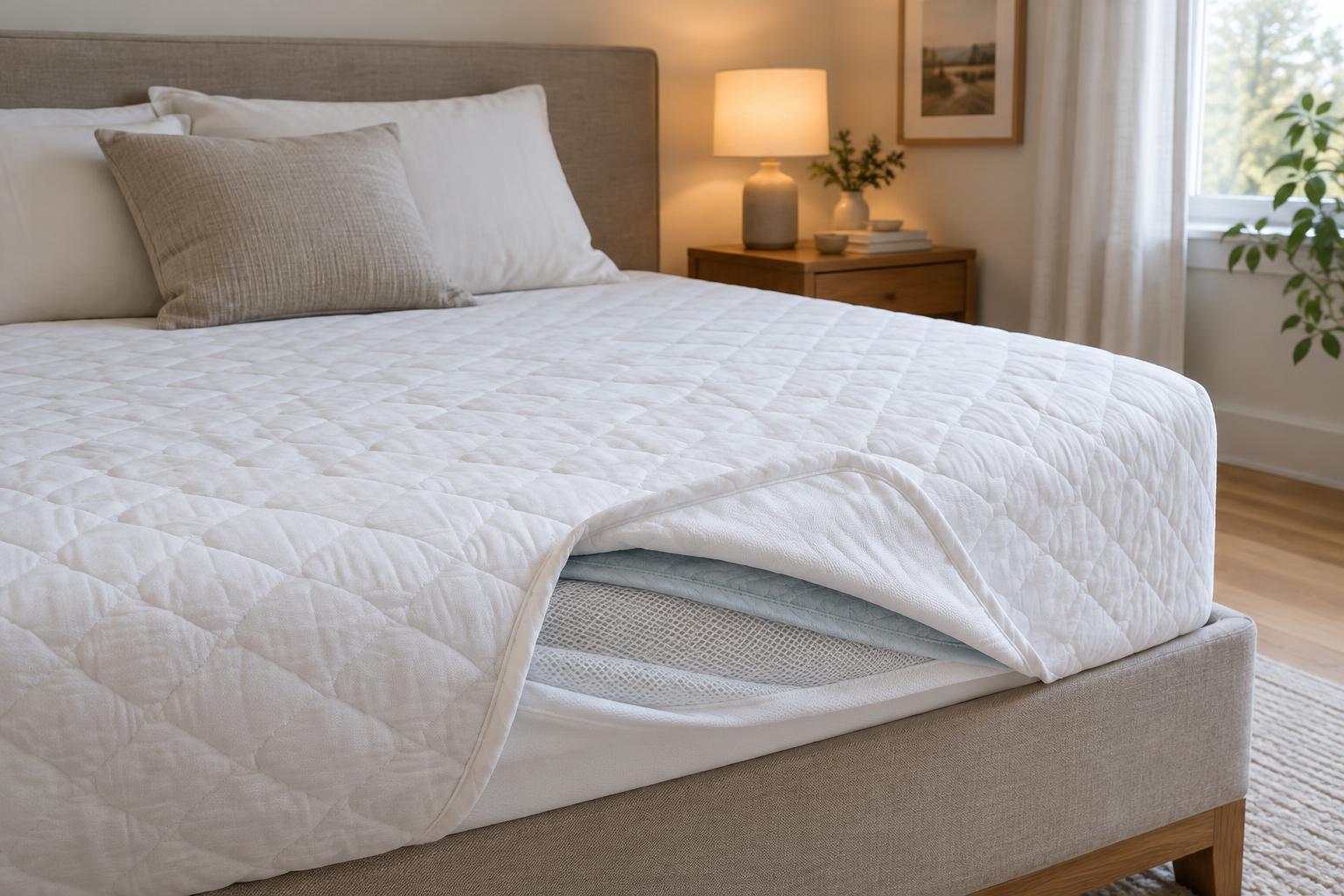
Mattress MaterialsPhase-change materials can absorb and release heat as their temperature changes, but they cannot keep a bed cool indefinitely. Learn how PCM mattress covers work, what affects their performance, and what to check before buying.
Read article · 4 min↗
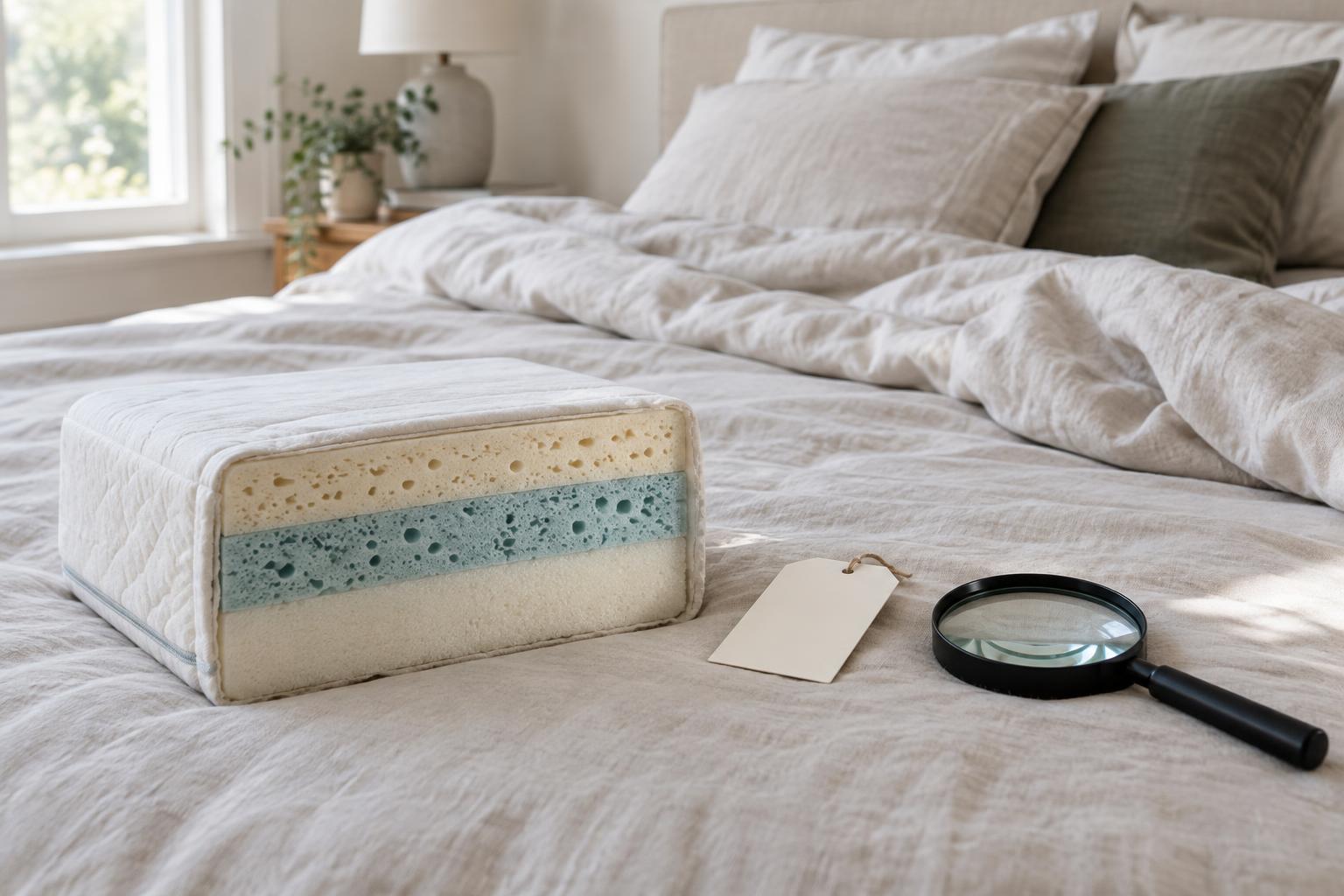
Mattress MaterialsA certification badge can tell you something useful about mattress foam, but it rarely describes the whole bed. Learn how to read common labels, check what was certified, and separate emissions and material standards from comfort claims.
Read article · 4 min↗
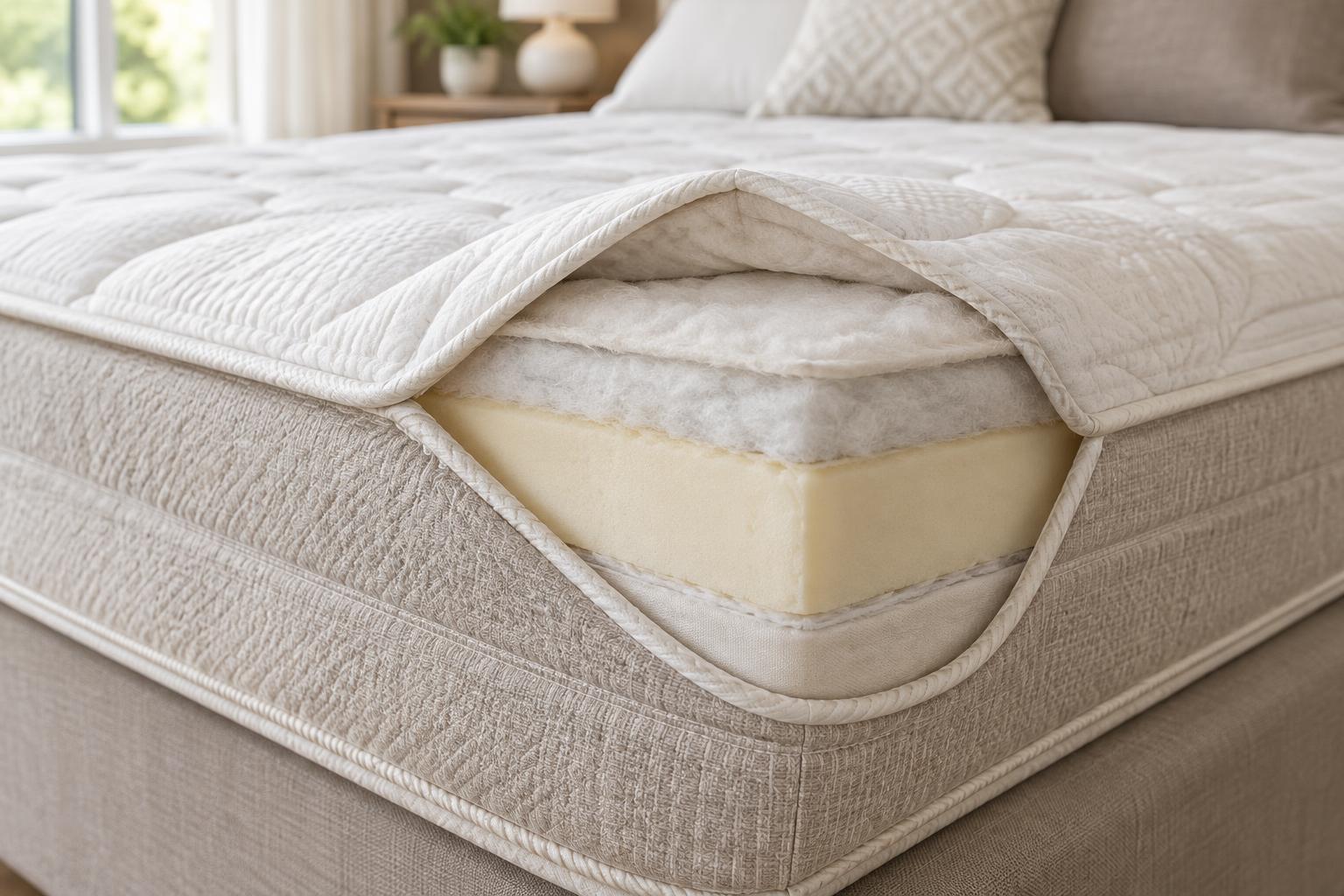
Mattress MaterialsMany mattresses use adhesives to hold foam, fabric, and other components in place. Learn where bonding matters, how to assess construction and odor information, and what questions to ask before buying.
Read article · 4 min↗
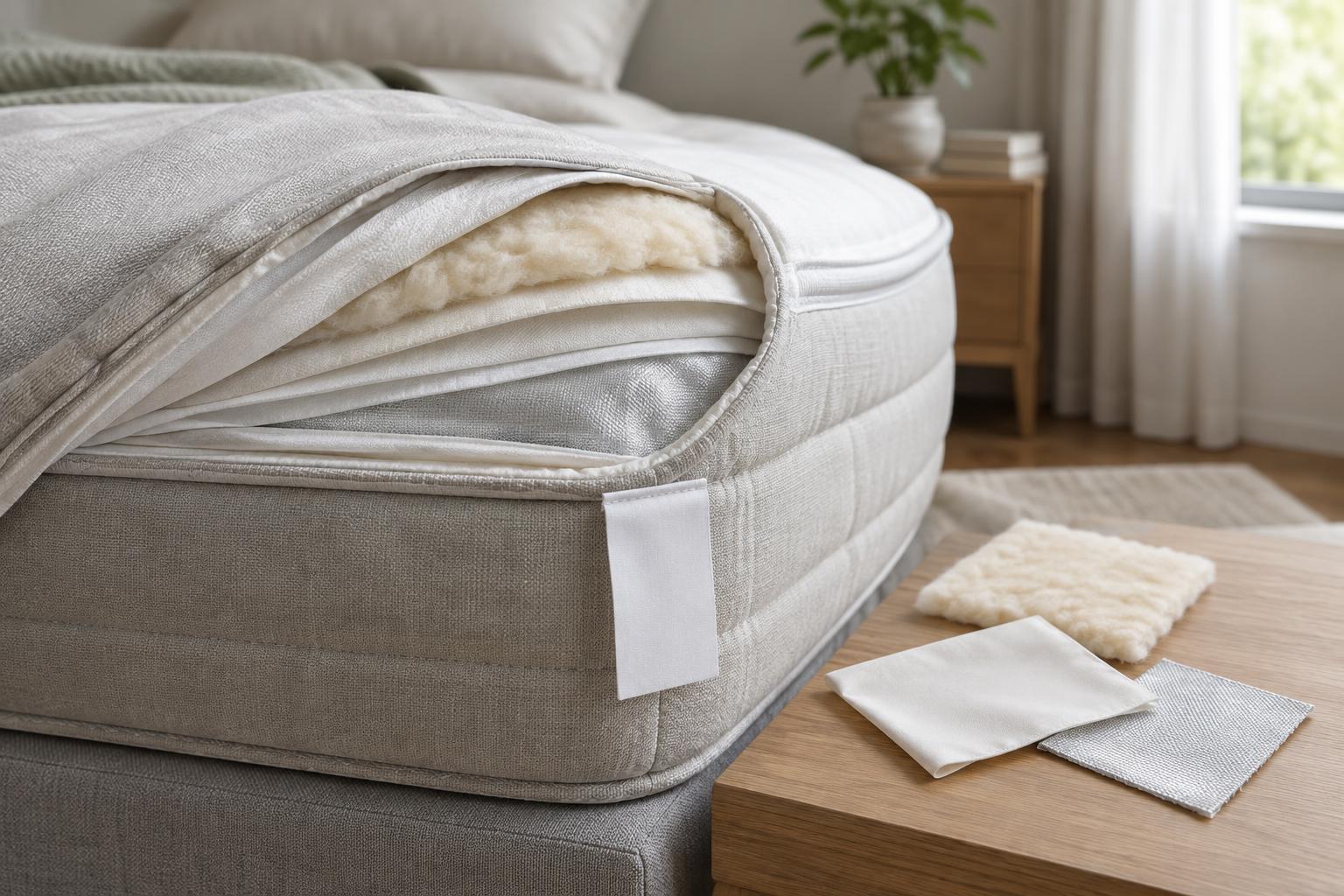
Mattress MaterialsA mattress fire barrier sits beneath the outer fabric, but its materials are not always easy to identify. Learn how wool, rayon and fiberglass barriers differ, what labels may reveal, and which questions to ask before buying or removing a cover.
Read article · 3 min↗
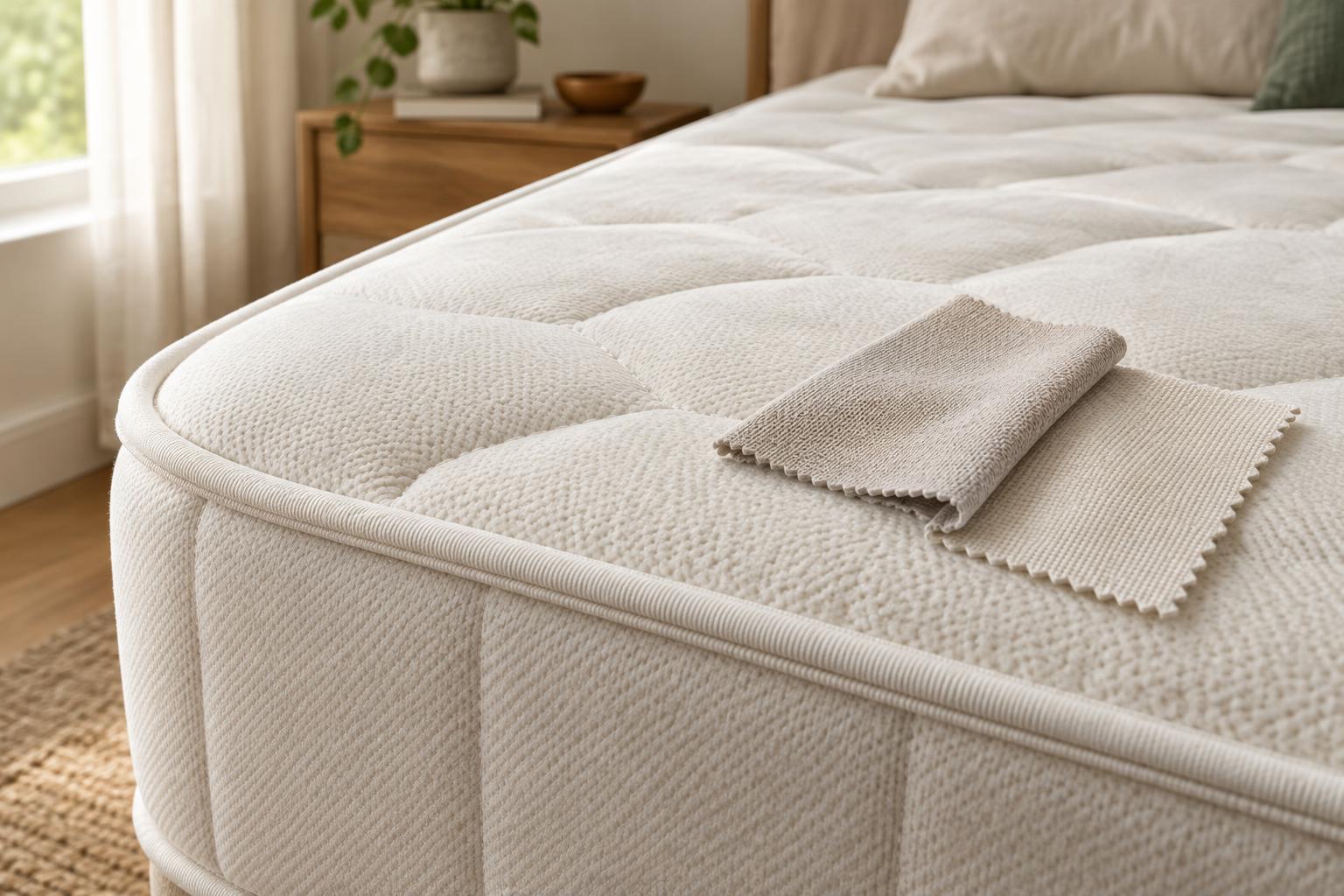
Mattress MaterialsA mattress cover does more than finish the look of a bed. Learn how knit and woven fabrics differ, what quilting adds, and which cover details matter when comparing mattresses and planning for care.
Read article · 4 min↗
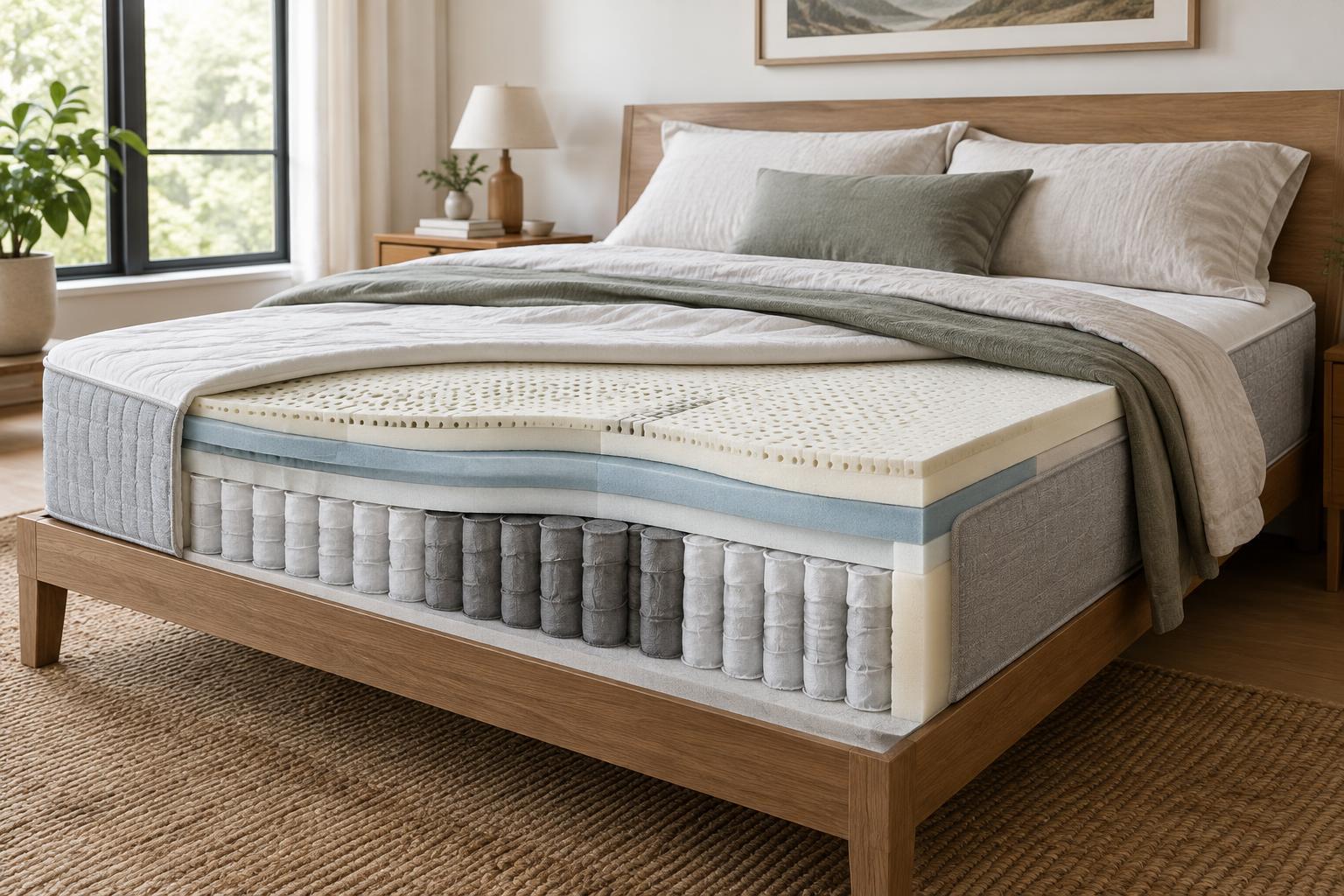
Mattress MaterialsA zoned mattress changes its construction from one area of the bed to another. Learn how foam, latex, and coils create those differences, what zoning may feel like, and how to judge whether it suits your sleeping position.
Read article · 4 min↗
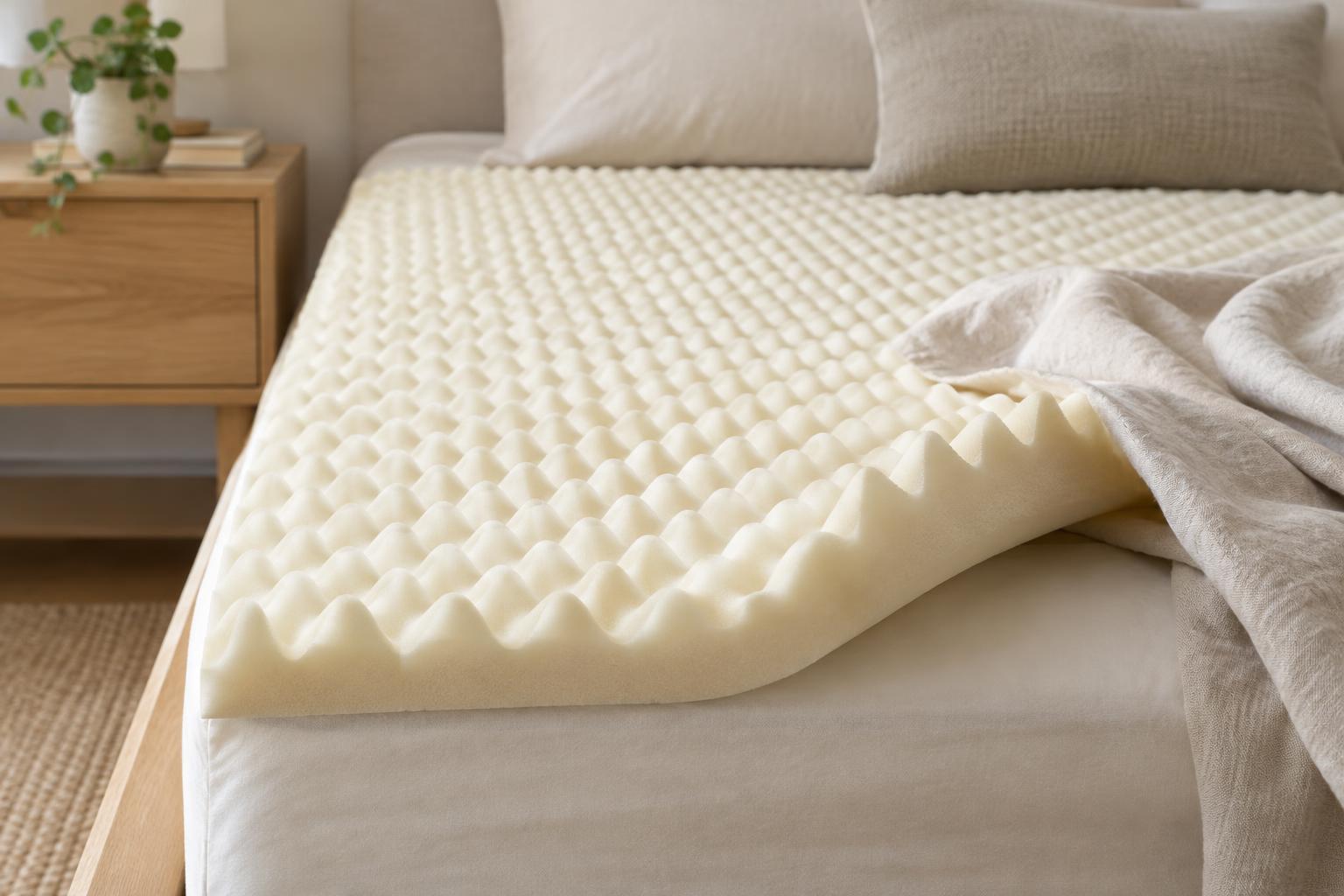
Mattress MaterialsConvoluted foam has a familiar egg-crate surface, but its shape does not tell you everything about how a mattress will feel. Learn what the peaks and valleys can change, how they affect airflow and support, and what to check before buying.
Read article · 4 min↗
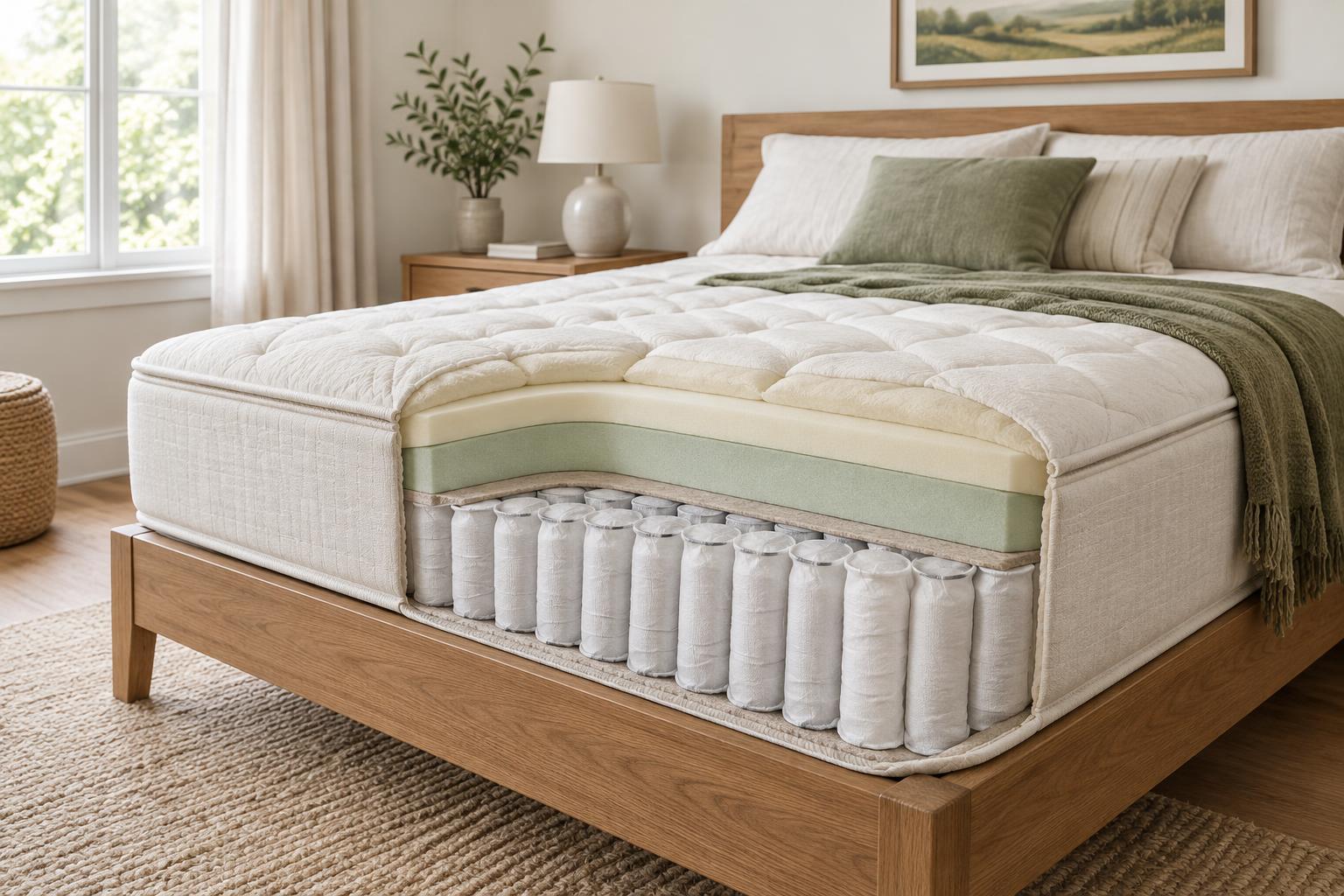
Mattress MaterialsA mattress’s upper layers shape how it feels when you lie down, while its core provides the deeper resistance beneath them. Learn how these parts work together, what common materials do, and which construction details are worth checking before you buy.
Read article · 4 min↗
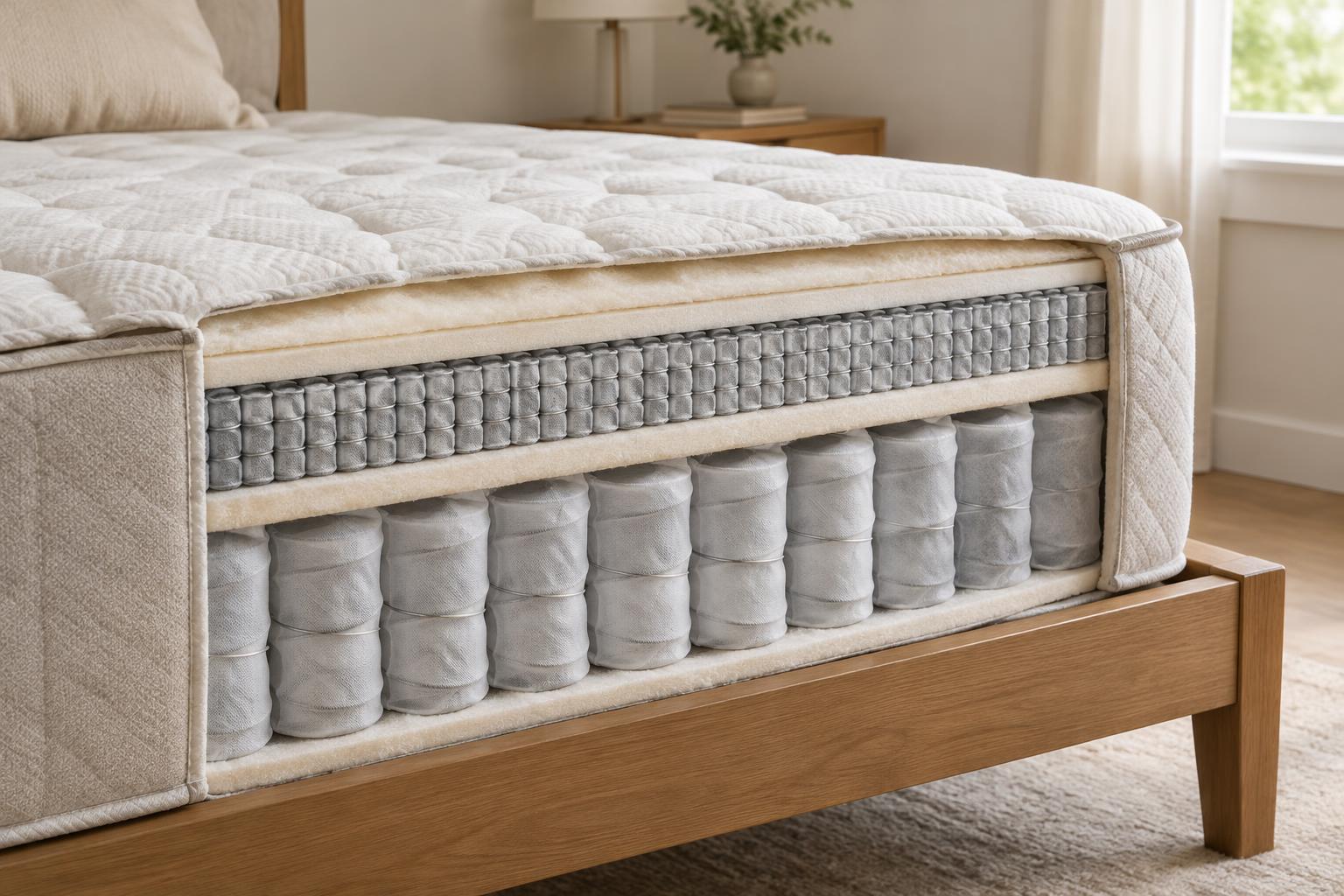
Mattress MaterialsMicrocoils are small springs used in some mattress comfort and transition layers. Learn where they sit, what they may change about a bed’s feel, and which construction details matter when comparing models.
Read article · 4 min↗
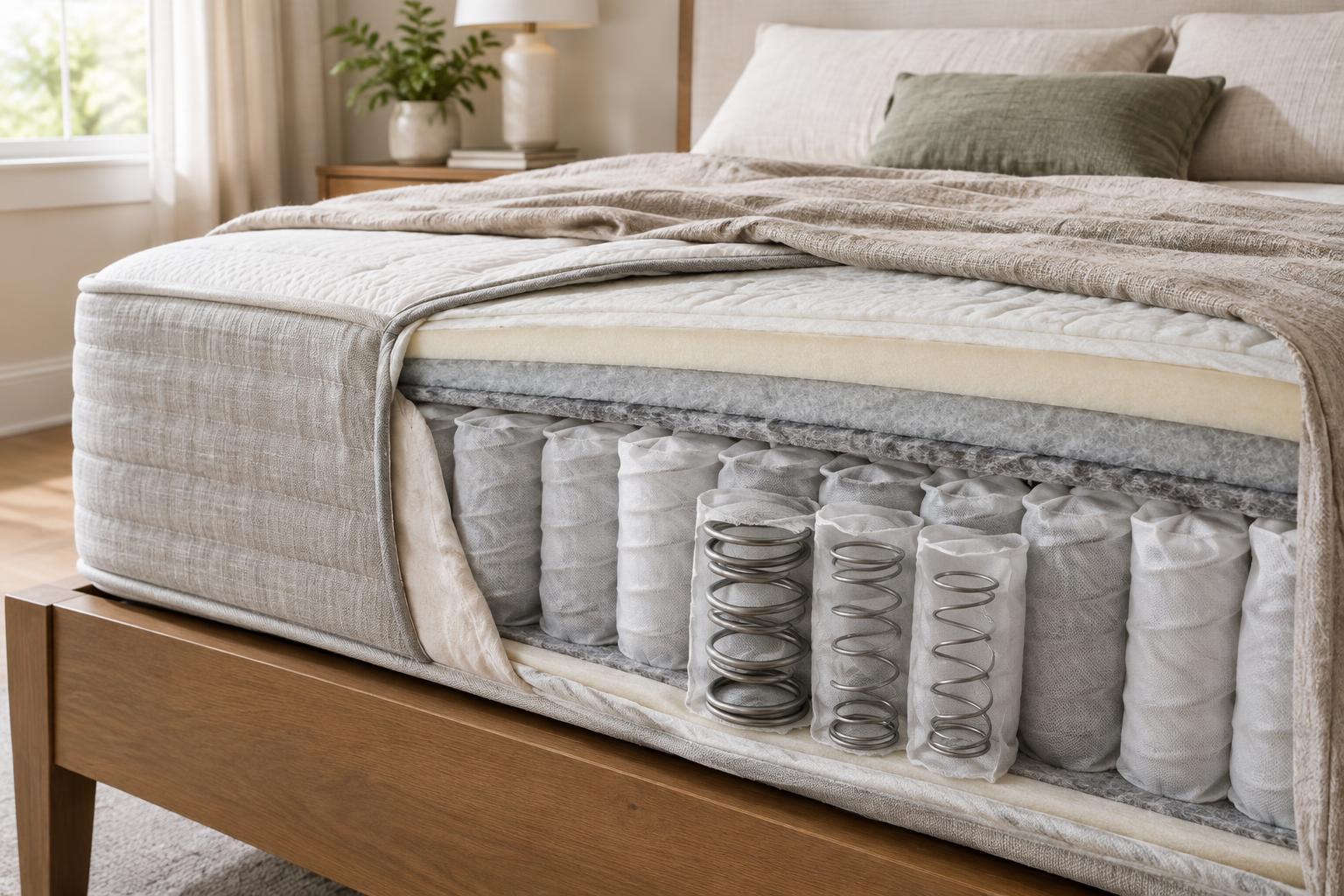
Mattress MaterialsCoil gauge describes the thickness of the wire used in a mattress spring, while coil count describes how many springs are present. Neither number predicts comfort or durability on its own. Learn how to compare these specifications alongside coil design, comfort layers and the way a mattress feels to you.
Read article · 4 min↗
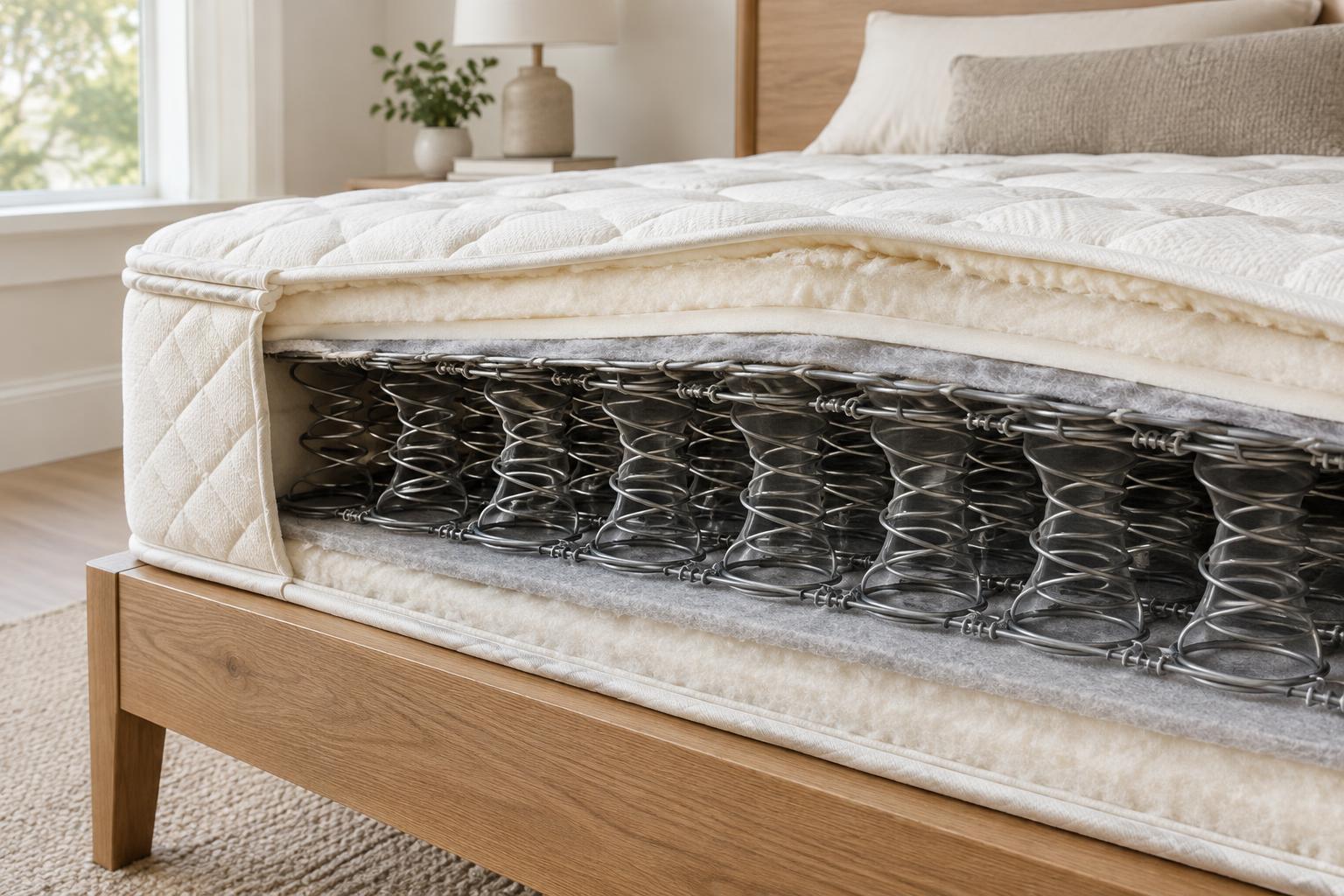
Mattress MaterialsBonnell, offset and continuous coils are three ways to build a connected-spring mattress. Learn how their shapes and connections can affect feel, motion transfer and shopping decisions—and why the layers above the springs matter just as much.
Read article · 4 min↗
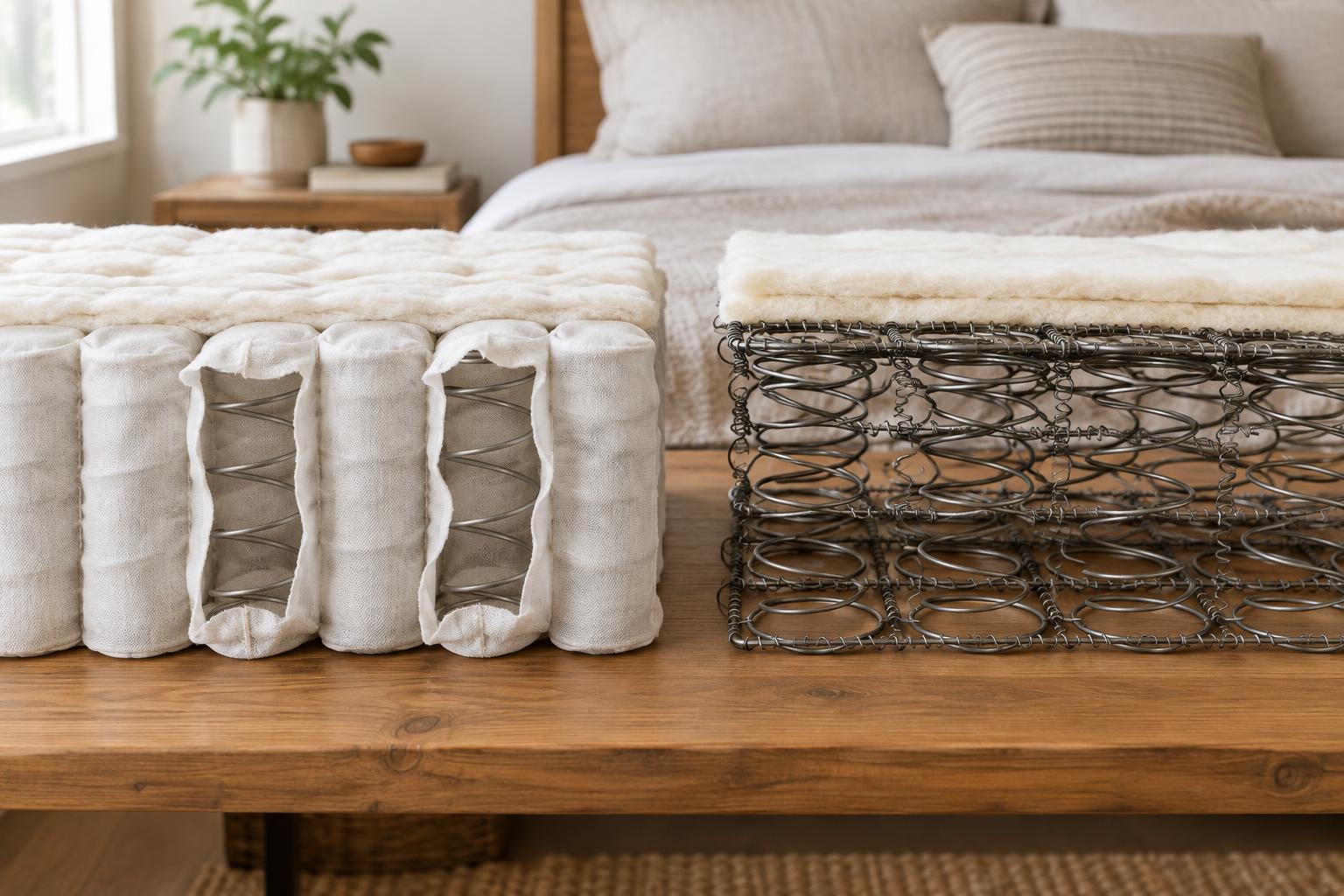
Mattress MaterialsPocketed coils sit in individual fabric sleeves, while connected coils are linked into a shared spring unit. Learn how each design is assembled, what that construction can mean for movement and support, and which details matter more than a coil-count claim.
Read article · 4 min↗
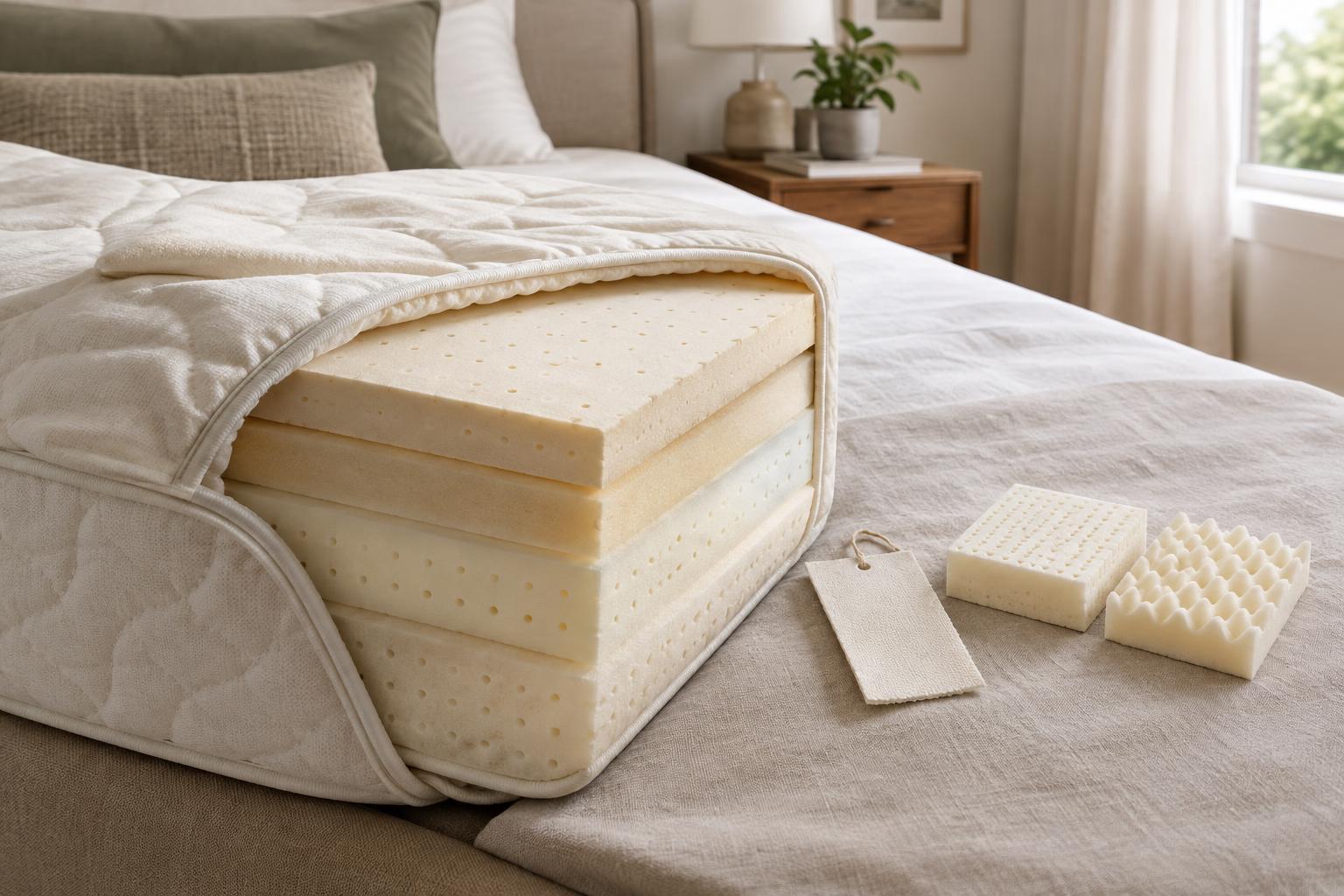
Mattress MaterialsLatex mattress labels can describe the foam’s ingredients, how it was made, or the construction of the finished bed. Learn which details help you compare mattresses—and which terms call for a follow-up question.
Read article · 4 min↗
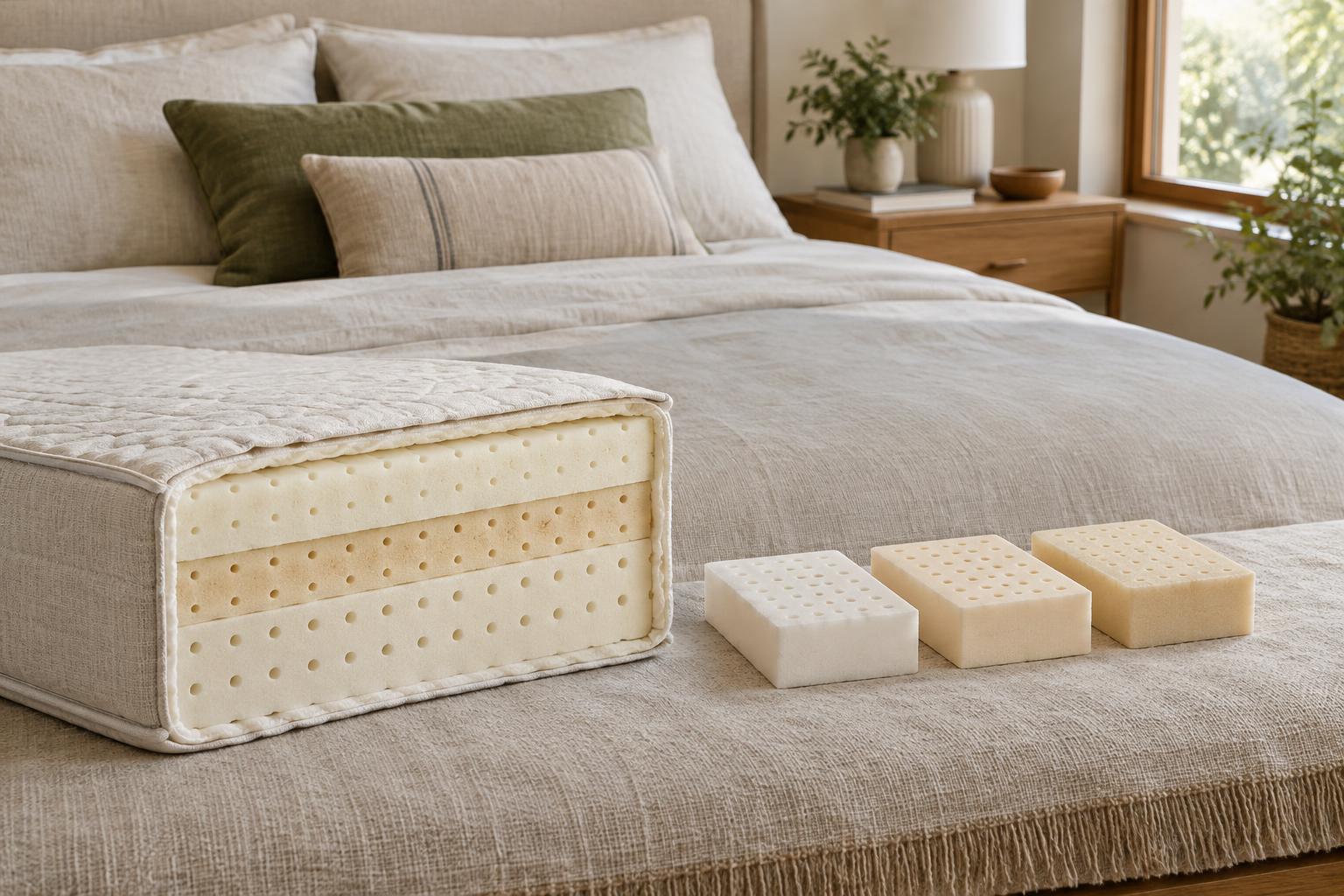
Mattress MaterialsA mattress labeled “latex” may contain natural rubber latex, synthetic latex, or a blend. Learn how to identify what is in each layer, interpret common marketing terms, and ask useful questions before buying.
Read article · 4 min↗
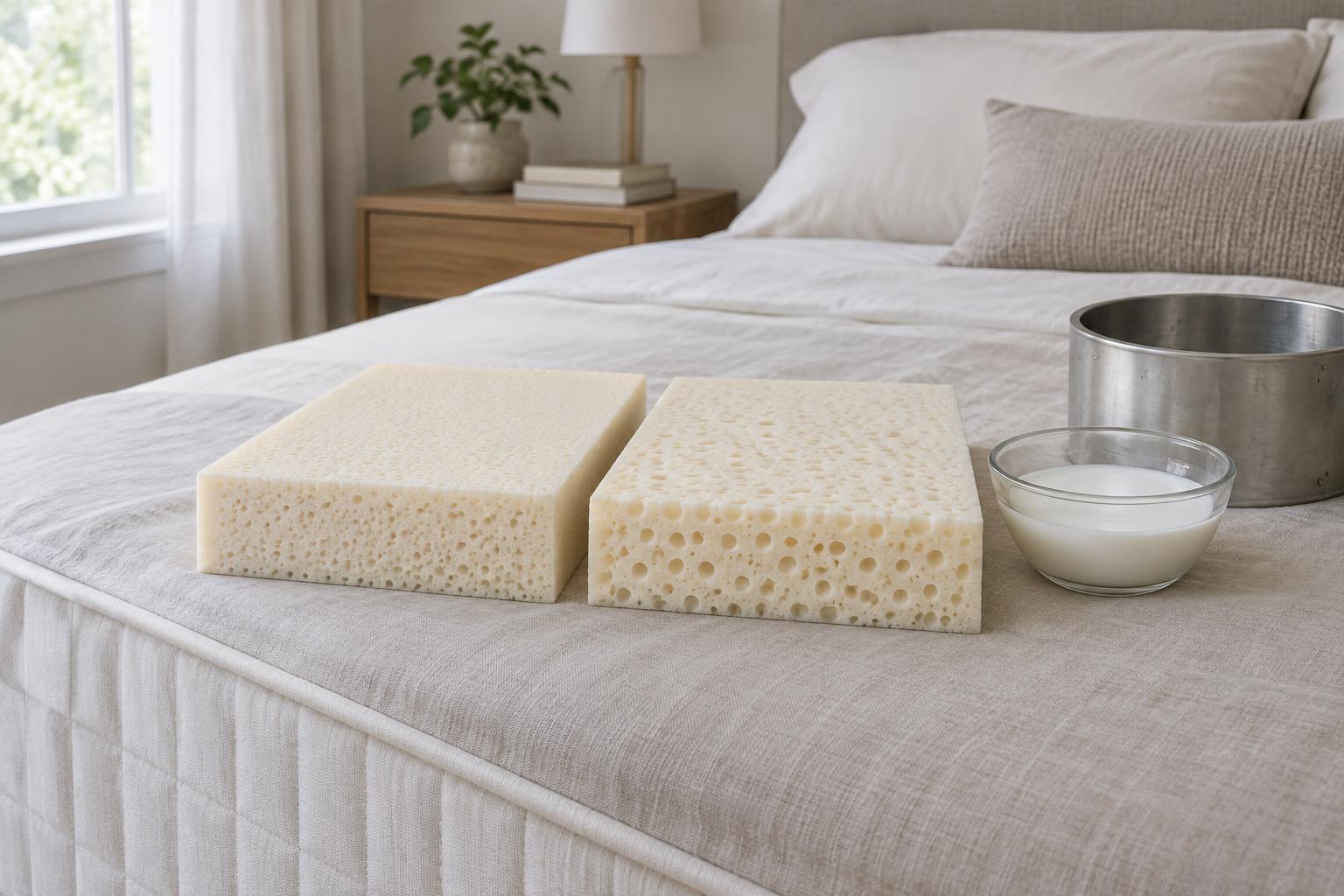
Mattress MaterialsDunlop and Talalay latex begin with liquid latex, but different molding steps give the finished foams distinct feels. Learn how each process works, what labels can and cannot tell you, and how to compare latex mattresses and toppers without relying on broad claims about comfort or durability.
Read article · 4 min↗
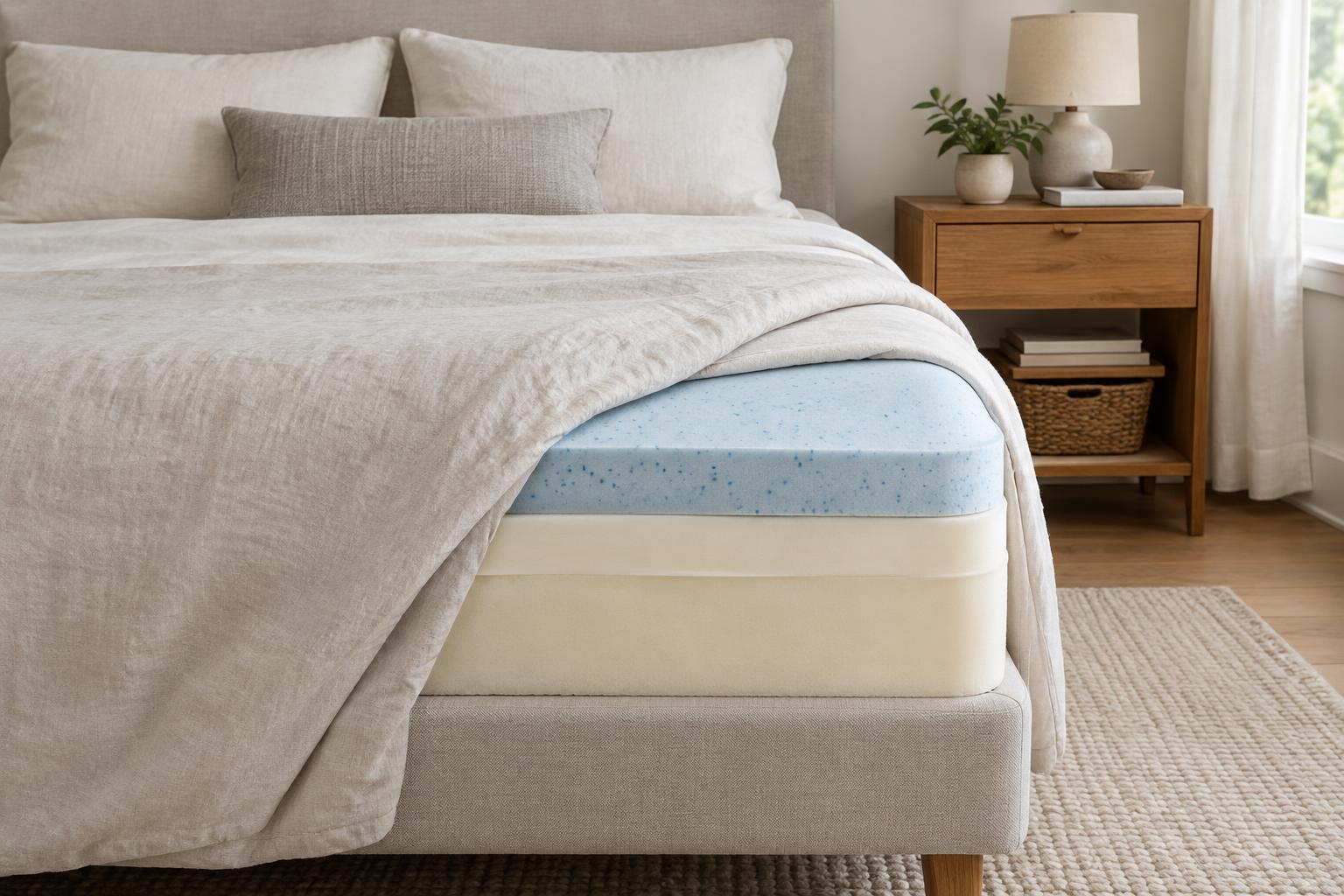
Mattress MaterialsGel-infused memory foam combines the slow, contouring feel of memory foam with gel added during manufacturing. Learn how the material is made, why cooling claims need context, and what to check in the rest of a mattress.
Read article · 4 min↗
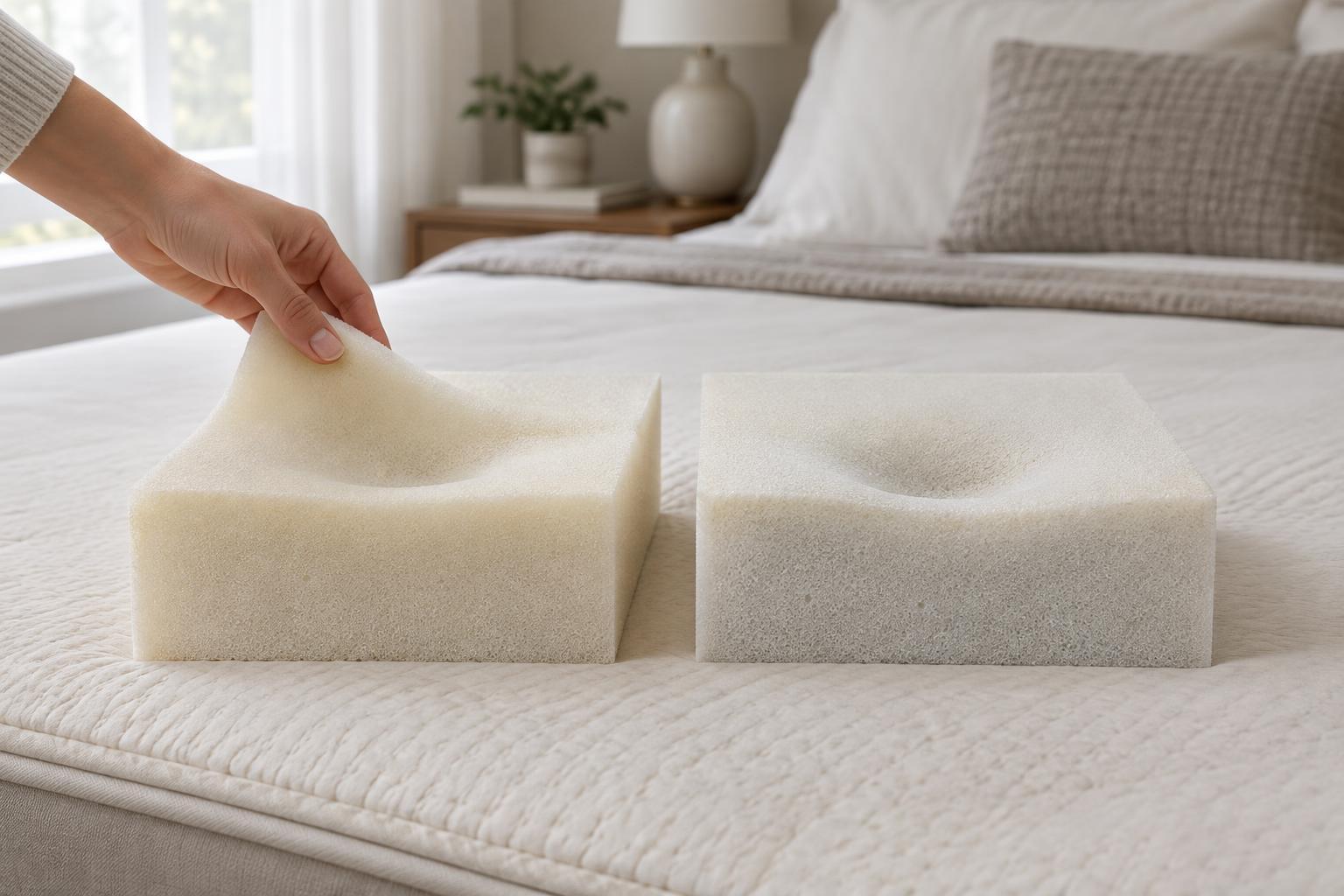
Mattress MaterialsHigh-resilience polyfoam is designed to spring back readily after compression, but the label alone does not tell you how a mattress will feel or how long it will last. Learn how it differs from conventional polyfoam and which details are worth checking before you buy.
Read article · 4 min↗
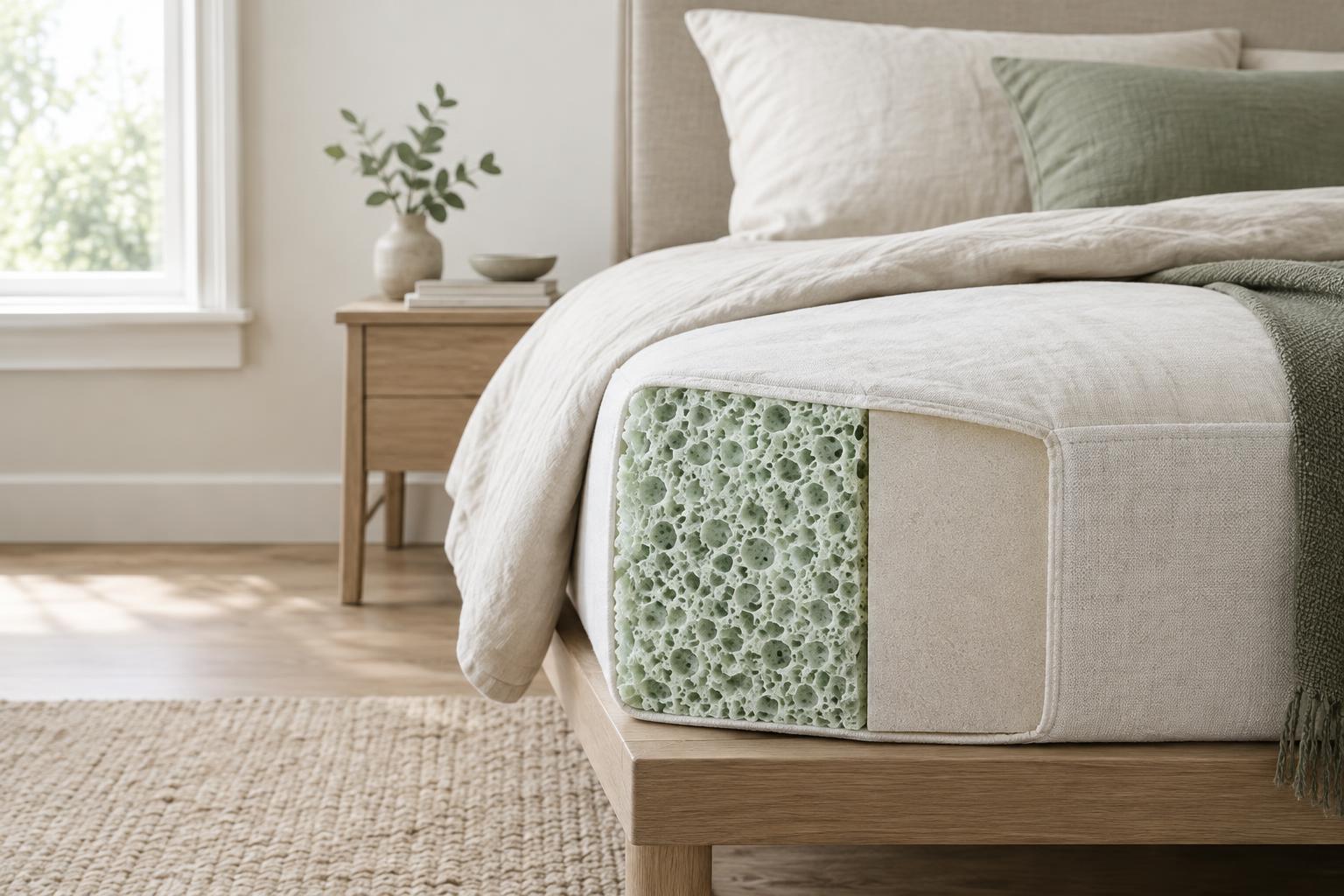
Mattress MaterialsOpen-cell and closed-cell describe how air spaces connect inside foam. Learn what that difference can mean for airflow, feel and mattress shopping—and why the rest of the bed matters just as much.
Read article · 3 min↗
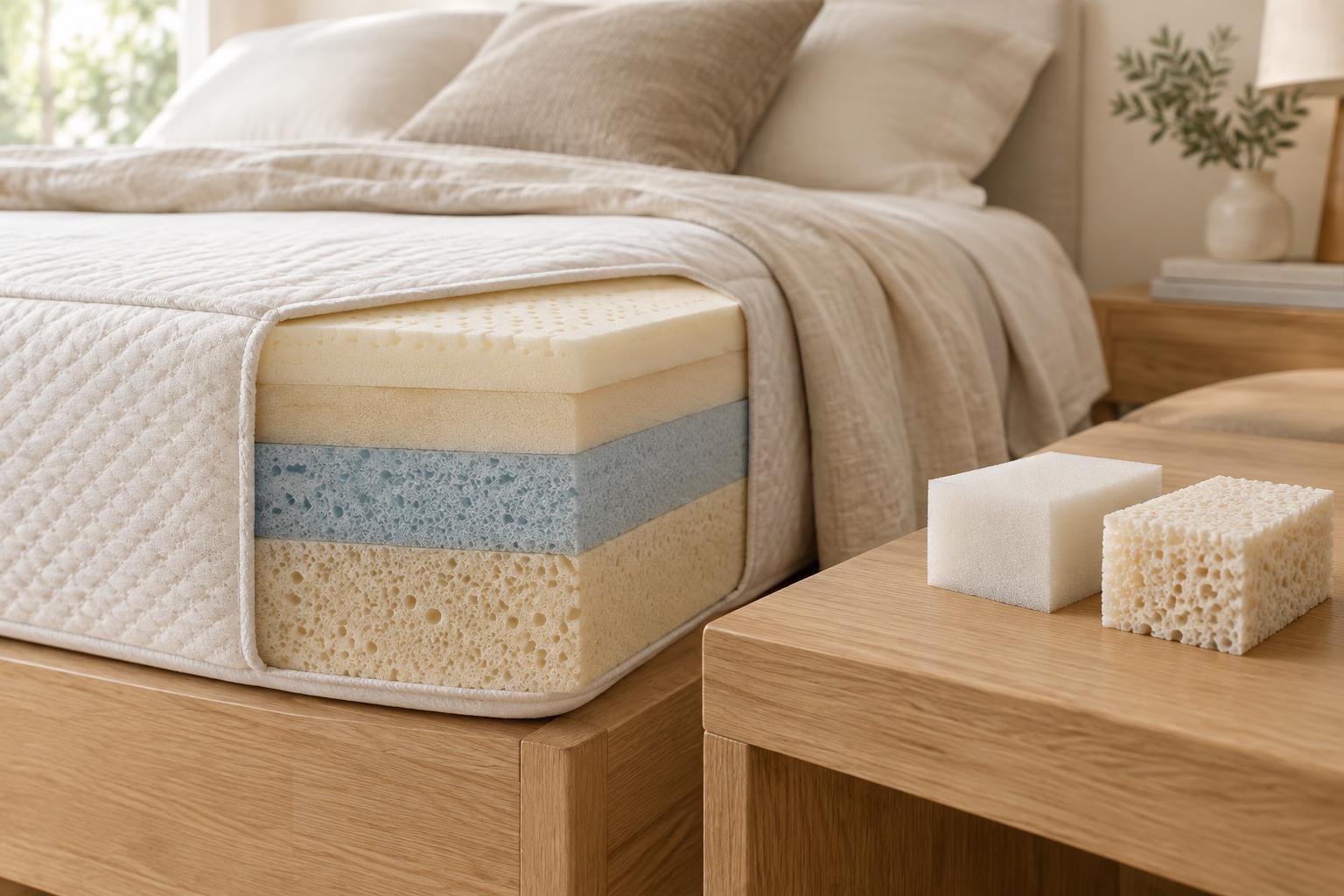
Mattress MaterialsFoam density describes how much a piece of foam weighs for its volume. It can help you compare mattress materials, but it does not tell you how firm, cool, supportive or durable a finished mattress will feel. Learn how to read density specifications without giving them more weight than they deserve.
Read article · 4 min↗
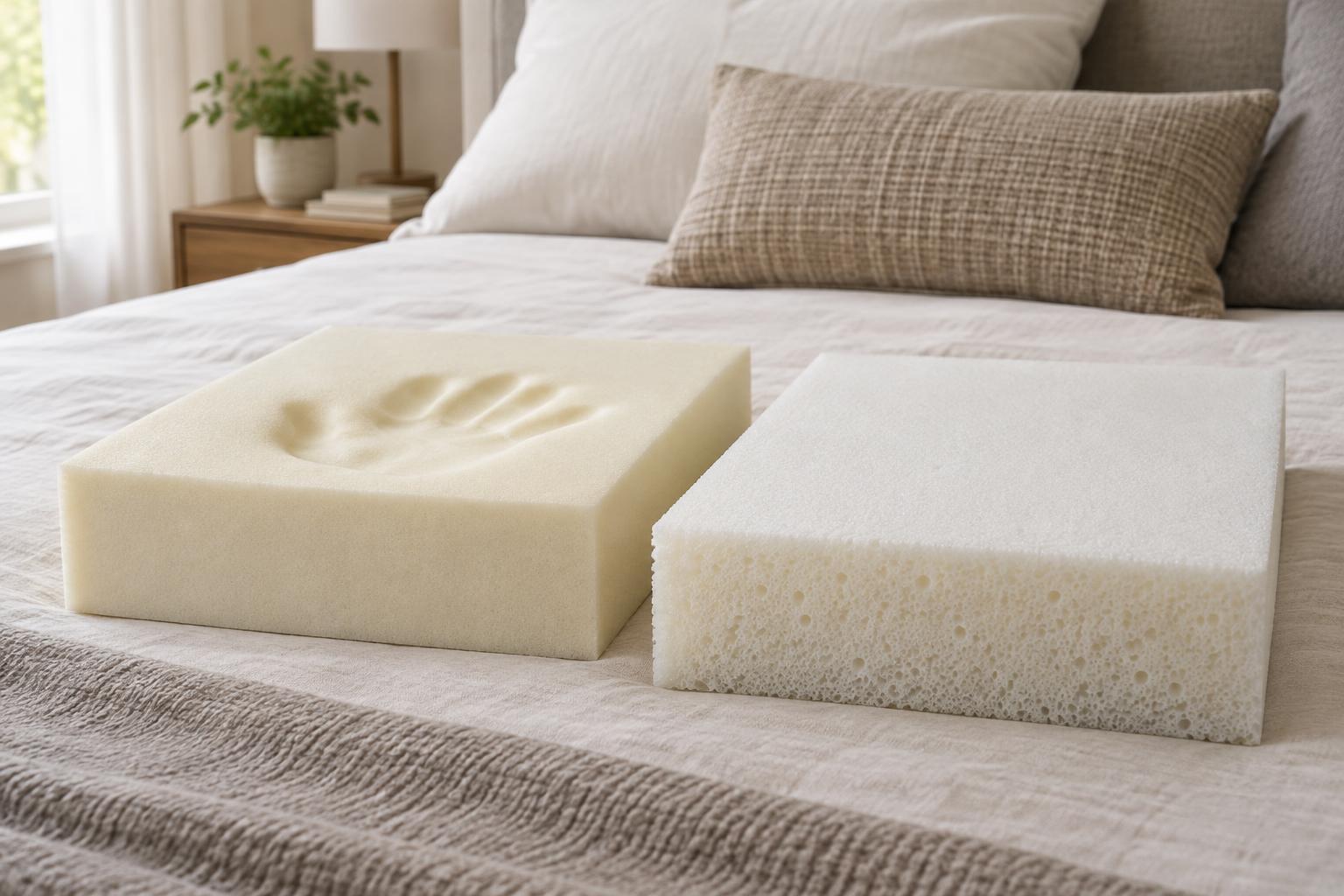
Mattress MaterialsMemory foam and conventional polyfoam are both polyurethane-based materials, but they respond differently to weight, movement and temperature. Learn what creates their distinct feel, where each is used in a mattress and what to check before buying.
Read article · 4 min↗