The spring unit beneath the comfort layers
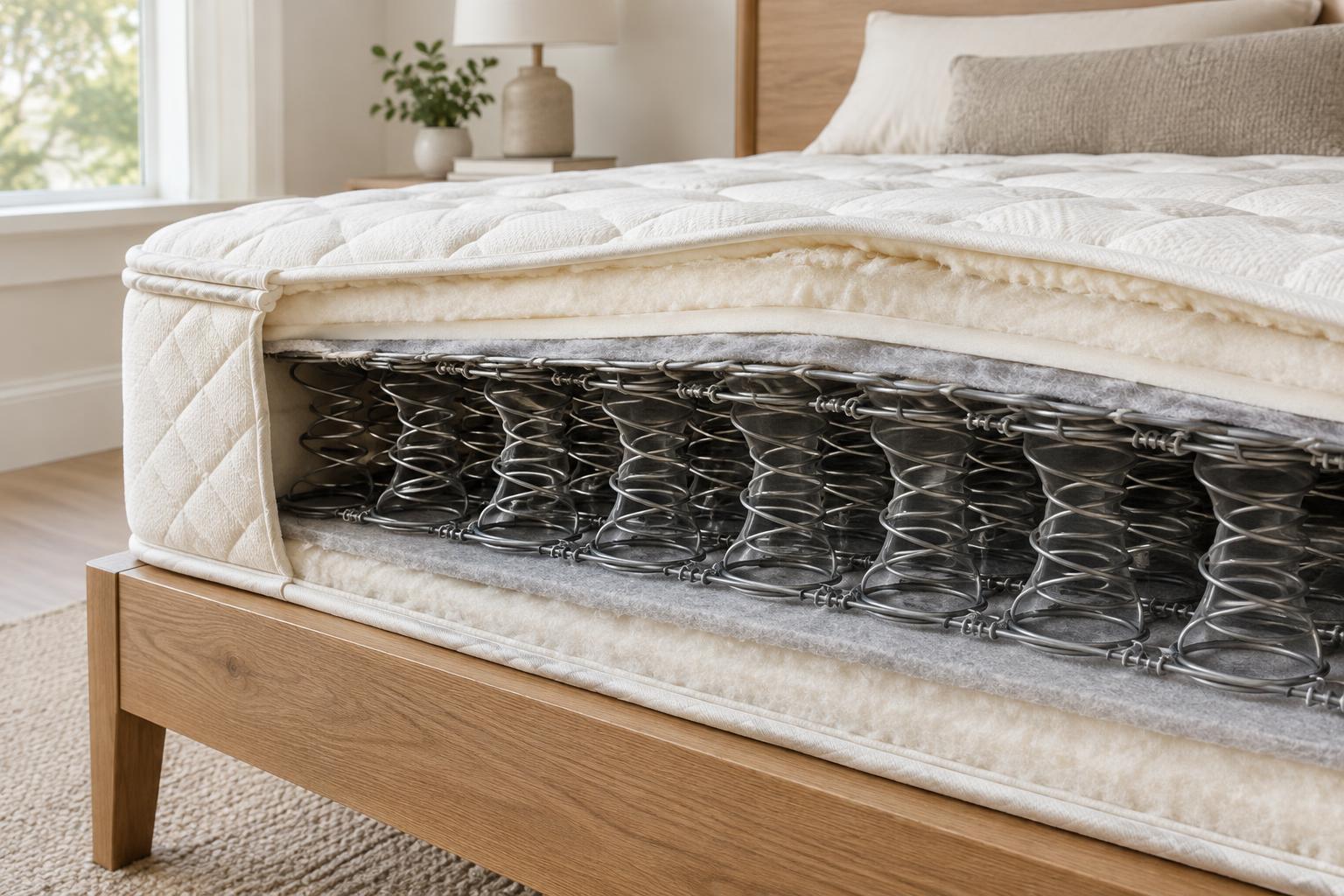
In an innerspring or hybrid mattress, the coil unit is the main spring structure beneath the cushioning layers. Its job is to compress under weight and return toward its original shape when that weight is removed. Two mattresses can use similar foam or fiber on top yet feel different because their coils are arranged and joined differently.
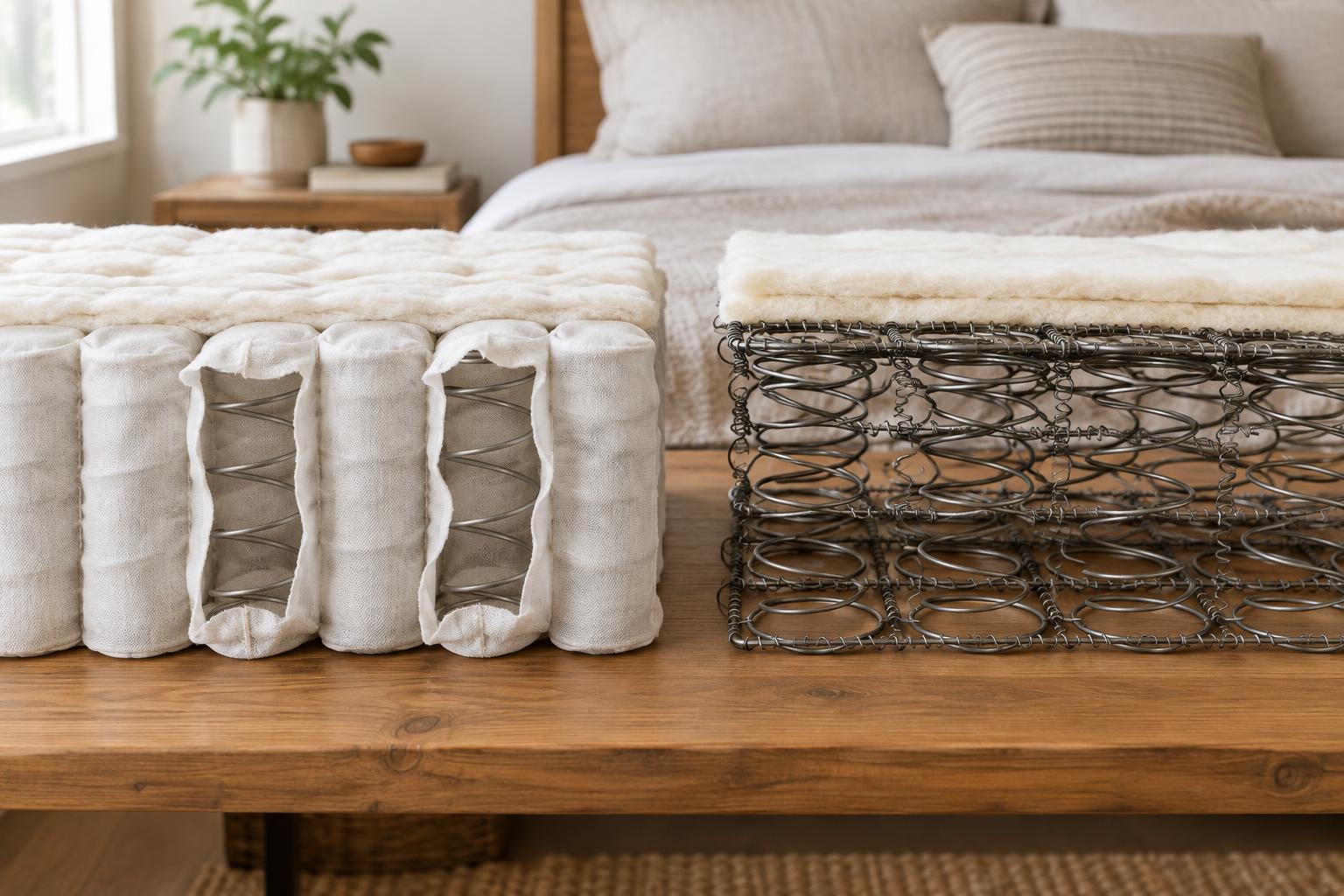
The basic distinction is how the springs relate to their neighbors. In a pocketed unit, each coil is enclosed in a fabric sleeve, and the sleeves are joined to form the mattress core. In a connected unit, metal links or shared wire join the springs into a more continuous structure. Neither label describes the whole mattress: coil shape, wire thickness, layout, edge construction and the materials above the springs also affect the result.
How pocketed coils are assembled
A pocketed coil begins as a shaped steel spring placed inside a fabric sleeve. The sleeve is closed around it, and individual pockets are attached in rows or arranged into a larger unit. Manufacturers may join the fabric with stitching, adhesive or other bonding methods. Because neighboring coils are connected mainly through fabric rather than direct metal links, each can compress with some independence. They do not move in complete isolation: the attached pockets, surrounding materials and mattress cover still transmit some force.
This construction can help the surface respond to pressure in smaller areas. It may also limit how much a movement on one side travels across the bed, though the comfort layers and bed frame influence what a sleeper notices. Some units use different wire gauges, coil heights or spacing in different areas to vary the feel. Others add smaller pocketed coils to a cushioning layer. A description that simply says “pocketed coils” does not reveal which of these choices, if any, are present.
How connected coils are assembled
Connected innerspring units use metal-to-metal connections or a continuous wire pattern to make the springs work together. In a traditional Bonnell design, hourglass-shaped coils are linked by helical wires that run across the unit. Offset coils have shaped, often flattened portions where the springs flex and connect; their design differs from Bonnell coils even though both form a linked network. A continuous-coil unit bends long lengths of wire into rows of springs and joins those rows to create the core.
Because the springs are linked, pressure on one area can affect nearby springs. Depending on the design, this may produce a more unified, responsive feel, but it can also allow more motion to travel across the bed than a pocketed unit would. The connections do not tell you, by themselves, whether a mattress will feel firm or soft. Wire dimensions, spring geometry and the layers above the unit all matter.
What the construction can change in use
Pocketed units are often chosen when a mattress is intended to follow changes in body shape and reduce motion transfer. Connected units may appeal to someone who prefers a surface that responds more as a whole. These are useful tendencies, not guarantees. Thick or soft comfort layers can mask the sensation of either coil system, while a thin layer may make the spring structure more noticeable.
Edge support is another separate design decision. A manufacturer might reinforce a pocketed unit with firmer perimeter coils or a foam border. A connected unit may use a border rod or other reinforcement. Whether the edge feels steady when sitting or lying near it depends on that perimeter construction as well as the rest of the mattress. Likewise, a noise concern cannot be settled by the coil label alone; the quality of the connections, surrounding materials and foundation may all play a part.
How to compare specifications without overreading them
Start with the coil type, then look for details that explain it: the coil shape, wire gauge, number and arrangement of springs, any zones, and how the perimeter is reinforced. With wire gauge, a lower number generally indicates thicker wire, but gauge alone does not establish overall firmness or durability. Coil counts also need context. A higher count may reflect smaller coils or a different layout rather than a better-built mattress.
Finally, consider the complete mattress. Ask what sits above the springs, how thick those layers are, and whether the available product description explains the construction clearly. If you can try the mattress, check how easily you change positions, whether the surface feels suitably supportive to you, and whether movement from another sleeper is noticeable. The most useful comparison is between complete designs, not between the words “pocketed” and “connected” on their own.