Start with how the pillow feels in use
A pillow does not need replacing simply because it has reached a particular age. Fill type, construction, care and nightly use all affect how it holds up. A more useful question is whether it still feels comfortable and keeps a suitable shape when you settle into your usual sleeping position. Try judging it at the start of the night, rather than only after you have tossed and turned.
Notice whether you repeatedly fold, stack or bunch the pillow to get the height you want. If it quickly flattens beneath your head or pushes your head higher than you prefer, its current loft may no longer suit you. That does not always mean the pillow is worn out: a change in mattress feel or sleeping habits can alter what feels comfortable. Still, a pillow that needs constant rearranging deserves a closer look.
Check for changes that do not bounce back
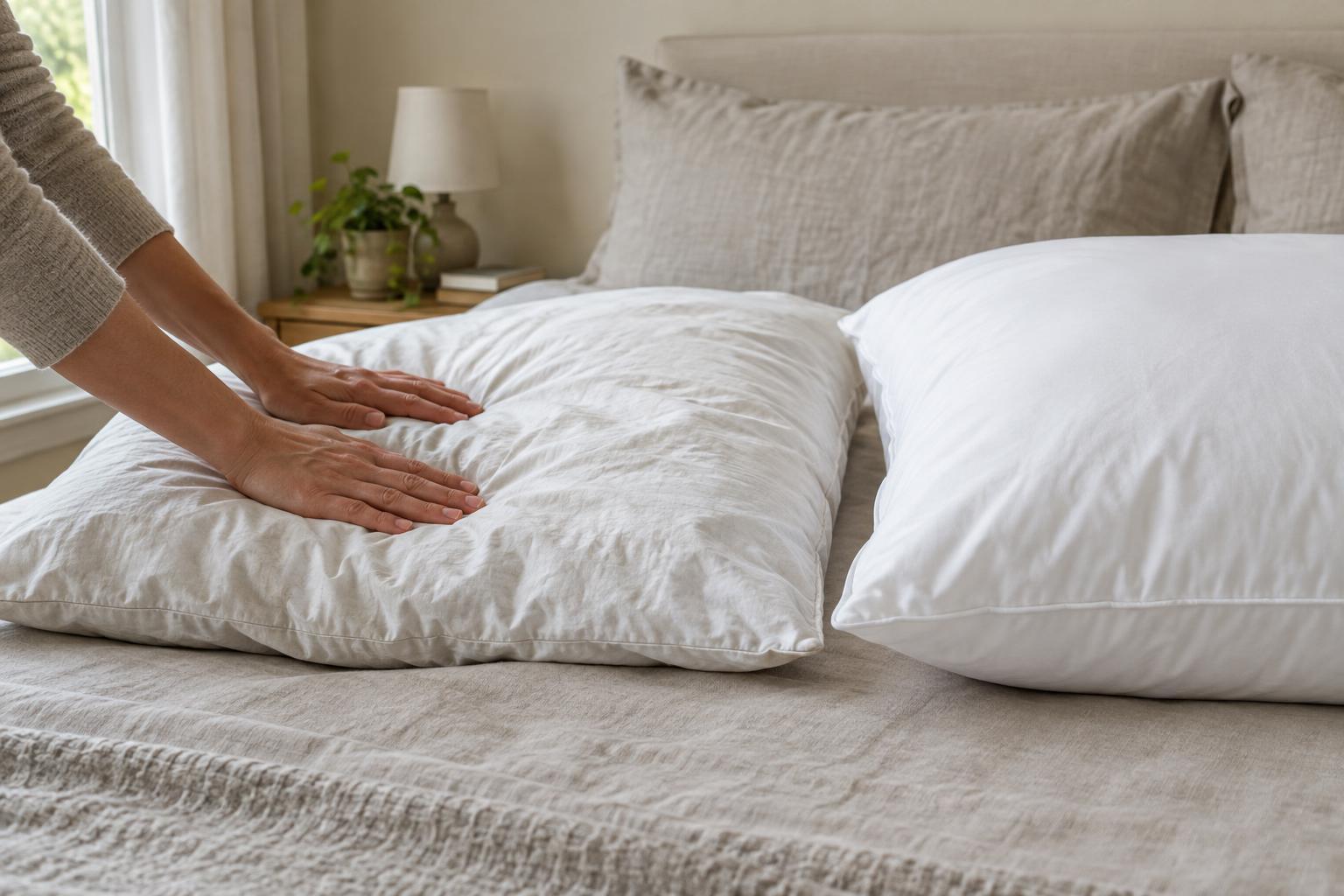
Remove the pillowcase and inspect the pillow on a flat surface. Look for uneven fill, a permanent dip, firm clumps or edges that no longer hold their shape. Gently fluff it as its care instructions allow, then leave it alone for a while. If it promptly returns to the same lumpy or flattened shape, ordinary fluffing may not restore the feel you want.
Different fills show wear differently. Loose fill can shift away from the center, while a one-piece foam pillow may develop a lasting hollow or lose its original resilience. Some shifting is normal in pillows designed to be adjustable, and you may be able to redistribute or add fill. What matters is whether you can still make the pillow feel even and comfortable without a nightly struggle.
Decide whether cleaning is enough
A pillow that feels less fresh is not necessarily finished. Check its care label before washing: some pillows can be machine washed, while others call for spot cleaning or special handling. A washable pillow needs to dry thoroughly according to its instructions before you put it back on the bed. A pillow protector and a regularly washed pillowcase can also help keep a clean pillow in better condition.
Cleaning cannot fix every problem. If persistent odors, staining or visible damage remain after appropriate care, replacing the pillow may be the more practical choice. The same is true if seams are failing or fill is escaping. Avoid trying to rescue a pillow with a washing method its label does not permit; the process could change the fill or leave it difficult to dry.
Use the old pillow to choose a better replacement
Before shopping, identify what you liked and disliked about your current pillow. Was its original height comfortable? Did you enjoy a moldable feel, or would you prefer a shape that stays more consistent? Consider your usual sleeping position and how far your head sinks into your mattress. These details are more useful than buying the same fill by habit or assuming that a firmer pillow is automatically better.
When comparing options, check dimensions, fill construction and care instructions, not just the words on the package. An adjustable-fill pillow may appeal if you have trouble settling on a height; a fixed-shape pillow may suit you if you prefer a more consistent feel. If you can try a pillow in a shop, allow enough time to relax into a familiar position rather than judging it by a quick squeeze. If buying online, read the return terms before opening or using it.
Once you find a pillow you like, keep its care label and note how it feels when new. That gives you a simple reference for later: you can tell whether a dip or loss of loft is a change rather than something you never liked. The aim is not to replace pillows on a rigid timetable, but to recognize when care and adjustment no longer make yours comfortable to use.