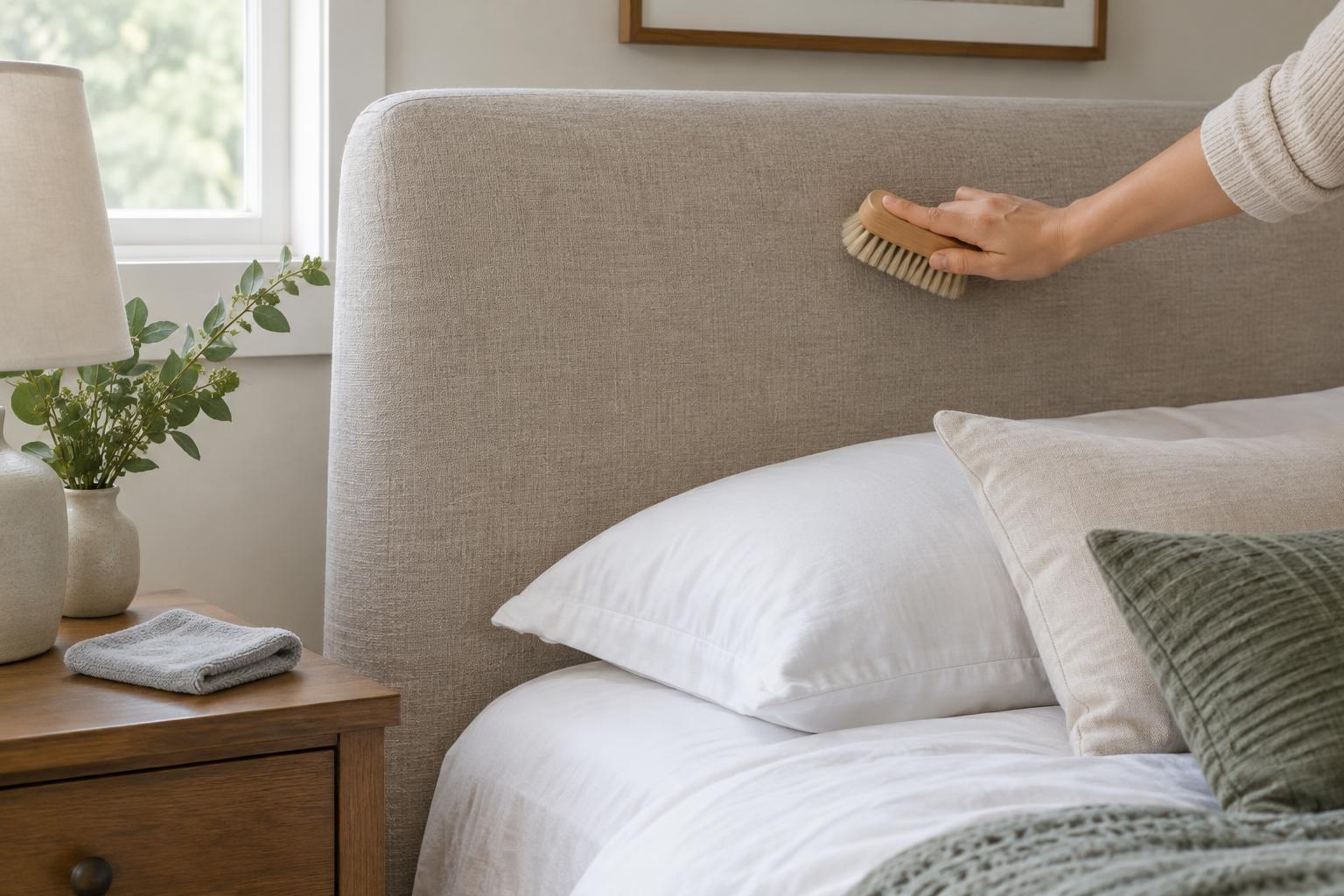
Check the upholstery before you clean
Start with the headboard’s care label or the manufacturer’s instructions, if available. Upholstery that looks similar can require very different treatment. Some fabrics tolerate a small amount of water-based cleaner, while others call for a solvent-based product or professional cleaning. Velvet, leather, faux leather, and delicate or loosely woven textiles also need different handling. If you cannot identify the material or its cleaning guidance, begin with dry dust removal rather than applying a liquid.
Before using any cleaner, test it on a hidden area and let that spot dry completely. Look for fading, a change in texture, water rings, or color transfer onto a clean cloth. A successful spot test does not guarantee that a large wet area will dry evenly, so work cautiously. Avoid spraying cleaner directly onto the headboard: it can soak into padding or reach the wall behind it.
Remove dust without roughing up the fabric
Use a vacuum upholstery attachment at a gentle setting, if your vacuum allows it. Move slowly across the front and pay attention to seams, buttons, piping, and the gap between the headboard and mattress. A soft brush can lift loose dust from crevices, but avoid stiff bristles that could snag threads or disturb the fabric’s surface. If a decorative trim or button feels loose, clean around it rather than pulling on it.
For fabric that shows a directional nap, such as some velvets, use light strokes in the direction that leaves the surface looking even. Vacuuming too aggressively can leave visible tracks or flatten the pile. If your headboard is leather or faux leather, a soft, dry cloth may be a better first step than a brush. Dusting regularly makes later spot cleaning easier because you are less likely to rub loose dirt into a stain.
Treat small marks carefully
For a fresh spill, blot it promptly with a clean, absorbent cloth. Press gently from the outside of the mark toward the center; scrubbing can spread the spill or damage the upholstery. If the care instructions permit a water-based cleaner, apply a small amount to a cloth rather than saturating the fabric. Blot the marked area, then use a separate cloth as directed by the cleaner’s instructions. Work in small sections and stop if color begins to transfer.
Greasy marks, ink, and set-in stains may not respond to ordinary spot cleaning. Repeatedly wetting or rubbing them can make the result more noticeable. Do not combine cleaning products or assume that a household stain remover is safe for furniture fabric. When the care code is unclear or a mark is prominent, an upholstery-cleaning professional may be a more cautious choice. Leather and faux leather should be cleaned only with products and methods appropriate to their particular finish.
Dry it fully and limit future wear
After any permitted damp cleaning, give the headboard time to dry with comfortable room ventilation. Keep bedding and pillows from pressing against the cleaned area until it feels completely dry. Avoid trying to speed the process with high heat, which may affect fabric, backing, or adhesive. If the headboard remains damp or develops a persistent musty smell, stop using liquid cleaners and investigate whether moisture has reached the padding or wall.
Small habits can reduce the need for deep cleaning. Keep hair products and lotions from resting against the upholstery, and consider placing pillows between the headboard and areas that see frequent contact. Check occasionally that the headboard is secure and not rubbing against the wall or bed frame. A gentle dusting routine, quick attention to spills, and cleaning methods matched to the material will usually do more for its appearance than aggressive scrubbing.