Start with requirements, not product names
Mattress shopping can become difficult when every listing emphasizes a different feature. Before saving products, write down what the mattress needs to do for your household. Include the required size, the space available around the bed, any limits imposed by your frame or foundation, and the total amount you are comfortable spending. These are filters, not qualities to weigh against comfort: an appealing mattress is not a useful candidate if it cannot fit your setup or budget.
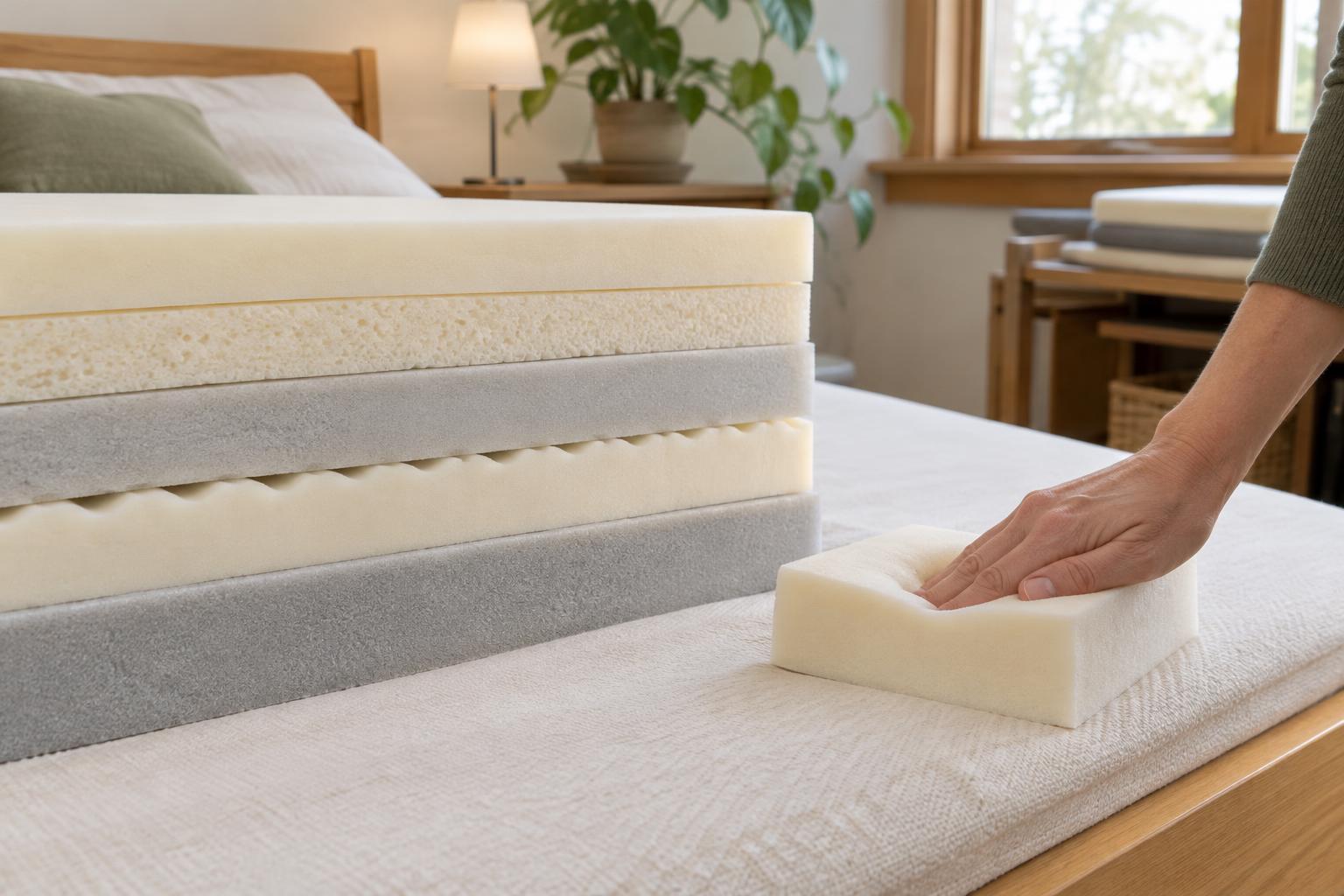
Next, identify two or three preferences that would make a noticeable difference in daily use. You might care most about a surface that is easy to move across, limited disturbance when a partner changes position, or a particular level of cushioning. Describe each preference in your own words rather than relying on a label such as “medium-firm.” Labels can help you search, but they do not guarantee that two mattresses will feel alike.
Keep the shortlist small and the details consistent
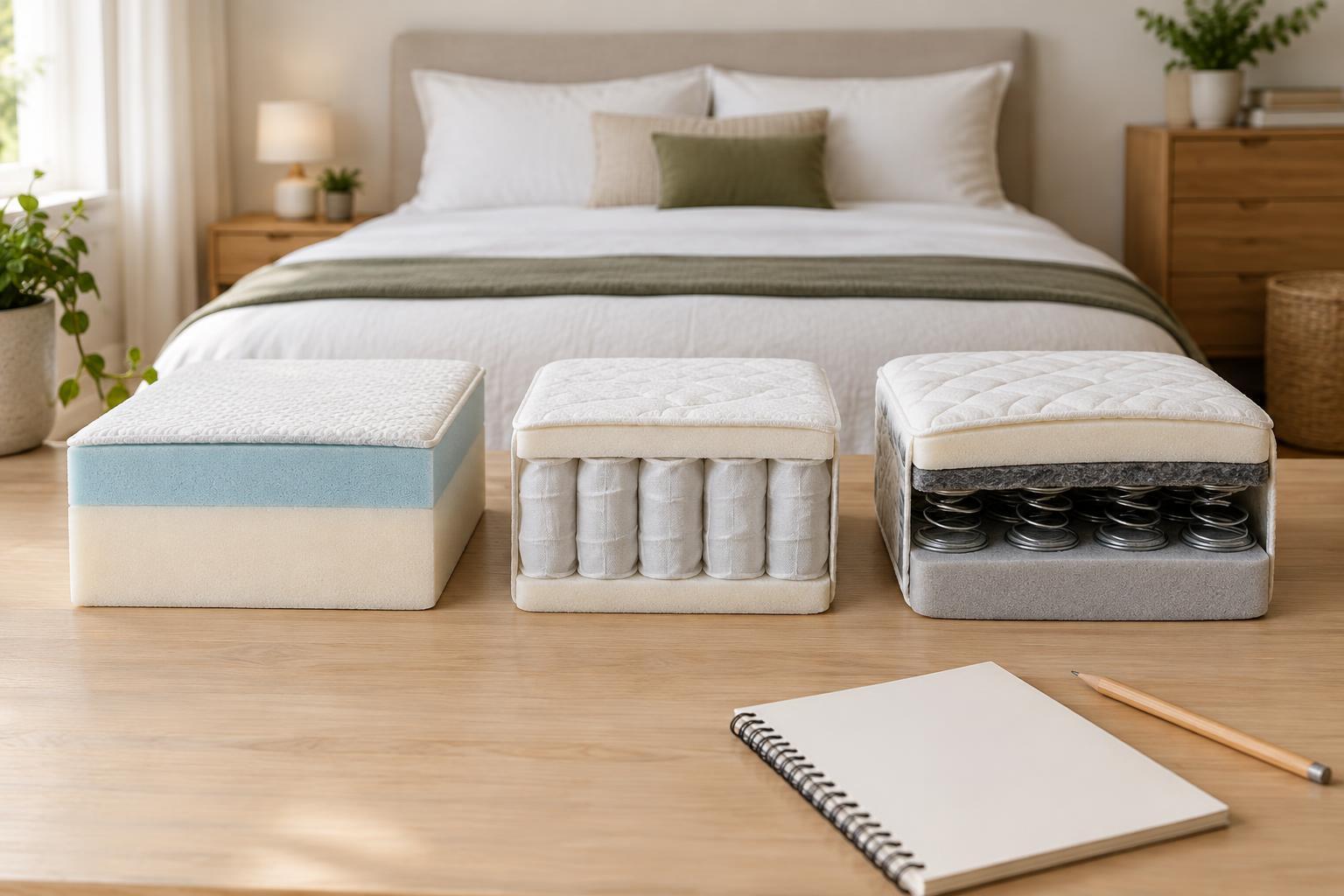
Choose a manageable set of candidates rather than saving every mattress that seems promising. For each one, record the same basic details: size, price in that size, overall height, broad construction type, stated firmness, and any dimensions or compatibility requirements that matter to your bed. If a detail is missing, mark it as unknown. An empty space is easier to investigate than a guess you may later mistake for a confirmed fact.
Keep observations separate from descriptions supplied by the seller. For example, “listed as medium-firm” records a product claim, while “felt difficult to turn on during a showroom visit” records your experience. If you cannot try a mattress, do not treat an editorial comparison, customer review or marketing description as a hands-on test of your own. Instead, note what remains uncertain and whether the purchase terms give you a practical way to evaluate it at home.
Compare trade-offs rather than counting features
A feature list can make one mattress appear stronger simply because its listing contains more detail. Compare candidates against your original priorities instead. A more cushioned surface may appeal to one sleeper but feel harder to move across to another. A taller mattress may have the feel you prefer yet require deeper fitted sheets or make the bed less convenient to get into. These are trade-offs to consider, not automatic advantages or flaws.
Try a simple three-column note for each priority: promising, uncertain or concerning. Add a short reason beside each judgment. “Promising: height works with existing sheets” is more useful than a numerical score whose meaning you will forget. If several mattresses remain close, focus your next question on a difference that could change your decision. There is little value in researching minor features while a major requirement remains unresolved.
Check what happens after you choose
The purchase experience belongs on the shortlist too. Record the final price you would pay, including any required delivery or setup charges, and check what happens if the mattress does not work for you. Trial periods can have conditions, such as a minimum time before a return or steps you must follow to request one. Warranty terms address different issues from a comfort return, so keep those notes separate.
Also consider the practical work of bringing the mattress into your home. Check packaging and delivery details if stairs, narrow doorways or limited help could complicate setup. Confirm whether your intended base meets the seller’s requirements. A candidate with a slightly lower price or a longer feature list may be less attractive if its delivery arrangements, return conditions or support requirements do not fit your situation.
Use a clear stopping rule
When two or three candidates remain, review your notes without looking at the product pages. Can you explain why each one is still on the list, what you do not know, and what would cause you to rule it out? If not, you may need a more specific question rather than more browsing. You could confirm a dimension, ask about a policy condition or revisit how a mattress felt during a showroom visit.
There may be no single option that wins on every measure. A reasonable choice is one that meets your non-negotiable requirements, performs well on your most important preferences, and leaves you comfortable with the price and purchase terms. Keep the shortlist and your reasons until delivery is complete; those notes make it easier to check that the mattress and terms match what you selected.