Start with the reason you want a seat
A seat can make a bedroom more useful, but it should have a clear job. You might need somewhere to put on shoes, a spot to read, or a place to set out tomorrow’s clothes. Those uses call for different designs. A firm bench may work well for dressing, while a chair with a supportive back is better suited to sitting for longer. If the seat is mainly there to hold laundry, consider whether a hamper or another storage solution would serve you better.
Think about who will use the seat and how they will get up from it. A low, deep chair may look inviting but can feel awkward for a quick sit while dressing. A seat that feels stable, has enough room for your feet and suits your preferred sitting position is usually a more practical choice than one selected for appearance alone.
Compare chairs, benches and compact alternatives
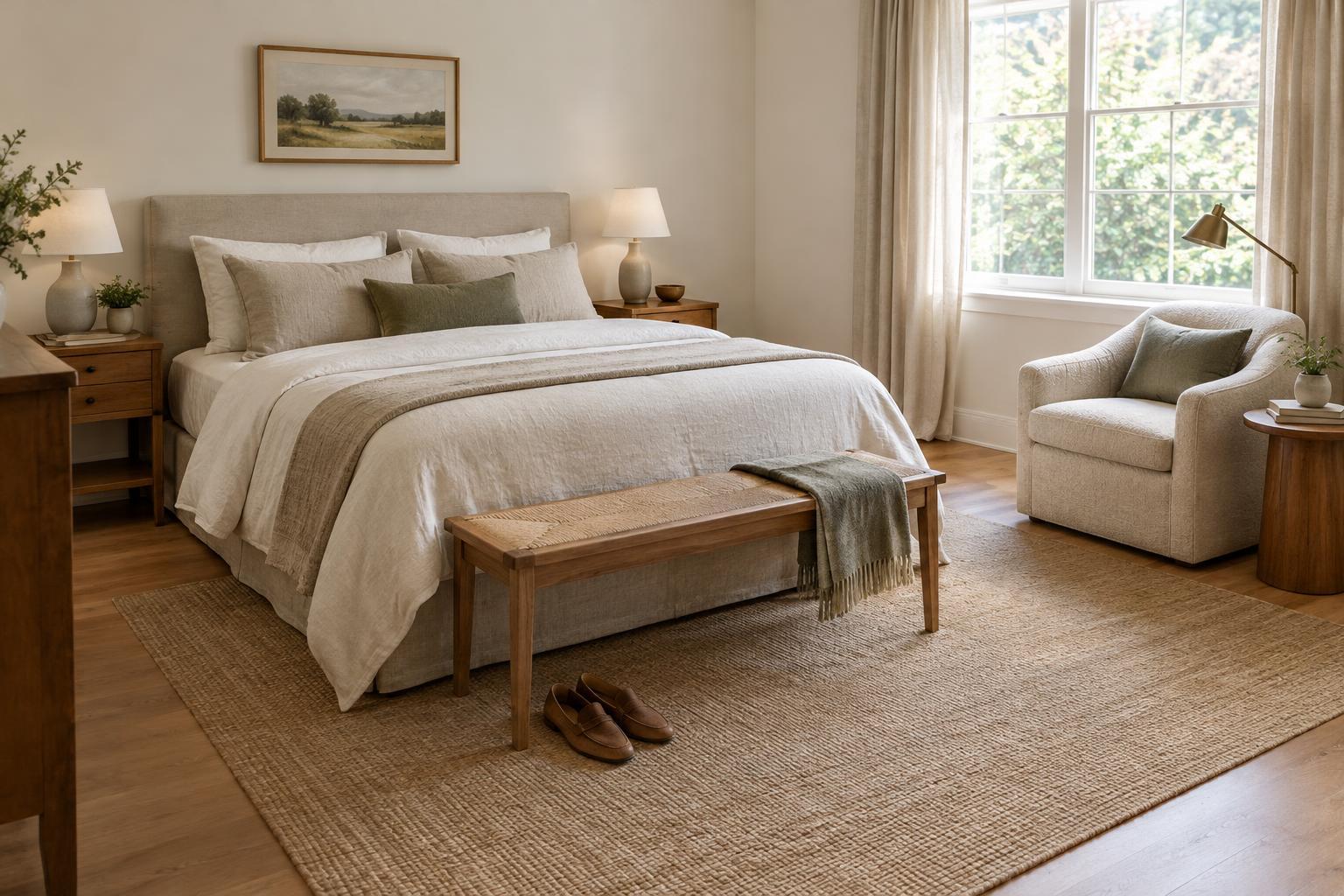
A chair with a back offers a defined place to sit and can make use of an otherwise empty corner. An armless chair may fit a tighter space, though armrests can be useful if you prefer them for getting seated or standing. Before choosing a chair for reading, check that its seat depth lets you rest comfortably against the back without having to perch on the edge.
A bench can provide seating without the visual bulk of a lounge chair. It may fit at the foot of a bed or against a wall, provided it does not crowd a walkway or block drawers. A storage bench can also hold spare bedding, but its lid needs room to open. In a very small bedroom, a compact stool may be enough for putting on shoes; it is less suitable if you want back support or expect to sit for extended periods.
Measure the space you will actually use
Measure the seat’s full footprint, then account for the space needed to approach and use it. A chair may fit neatly on paper but feel cramped once you pull it away from a wall or sit with your legs extended. A bench at the foot of the bed should leave room to pass it comfortably. Check nearby doors, closet openings and drawers in their open positions, not just when everything is closed.
You can mark the proposed footprint on the floor with removable tape or place a similarly sized object in the spot for a day. Walk through your normal routine: make the bed, reach the closet and move around the room in low light. If you repeatedly have to step around the proposed seat, a smaller piece or a different location may work better. Keep cords, floor vents and frequently used outlets accessible.
Choose materials you can live with
Upholstery can feel warm and soft, but it may collect dust, hair or lint and can be harder to clean after a spill. Removable, washable covers can simplify upkeep if their care instructions fit your routine. Wood, metal and other hard surfaces are often easier to wipe down, though you may want a cushion for comfort. Look at the entire piece, including legs, seams and any storage compartment, rather than judging the seat fabric alone.
Check that a prospective seat feels steady and that its construction suits its intended use. If shopping in person, sit on it as you would at home and notice whether it shifts, creaks or presses uncomfortably. If shopping online, use the listed dimensions and care instructions to narrow your options, and check the return terms before ordering. Once the seat is in place, keep it usable: a chair buried under clothes no longer provides the comfortable pause you bought it for.