What gel-infused memory foam actually is
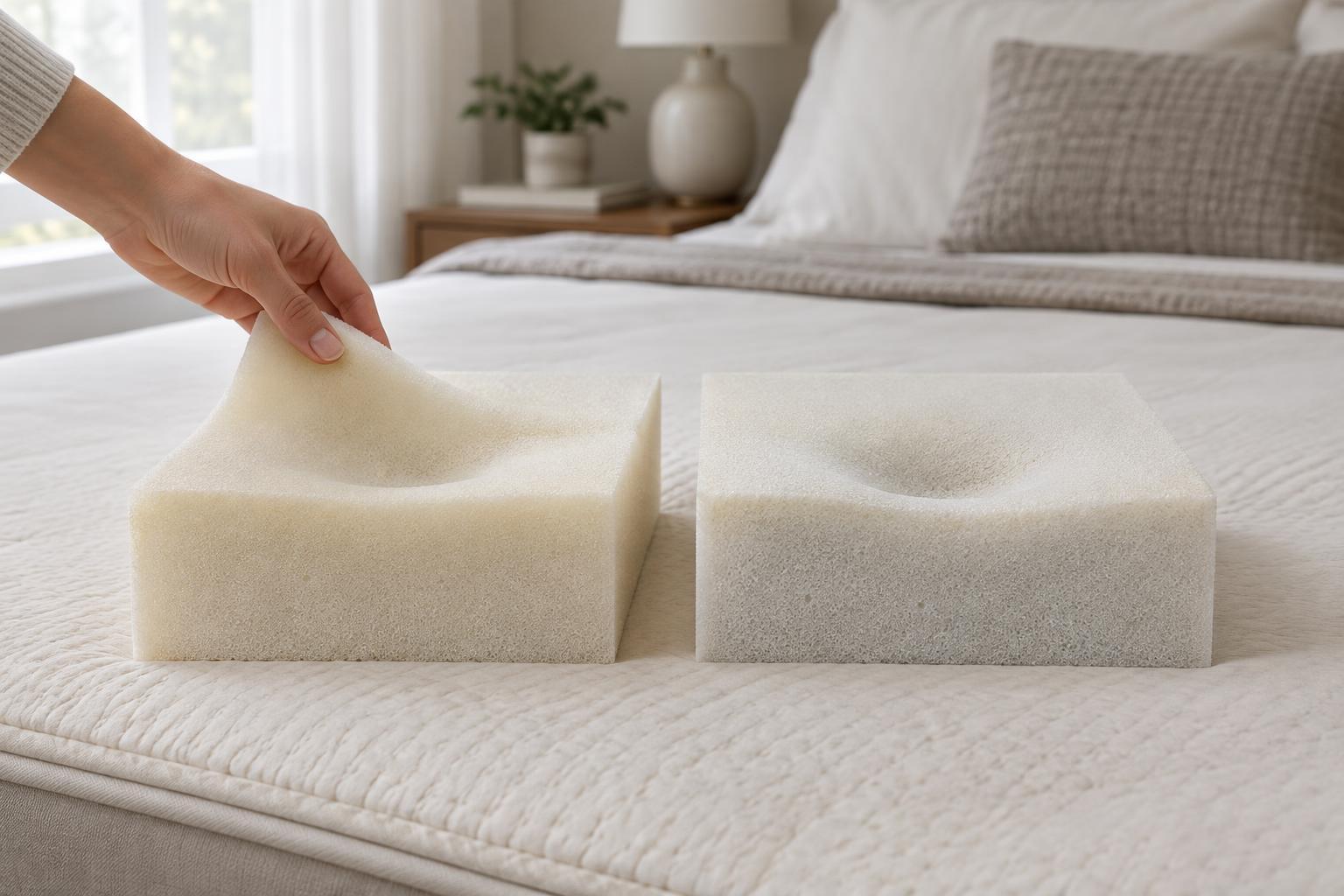
Memory foam is a type of polyurethane foam designed to respond to pressure and temperature. It compresses around the body and tends to recover its shape more slowly than many conventional foams. That gradual response creates the close-contouring feel people often associate with memory foam mattresses and pillows.
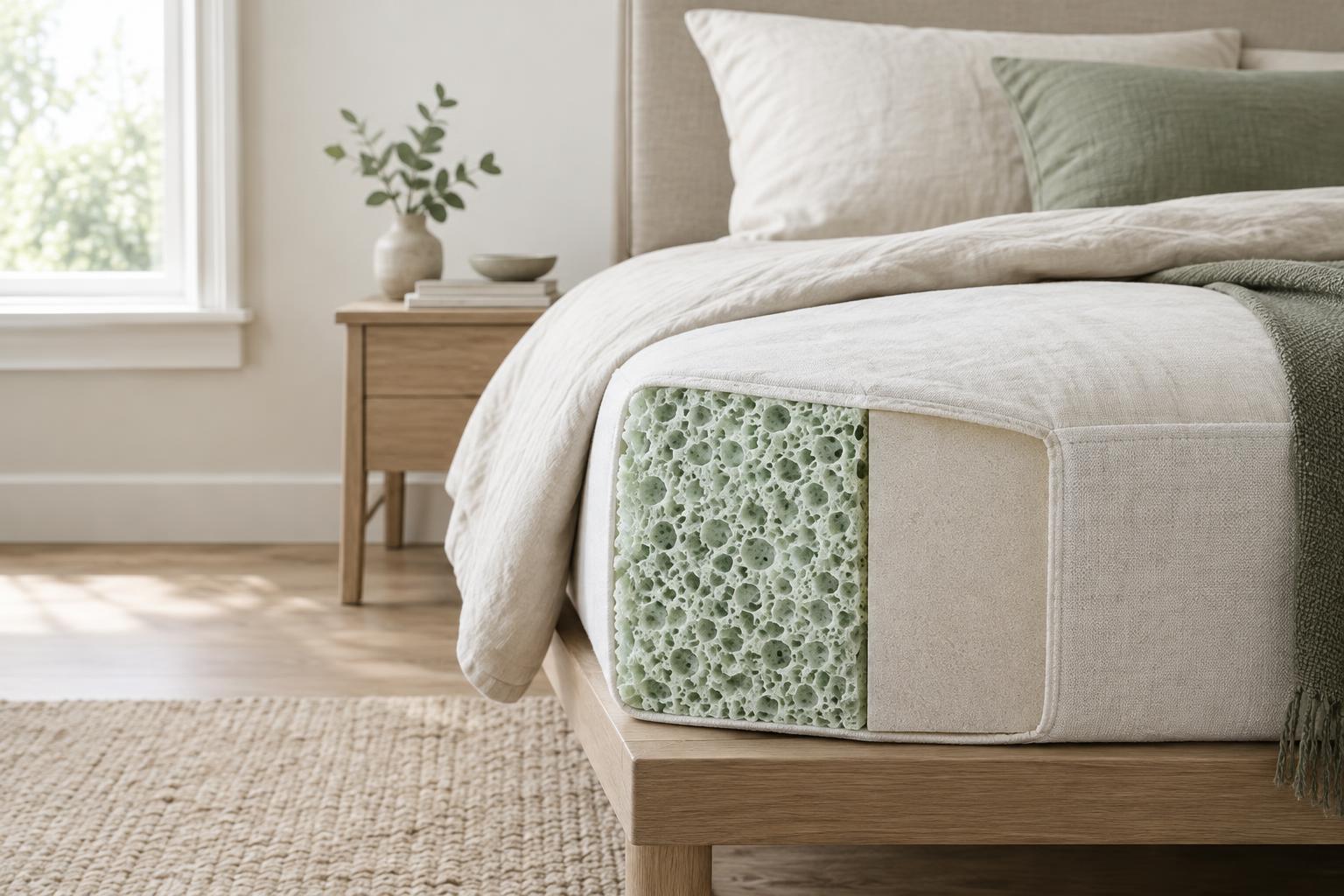
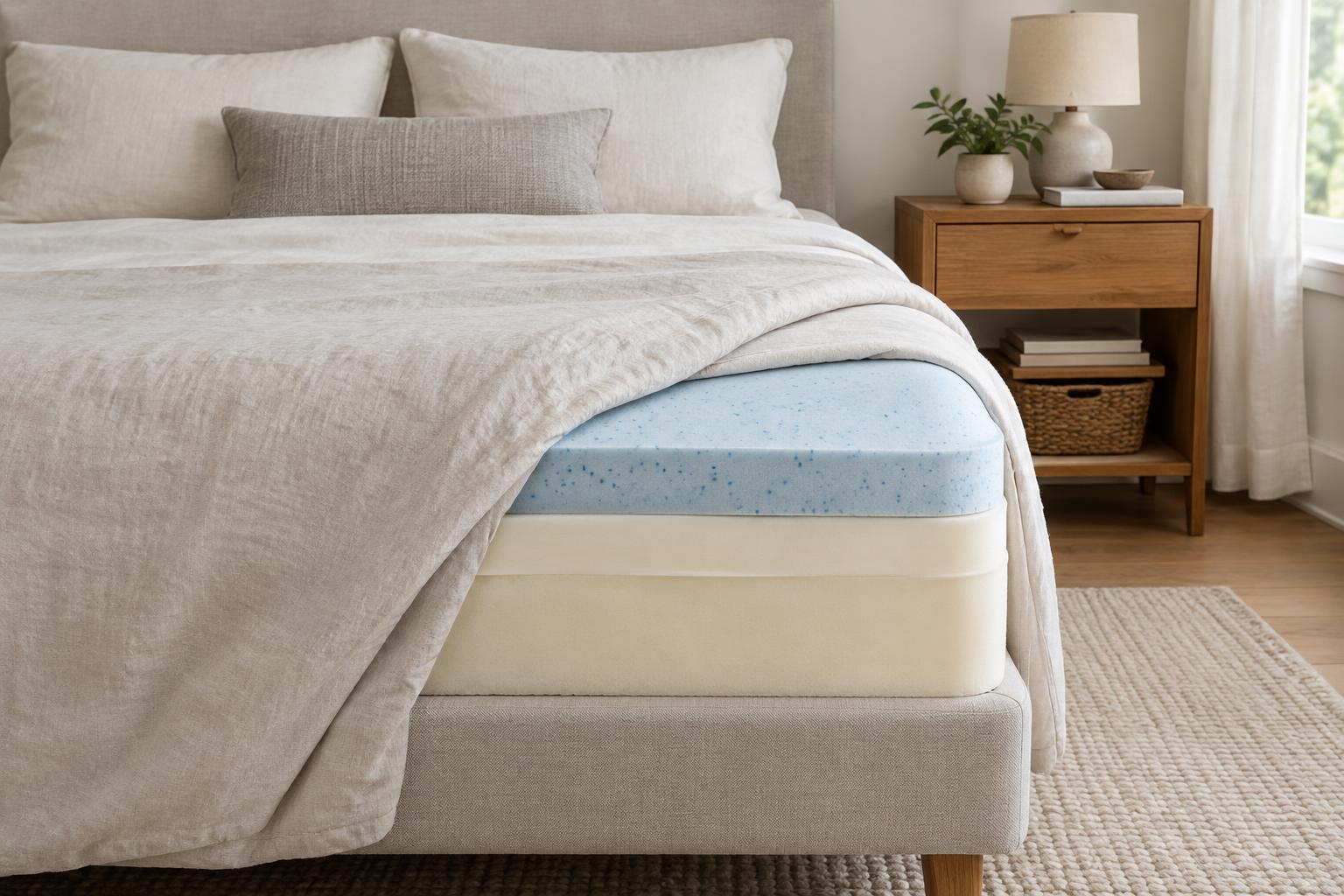
Gel-infused memory foam is memory foam with gel incorporated into it. Manufacturers may mix gel into the foam or use gel particles or beads, so products bearing the same label can differ in feel and construction. The word “gel” does not identify the foam’s density, firmness, thickness or durability. Nor does it tell you how the entire mattress will feel: a thin gel-infused layer over a firm support core can behave differently from a thick layer over softer materials.
What the gel may change—and what it cannot promise
Gel is commonly presented as a way to make memory foam feel cooler. A gel-containing layer may absorb some heat when you first lie down, or it may change how heat moves through that layer. Whether you notice a difference depends on the particular foam, how much gel it contains and what surrounds it. An initially cool sensation is not the same as staying cool throughout the night.
A mattress also has to allow heat and moisture to move away from the sleeper. A thick foam layer can still feel warm if it closely surrounds the body, even when it contains gel. Covers, sheets, protectors, room temperature and bedding all influence the experience. Without comparable evidence for specific products, a “cooling gel” label is best treated as a description of construction, not a guarantee of sleep temperature.
Gel does not automatically make foam firmer, more supportive or longer-lasting. Those qualities depend on the foam formulation and the layers beneath it. It also does not turn memory foam into a highly springy material. If you dislike a slow-moving, enveloping feel, adding gel may not address your main concern.
Look at the whole mattress, not just the top layer
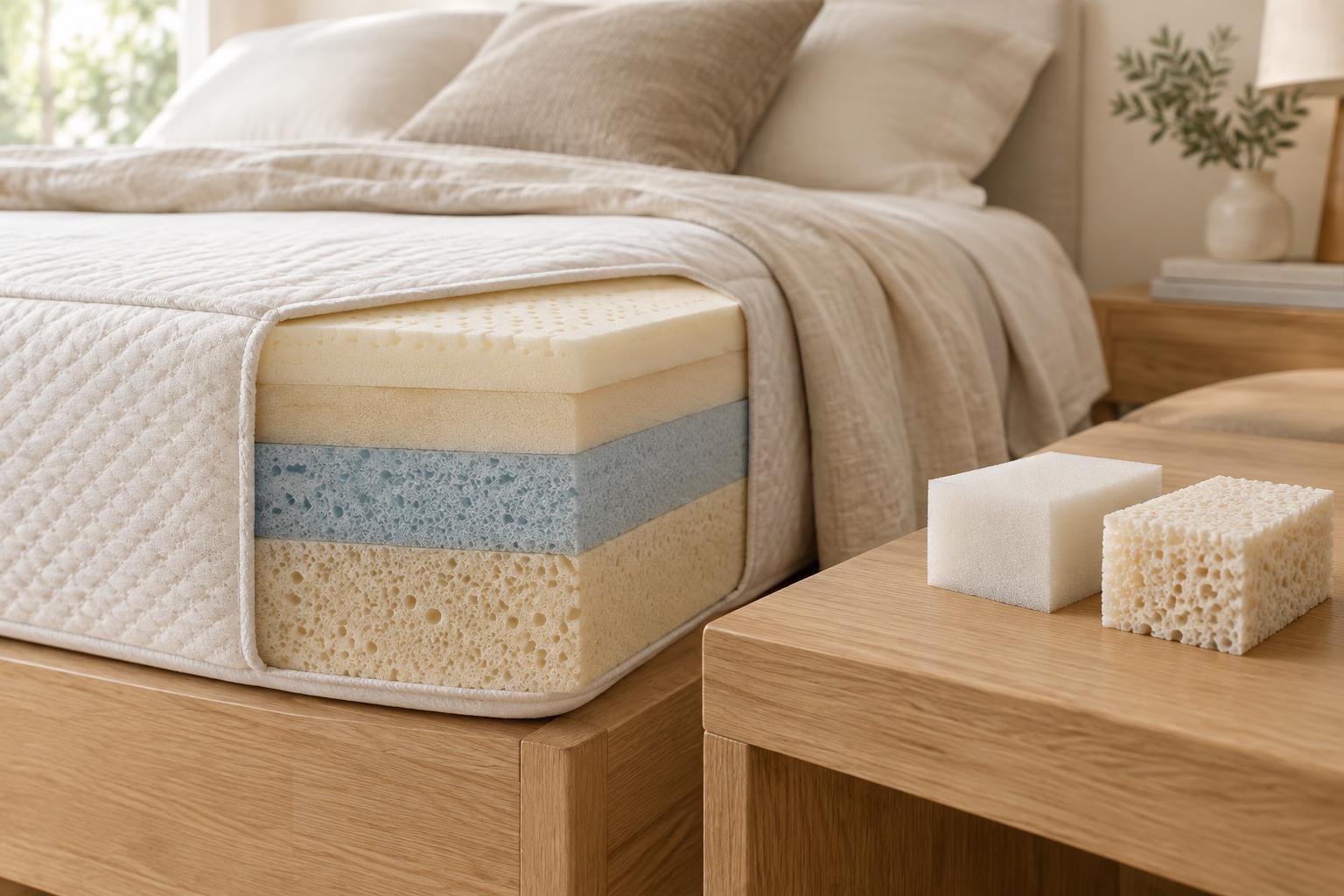
When comparing mattresses, start with a layer-by-layer description. Check the thickness and placement of the gel-infused foam, what lies directly below it, and whether the mattress uses a foam core or springs for deeper support. The upper layers have a strong effect on the first impression of softness and contouring; the underlying construction affects how far you sink and how easily you can change position.
Ask what information the seller provides about foam density and layer thickness. Density describes how much material is packed into a given volume; it is not a firmness rating. Firmness describes how resistant a surface feels under load, and labels such as “medium” are not necessarily consistent between brands. These details are more useful together than any one specification on its own.
Your sleeping position and preferences matter as well. Someone who wants gentle contouring may appreciate a memory foam comfort layer, while someone who prefers easier movement may favor a thinner layer or a more responsive surface. Edge feel, motion transfer and overall firmness come from the assembled mattress. They cannot be reliably inferred from the presence of gel.
How to assess cooling and comfort claims
Product descriptions often group several features under the word “cooling,” including gel, perforations, breathable covers and airflow channels. Try to separate those features. Perforations may provide paths for air to move, but the benefit depends on the surrounding layers and whether air can actually circulate. A cover may feel cool to the touch without changing the feel of the foam beneath it for long.
If you can try a mattress, spend enough time on it to notice more than its first-touch temperature. Pay attention to how closely it contours, whether turning over feels easy and whether its firmness suits you. A brief showroom visit still cannot reproduce a full night in your bedroom, so review the trial terms, return conditions and any fees before buying. Online descriptions can help narrow choices, but they are not a substitute for your own comfort preferences.
Be cautious about broad claims that a material will solve overheating or produce a particular health outcome. Experiences vary, and a mattress is only one part of the sleep environment. Comparing clearly stated construction details and practical purchase terms is more dependable than comparing cooling adjectives.
Caring for a gel-infused foam mattress
Treat gel-infused memory foam much like other foam mattress materials unless the manufacturer gives different instructions. Use a suitable base that supports the mattress evenly, and follow its guidance on rotation. Many all-foam mattresses are designed with a specific top and bottom, so flipping one may put the comfort layers in the wrong position.
A breathable protector can help guard against spills, though a thick or less breathable protector may change how the surface feels. For cleaning, follow the mattress care label, avoid saturating foam and allow any cleaned area to dry fully before replacing bedding. Routine care cannot correct a mattress that feels wrong for you, but it can help preserve the construction you chose.