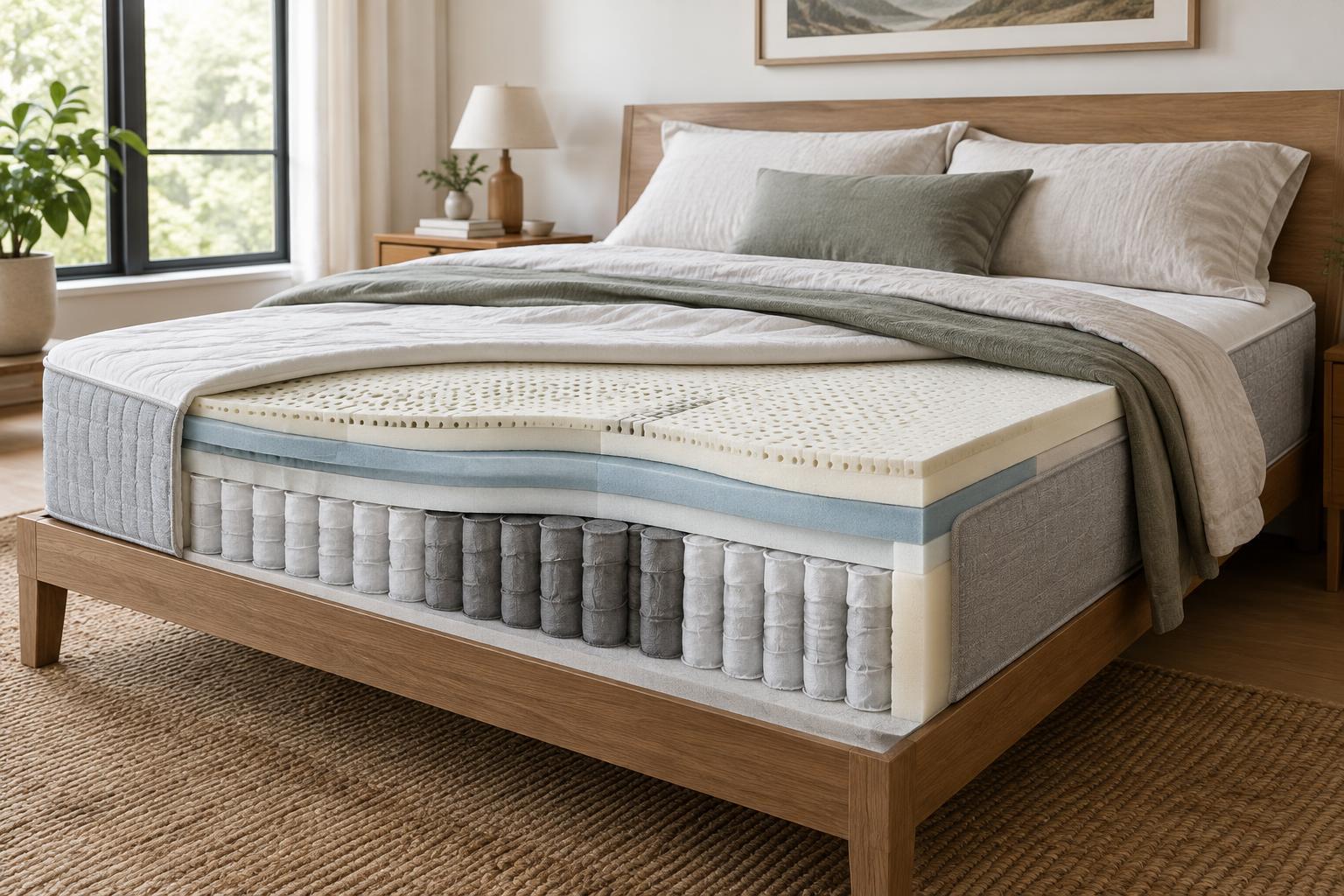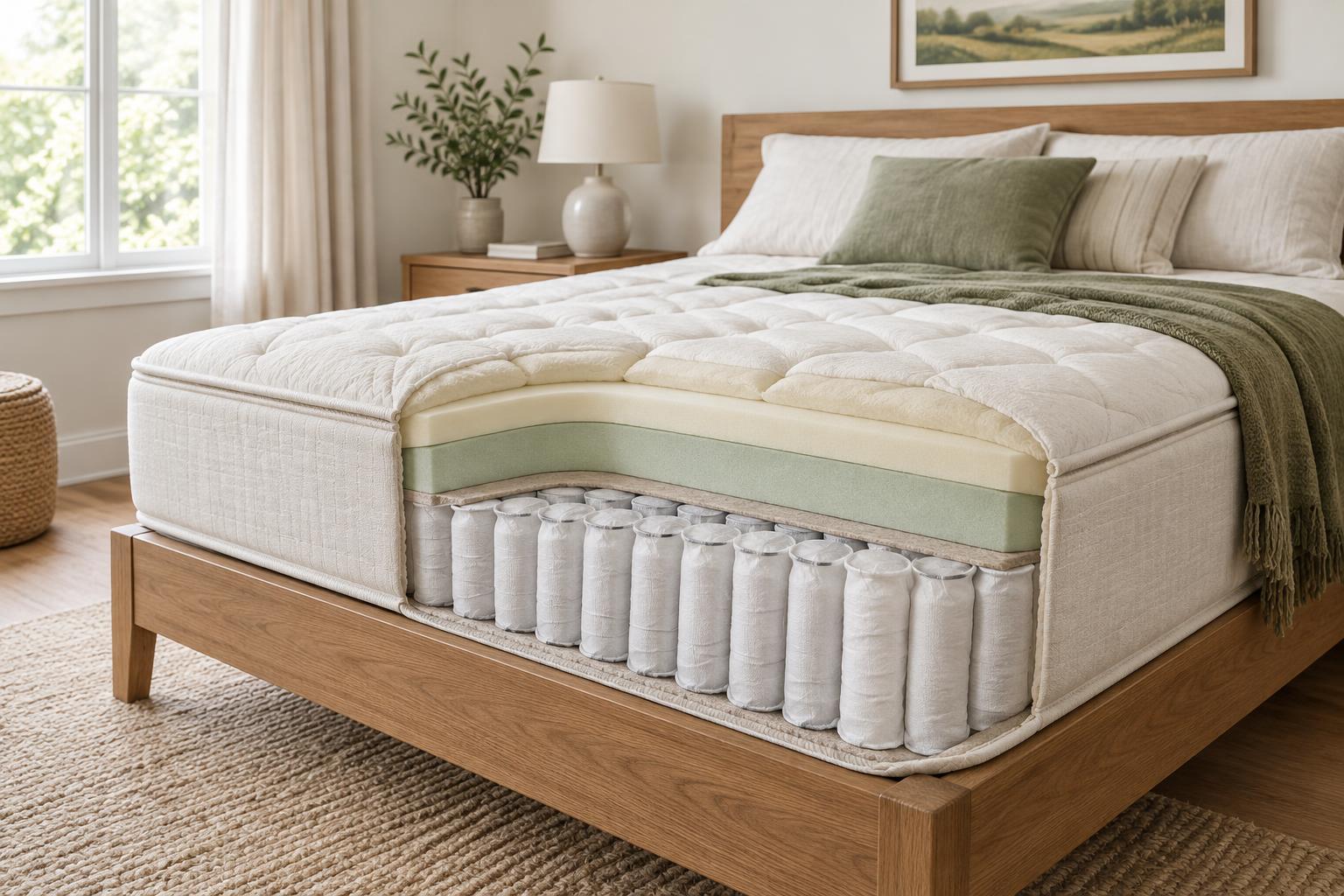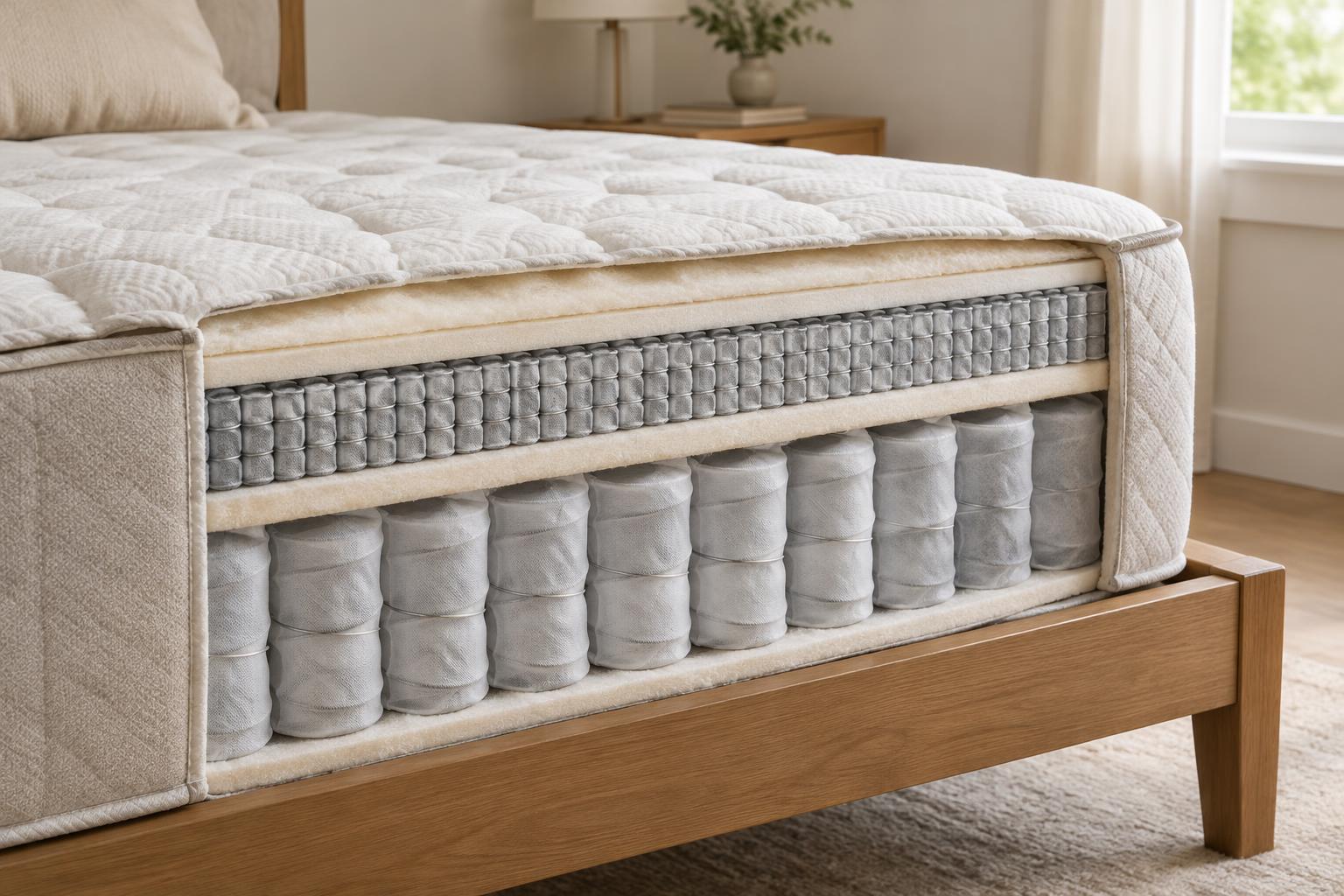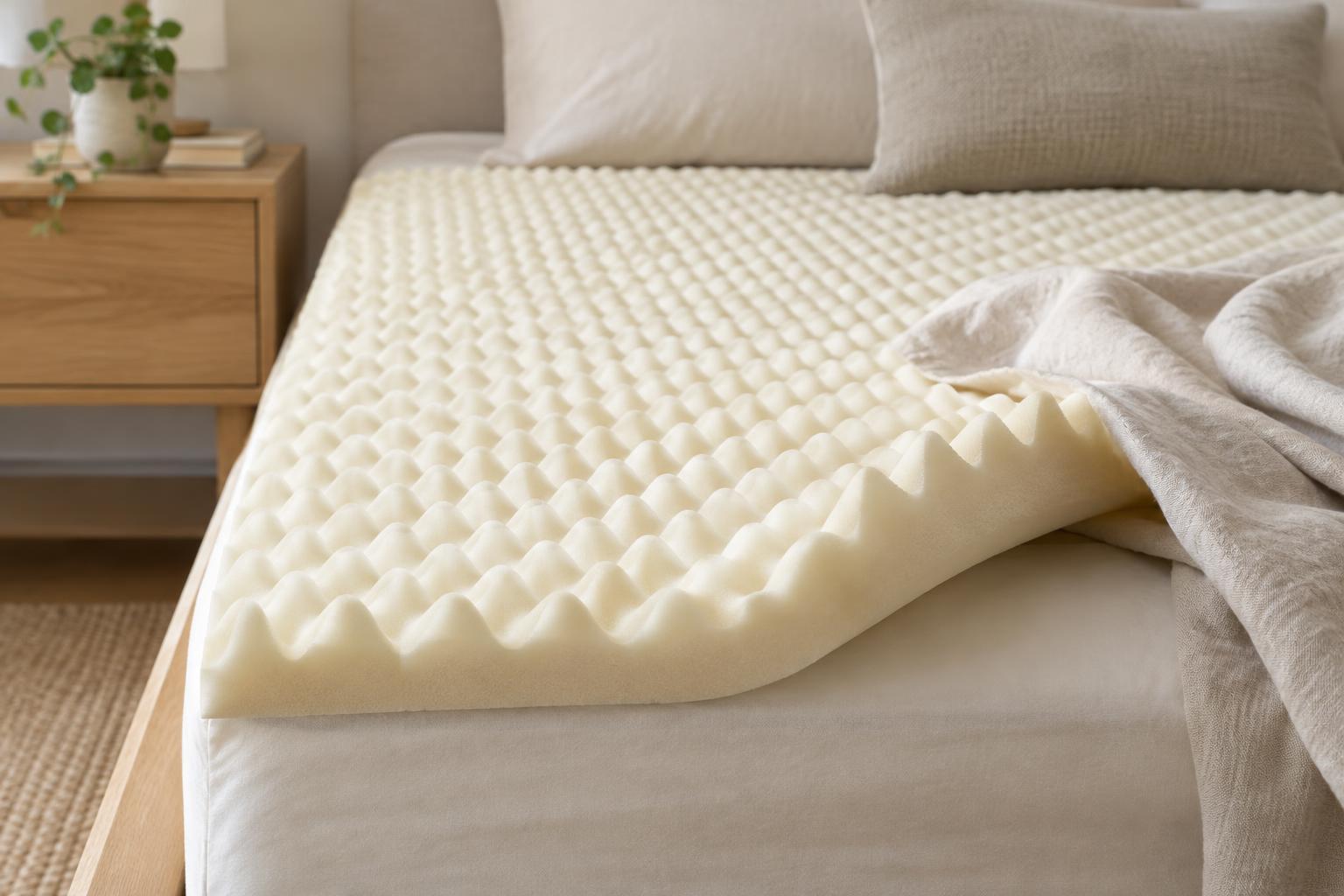
What is convoluted foam?
Convoluted foam is foam cut or molded into a repeating pattern of peaks and valleys, often called an egg-crate shape. It may appear in a mattress comfort layer, a transition layer or a separate topper. The pattern can face upward or sit beneath another material, so it is not always visible or directly noticeable when you lie down.
The shape is a construction feature, not a type of foam. A convoluted layer might be made from polyurethane foam, memory foam or latex, each of which can feel different. The foam’s formulation, firmness, thickness and position in the mattress all matter alongside the surface pattern. Seeing “egg-crate foam” on a product page therefore tells you less than a full description of the layer.
How the peaks and valleys change the feel
Compared with a flat piece of the same foam, a convoluted surface puts less material directly beneath the body at first contact. Its peaks can compress before the wider body of the layer does. This may make the surface feel softer or more yielding without requiring an entirely softer foam. The effect is usually easier to notice when the patterned side is near the sleeping surface; thick layers above it can reduce how much you feel.
The pattern can also change how a layer responds across its surface. Broad peaks, narrow peaks and deep cuts do not behave identically, and a mattress may use different patterns in different areas. Such zoning may be intended to vary the feel, but the pattern alone does not establish how supportive the finished mattress will be. Support depends on the complete construction, including the layers below the convoluted foam.
Does the shape improve airflow?
The valleys create open spaces between portions of the foam and whatever sits next to it. Depending on the mattress design, these spaces may give air more room to move than two tightly pressed, flat surfaces would. That is a plausible reason manufacturers use convoluted foam, but it is not a guarantee that a mattress will sleep cool.
A dense cover, a thick foam layer above the pattern or limited airflow through the rest of the bed can reduce the practical effect of those channels. Sheets, protectors, room conditions and the amount of body contact with the mattress also influence warmth. If temperature comfort is a priority, consider the whole bed rather than treating an egg-crate profile as proof of cooling performance.
What the pattern does not tell you about durability
A cut surface has less foam in its valleys, but that fact alone cannot predict how long a mattress will keep its feel. Durability also depends on the quality and density of the particular foam, how thick the layer is, how it is bonded or contained, and the wear placed on it. A soft layer close to the surface may show changes in feel sooner than a firmer layer deeper in the mattress, regardless of its shape.
When comparing products, look for a clear layer breakdown rather than relying on terms such as “high-density” or “premium” without specifications. If foam density is provided, compare it only with the same kind of foam: density does not directly tell you firmness, and figures for different foam types are not interchangeable. If specifications are missing, ask the seller what the convoluted layer is made of, how thick it is and where it sits.
How to evaluate a mattress or topper with convoluted foam
Start with the feel you need from the complete bed. A thin egg-crate topper may add some surface cushioning, but it is unlikely to correct a mattress that has lost its underlying support. In a new mattress, check the layers above and below the pattern and consider whether they match your preference for a more contouring or a more resilient surface. If you can try the bed, use your usual sleeping positions and allow enough time to notice whether you feel comfortably cushioned without sinking farther than you like.
For a separate topper, check its dimensions and the maker’s instructions about which side should face up. Keep it on a clean, even mattress and follow its care directions; foam layers generally should not be soaked unless the maker explicitly permits washing. Convoluted foam is best understood as one design choice that can alter initial softness and create spaces within a layer. The full construction remains the better guide to whether the bed will suit you.