What a phase-change material does
A phase-change material, or PCM, absorbs heat as it changes from a solid to a liquid. It releases that heat as it changes back to a solid. In a mattress cover, the material is usually contained in tiny capsules or incorporated into a coating or fiber, rather than left as a free-flowing liquid. The intended effect is to slow a rise in temperature near the sleeper when the cover warms.
This is heat storage, not active cooling. A PCM cover does not generate cold air or remove heat from the bedroom. Its behavior depends partly on the temperature range at which the material changes phase. If that range is not reached, little phase change may occur. If the material has already absorbed as much heat as it can under the conditions, it cannot keep taking up heat at the same rate.
Why the effect may change over the night
When you first get into bed, heat from your body begins moving into the sheets and mattress surface. If the PCM is at an appropriate starting temperature and close enough to that heat, it may absorb some of it while changing phase. That can moderate the surface’s temperature rise for a time. The amount of PCM, its placement in the cover, and the fabrics between it and your body all affect how noticeable that change might be.
The effect has a limit because a cover contains a finite amount of material. To be ready to absorb heat through phase change again, the PCM generally needs to cool enough to return toward its starting state. Whether that happens between uses depends on the room conditions and the cover’s construction. A warm bedroom, heavy bedding, or an insulating mattress layer may also affect how readily heat leaves the sleep surface. A PCM cover is therefore better understood as a temperature-buffering feature than as an all-night cooling system.
PCM is only one part of sleep-surface comfort
Temperature and moisture are related, but they are not the same problem. PCM manages heat through a material change; it does not automatically make a cover more breathable or move perspiration away from the body. The cover fabric, any waterproof protector, sheets, comforter, and mattress layers all influence how warm or damp the bed feels. A thick or poorly ventilated layer between you and the PCM may reduce how directly you feel its effect.
Other cover features can create a cool sensation for different reasons. A smooth fabric may feel cool on first contact, while an airy weave can help heat and moisture move through bedding. Those sensations do not, by themselves, show that a product contains effective PCM. Likewise, a PCM label does not tell you whether the complete mattress will feel comfortable in your room. Firmness, pressure relief, and support are separate shopping questions; a cover treatment cannot substitute for a mattress that otherwise suits your preferences.
How to evaluate a PCM mattress cover
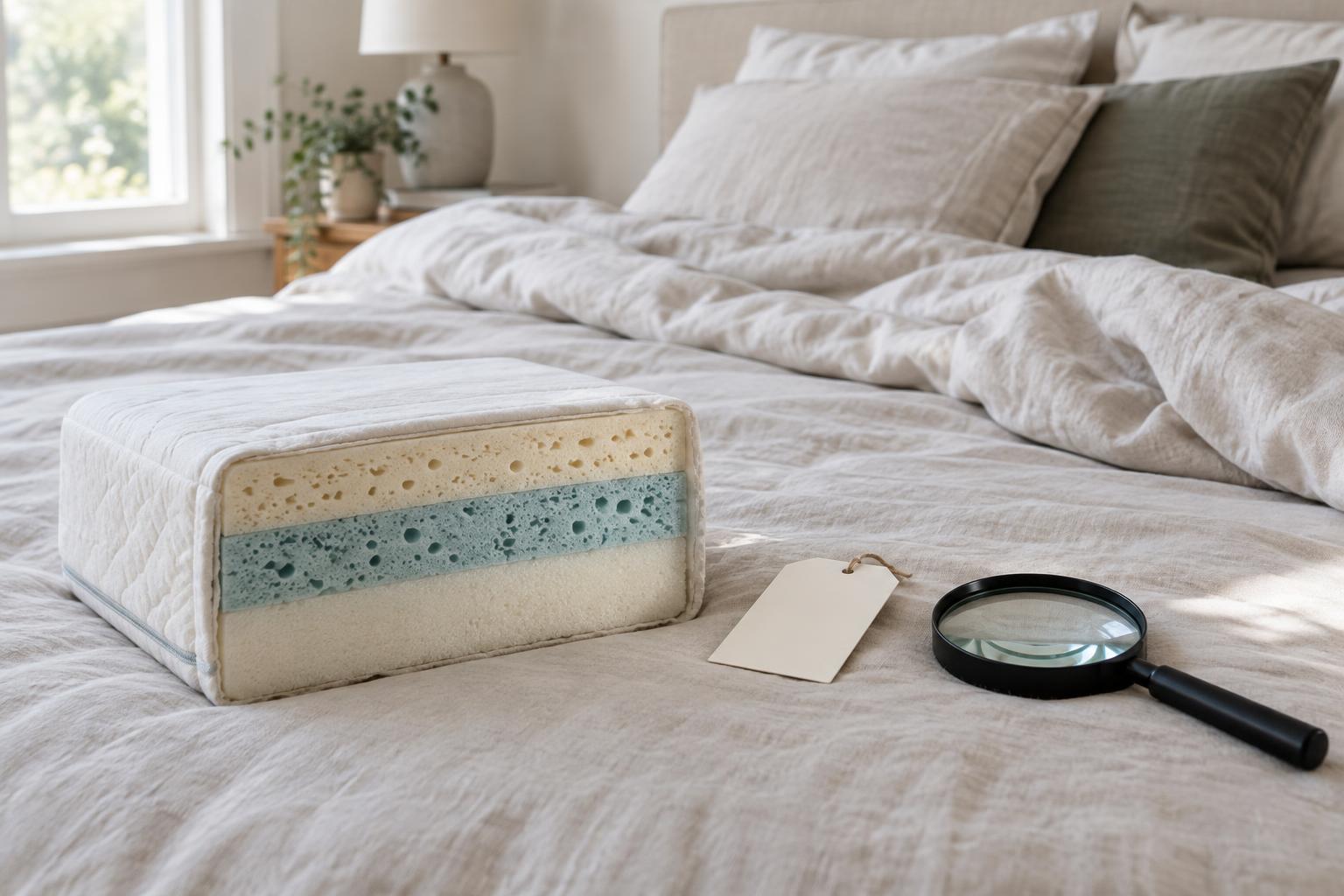
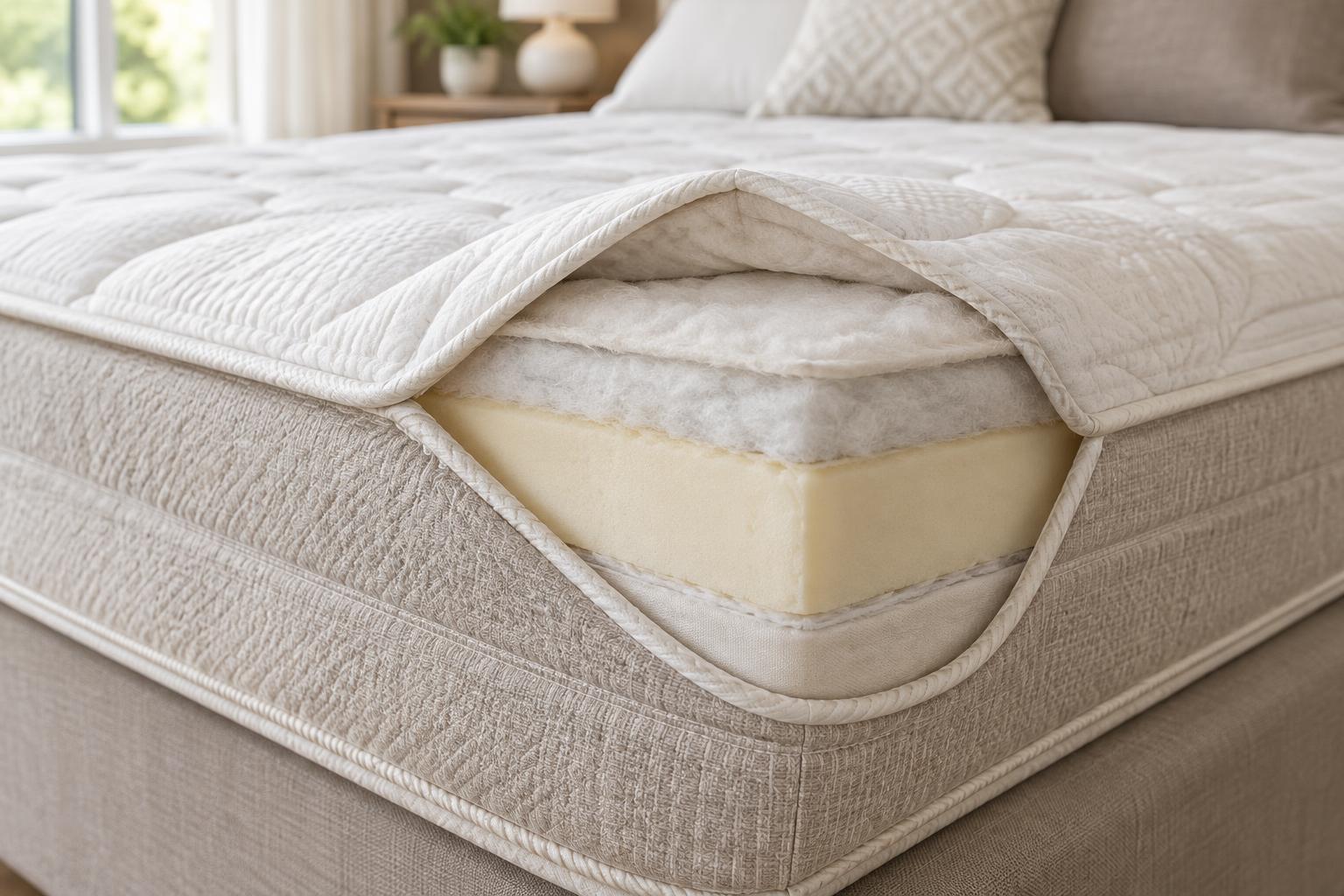
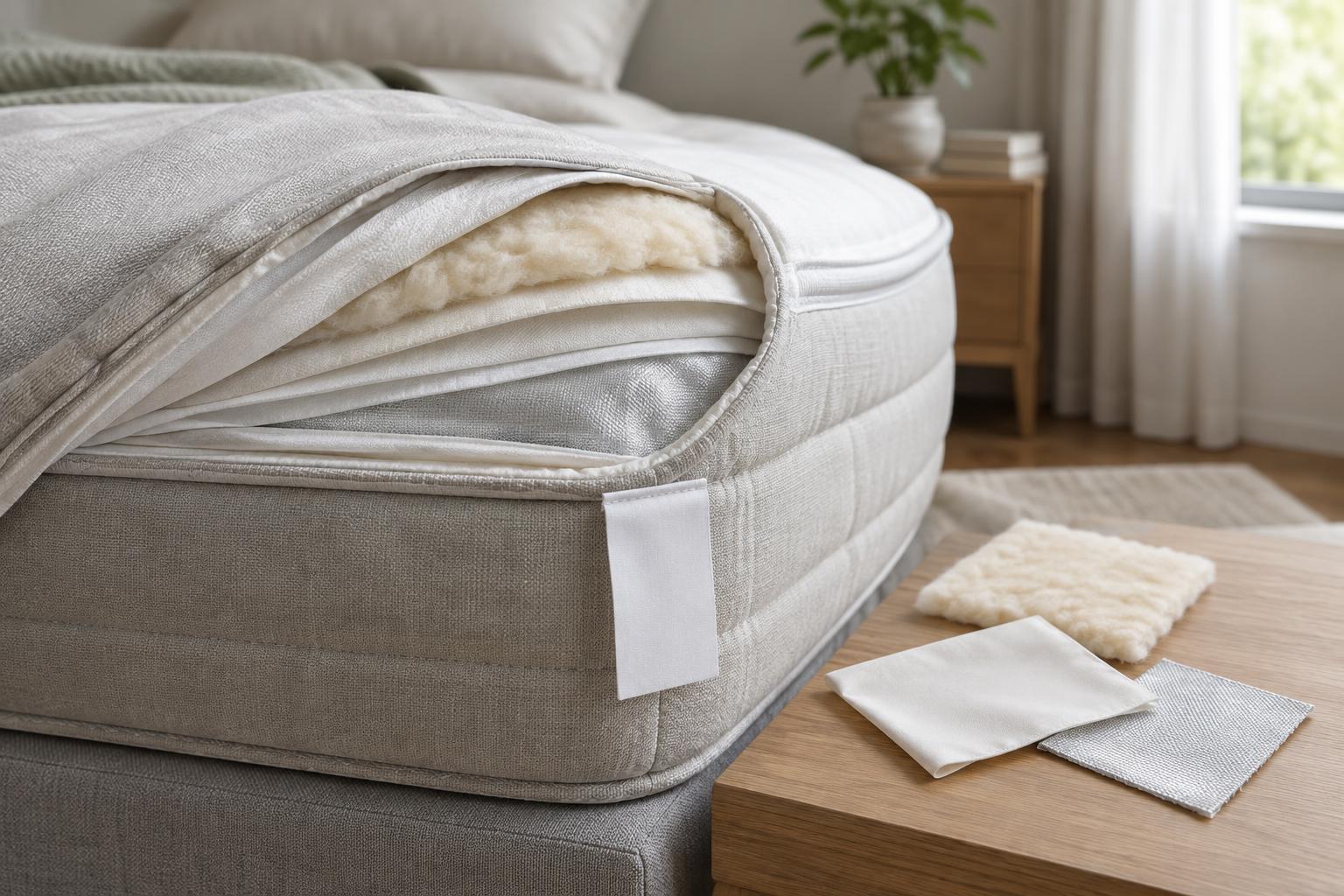
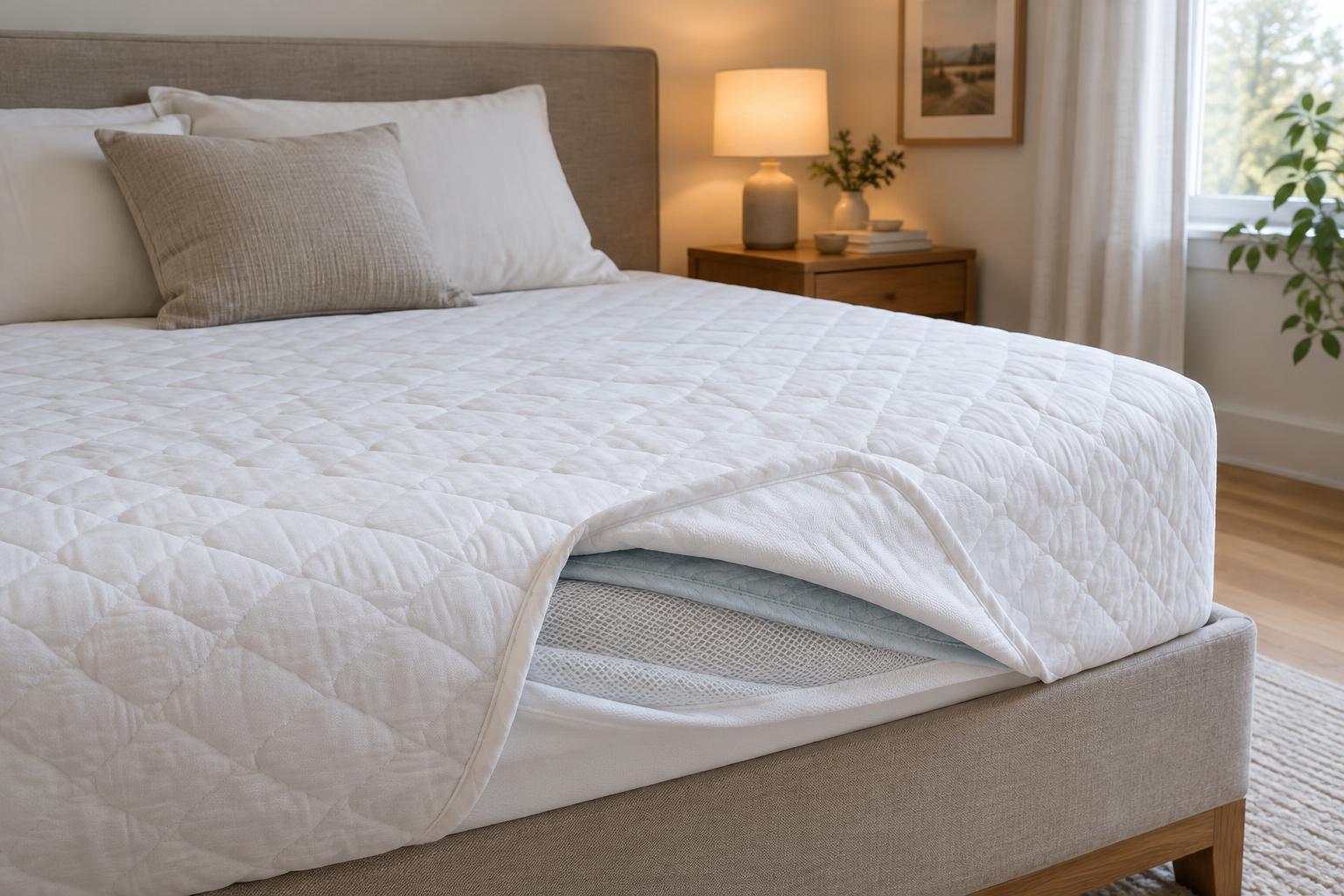
Start by finding out where the PCM is used. A treatment on the top panel is different from material distributed throughout a cover, and a removable protector is different from a cover sewn onto the mattress. Look for a clear description of the cover fabric, the PCM’s placement, and whether sheets or an additional protector are recommended. A product description that says only “cooling” gives you little basis for judging the feature.
Treat temperature claims with care. Information about a material’s phase-change temperature or heat-storage capacity can help explain its design, but it does not establish how a finished bed will feel to every sleeper. If a brand offers performance comparisons, check what was compared and under what conditions. An editorial description of materials is not a hands-on test, and neither can guarantee your experience. When possible, weigh the PCM feature alongside the mattress’s overall construction, return terms, and care requirements rather than choosing on a cooling label alone.
Care and realistic expectations
Follow the care label for the specific cover or protector. Some mattress covers are not meant to be removed, even if they have a zipper; others may have washing or drying limits. Avoid assuming that a PCM treatment will tolerate heat, bleach, or vigorous cleaning simply because the surrounding fabric does. A washable sheet or protector can help keep the mattress surface clean, though adding layers may change how much of the PCM effect you notice.
For a warmer-than-desired bed, consider the whole setup before relying on one feature. Lighter bedding, an appropriate room temperature, and layers that allow moisture to move may matter as much as the cover. A PCM cover can be a useful preference to consider if you like the idea of a surface that temporarily buffers heat. Its practical value, however, depends on the full bed, the room, and your expectations of what a passive material can do.