Two foams with a shared starting point
Memory foam and conventional polyfoam are both forms of polyurethane foam. Manufacturers can change their properties through formulation and production, so neither name describes one fixed level of softness or quality. The useful distinction is how the foam behaves under weight and how quickly it returns to shape.
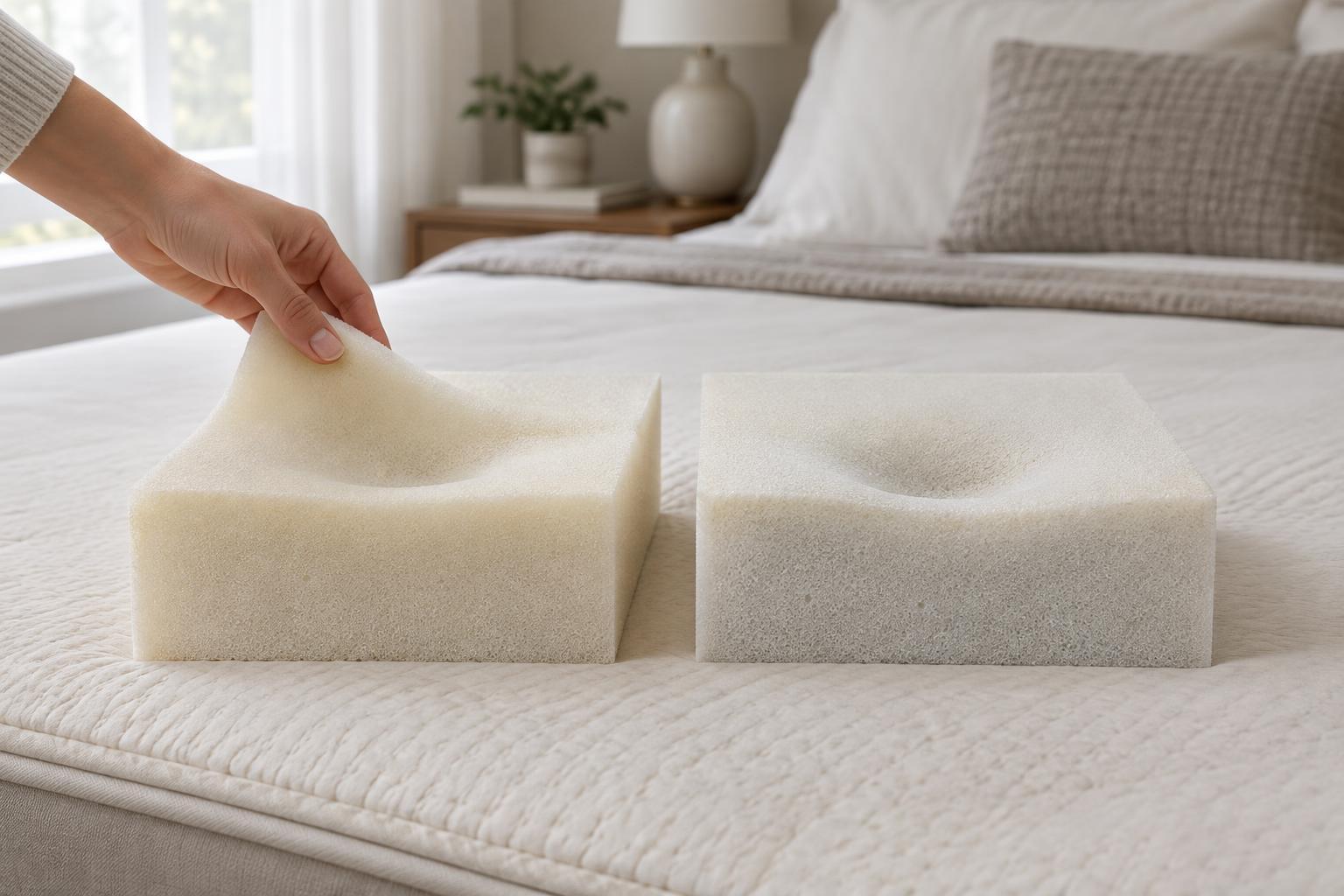
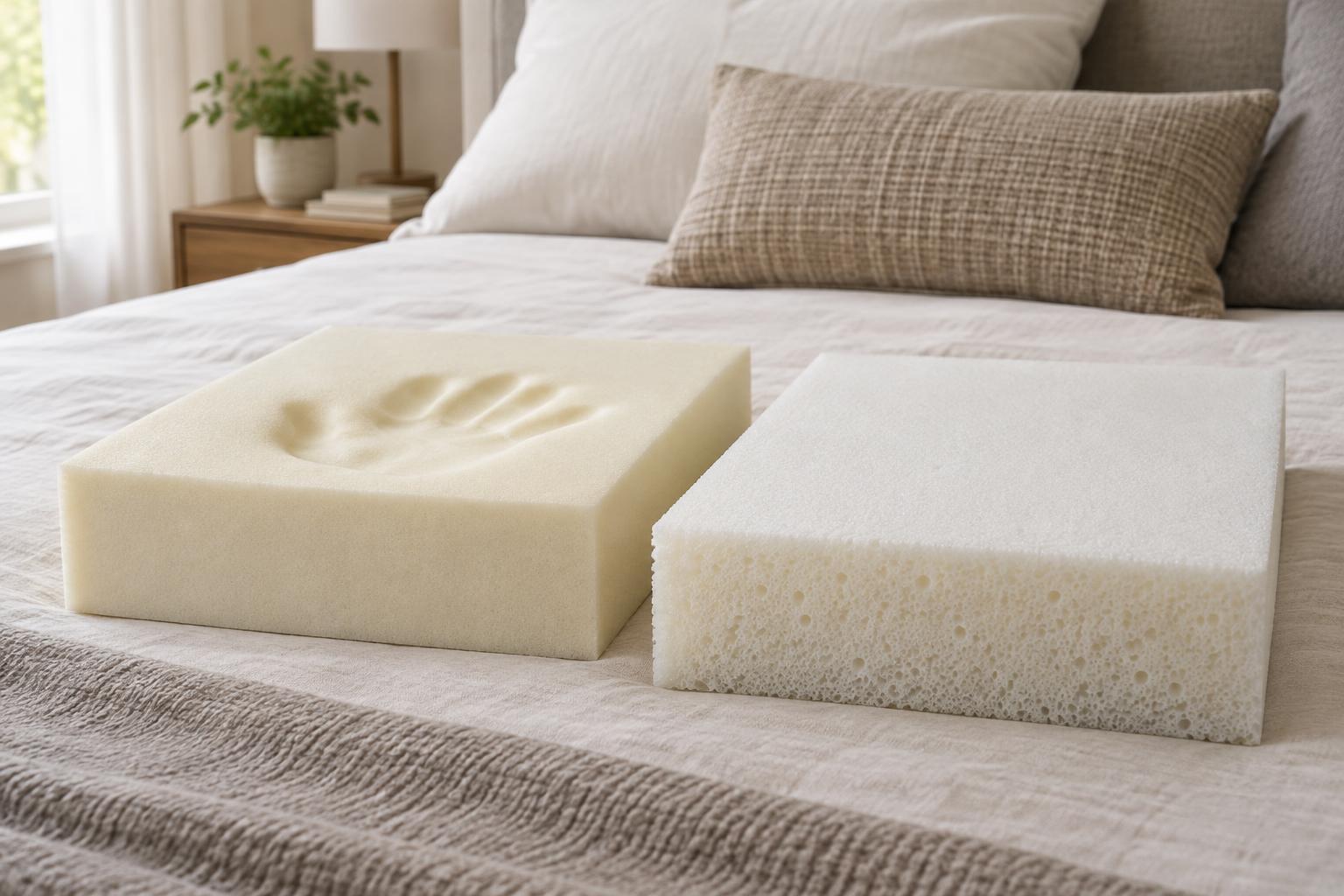
Conventional polyfoam generally compresses and rebounds promptly. Memory foam is formulated to respond more slowly, allowing it to conform around the body and retain an impression briefly after pressure is removed. These are tendencies, not strict rules: a soft polyfoam can cushion deeply, while a firmer or faster-responding memory foam may feel less enveloping than expected.
What their structure means in practice
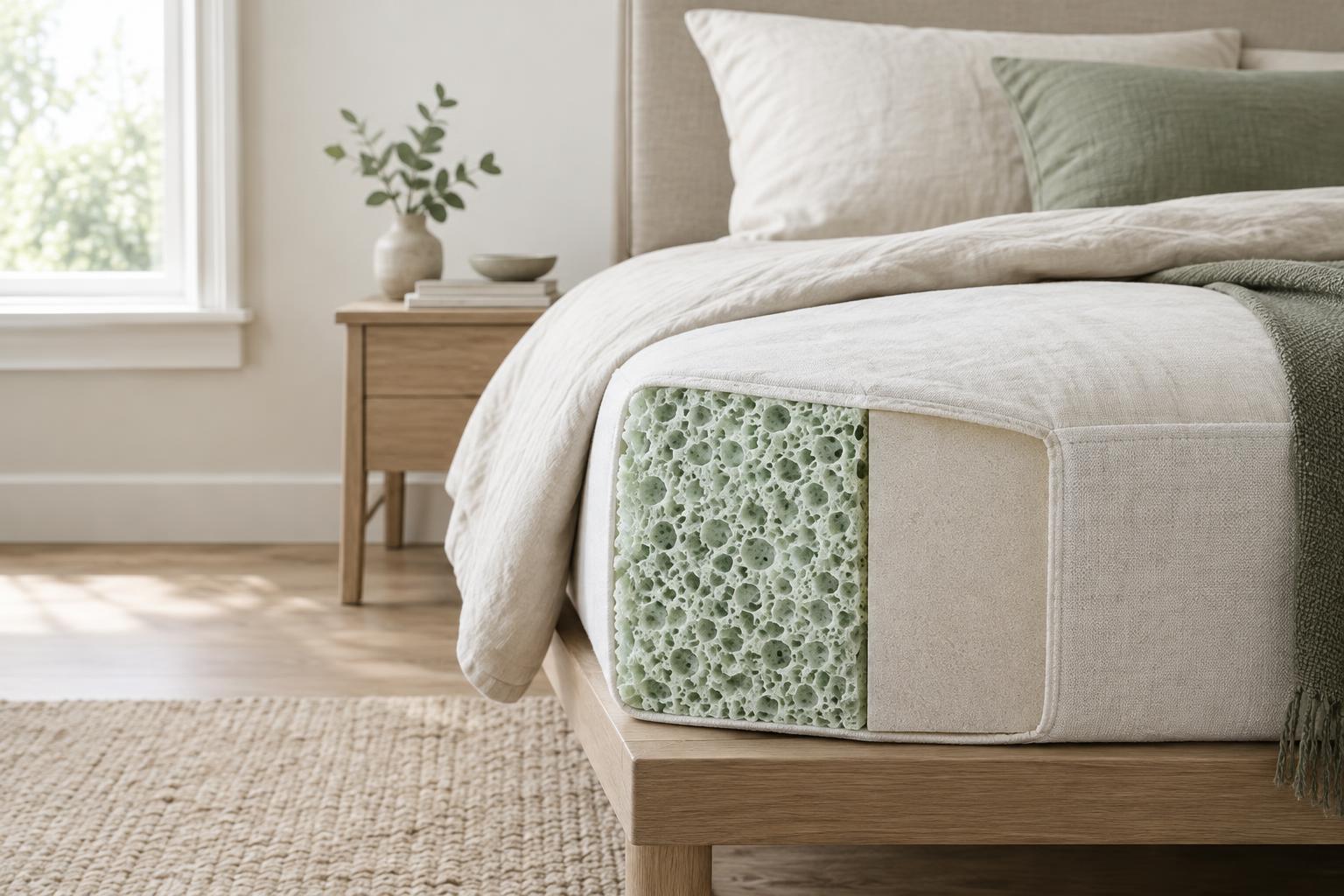
Both materials contain networks of small cells that compress when loaded. Their cell structure, density and formulation affect airflow, firmness and resilience, but a label such as “open-cell” does not tell the whole story. Two foams described the same way may still feel and perform differently.
Memory foam’s viscoelastic behavior combines cushioning with a delayed response. It often softens as it warms, though the degree of temperature sensitivity varies by product. Conventional polyfoam is usually more immediately responsive and may offer a buoyant feel instead of the gradual settling associated with memory foam. Neither construction is automatically cooler: covers, foam thickness, airflow and the rest of the mattress also shape how warm it feels.
How they feel when you lie down and move
Memory foam can spread pressure across a broader contact area as it conforms to curves such as shoulders and hips. Some people appreciate that close-fitting feel; others dislike the sensation of sinking in or waiting for the surface to catch up when they change position. A thick, soft memory-foam layer will usually make that effect more noticeable than a thin layer over a firmer core.
Conventional polyfoam tends to push back sooner. Depending on its firmness and thickness, it can feel gently cushioned or quite supportive. Its quicker rebound may make turning over feel easier, while a firm version may not contour as closely at prominent pressure points. These differences are best understood as feel preferences, not guarantees of better sleep or relief from discomfort.
Both types can reduce the transfer of movement across a mattress, but results depend on the full construction. A slow-response surface may absorb motion especially well, while a responsive polyfoam layer can still perform differently depending on what sits beneath it.
Where each foam appears in a mattress
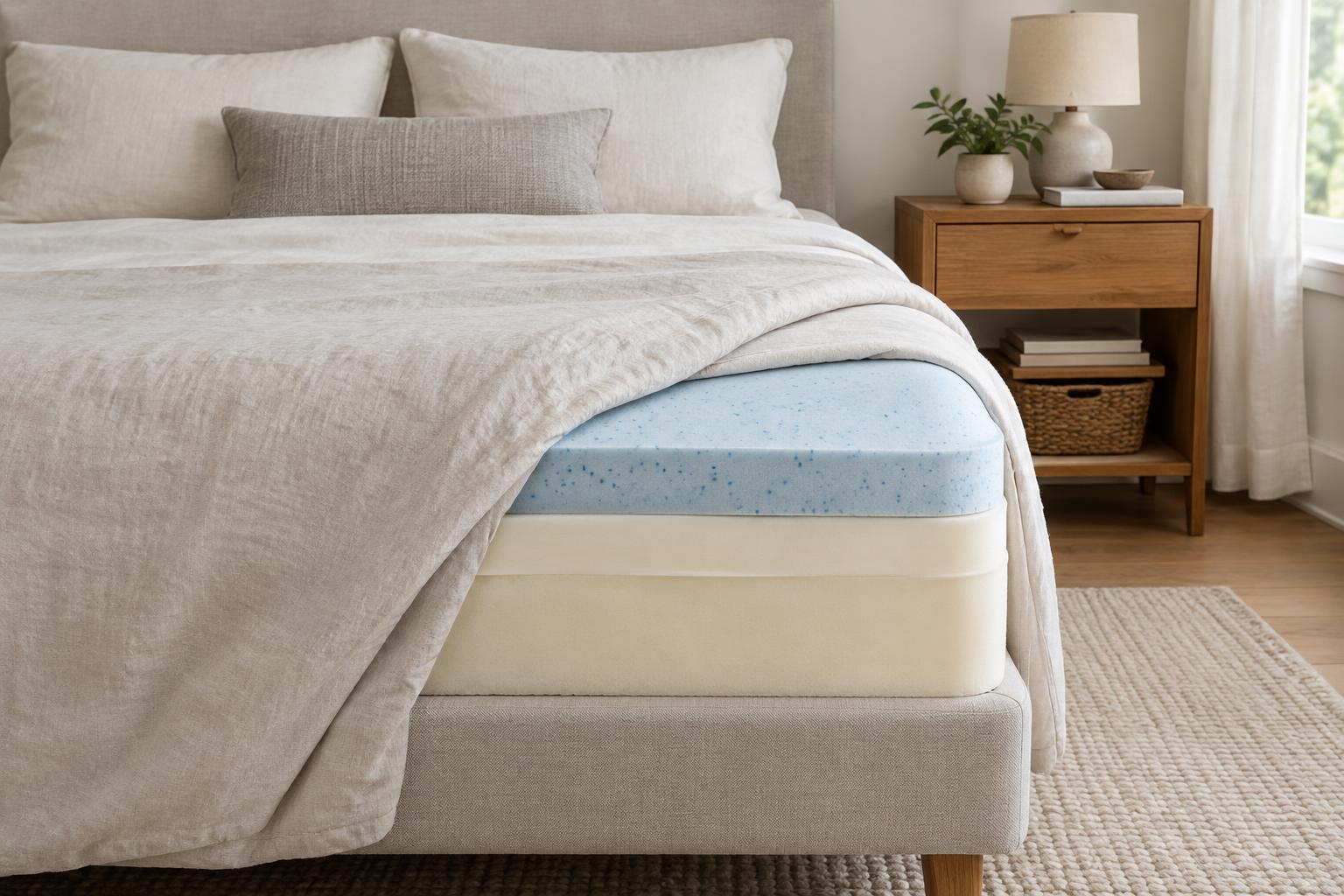
Memory foam is commonly used in comfort layers near the sleeping surface, where its contouring is easiest to notice. Conventional polyfoam can also serve as a comfort layer, or it can form a firmer support core beneath softer materials. A mattress may contain both: for example, memory foam on top for a slower, closer feel and firmer polyfoam below to limit how far the body sinks.
The layer arrangement matters as much as the foam names. Thickness and firmness determine how much of a material you actually feel. A thin memory-foam layer may have only a modest effect on a firm mattress; several inches of soft foam can dominate the feel. Reading the layer description is more useful than relying on a single label on the product page.
What to check before choosing
Ask about the type, thickness and density of each foam layer, along with the mattress’s firmness and return policy. Density describes how much material is present in a given volume; it is not a firmness rating. It can offer context for durability, but density figures for memory foam and conventional polyfoam should not be treated as directly interchangeable quality scores. Construction and daily use also affect how a mattress holds up.
If you can try a mattress, spend enough time in your usual sleeping position to notice whether you feel comfortably supported and whether changing position takes effort. If shopping online, look for clear layer specifications and return terms that give you a reasonable chance to judge the feel at home. This comparison describes general material behavior, not results from hands-on testing of particular mattresses. The better choice is the construction whose overall feel suits you, rather than one foam name considered on its own.