What are microcoils?
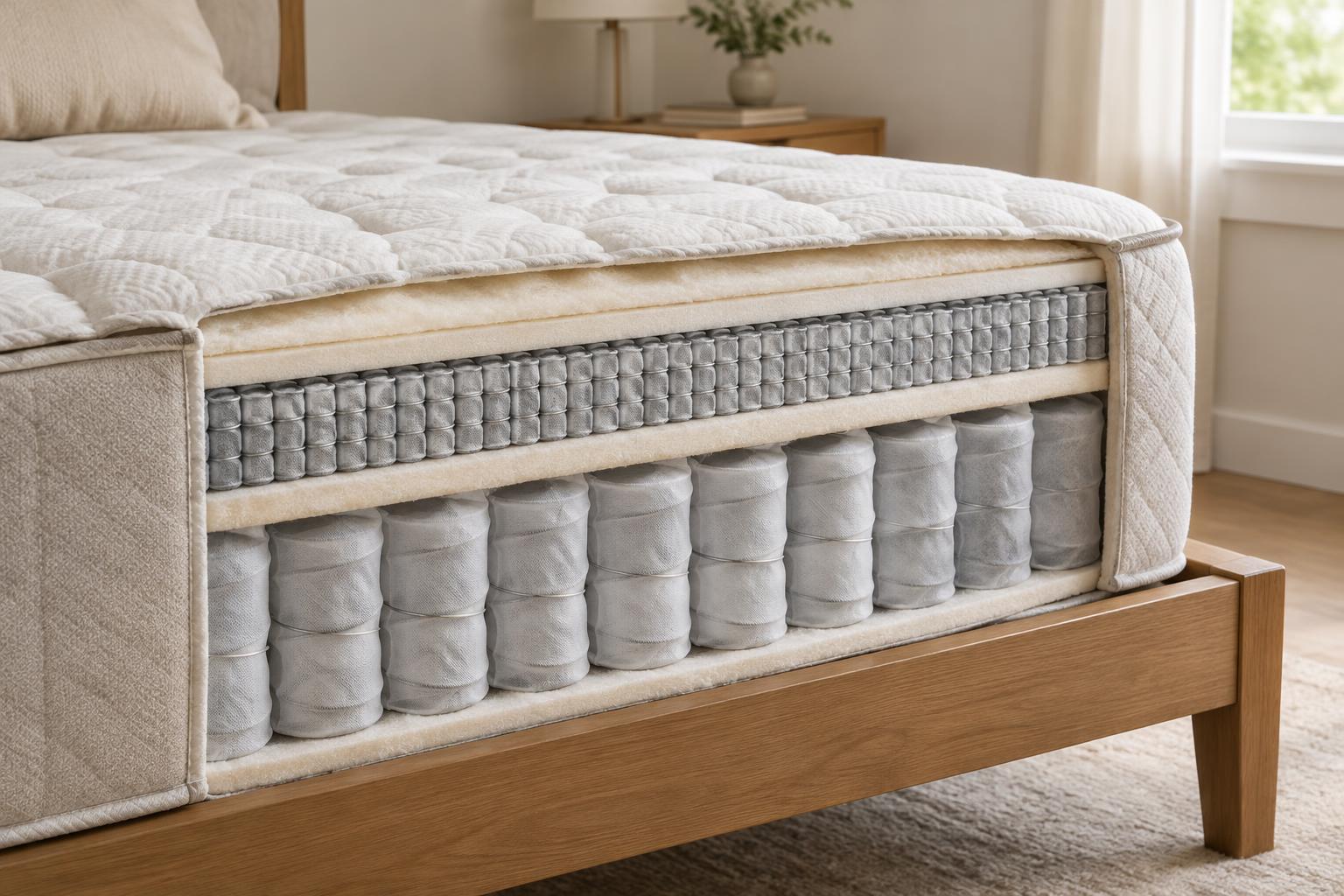
Microcoils are small metal springs used within a mattress, usually above its main support core. Many are individually wrapped in fabric pockets, allowing neighboring coils to move somewhat independently. They differ from the larger pocketed coils that often form the core of a hybrid mattress: microcoils generally belong to the upper comfort or transition layers, where they help shape how the surface responds to weight.
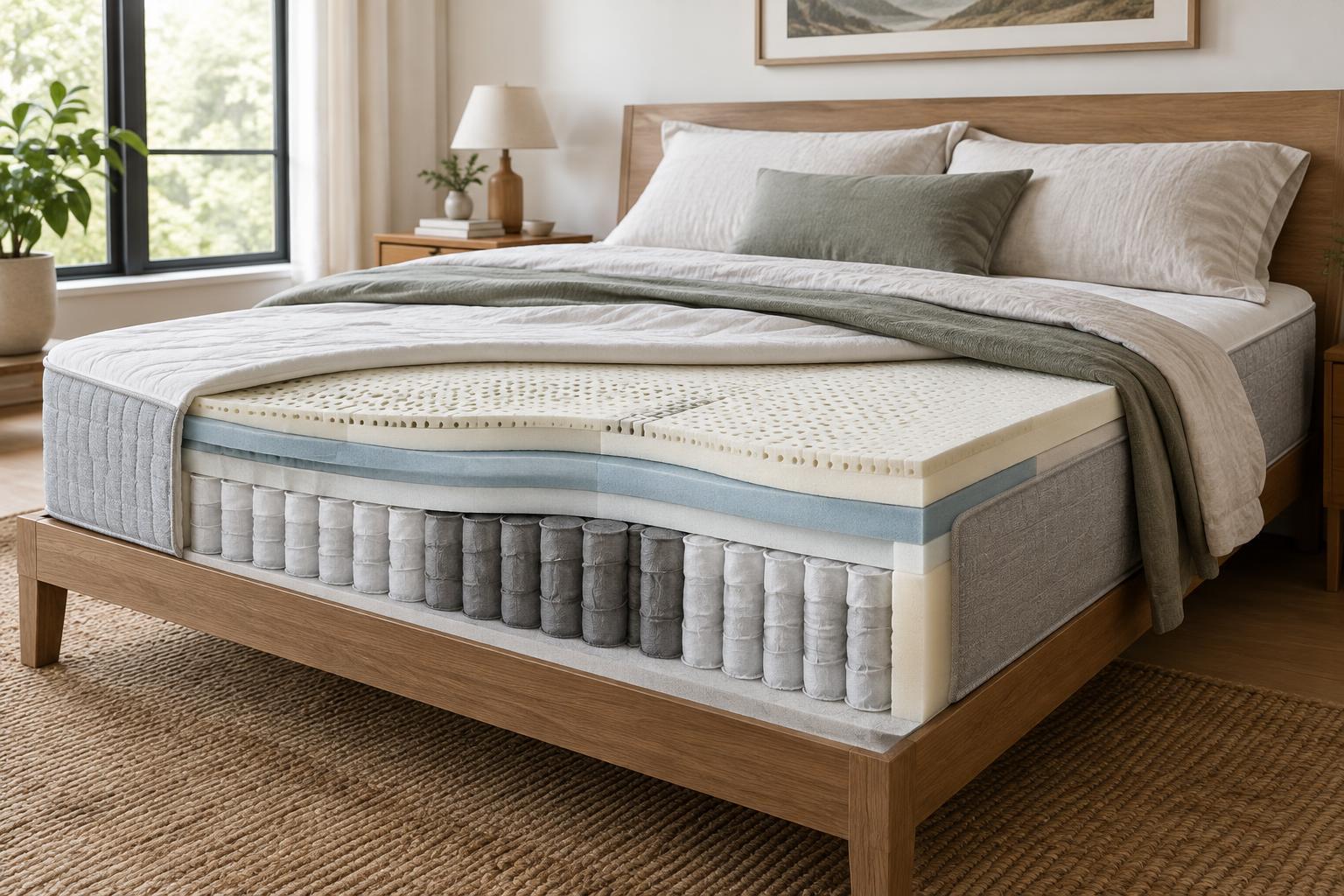
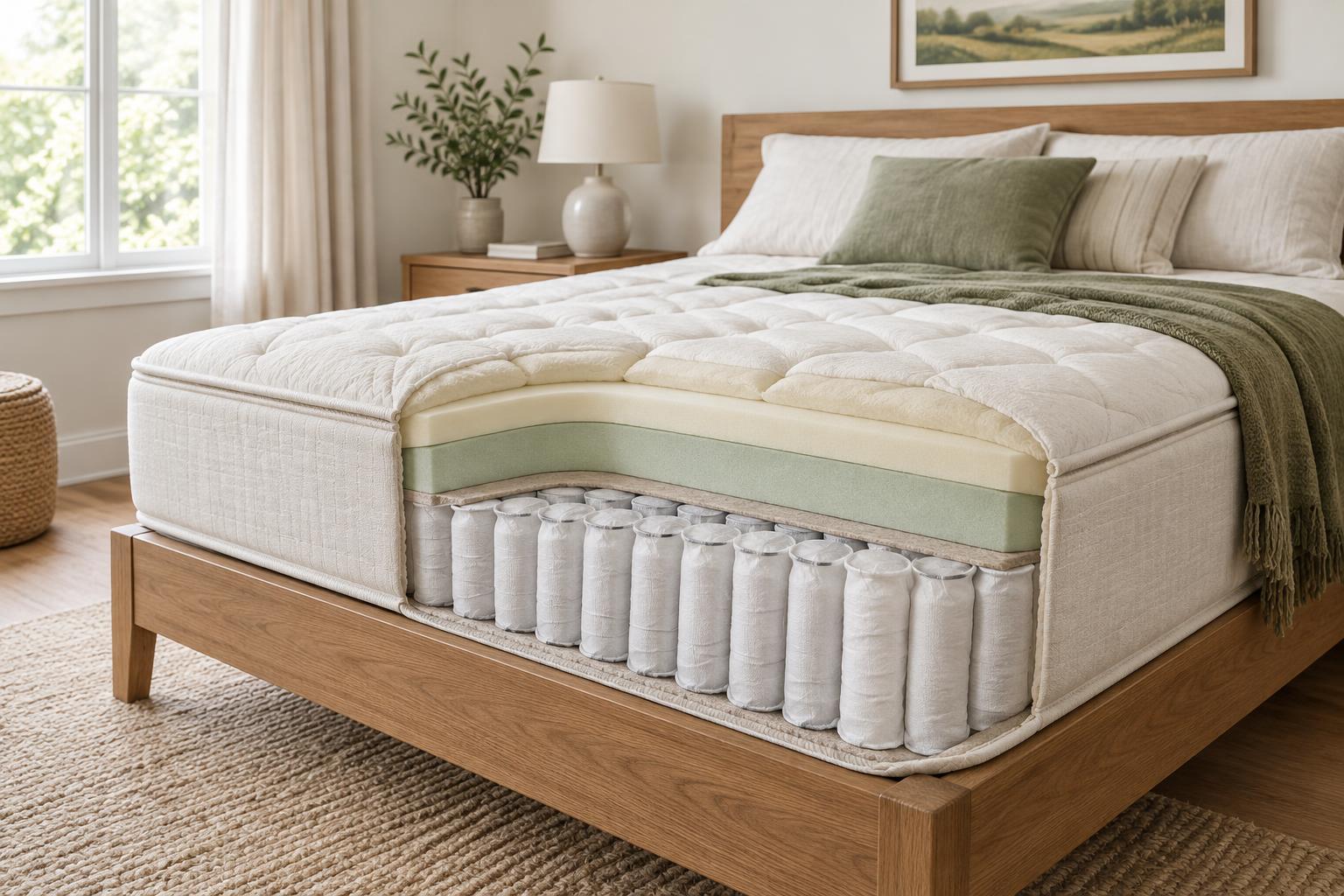
A microcoil layer is not a mattress design on its own. Manufacturers may pair it with foam, latex, fiber padding, a quilted cover or a larger coil unit. Those surrounding materials matter as much as the microcoils. A thick, soft layer above them can make their response less noticeable, while a thinner covering may let sleepers feel more of their springiness.
How the layer is constructed
A typical microcoil layer consists of rows of short springs held in a fabric assembly. Its feel depends partly on coil height, wire thickness, spring shape and how the coils are arranged. The materials immediately above and below the layer also affect how far the springs compress. Product descriptions do not always provide enough detail to predict the result from a coil count or a label alone.
Some designs use microcoils across the full sleeping surface; others change their arrangement or firmness in particular areas. A zoned design is intended to provide different responses under different parts of the body, but the benefit will depend on where a person lies and how the complete mattress is built. Likewise, more coils do not automatically mean more comfort or better durability. Coil size, materials and the rest of the construction must be considered together.
Why placement matters
Placed near the surface, microcoils can add a buoyant response beneath the cover and padding. Compared with a thick slab of slowly responding foam, this arrangement may make it easier to shift position. It does not guarantee a firm feel: plush materials above the coils can still create substantial cushioning.
Placed deeper in the mattress, microcoils often serve as a transition between softer comfort materials and a firmer support core. There, they may make the change between layers feel more gradual. Their effect can be harder to identify from a brief description because the sleeper’s weight passes through several materials before reaching them. A mattress may also use more than one microcoil layer, with each layer playing a different role.
Neither placement makes microcoils a substitute for an appropriate support core. The core, mattress dimensions and overall firmness remain important when judging whether a bed suits a sleeper. If a listing simply says “coil-on-coil,” check whether it describes microcoils above a main coil unit or two layers of larger springs.
Microcoils compared with foam and latex layers
Foam and latex can perform the same general job as a microcoil layer: cushioning the body or bridging the comfort surface and support core. The materials respond differently, however. Microcoils compress mechanically and tend to rebound promptly. Foam feel varies widely by type and formulation; some foams contour slowly, while others recover quickly. Latex is often responsive too, but it forms a continuous layer rather than a field of separate springs.
Air can move through the spaces around microcoils, but that does not establish how cool an entire mattress will sleep. Covers, foam layers, bedding and room conditions also influence warmth. Similarly, a microcoil layer is not proof that a mattress will isolate motion well or poorly. Its location and the materials around it affect how much movement reaches another sleeper.
What to check before buying
Start with a layer-by-layer description. Look for the microcoil layer’s position and thickness, what sits above it, and whether the main support core is foam or coils. If the information is missing, ask the seller for a construction diagram. Treat coil count as one specification rather than a quality score; it is most useful when comparing designs with similar sizes and layouts.
When trying a mattress, pay attention to the complete feel rather than attempting to identify one component. Spend time in your usual sleeping positions, notice whether changing position feels easy, and consider whether the surface provides enough cushioning without feeling unstable to you. For an online purchase, review the trial terms, return process and warranty coverage before ordering. Microcoils can be a useful design choice, but placement and surrounding layers determine what they contribute to the finished mattress.