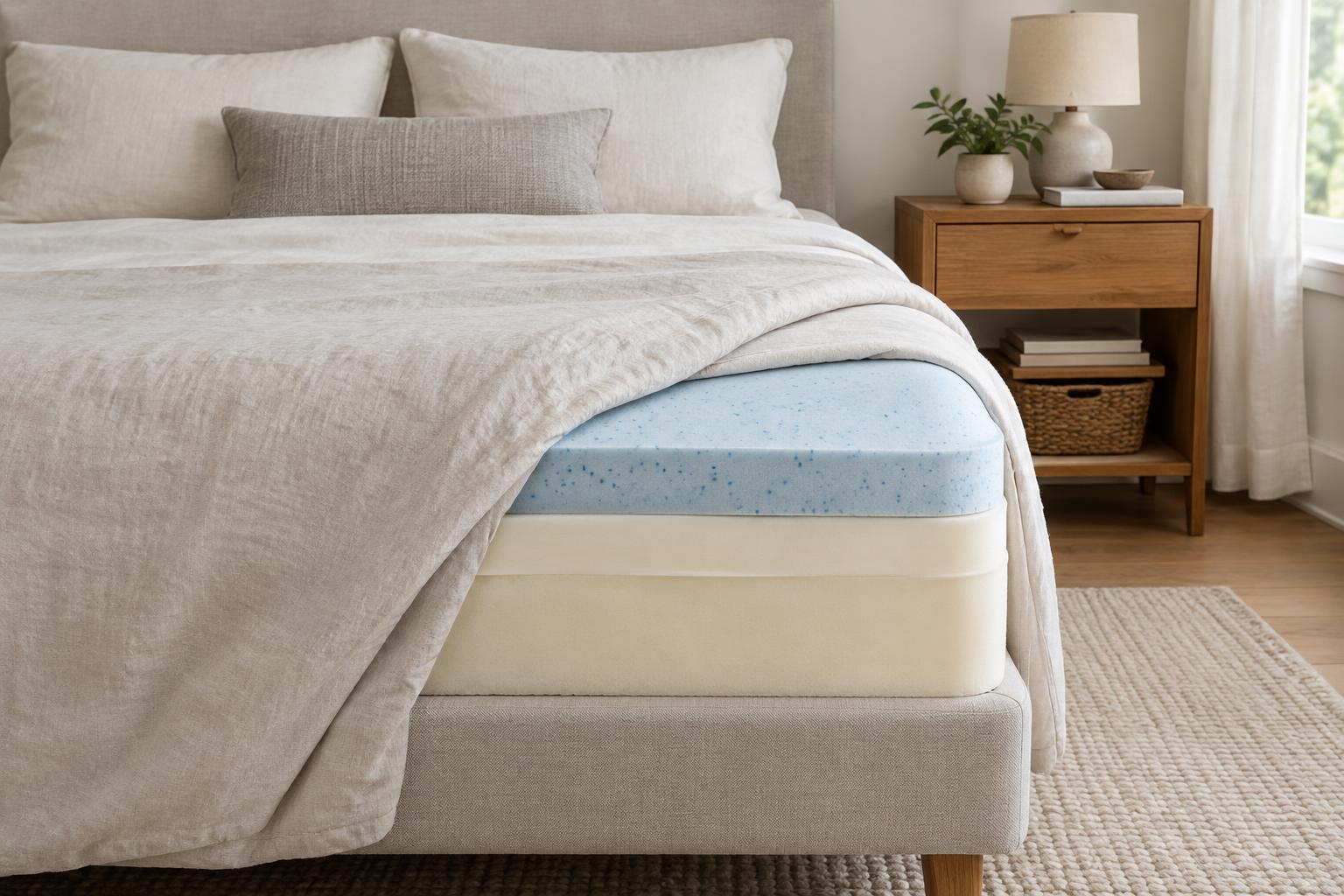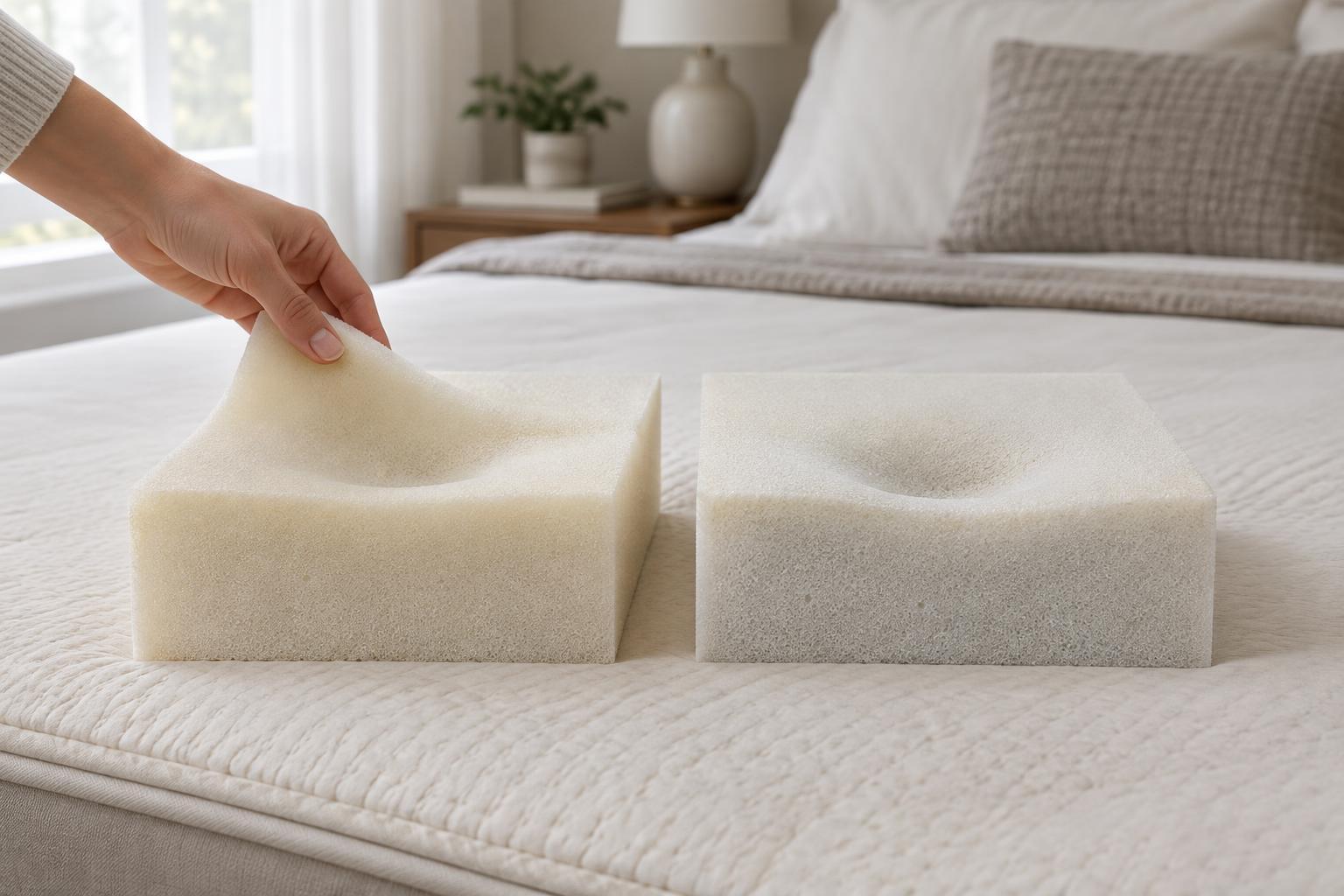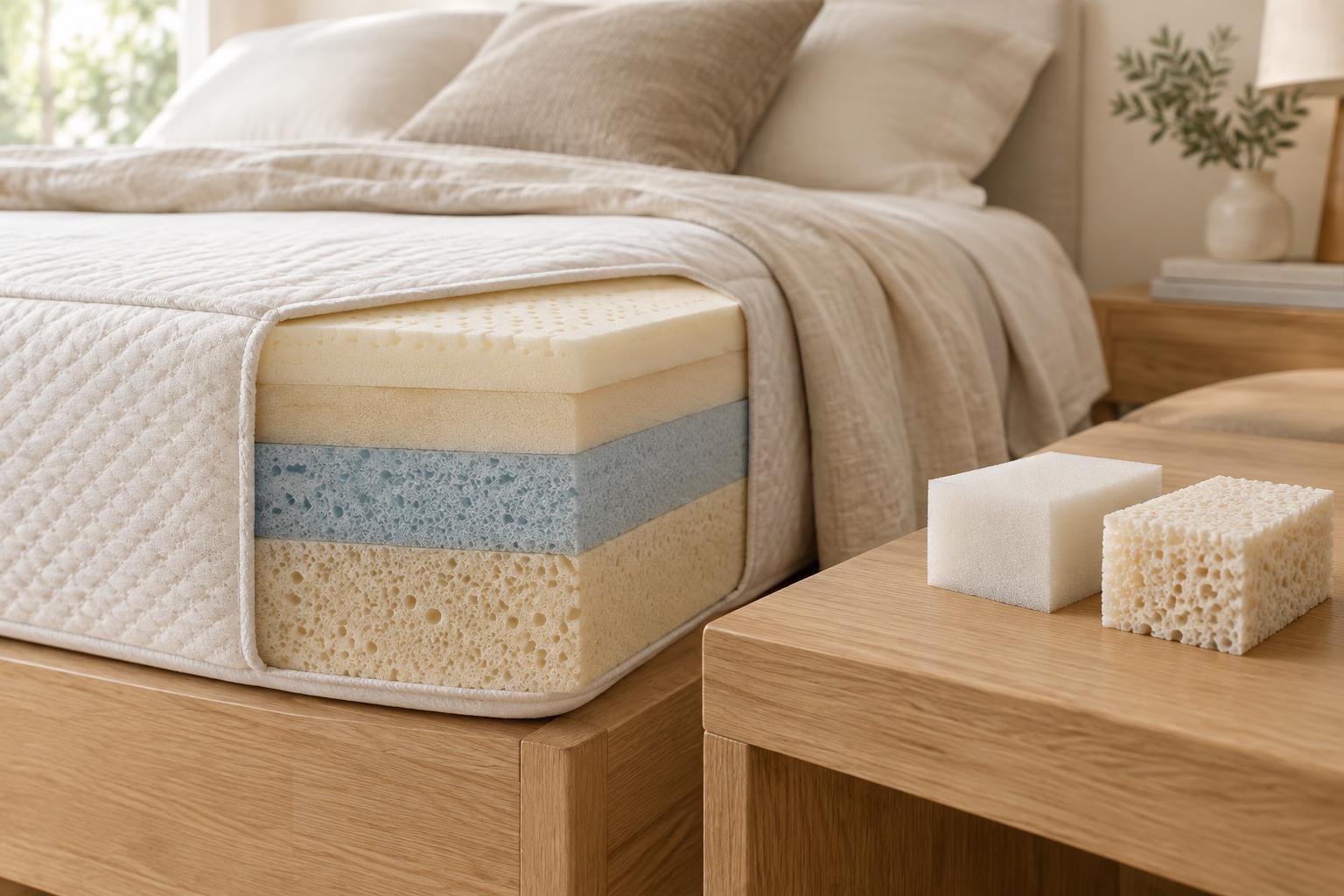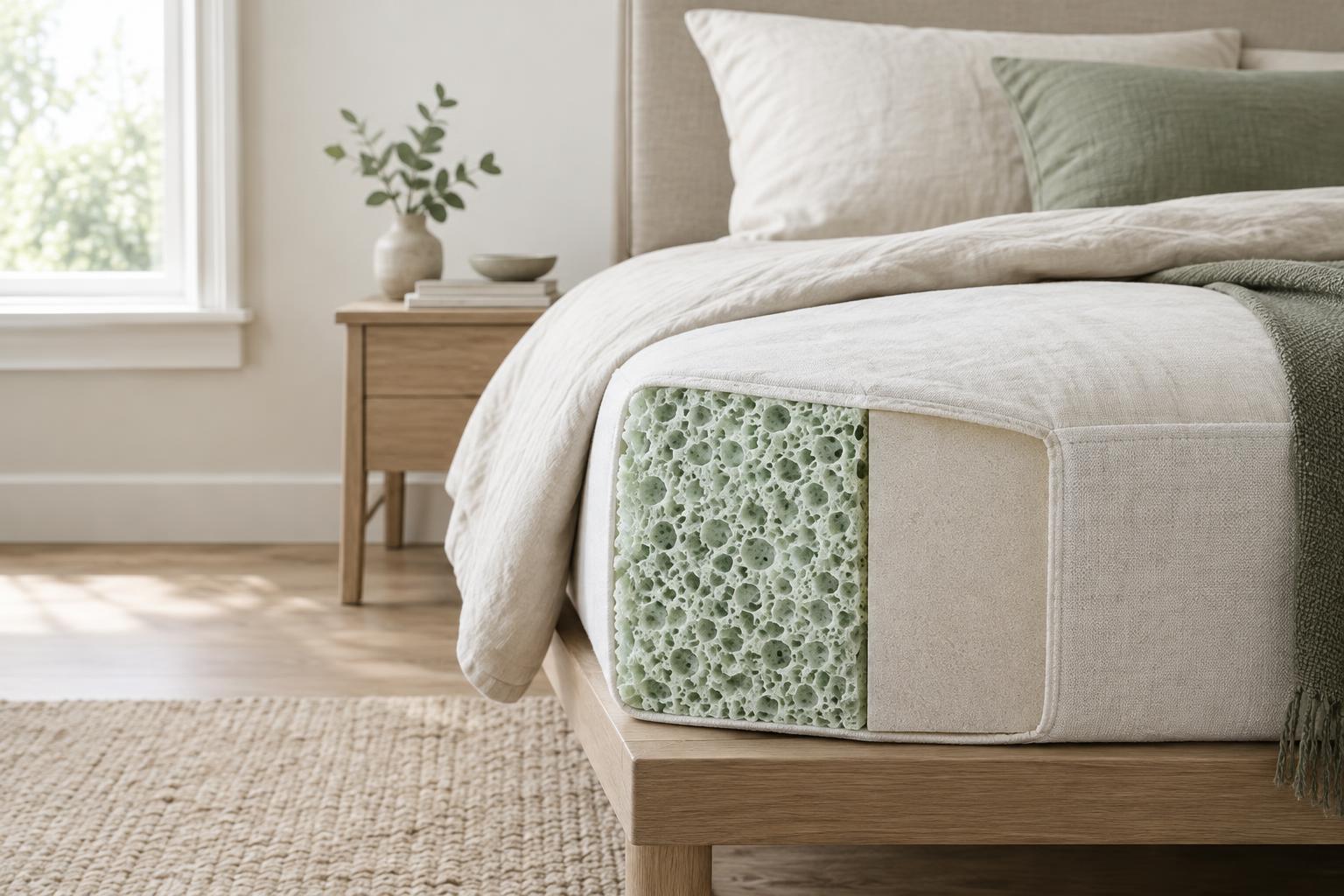
What the two terms describe
Foam contains many small pockets, often called cells. In open-cell foam, openings between at least some of those pockets allow air to move through the material. In closed-cell foam, most pockets are sealed off from their neighbors. The distinction describes the foam’s internal structure, not a complete mattress design or a guaranteed sleeping experience.
Cell structure is rarely a perfect either-or choice. A foam may contain a mixture of open and closed cells, and the size and arrangement of its openings can vary. Manufacturers can also cut channels or perforations into a foam layer. Those features may create paths for air even when the foam itself is not especially permeable.
How cell structure affects airflow
Open-cell foam generally offers more opportunity for air to pass through the foam itself. Movement and changes in pressure can push some air through connected spaces. Closed-cell foam tends to resist that movement because its air pockets are less connected. This makes cell structure useful to understand when comparing materials, but it is only one part of a mattress’s ventilation.
Air still needs a route into and out of the bed. A breathable foam layer can sit beneath a tightly woven cover, a waterproof protector or several less-permeable layers. A solid foundation may also limit airflow beneath the mattress. Conversely, a mattress with channels, perforations or a coil layer may provide routes around and between foam components. Looking at the full construction is more useful than relying on an “open-cell” label alone.
Airflow is not the same as sleeping cool
Air permeability can influence how readily heat and moisture move through a mattress, but it does not determine how warm the surface will feel. Covers, sheets, protectors, room temperature and the amount of contact between your body and the mattress all matter. A thick, contouring comfort layer may feel warm to some sleepers even if its foam has an open-cell structure.
Foam recipes and construction also affect feel. Cell structure alone does not tell you whether a mattress will be soft, supportive, springy or durable. When considering memory foam, polyurethane foam or latex foam, compare the complete layer arrangement and firmness rather than assuming that one cell type predicts comfort. Claims such as “cooling” are most helpful when the seller explains which design feature is intended to improve airflow and where that feature sits in the mattress.
Where each structure may be useful
Open-cell structures are common in foam layers intended to provide cushioning while allowing some air exchange. Their feel depends on the formulation, thickness and surrounding layers. An open-cell label does not mean the foam will always ventilate well once assembled into a bed, nor does it establish how long the layer will retain its feel.
Closed-cell foams are generally less air-permeable and may be chosen where insulation or resistance to liquid passing through the material is useful. Those properties do not automatically make closed-cell foam a better mattress component. For a comfort layer, reduced air passage may be a drawback for someone prioritizing ventilation. It is worth checking a product’s actual construction rather than assuming every foam component has the same role.
Questions to ask when shopping
Start with the layer nearest your body: What material is it, how thick is it, and is it perforated or channeled? Then ask what sits beneath it and whether the cover or included protector could restrict air passage. If a brand describes its foam as open-cell or breathable, look for a clear explanation of the construction. Without comparable measurements and testing conditions, it is hard to rank airflow claims across brands.
Consider airflow alongside the factors you can more readily judge: comfortable firmness, adequate support for your preferred sleeping position, ease of movement and the return policy. If possible, try the mattress long enough to notice how its surface feels with the bedding you normally use. Cell structure is a helpful clue, but the assembled bed—and your bedroom setup—will shape the experience.