What a mattress fire barrier does
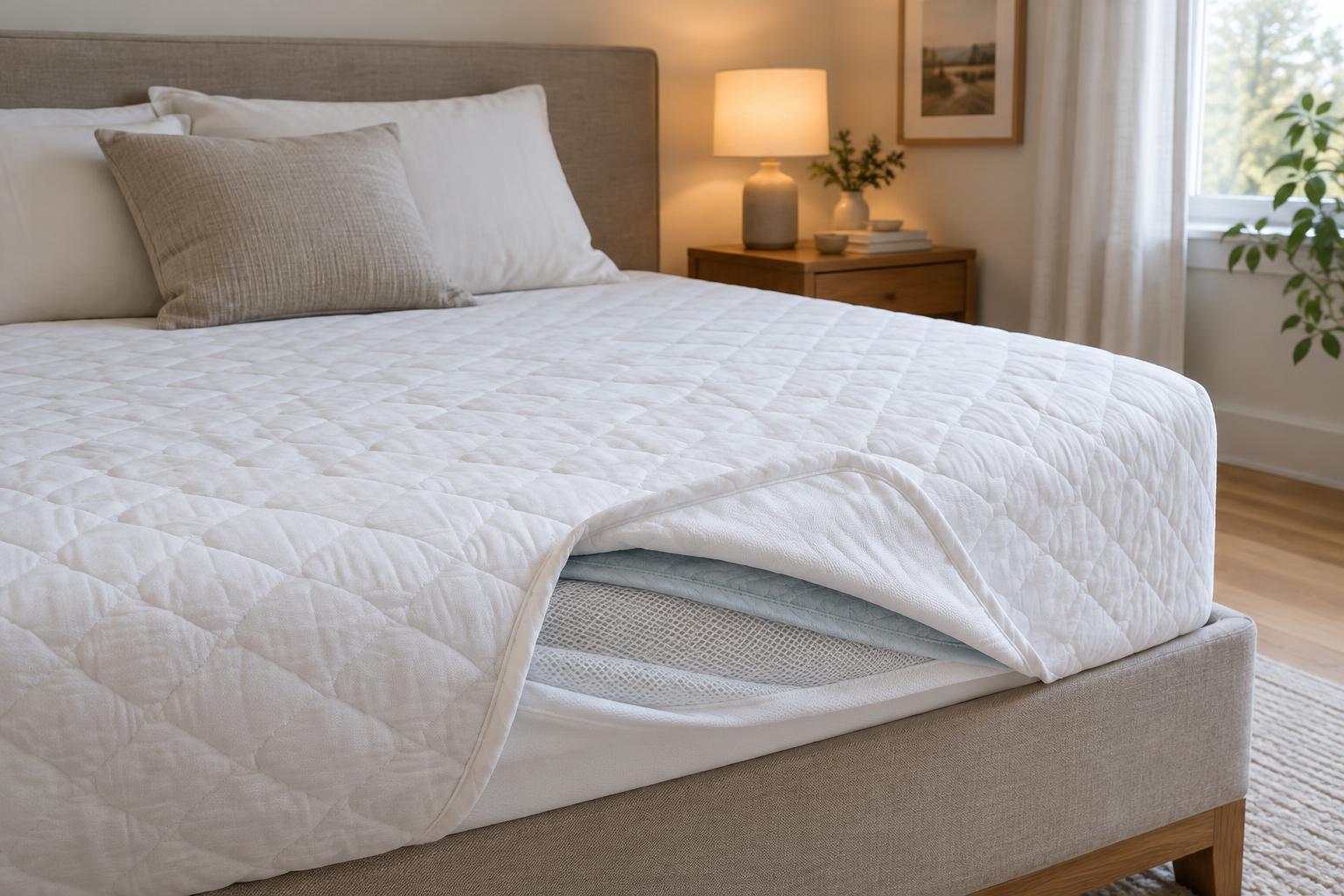
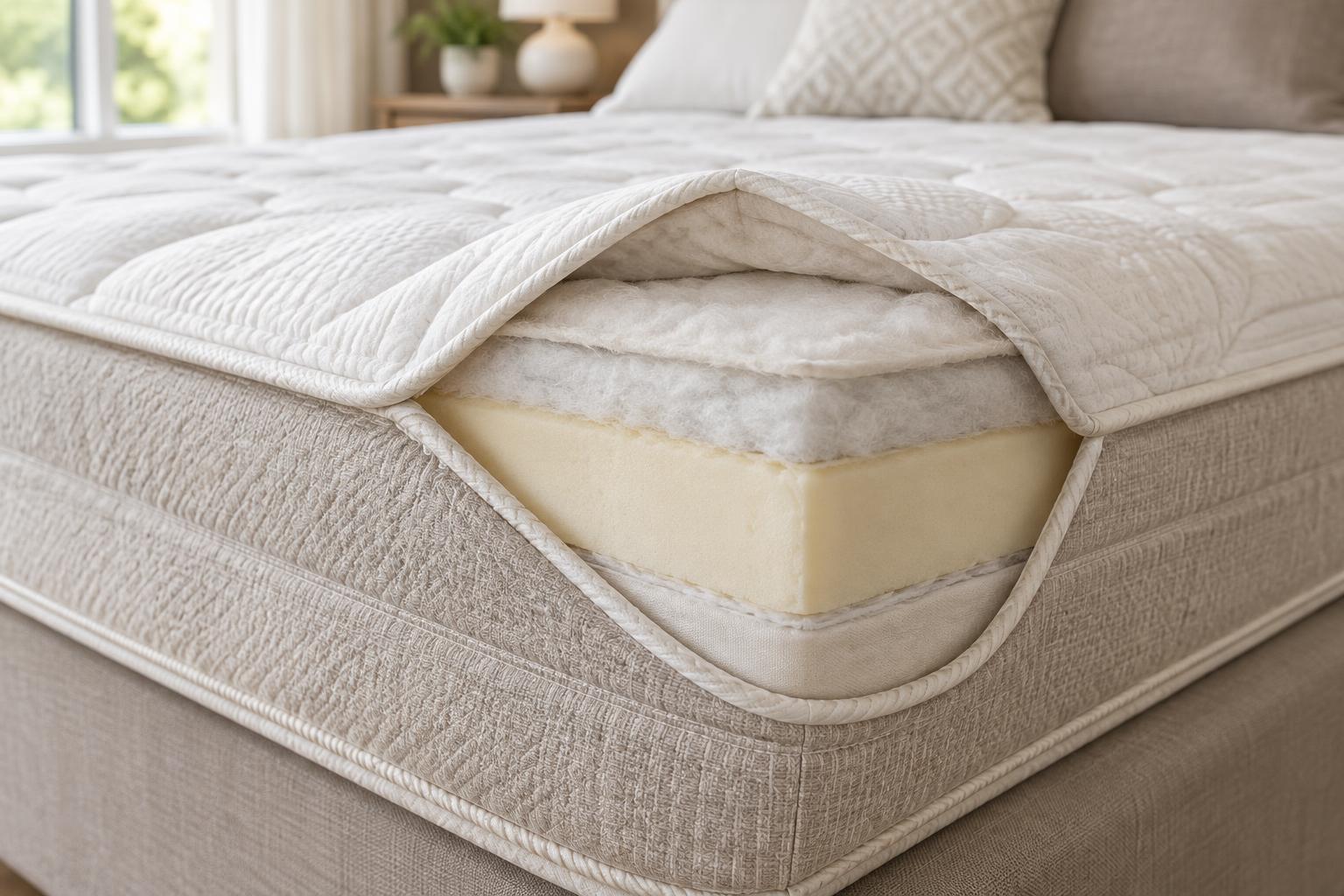
A fire barrier is a layer or component intended to help a mattress resist ignition or slow the spread of fire. It is usually out of sight, beneath the outer cover and around the foam or other interior materials. That hidden placement makes it easy to overlook when comparing mattresses, even though the barrier’s composition may affect your preferences for materials, cover care and handling.
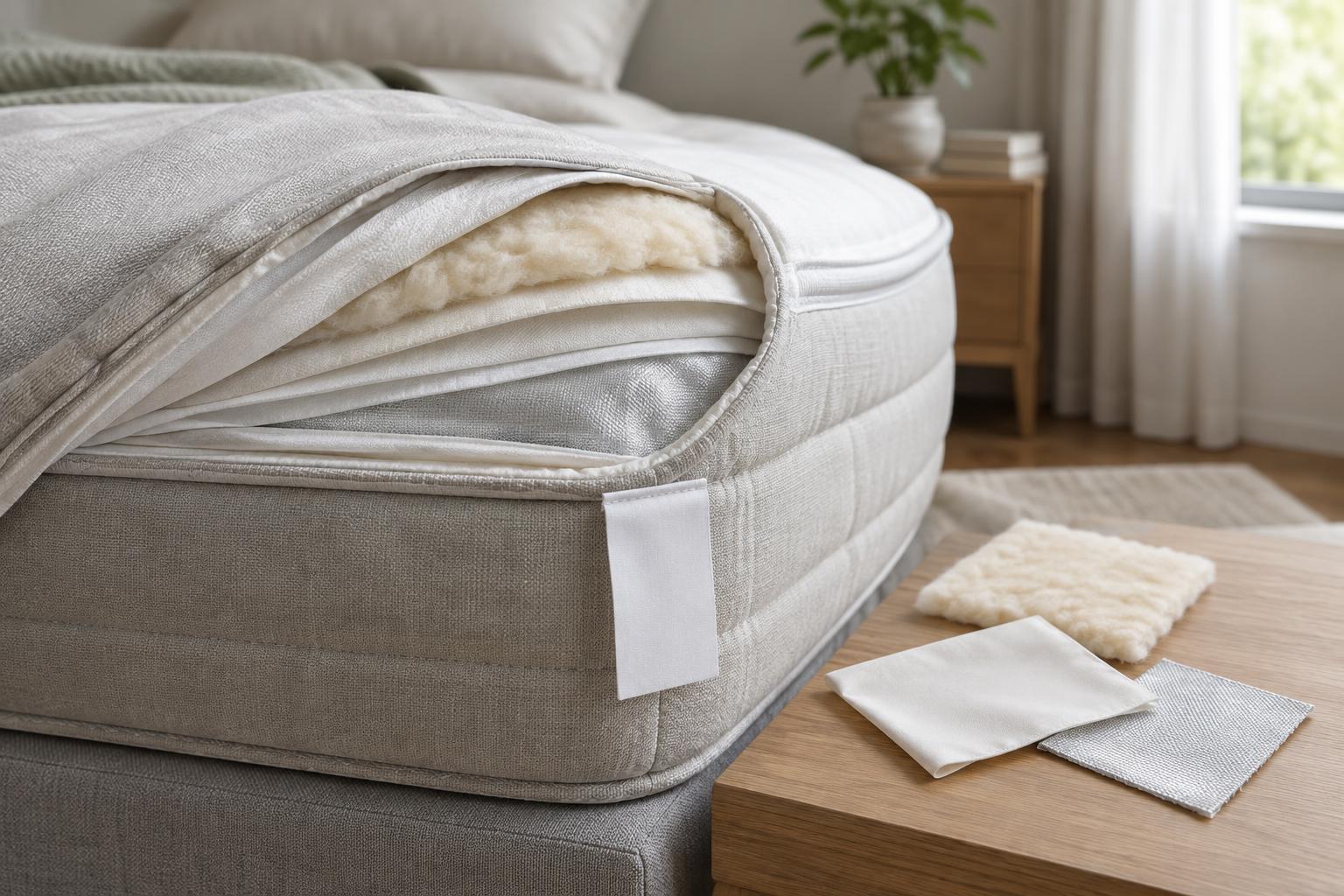
There is no single material used in every mattress. A manufacturer may use a wool-based layer, a fabric containing rayon, a glass-fiber-containing component, or a combination of materials. The outer cover and the fire barrier are not necessarily the same thing. A label describing the cover as cotton or polyester does not, by itself, identify every material inside the mattress.
Wool: check the layer, not just the headline
Wool is sometimes used in mattress fire-barrier designs because it chars rather than melting in the way some synthetic fibers can. It may appear as batting, a quilted layer or part of a blended fabric. Its presence does not mean the entire mattress is made from natural materials, and the word “wool” alone does not describe how much is used or whether it has been blended or treated.
If wool is important to you, look for a description of the specific layer and its fiber content. Ask whether the wool is part of the fire barrier or simply a comfort layer near the surface. Also check care instructions: a wool-containing layer inside a mattress is generally not something you can remove and wash like a wool blanket.
Rayon: a fiber name, not a complete barrier description
Rayon is a manufactured fiber made from regenerated cellulose. It can be produced from plant-derived feedstocks, but describing a barrier as “plant-based” does not explain its full construction. In mattresses, rayon may be blended with other fibers or incorporated into a fabric designed to serve as a fire barrier. Some barriers described as rayon-based also contain silica or other components, so “rayon” on its own may be an incomplete answer.
When comparing products, ask for the composition of the finished barrier rather than only the origin of one fiber. Useful questions include whether the barrier is a separate sock around the mattress core, part of the cover, or another internal layer. If a seller says a mattress is fiberglass-free, you can still ask what materials provide the fire barrier instead.
Fiberglass: distinguish a contained component from loose fibers
Fiberglass is made of very fine glass fibers and may be used in some mattress fire barriers. While it remains contained within an intact mattress, it may not be visible or noticeable. The concern for a shopper is what could happen if a cover is removed, damaged or handled contrary to its care instructions: fibers could escape and be difficult to clean up.
Do not assume that a zipper means a cover is designed to come off. Check the sewn-on care label and the manufacturer’s instructions before opening or washing anything. If you suspect a barrier has been exposed, leave the cover in place, avoid disturbing the material and contact the manufacturer for product-specific guidance. Similarly, a “fiberglass-free” claim is most useful when the seller can explain which components it covers.
How to read labels and ask better questions
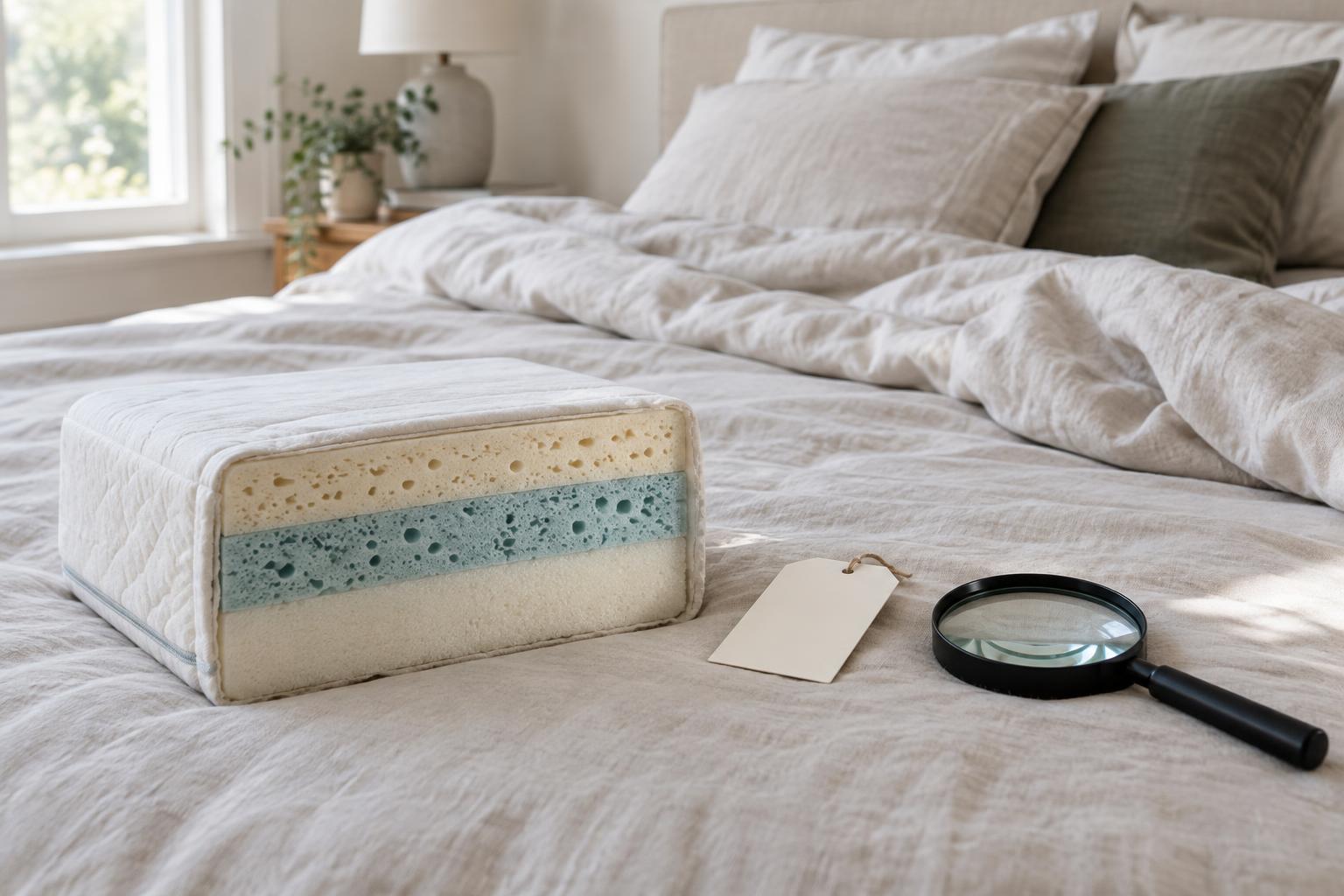
Start with the sewn-on mattress label, the cover’s care label and the manufacturer’s material description. These sources may serve different purposes and provide different levels of detail; a short list of filling materials may not clearly identify the fire-barrier layer. Product names and marketing terms such as “natural,” “clean” or “chemical-free” are not substitutes for a component-by-component description.
Before buying, ask: What is the fire barrier made of, including any blends? Does it contain glass fiber or fiberglass? Is it integrated into a removable cover or located beneath one? Can the cover actually be removed and washed? Request written care instructions if the answer is unclear, and keep them with your purchase information. Comparing clear, specific answers is more reliable than guessing from a single label term or assuming that every mattress built with the same main foam uses the same barrier.