Start with the question behind the badge
Foam certification labels are easy to mistake for an overall rating of a mattress. In practice, a standard usually answers a narrower question: whether a particular material or finished product meets specified requirements for chemical content, emissions, organic sourcing, or another defined property. Those are useful distinctions, but none tells you whether a mattress will feel comfortable or suit your sleeping preferences.
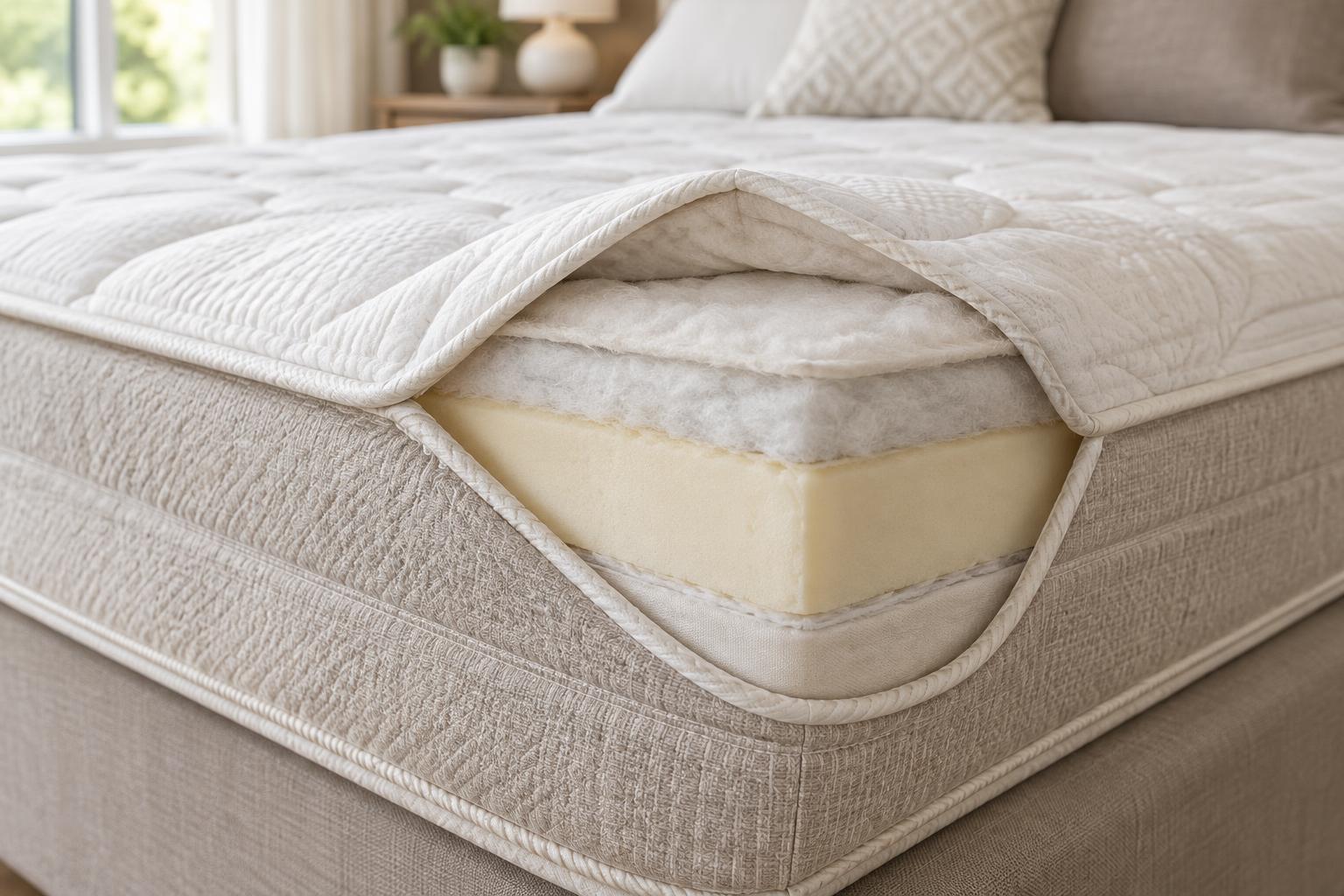
Before relying on a badge, identify three things: the standard named, the item it covers, and the claim it supports. A certified foam layer is not necessarily the same as a certified mattress. Other components may include fabric, adhesive, thread, a fire barrier, or additional padding. The certification’s scope matters as much as its name.
Polyurethane foam: content and emissions are different questions
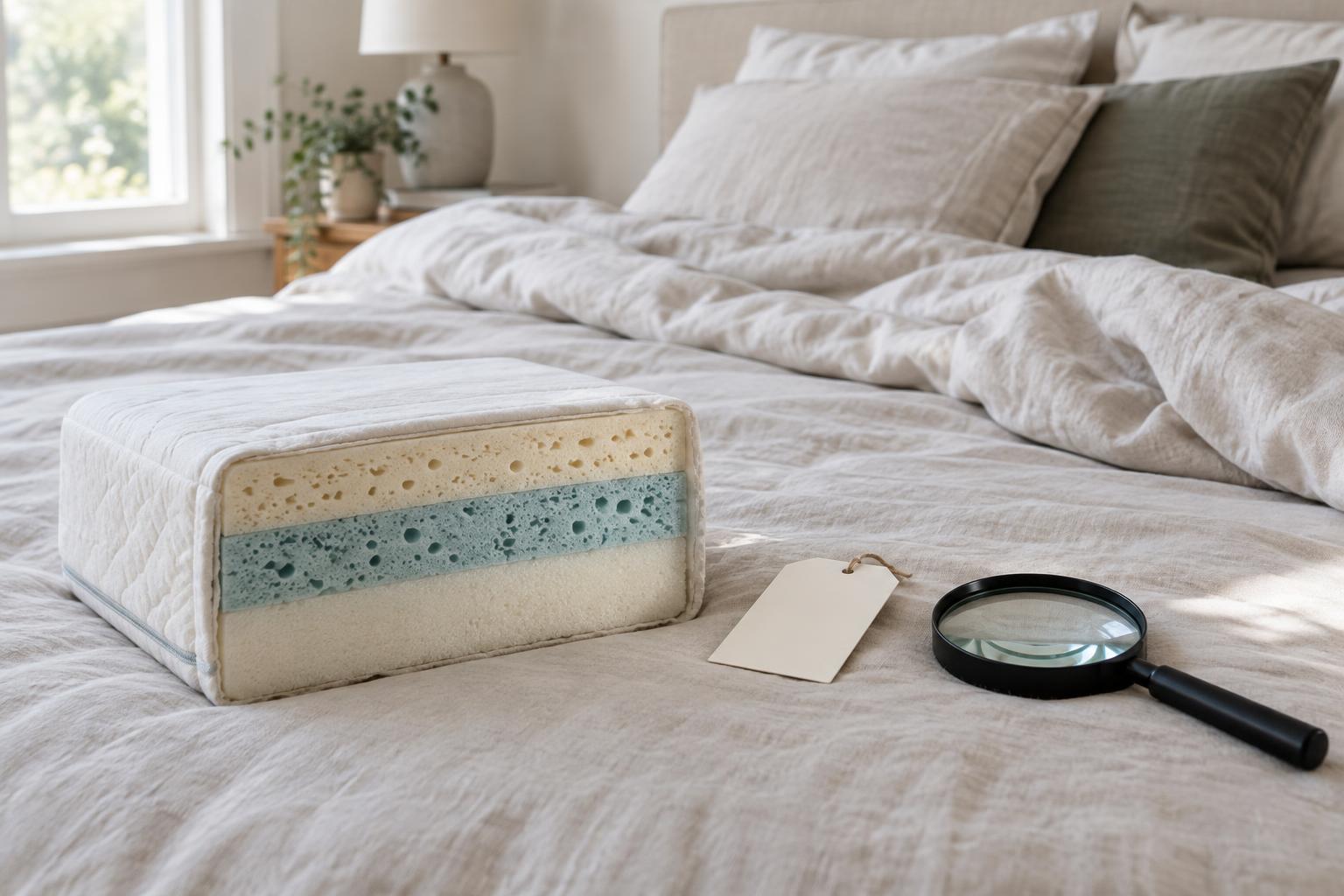
CertiPUR-US is a program for flexible polyurethane foam. Its requirements address certain substances used in the foam and include emissions criteria. A valid claim can help you compare foams against a defined set of requirements. It does not mean the entire mattress is certified, that the foam contains no chemicals, or that a newly opened mattress will have no odor.
Volatile organic compounds, often shortened to VOCs, are substances that can be released into the air from materials. An emissions standard evaluates this issue under specified test conditions; it is not a promise of zero emissions in every bedroom. Room temperature, ventilation, packaging, and other mattress components can affect what you notice after unboxing. If emissions are your main concern, check whether a claim applies to one foam layer or to the finished mattress.
What other familiar labels may cover
GREENGUARD and GREENGUARD Gold focus on chemical emissions from certified products under defined testing conditions. Gold uses more stringent criteria for certain emissions. When a mattress carries one of these labels, check the exact product or model listed rather than assuming every material in a brand’s range has the same status. Low-emissions certification is not a measure of firmness, support, or lifespan.
OEKO-TEX STANDARD 100 addresses tested substances in certified textile articles and their components. On a mattress, it may apply to a cover or another specified component; the claim should make that scope clear. It should not be read as an automatic emissions certification for every foam layer inside the bed.
For latex, Global Organic Latex Standard, or GOLS, relates to organic latex and associated production requirements. Global Organic Textile Standard, or GOTS, concerns organic textiles, such as cotton or wool components. Neither label should be casually extended from one certified component to the entire mattress. “Organic” also describes a different set of requirements from “low emissions,” so one term cannot stand in for the other.
How to check a certification claim while shopping
Look for the certificate or an official product listing that matches the mattress model or component being advertised. Note whether the claim names the foam supplier, a fabric, a latex layer, or the finished bed. If the product page only displays a logo, ask the seller which part is covered and whether the certification applies to the version and size you intend to buy.
Read the wording around the badge carefully. “Made with certified foam” is narrower than “certified mattress.” A retailer may also describe a material as meeting a standard without clearly showing that the product is currently certified under that program. If the distinction is important to your purchase, ask for documentation rather than inferring the answer from a logo or a broad marketing phrase.
Then consider factors the certificate does not evaluate for you: construction, firmness options, edge feel, motion transfer, return terms, and care instructions. A mattress can carry a meaningful certification and still be a poor match for your preferences. Conversely, an absent badge does not by itself prove a product is unsafe; it means you have less information from that particular program.
Use certifications as evidence, not a verdict
The most useful certification is one that addresses a concern you actually have and clearly covers the item you are considering. If you want information about a polyurethane foam layer, look for a claim specific to that foam. If you want information about emissions from the assembled product, seek a certification whose scope includes the finished mattress. If organic latex or textiles matter to you, verify those materials separately.
A badge can narrow uncertainty, but it cannot replace the rest of the buying decision. Compare the stated materials with the product’s construction, check the applicable certificate, and weigh comfort and practical purchase terms on their own merits. That approach gives each label its proper value without asking it to promise more than it was designed to show.