What makes polyfoam high-resilience?
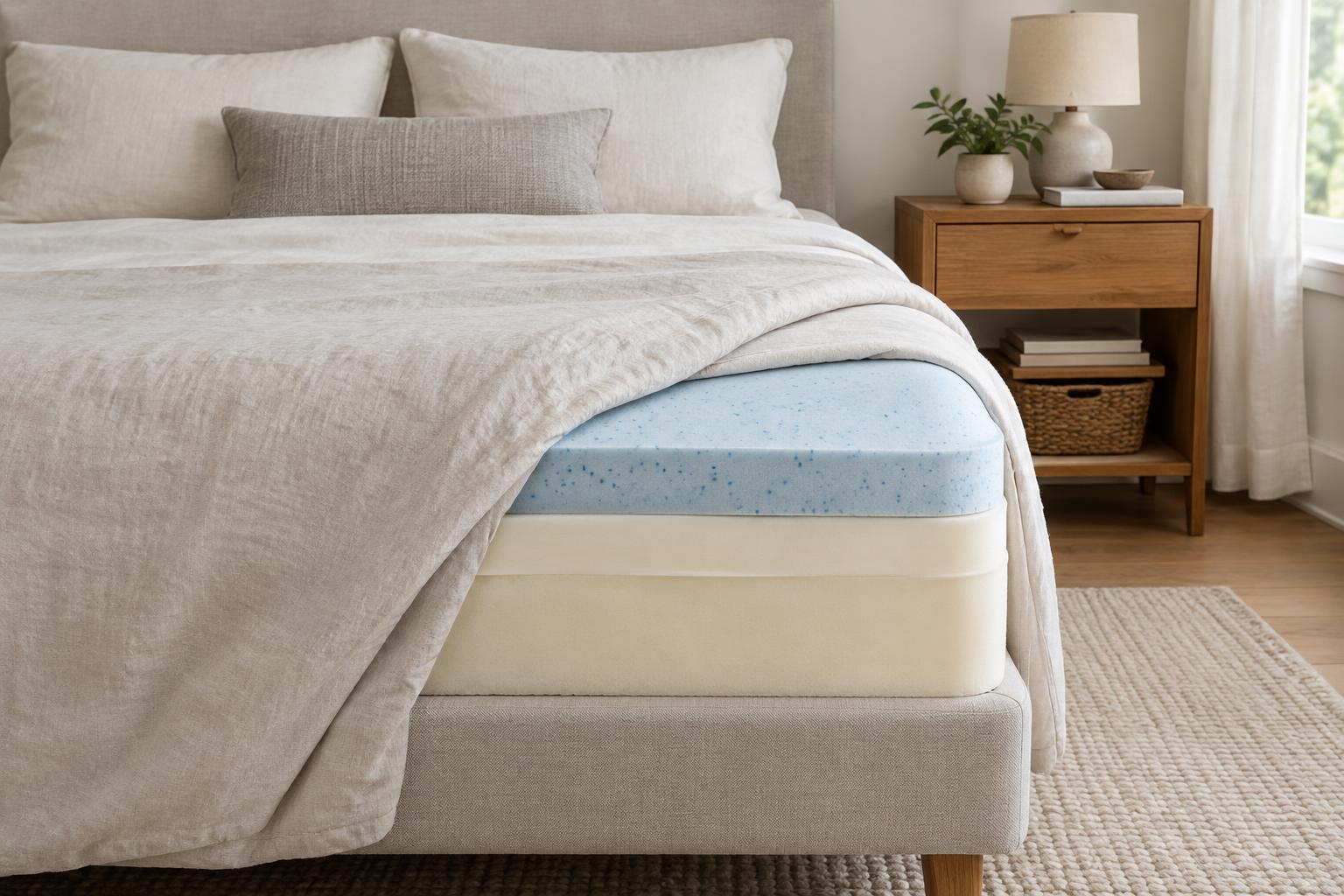
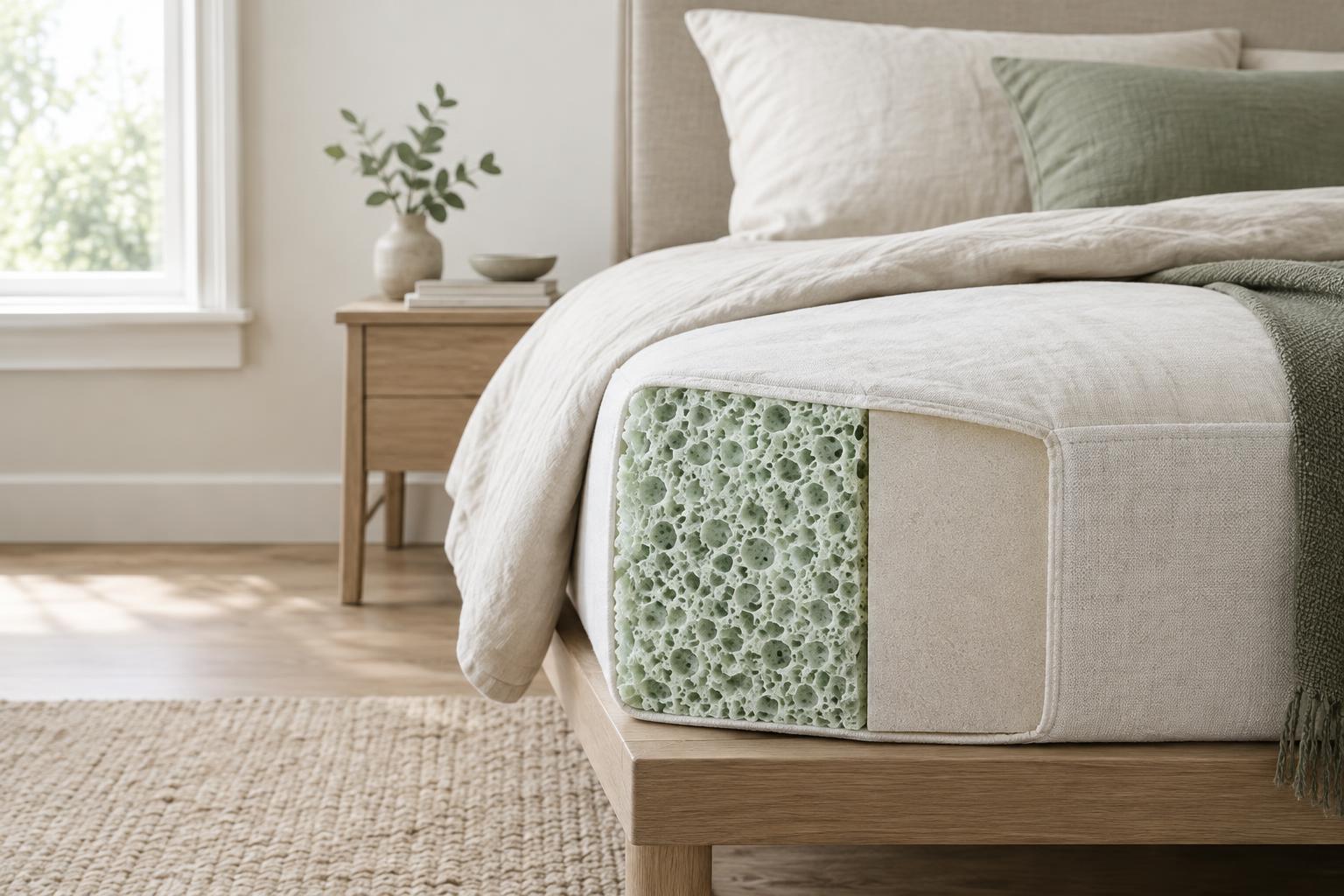
Polyfoam, short for polyurethane foam, appears in many parts of a mattress. A soft layer may cushion the surface, while a firmer layer may form the support core. High-resilience, or HR, polyfoam is a type intended to recover quickly after pressure is removed and to feel comparatively springy. Standard polyfoam is a broad category: it can be soft or firm, light or dense, and it does not all behave the same way.
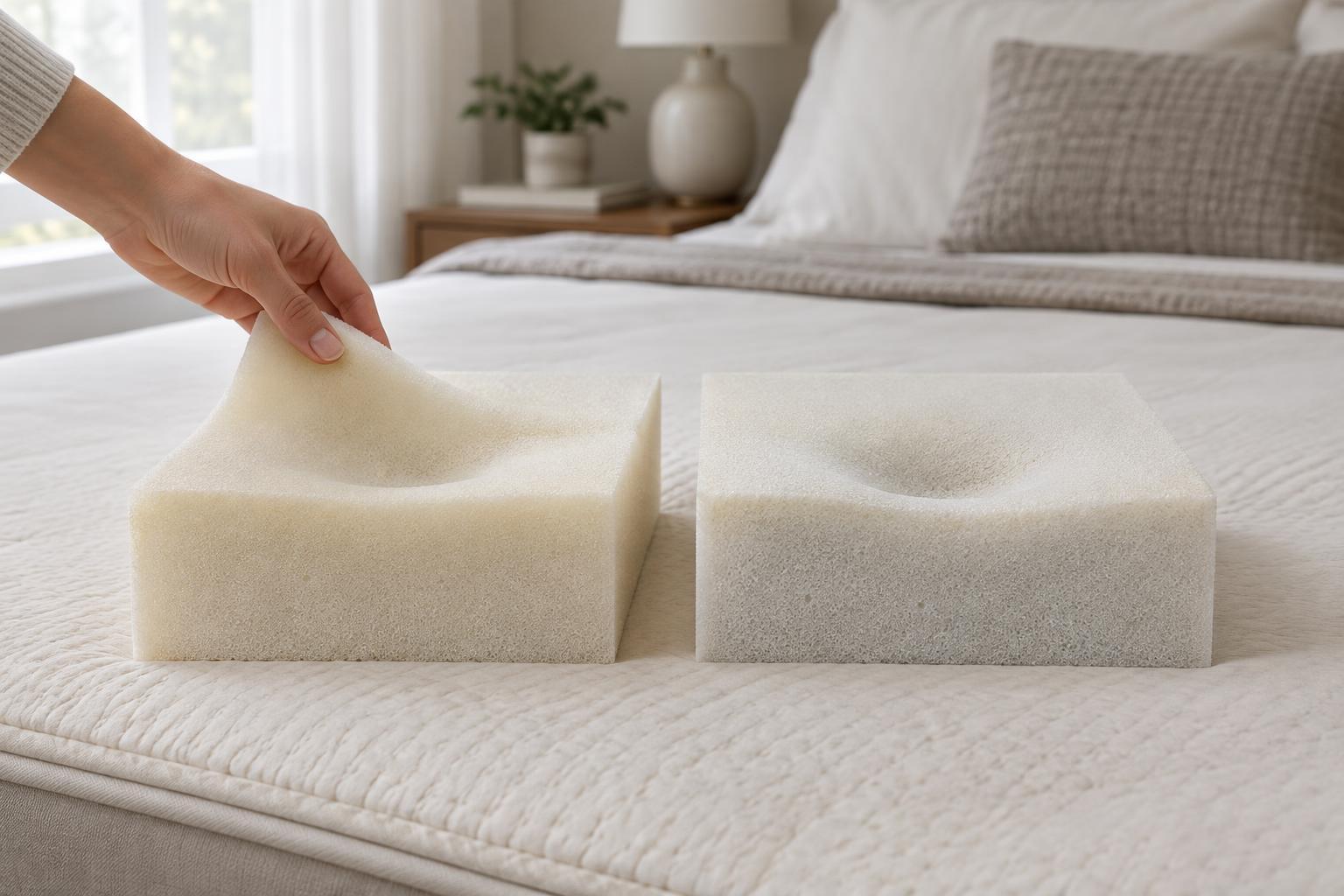
Resilience describes how energetically a foam rebounds after compression. It is not another word for firmness. A foam can feel firm when you press into it yet return slowly, or feel soft while bouncing back quickly. HR polyfoam often combines noticeable rebound with a more responsive feel than conventional cushioning polyfoam. Exact behavior depends on the formulation, the layer’s thickness and what sits above or below it.
How the difference feels in a mattress
On an exposed HR polyfoam layer, changing positions may feel easier because the surface follows your movement without a pronounced slow-release sensation. Standard polyfoam can also respond quickly, so this is a tendency rather than a reliable way to identify the material. Neither should be confused with memory foam, which is generally chosen for its slower, more contouring response.
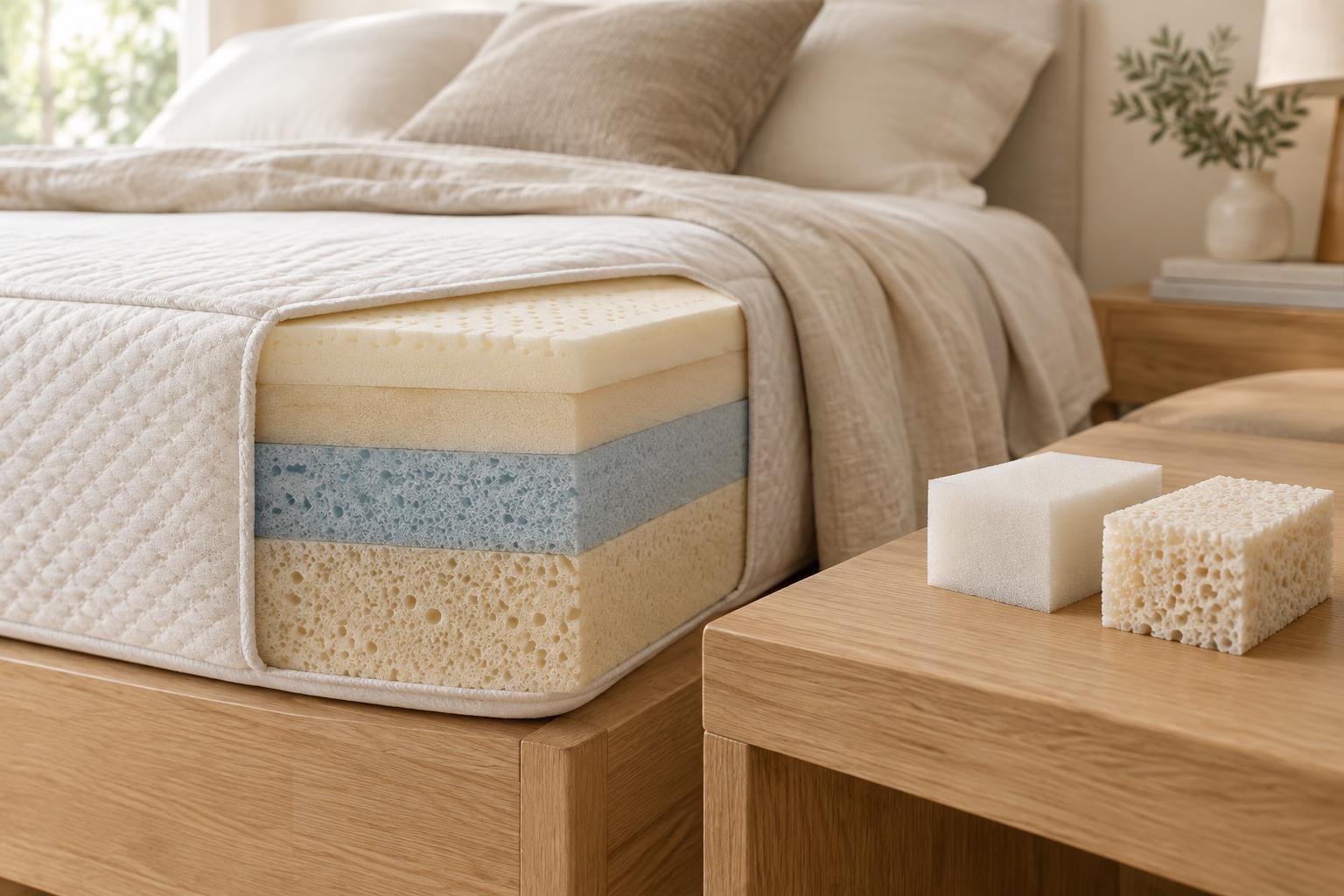
You may not feel the properties of an HR layer clearly in a finished mattress. A thick quilted cover or several inches of softer foam can dominate the initial feel, even when HR polyfoam lies beneath them. Likewise, a thin HR layer will not necessarily make an entire mattress bouncy. If you are comparing mattresses, consider the complete layer arrangement rather than relying on one material named in the description.
Density, firmness and durability are separate questions
Foam density describes how much material is present in a given volume, commonly listed in pounds per cubic foot for mattresses sold in the United States. Firmness describes resistance to compression. Resilience describes rebound. These properties can influence one another, but none substitutes for the others. In particular, a firm feel does not prove that a foam is dense or that it will resist wear.
HR polyfoam is often positioned as a higher-performance option, yet its label alone cannot guarantee a mattress’s lifespan. Repeated loading, body weight, layer thickness and the quality of other components can all affect how a bed changes over time. Softening is also different from a visible body impression: a mattress can lose some support or cushioning before a deep indentation appears.
When specifications are available, ask for the density and thickness of each polyfoam layer, not just the density of the support core. Upper layers take frequent direct pressure and can strongly affect how the mattress feels as it ages. Manufacturers may describe their foams differently, so compare disclosed specifications and construction alongside any HR claim.
Where HR polyfoam fits best
HR polyfoam may appeal to someone who wants foam cushioning without much of the slow, enveloping feel associated with memory foam. It can be used in comfort layers, transition layers or support cores, depending on its firmness and the mattress design. In a comfort layer, it may add a buoyant surface; in a deeper layer, it may help the mattress respond as you move.
Standard polyfoam remains useful. A conventional foam layer can provide a particular softness, a smooth transition between firmer and softer components, or a lower-cost construction. The better choice depends on the feel you prefer and the role of the layer, not on a rule that HR is always superior. Covers, quilting and the bed base can also influence comfort.
How to compare mattresses without relying on the label
Start with the basics: identify each layer’s material, approximate thickness and position. Check which polyfoam layers have disclosed density and firmness information. Then assess the mattress as a whole for comfortable pressure distribution, ease of movement and enough support for your preferred sleeping positions. If you can try it in person, spend time in the positions you normally use rather than judging it with a quick hand press.
For an online purchase, read the return terms, any trial conditions and the warranty’s rules for impressions and foundation use. These policies do not reveal foam quality, but they clarify your options if the finished bed feels different from expected. Treat “high-resilience” as a useful clue about intended response—not a replacement for layer details, a realistic comfort assessment or clear purchase terms.