What edge support actually describes
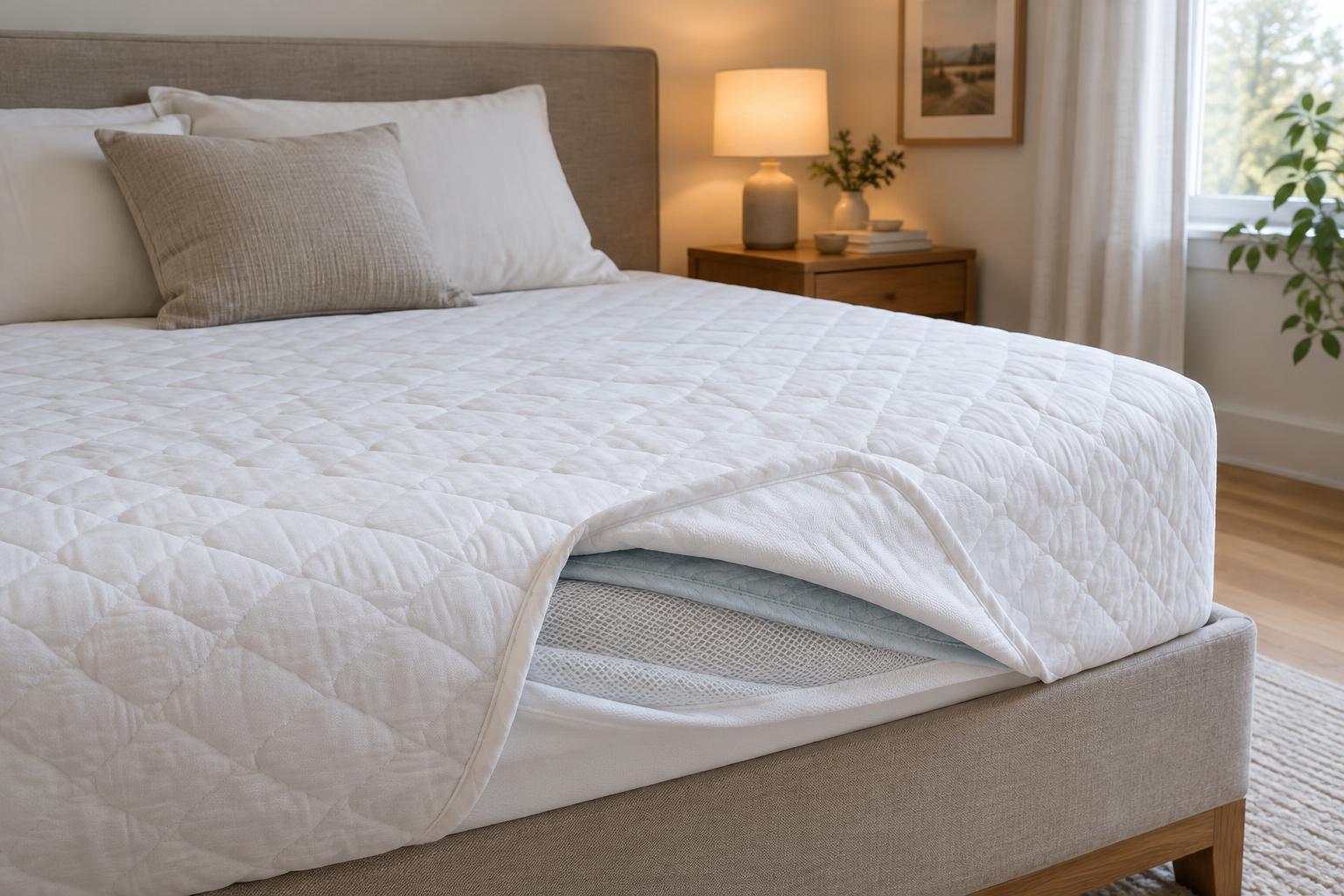
Edge support is the resistance you feel when you sit or lie near the perimeter of a mattress. A supportive edge compresses without leaving you feeling as though you might slide off. That does not mean it must feel hard: the surface comfort layers can still cushion the edge while the structure beneath them limits deeper sinkage.
Two experiences are worth separating. Sitting concentrates weight in a small area and can compress the edge sharply. Lying near the side spreads weight over more of the mattress. A bed may feel secure in one position and less so in the other. The bed frame matters, too. A mattress on an unsuitable or uneven base may feel less stable regardless of its perimeter design.
Common ways manufacturers build the perimeter
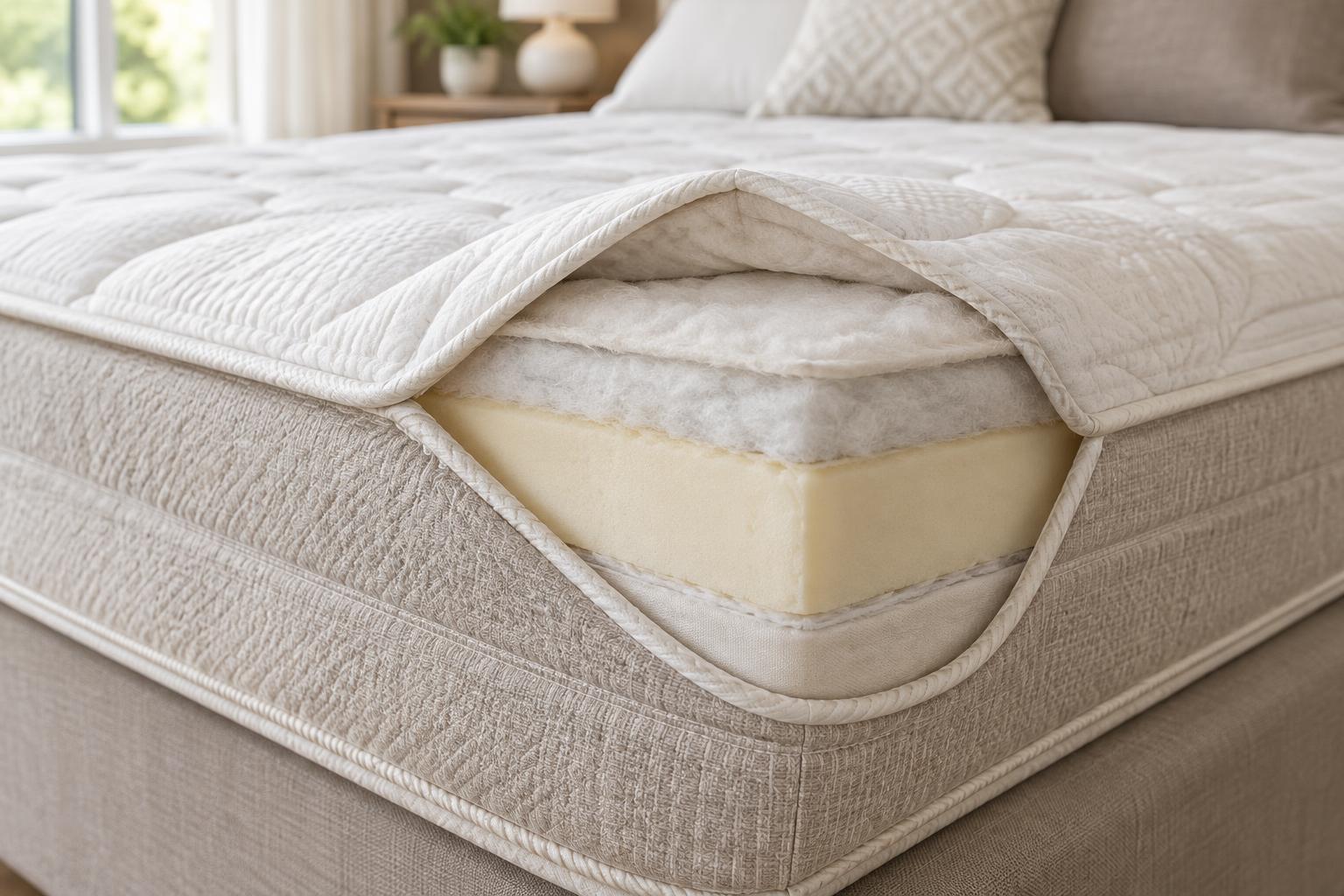
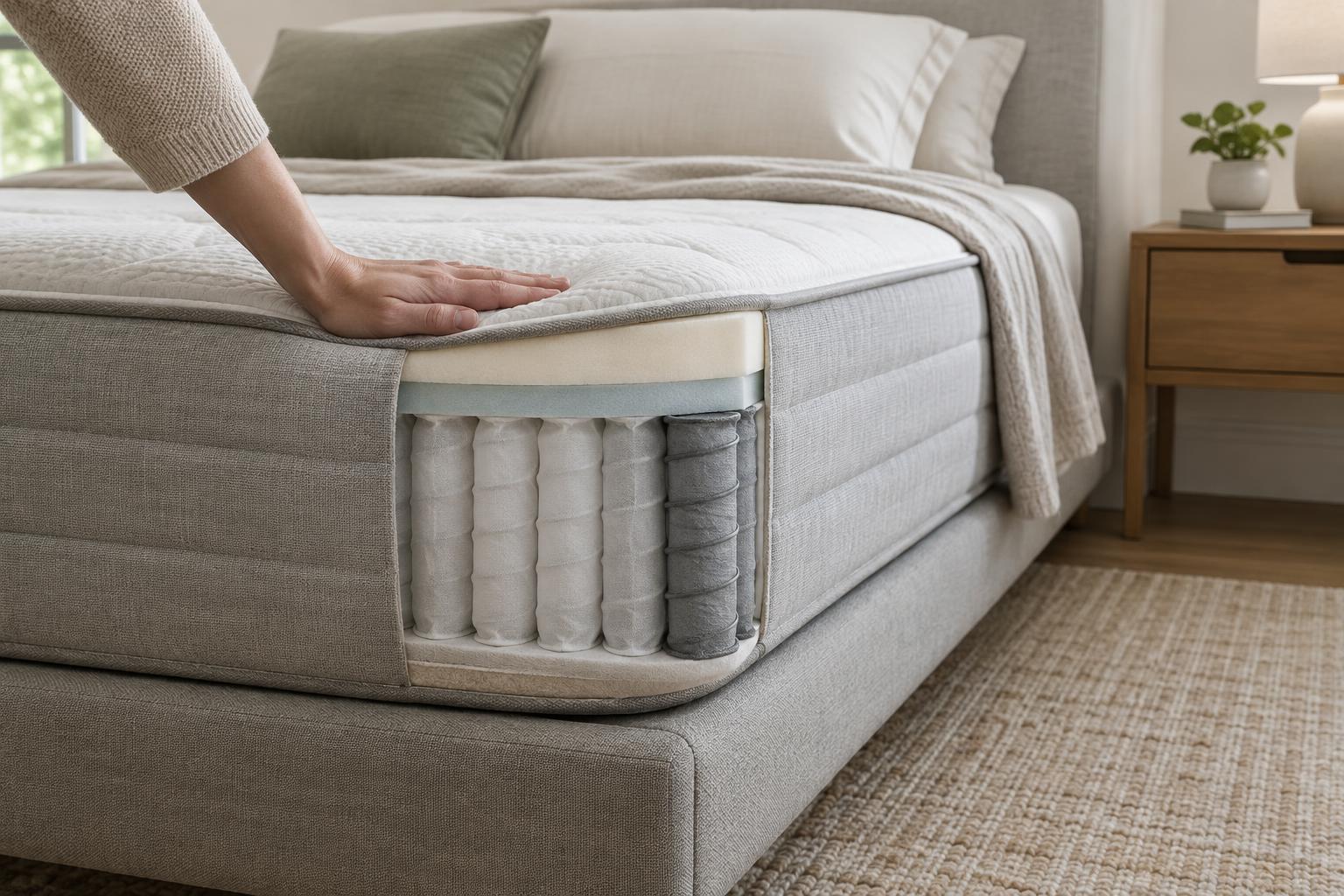
Some mattresses use a border of firmer polyurethane foam around an innerspring or pocketed-coil unit. This foam encasement can create a more resistant surface for sitting and help define the bed’s shape. It also replaces coils along the perimeter, so the edge may respond differently from the center when you lie across that boundary. The result depends on the border’s firmness, width and integration with the layers above it; the phrase “foam-encased” alone tells you little about how it will feel.
Other designs use stronger or more closely spaced coils around the outside of the spring unit. These preserve a spring-based structure across the width of the bed while making the perimeter more resistant to compression. A seller might describe this as a reinforced coil edge, but that description does not reveal how much firmer it is than the center. Some beds also use firmer foam rails alongside the coils rather than replacing them.
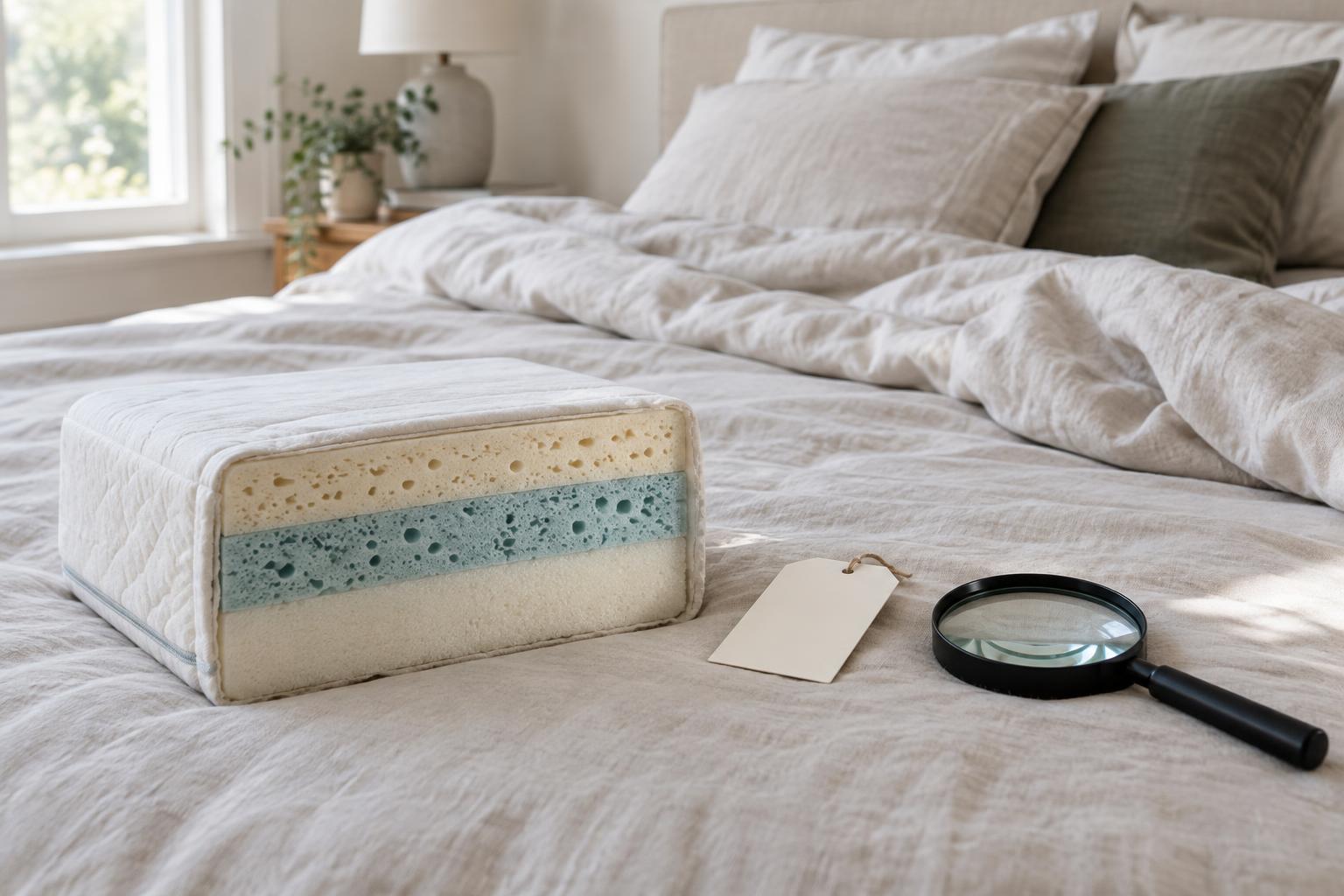
Not every mattress has a distinct reinforced border. An all-foam bed, for example, may rely on the firmness and thickness of its existing layers, with the same materials extending to the sides. That is not automatically a flaw. It may produce a consistent feel across the surface, though a softer construction can compress noticeably when someone sits at the edge.
Trade-offs behind a firmer border
A resistant perimeter can make the edge feel steadier when you sit to put on shoes or use more of the surface for sleeping. But stronger is not always better. A very firm border beside a softer interior can create a noticeable change in feel when you move across the bed. If the comfort layers remain plush all the way to the side, you may still feel substantial initial sinkage before the reinforcement underneath engages.
Perimeter construction is only one part of durability. Foam rails can soften, coils can lose resilience, and comfort layers can develop impressions; materials, construction and use all influence how a mattress changes over time. Neither a foam border nor reinforced coils guarantee that an edge will keep its original feel. Claims such as “full usable surface” are best treated as descriptions to check against the actual design and your own comfort preferences.
How to assess edge support while shopping
Start by asking what, if anything, reinforces the edge. If the mattress has springs, find out whether the perimeter uses foam rails, different coils or the same coils as the center. If it is an all-foam model, ask whether its layers change at the sides. Product diagrams can help you identify the arrangement, but they cannot reliably predict how supportive it will feel to you.
When you can try a mattress in person, sit in the spot where you would normally get in and out of bed, then lie close to the edge in your usual sleeping position. Notice both the first few seconds of compression and whether the edge continues to give way. Compare that feeling with the center rather than judging firmness in isolation. If shopping remotely, review the seller’s return terms and any requirements for the bed base before ordering.
Finally, check that the mattress and foundation are compatible and that the mattress is supported as directed by its maker. A reinforced edge cannot compensate for an unstable frame or excessive gaps beneath the bed. Choosing edge support is less about finding the strongest advertised border than finding a construction that feels consistent and secure in the ways you actually use your mattress.