What “latex mattress” tells you—and what it does not
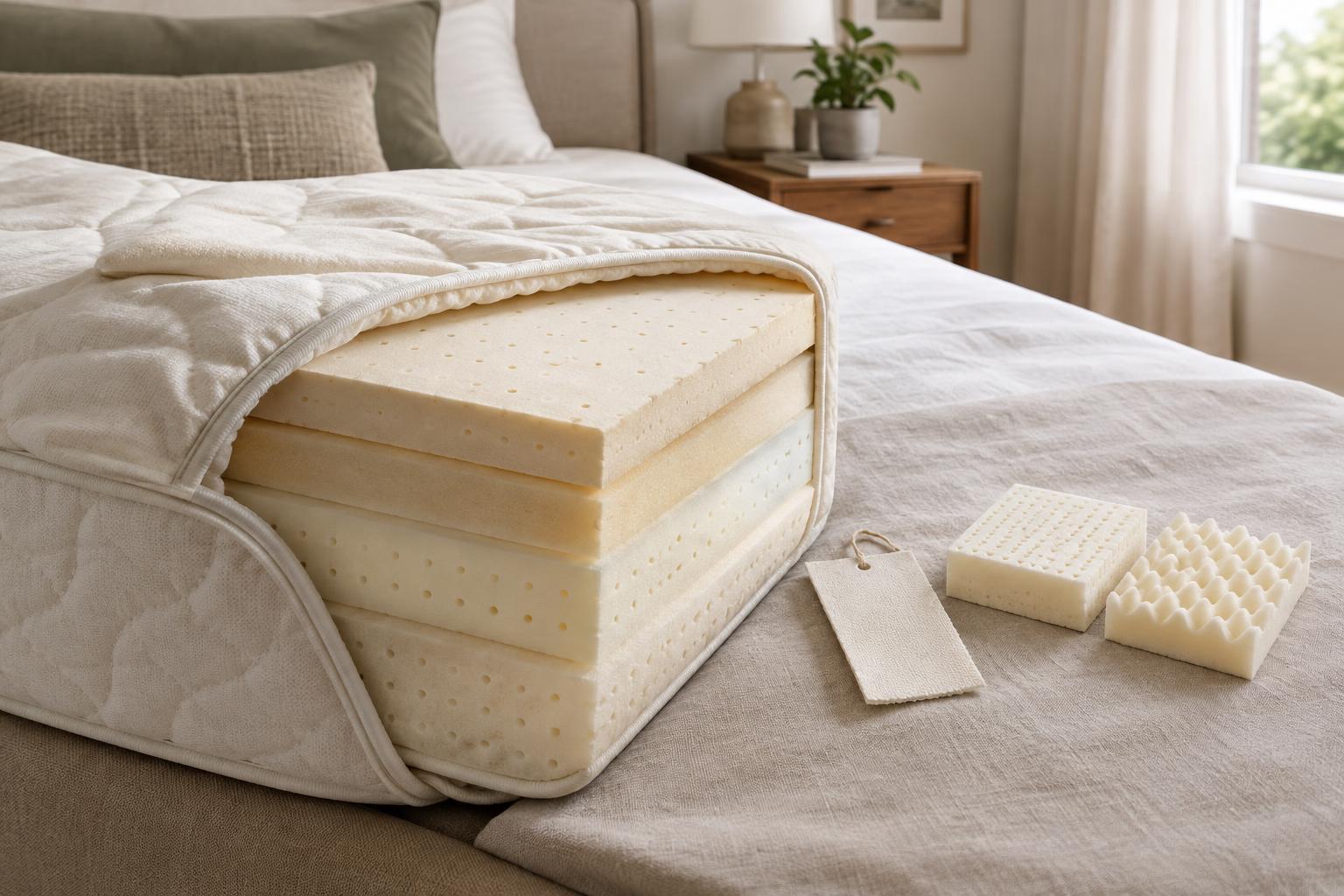
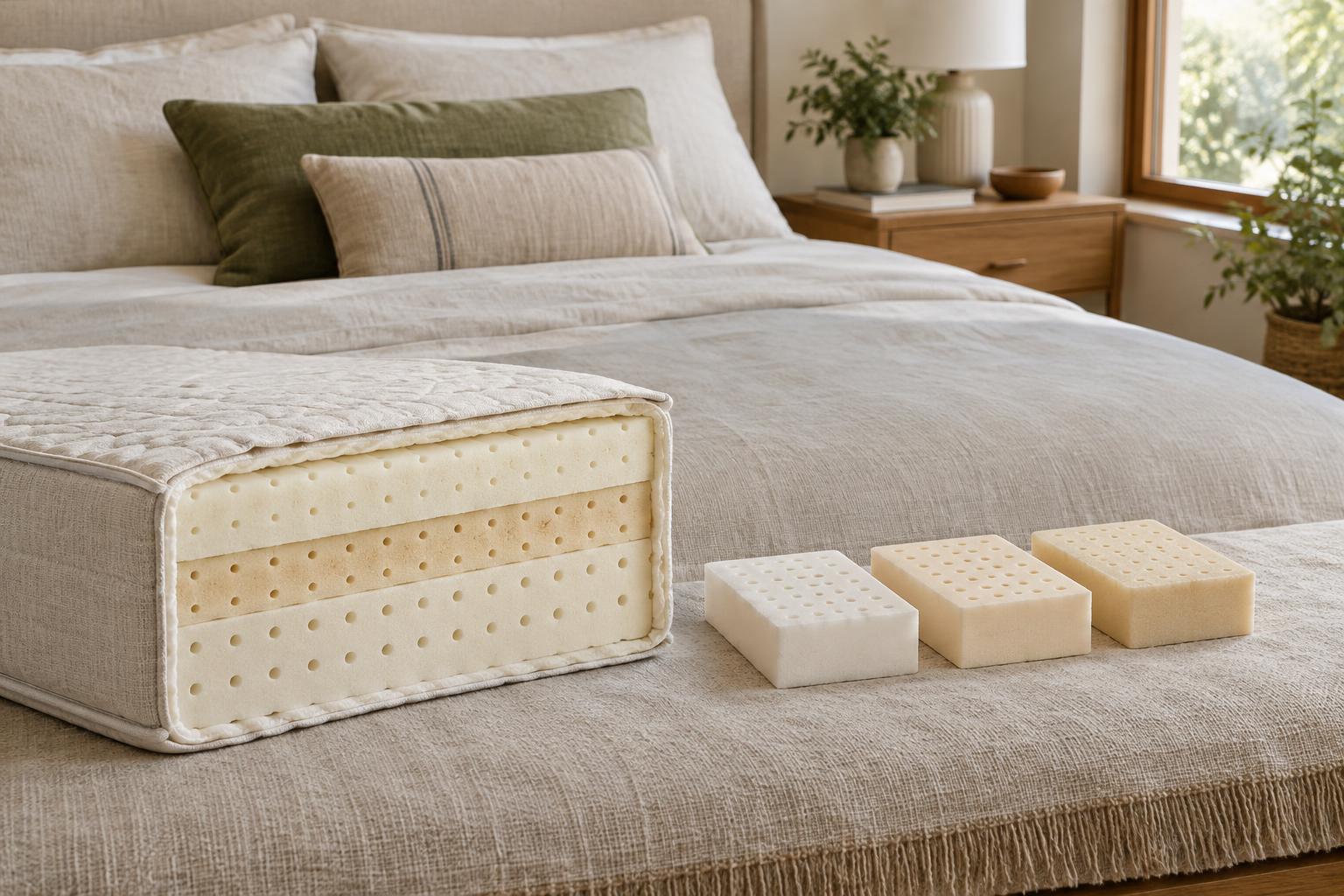
Latex foam is used in mattresses for its springy feel and ability to conform under pressure. The word “latex” on a product page, however, does not tell you whether the foam is made from natural rubber, synthetic materials, or both. It also does not tell you how much of the mattress is latex. A mattress might have a latex comfort layer above a different type of foam, or it might use latex throughout most of its support structure.
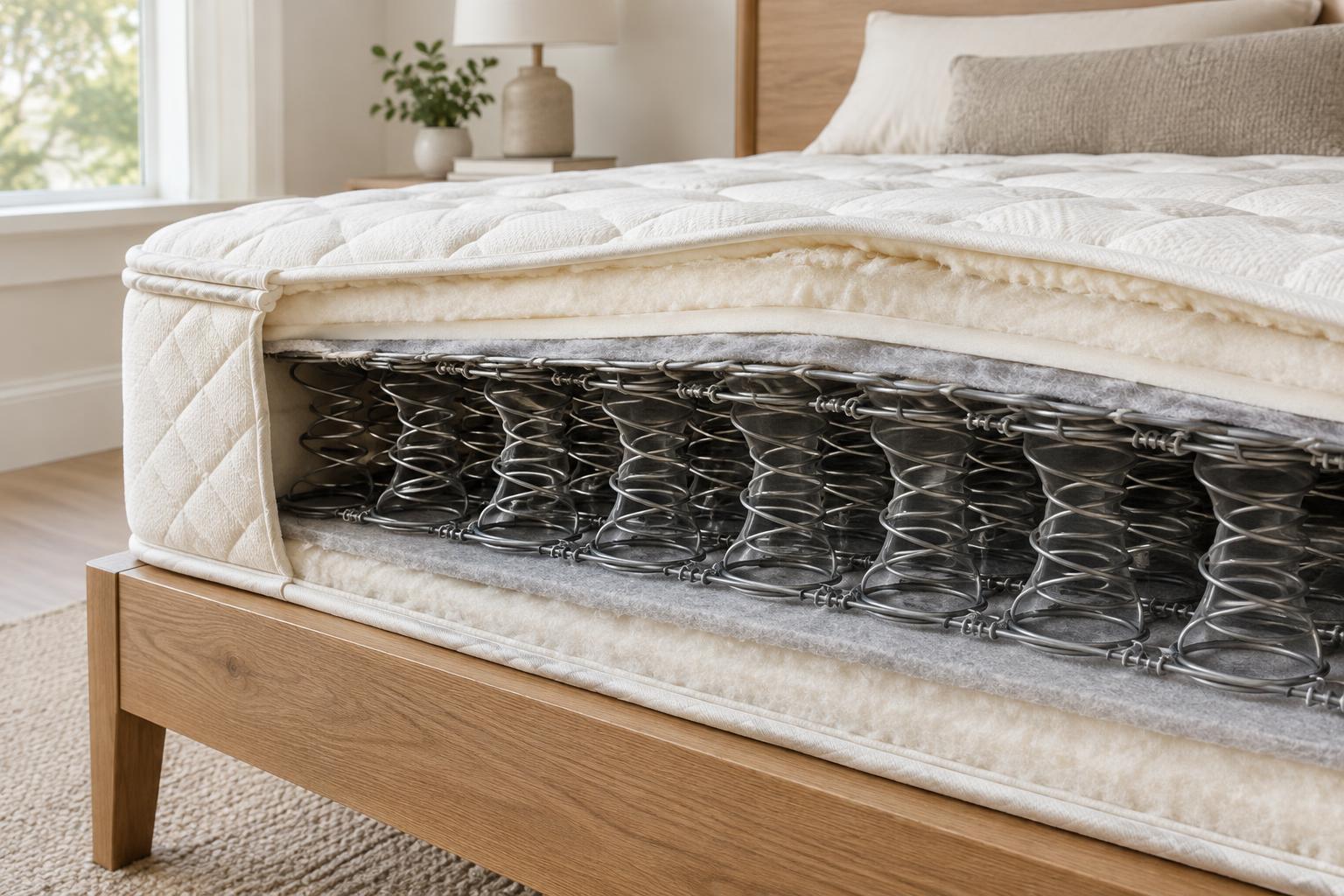
Start by looking for a layer-by-layer description rather than relying on the mattress name. Note each layer’s material, thickness, and position. A thin latex layer near the surface can affect the initial feel, while the materials beneath it also influence support, motion transfer, and how the mattress feels over time. Covers, quilting, adhesives, and fire-barrier materials are separate parts of the construction worth checking if their composition matters to you.
Natural, synthetic and blended: the composition question
Natural latex foam is made using latex harvested from rubber trees. Synthetic latex foam is made from manufactured rubber-like materials. Blended latex combines natural and synthetic components. Each description refers to the material used to make the foam, not necessarily to every component in the finished mattress. Even a mattress with natural latex foam can contain a synthetic-fiber cover or other non-latex layers.
Descriptions such as “natural latex,” “made with natural latex,” and “100% natural latex” are not interchangeable. “Made with” may indicate that natural latex is present without saying how much. A percentage needs context: does it refer to the latex ingredients in one foam layer, the weight of that layer, or the mattress as a whole? If a listing says “blended latex” but gives no proportions, ask the seller for the natural-to-synthetic ratio and which layers contain the blend.
Neither origin automatically settles which mattress will suit you. Foam formulation, firmness, layer thickness, and the rest of the construction all affect feel. If you are comparing two models, a clear specification for each layer is more useful than a broad claim that one type of latex is always better.
Dunlop and Talalay describe processing, not origin
Dunlop and Talalay are names for methods of making latex foam. They do not, by themselves, establish whether a layer is natural, synthetic, or blended. A listing that says “Talalay latex” answers a different question from one that says “natural latex”; ideally, it should answer both.
The two methods can produce foams with different textures and firmness options, but method alone cannot predict how a complete mattress will feel. The depth of a layer, the layers around it, and the firmness offered in a particular model matter too. When reading a specification, treat processing method, material composition, and firmness as three separate details. If one is missing, do not assume it from the others.
How to check a listing without getting lost in claims
First, find the construction diagram or written layer list. For every layer described as latex, record its thickness, whether it is natural, synthetic, or blended, and whether a process is named. Then check what sits above and below it. This simple inventory makes it easier to compare a mattress with a latex top layer against one built with multiple latex layers.
Next, read the scope of any certification or materials claim. A claim may apply to a particular foam component rather than the entire mattress. Look for the named product or component and what the claim actually covers; if the listing is vague, request documentation or a more precise explanation. Terms such as “eco,” “green,” and “organic feel” do not substitute for a specific description of materials. If organic status is important to you, check what is certified and whether that certification applies to the product being sold.
Finally, ask questions the label has not answered: What are the latex contents of each layer? What does any stated percentage measure? Are there non-latex foams in the mattress? What are the cover and fire barrier made from? Keep the seller’s answers alongside the listed specifications so you can compare options on the same basis.
Choosing with the full mattress in mind
Material labels are a starting point, not a comfort guarantee. Once the construction is clear, compare the firmness choices, mattress dimensions, foundation requirements, return terms, and care instructions. Those details can matter as much as the latex category when deciding whether a mattress fits your preferences and home.
If you have a known latex sensitivity, do not treat a cover or marketing description as proof that exposure is impossible. Seek product-specific information from the seller and appropriate guidance for your circumstances. For other shoppers, the most useful habit is straightforward: identify the contents of each layer, separate composition from processing claims, and ask for clarification whenever a label leaves room for more than one interpretation.