Two numbers, two different questions
Coil gauge and coil count are common specifications for innerspring and hybrid mattresses, but they measure different things. Gauge describes the thickness of the wire used to make a spring. Count describes the number of coils in a mattress or in a particular coil layer. Both can help you understand a mattress’s construction, but neither is a shortcut to finding the right bed.
Start by checking what a specification refers to. A count for a queen mattress cannot be compared directly with a count for a smaller size. A count for one support layer is also different from a total that includes both support coils and smaller coils in a comfort layer. Product descriptions do not always make these distinctions equally clear, so it is reasonable to ask a seller which mattress size and layers its figures cover.
What coil gauge can tell you
Wire gauge works in a counterintuitive direction: a lower gauge number generally means thicker wire, while a higher number means thinner wire. Within otherwise similar coil designs, thicker wire tends to resist compression more strongly. That can affect how firm or supportive the spring unit feels. Thinner wire may allow more give, but it is not automatically less suitable; it may be chosen to create a particular feel or to let individual coils respond more easily.
Gauge alone cannot tell you how firm a finished mattress will feel. Coil shape, height, number of turns, arrangement and any variation across zones can all affect the response. The foam, latex or fiber above the coils also changes what you feel at the surface. Two mattresses with the same listed gauge may therefore feel quite different.
Some mattresses use more than one wire gauge, especially when the edge or particular zones are built differently. If a product lists a single gauge, find out whether it applies to the entire support unit. Treat gauge as a clue about spring construction, not as a direct rating of comfort or lifespan.
What coil count can and cannot tell you
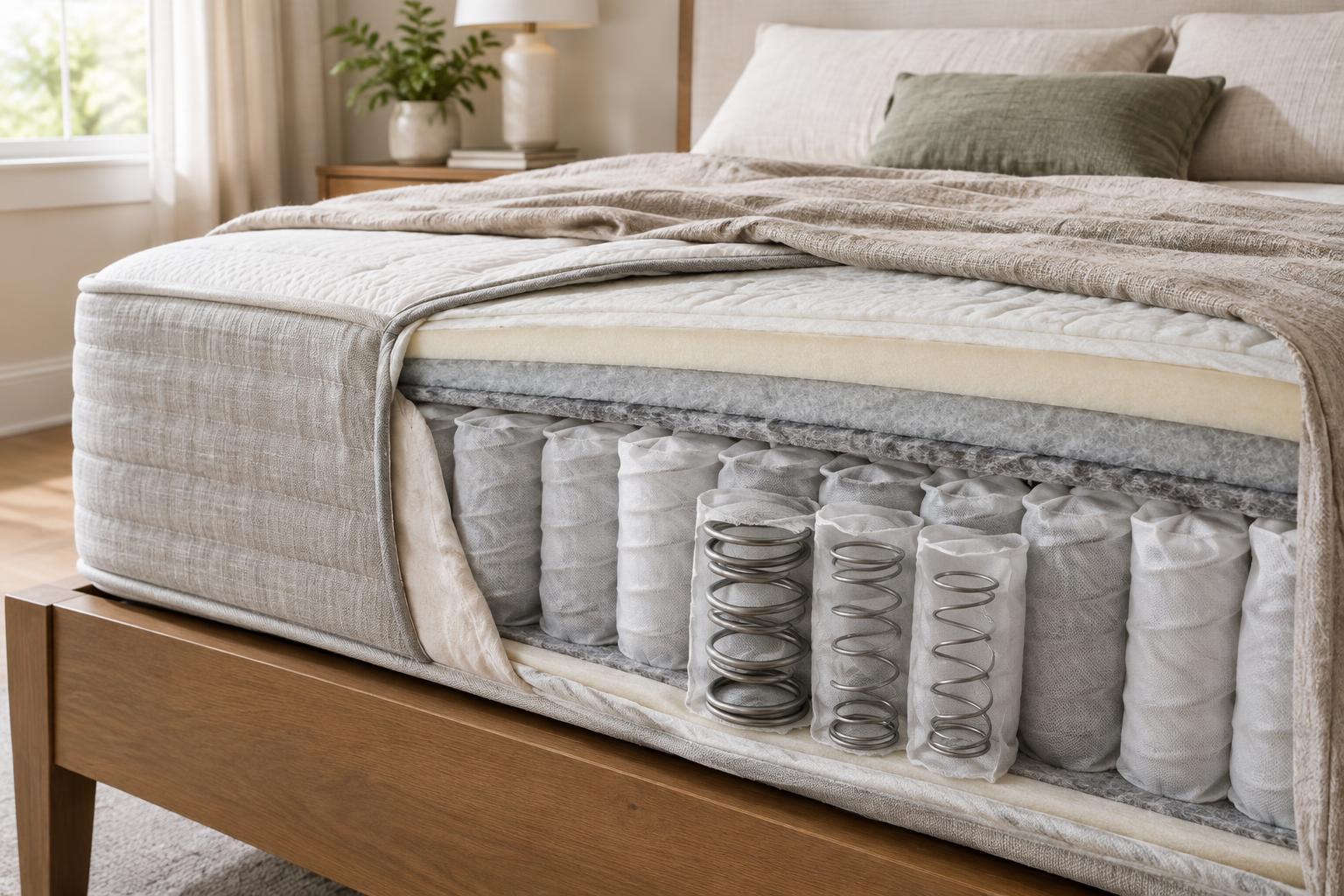
Coil count tells you how many springs are included in the figure the manufacturer reports. When you compare mattresses of the same size and similar construction, it can help describe how densely springs are arranged. In a pocketed-coil unit, more, smaller coils may allow the surface to respond in finer increments to pressure. That does not mean the highest available count will feel best to every sleeper.
Count is particularly easy to misread across different designs. Pocketed coils move more independently than interconnected spring systems, and the designs need not use the same number of springs. Some mattresses also add a layer of small coils above the main support unit. Including those in a headline total can produce a larger number without changing the count of the primary support coils.
More coils do not, by themselves, establish better durability, stronger support or less partner disturbance. Wire thickness, spring design, surrounding materials and overall construction matter too. A count is most useful when you know the mattress size, the coil type and exactly which layers are being counted.
Read the specifications together with the rest of the build
To make a meaningful comparison, look beyond the two numbers. Identify the coil system first: individually pocketed coils, for example, behave differently from linked coils. Then look at the comfort layers above it. A thick, soft layer can make a relatively firm spring unit feel plush at first contact; a thinner layer may make the spring response easier to notice. Edge construction and zoning may also influence where the mattress feels most stable or yielding.
Be cautious about using specifications to predict how long a mattress will last. Wear depends on the whole assembly, including the materials above and around the springs, as well as use and care. Gauge and count can help you ask informed questions, but they do not provide a reliable lifespan estimate in isolation. If a seller provides limited construction detail, avoid treating one prominent number as proof of quality.
A practical way to compare mattresses
When narrowing down options, compare the same mattress size and ask four questions: What type of coils are used? Does the published count cover the main support layer or multiple layers? Is the listed gauge used throughout the unit? What materials sit above the springs? These answers make the numbers more useful and reveal when two advertised specifications are not truly comparable.
Finally, let comfort and fit guide the decision. If you can try a mattress, spend time in your usual sleeping position and notice whether your body feels supported without uncomfortable pressure. If shopping remotely, review the seller’s return terms and the mattress’s full construction description. Coil gauge and count are best used to understand why mattresses might feel different—not to choose a winner from a specification sheet alone.