The shared starting point
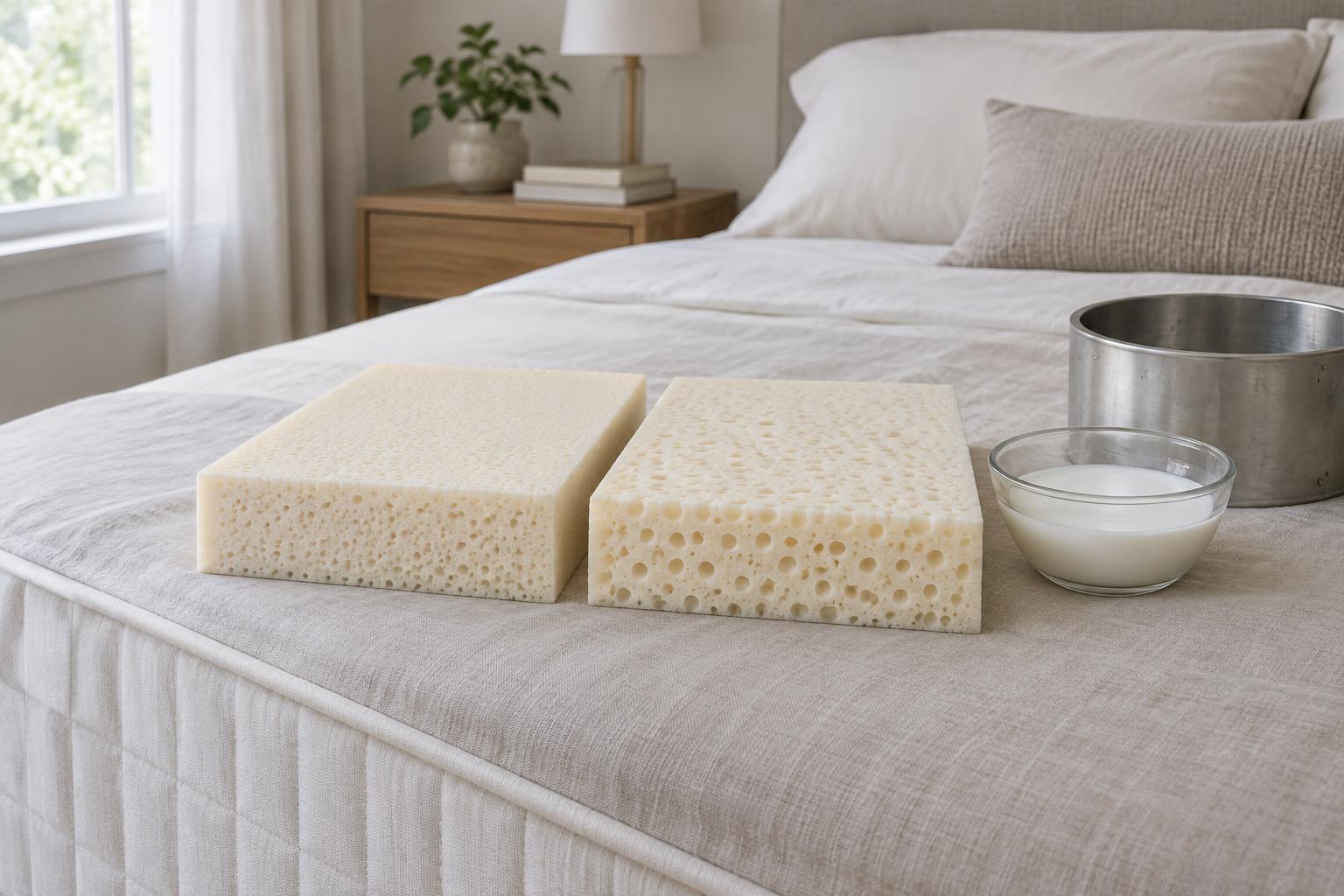
Latex foam starts as a liquid mixture that is frothed into bubbles, poured into a mold, and heated to set its shape. The finished foam is typically washed and dried. Manufacturers can make latex from rubber-tree latex, synthetic latex, or a blend; the words “Dunlop” and “Talalay” describe processing methods, not the source of the latex. A Talalay layer is not automatically synthetic, and a Dunlop layer is not automatically all-natural.
Both processes can produce springy foam that responds to pressure differently from the slow-moving feel often associated with memory foam. Both can also be made in a range of firmness levels. The process affects the foam’s structure, but the recipe, density, thickness, and placement within a mattress matter too.
How Dunlop latex is made
In the Dunlop process, liquid latex is whipped into a foam, poured into a mold, and heated to set it. The foam is then removed, washed, and dried. This comparatively direct molding process can leave some variation through the depth of a thick piece, including a denser area toward the bottom. How noticeable that variation is depends on the product.
Dunlop is often described as having a grounded, supportive feel. That can make it a useful option for a mattress core or a firmer comfort layer. It is not always firm, however: a softer Dunlop topper may feel more cushioning than a firm Talalay layer. Comparing the two by process alone is less useful than comparing products with similar thicknesses and stated firmness.
What Talalay adds to the process
Talalay latex is also poured into a mold, but the mold is only partly filled. Air is removed to expand the foam through the mold, and the foam is frozen before it is heated to set. It is then washed and dried. These additional steps are intended to produce a more consistent cell structure throughout the layer.
Talalay is frequently used in comfort layers because it can offer a buoyant, pressure-relieving feel without a pronounced slow sink. Shoppers may perceive it as airier or more uniform than a comparable Dunlop layer, but those impressions are not guaranteed. A mattress cover, quilting, and the layers underneath can change what you feel more than the name of the latex process does.
Comparing mattresses without relying on shortcuts
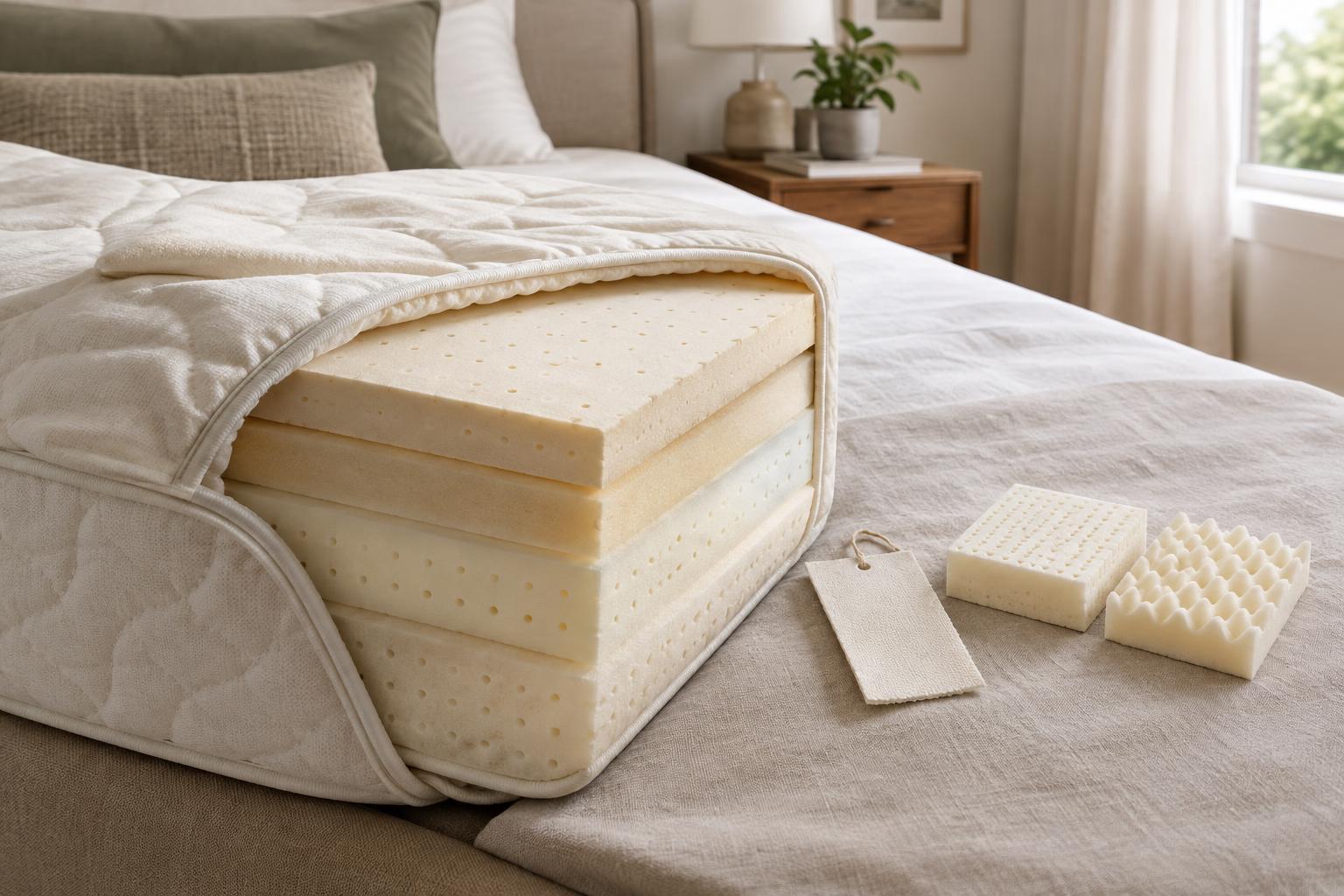
Start with the whole mattress design. Ask which layers are Dunlop or Talalay, how thick they are, and whether they sit near the surface or form the support core. A thin Talalay layer under substantial quilting may feel different from the same foam used in an uncovered topper. Likewise, a Dunlop core beneath a softer top layer may not feel especially firm when you first lie down.
Check how a seller defines firmness; labels such as “medium” are not standardized across brands. If density or indentation-load figures are provided, use them as additional clues rather than as a direct prediction of comfort. Compare the latex content separately from the manufacturing process, and read any certification or material claim closely to see whether it applies to a layer, a component, or the complete mattress.
There is no universal winner for durability, cooling, or value. Either type may perform well when its formulation and construction suit the job, and either can be a poor match for your preferences. When possible, try the mattress in your usual sleep positions long enough to notice both surface cushioning and deeper support. For online purchases, check the trial terms, return conditions, and warranty exclusions before ordering.
Choosing and caring for a latex layer
If you want a more substantial, steady-feeling base, Dunlop may be a sensible place to start. If you want a buoyant comfort layer with a more uniform feel, consider Talalay. Treat these as starting points, not rules. Your preferred firmness and the design of the complete mattress should guide the choice; a topper also needs to work with the support provided by the mattress beneath it.
To care for either foam, follow the maker’s instructions and use an appropriate cover or protector. Keep bare latex away from prolonged direct sunlight and strong heat, and avoid soaking it. Whether you can rotate or flip a mattress depends on its construction, so check its care guidance rather than assuming that every latex mattress can be turned over.