Density is a measurement of foam, not the whole mattress
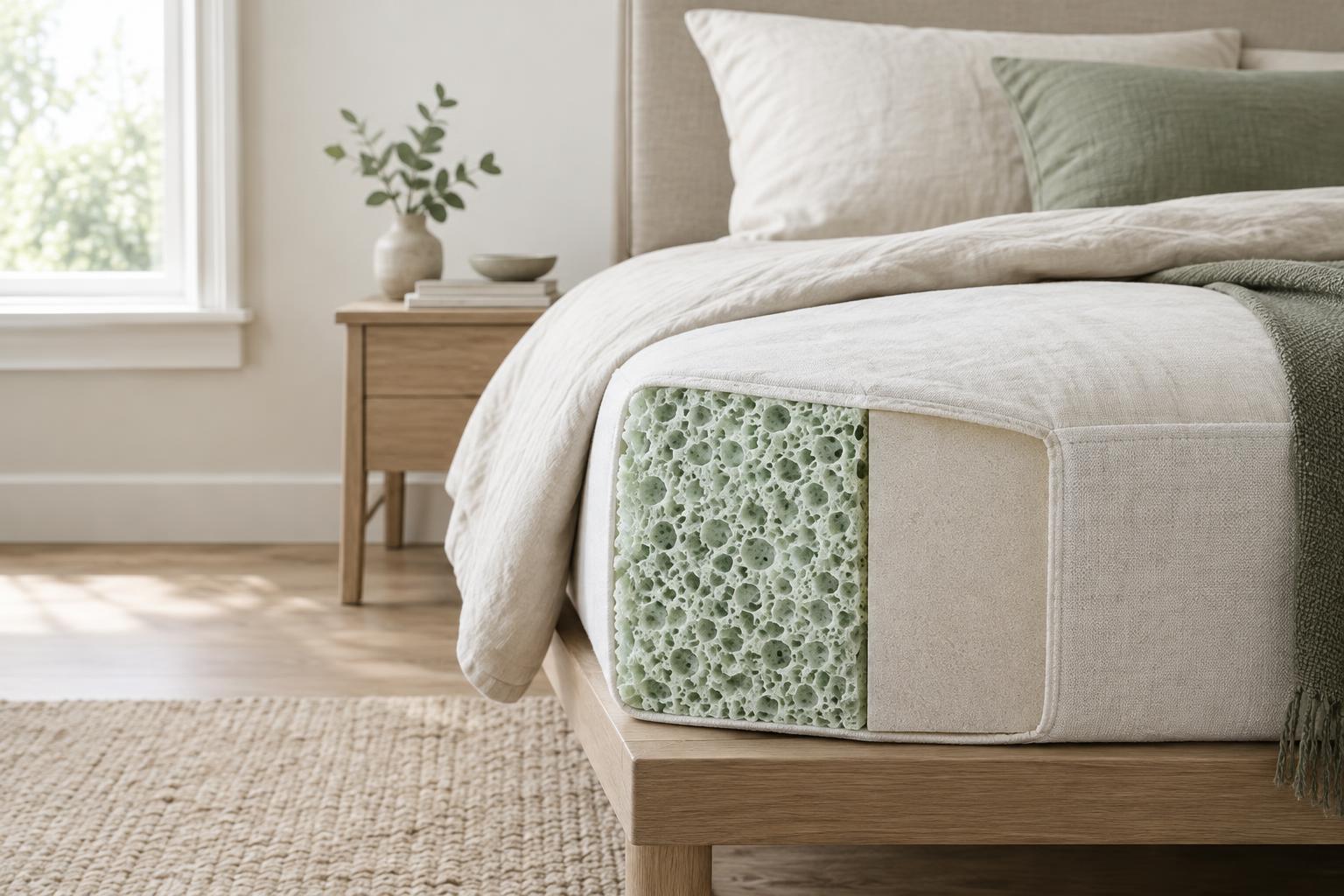
Foam density is the weight of a foam sample divided by its volume. Mattress specifications commonly express it in pounds per cubic foot or kilograms per cubic meter. A denser sample contains more weight in the same amount of space. The measurement applies to a particular foam layer, not automatically to every layer in the mattress.
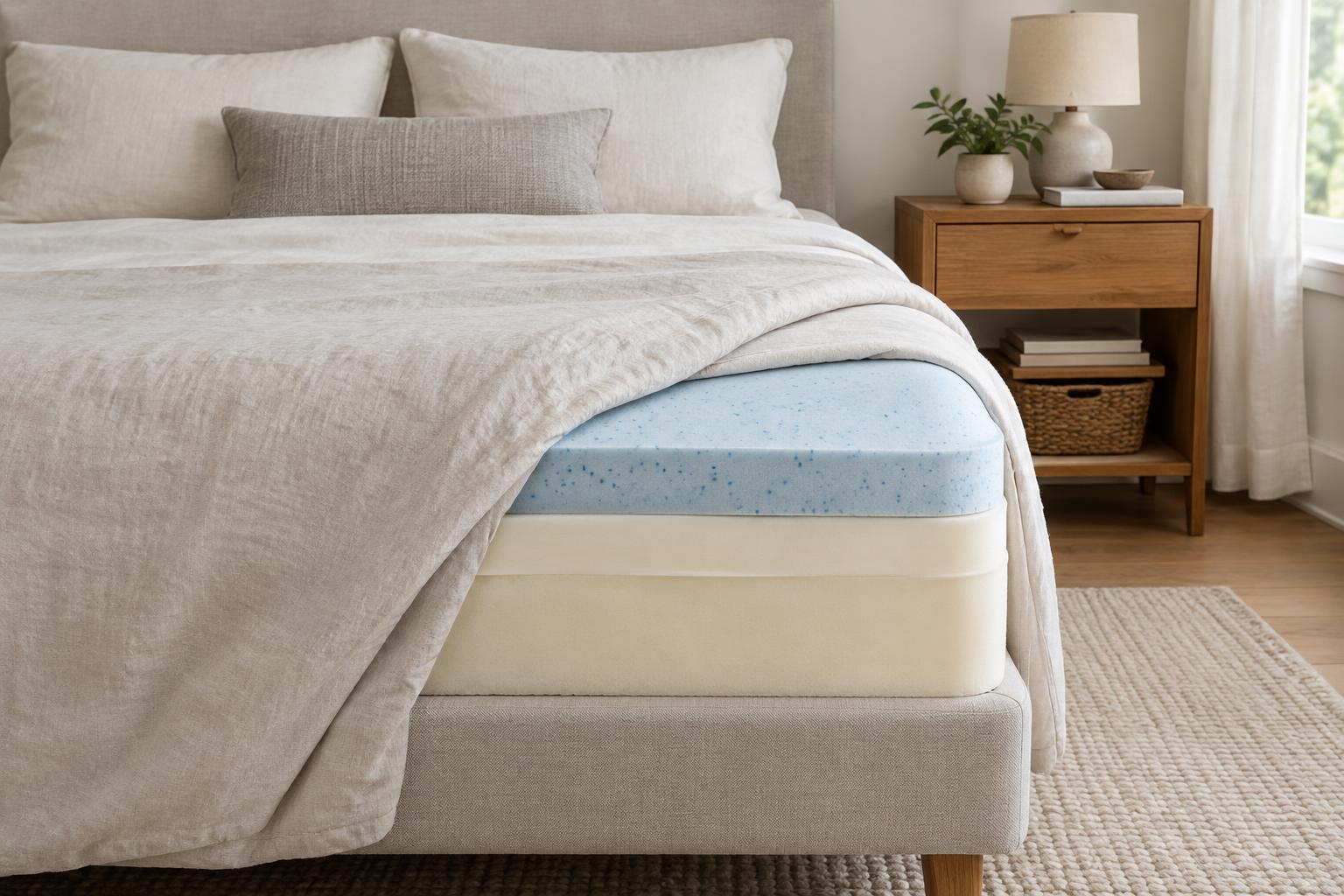
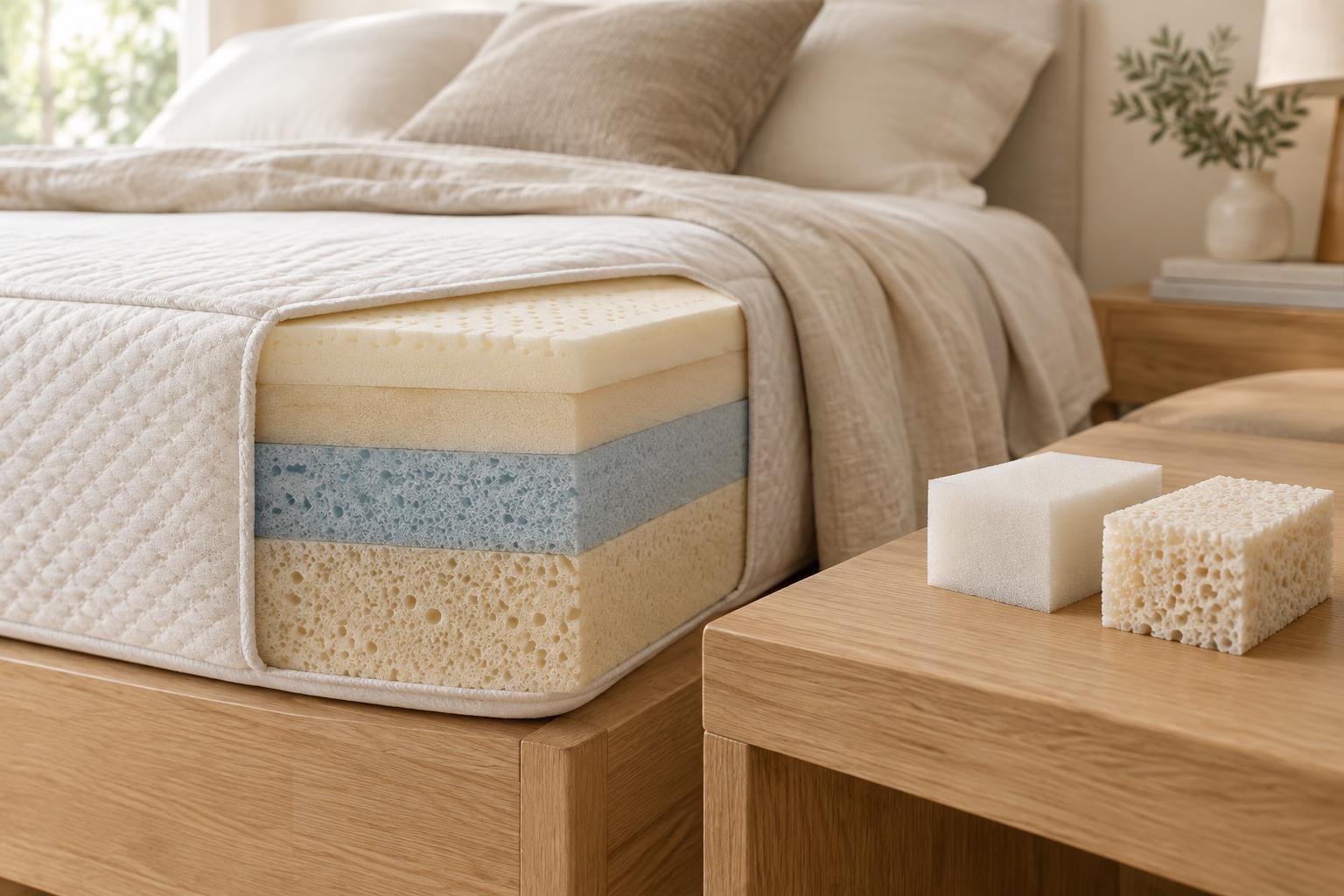
That distinction matters because a mattress may combine several materials: a soft foam quilted into the cover, a pressure-relieving comfort layer, firmer transition foam and a support core. A density number for the support core tells you nothing certain about the foam above it. Likewise, a product's total weight is not a reliable substitute for layer densities; springs, fabric, latex and the mattress's dimensions all affect its weight.
Density is most useful when you know which layer it describes and what type of foam that layer contains. A listing that says only “high-density foam” leaves important questions unanswered.
Density and firmness answer different questions
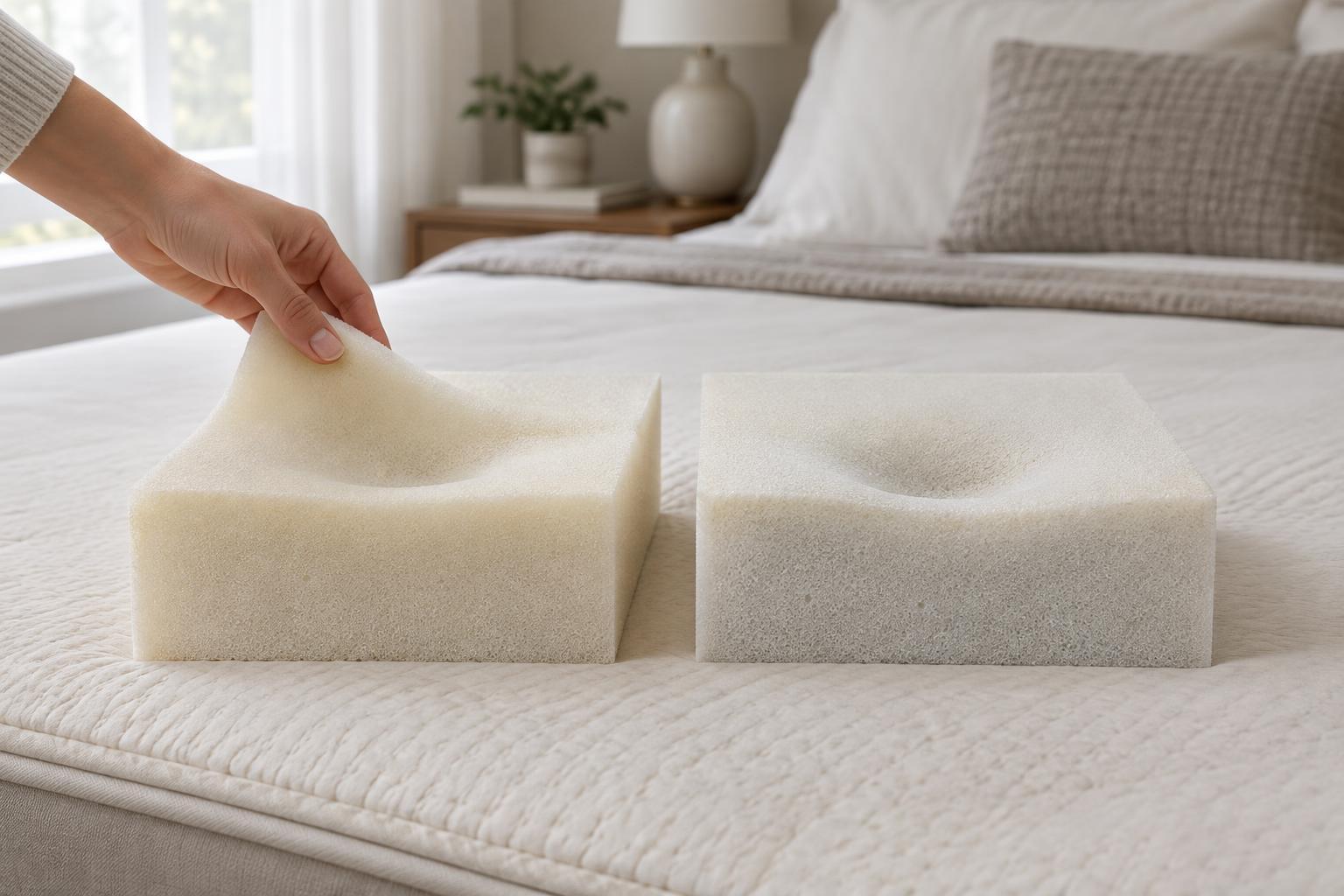
Density describes weight per unit of volume. Firmness describes how a material resists pressure. Two foams can have similar densities yet feel different because their formulations and construction differ. A denser foam is not necessarily a firmer one, and a firm first impression does not establish that a foam is dense.
The feel of a finished mattress adds another layer of complexity. Layer thickness, the order of materials, the cover and the support system all influence how far you sink and how easily you move. A thin soft layer over a firm core can feel unlike a thick soft layer over that same core. If you are trying to judge comfort, density alone cannot replace information about the full construction or an opportunity to try the mattress.
Density also does not directly measure cooling, motion isolation or pressure relief. Those qualities depend on more than one specification, including the foam's response to pressure, the surrounding materials and the way the mattress is assembled.
What density may tell you about wear
Within the same broad type of foam, density can be a useful clue about how much material a layer contains. It may help you assess the risk that a frequently compressed layer will lose its original feel over time. This is especially relevant near the sleeping surface, where body weight repeatedly loads the material. Still, density is a clue, not a promised lifespan.
Foam formulation, layer thickness, manufacturing quality and daily use can all affect wear. A mattress can also develop an uncomfortable feel for reasons other than foam deterioration. For example, a comfort layer might be sound but poorly matched to a sleeper's preferences, or another part of the mattress may change how it feels. A single density figure cannot settle those questions.
Compare like with like. Memory foam, conventional polyurethane foam and latex have different structures and typical uses, so their density numbers should not be treated as one universal ranking. Even within a material family, the number makes more sense alongside the layer's position and purpose.
How to read a mattress specification
Start by looking for a layer-by-layer description. For each foam layer, note its material, thickness, density if provided, and place in the mattress. A detailed specification lets you distinguish a substantial comfort layer from a thin surface treatment and identify which material forms the support core. If a seller gives one density for a multilayer mattress, ask which layer it refers to.
Next, keep density separate from claims about feel. Terms such as “plush,” “medium” and “firm” describe an intended experience, but they are not density measurements. A specification is more useful when it helps explain how the layers work together rather than relying on a label such as “premium foam.” If density is not disclosed, you can still assess the mattress, but you have less information for comparing its construction with another model.
Finally, read the practical terms of a purchase. A return policy may matter more to your decision than a small difference between two density figures, particularly when you cannot try both mattresses beforehand. Check any conditions for returns and any warranty exclusions rather than assuming either policy guarantees lasting comfort.
Use density as one part of the decision
A useful comparison begins with the questions density cannot answer: Does the mattress offer the feel you prefer? Does its construction suit your bed base and the way you sleep? Are the layer details clear enough to understand what you are buying? Density can add context to those answers, especially when comparing similar foams in similar positions, but it should not be the sole reason to choose one mattress.
If two models seem close, make a simple side-by-side list of their materials, layer thicknesses, disclosed densities, return terms and care requirements. Mark any missing details rather than filling them in with assumptions. That approach gives density its proper role: a specific measurement that can inform a broader, more practical judgment.