What does mattress zoning mean?
A zoned mattress is built to respond differently in different areas. Most designs run from head to foot, with one feel around the shoulders, another around the middle of the bed, and sometimes a third around the legs. A common goal is to let the shoulders sink more easily while giving the hips and waist a firmer-feeling area. That pattern is not a rule: brands use different layouts, and the same layout can feel different to people with different body shapes and sleeping positions.
Zoning is a construction detail, not a guarantee of comfort. The top layers, the overall firmness, and the foundation under the mattress all affect what you feel. A subtle change deep in the support layer may be hard to notice beneath thick cushioning. Before comparing zone counts, it helps to find out which layer is zoned, where the zones fall, and whether the change is meant to affect cushioning, support, or both.
How foam and latex create different zones
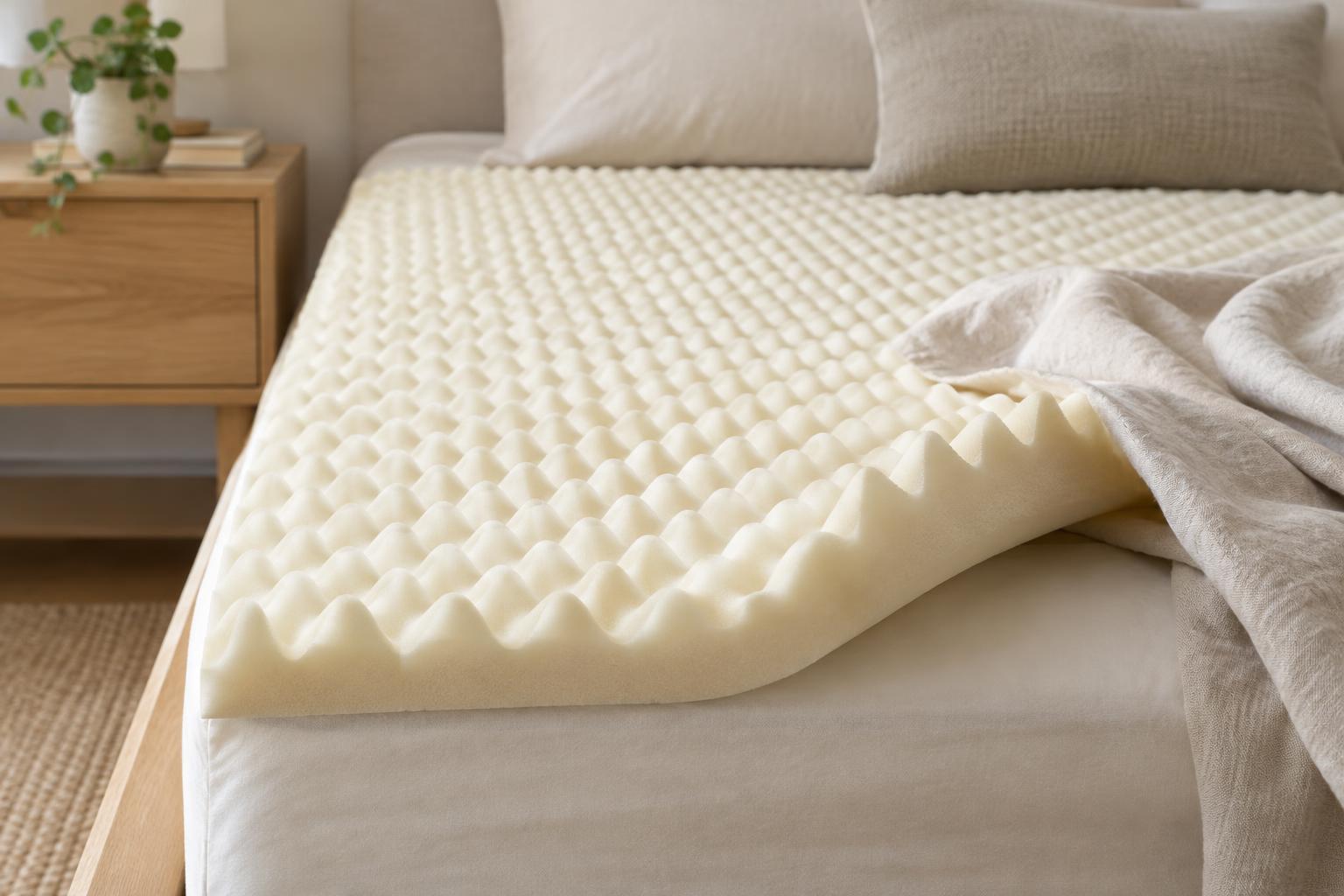
Foam mattresses can vary firmness across the bed by joining pieces of foam with different properties or by cutting channels and shapes into one layer. Cuts allow a section to compress differently without requiring a different material. A softer-feeling shoulder area, for example, might have deeper cuts or a different foam from the middle area. The effect depends on the thickness of that layer and what sits above it.
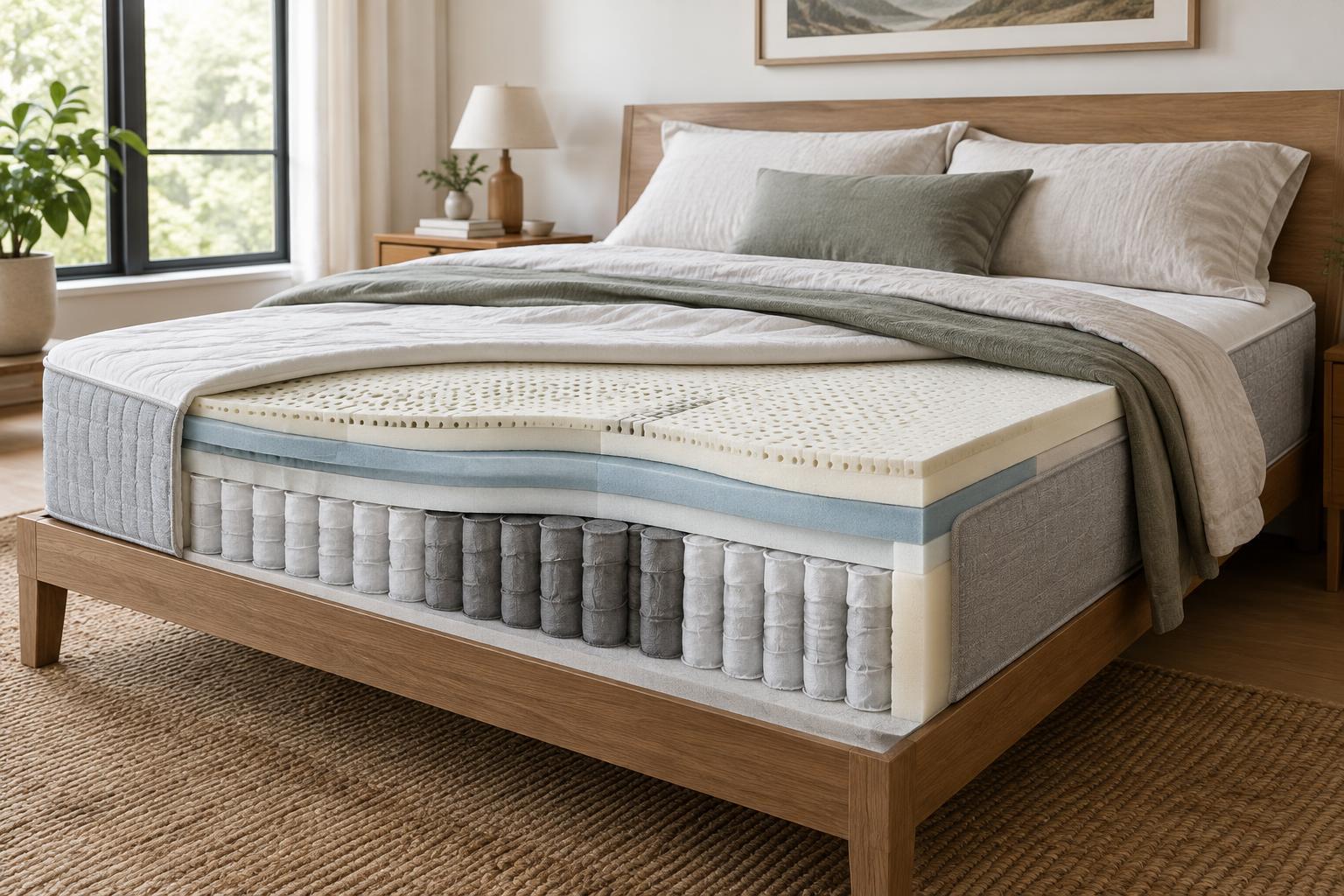
Latex layers can also be zoned through changes in their pattern of holes or through sections with different firmness. The pattern is only part of the story: the thickness and firmness of the latex, along with any layers above it, shape the finished feel. A product description that says “zoned latex” tells you less than a layer diagram showing where that latex sits and how the zones are arranged.
Do not assume that a visibly patterned layer will create a dramatic change at the surface. Thick, soft comfort layers can make a zoned core feel more even. Conversely, zoning near the surface may be easier to notice when you move between positions. Neither approach is inherently better; the useful question is whether the complete mattress feels comfortable and supportive to you.
How coils and hybrid designs vary support
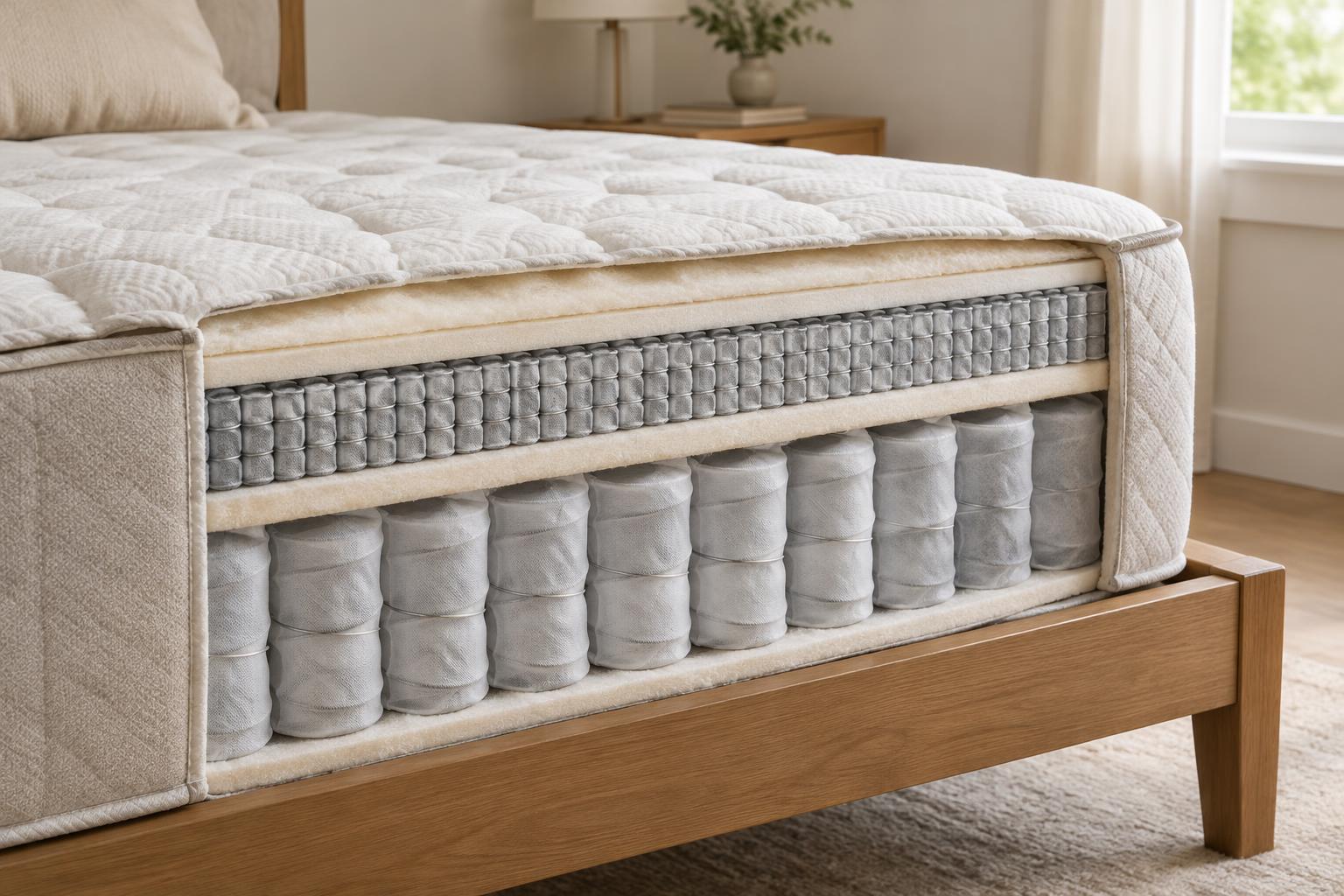
In a zoned pocket-coil unit, manufacturers may change the properties or arrangement of coils across the bed. A middle section might use coils designed to resist compression more than those near the shoulders. Hybrids can pair that coil unit with a uniform foam top, or add zoning in a foam or latex layer as well. Two mattresses described as zoned hybrids may therefore have quite different constructions.
Coil count alone will not explain how a zoned mattress feels. The coil design, the way coils are arranged, and the cushioning above them all matter. Also check whether a firmer perimeter is being described as edge support rather than as a head-to-foot zone. Edge support changes how the sides of a bed feel when you sit or lie near them; it does not necessarily change support beneath your shoulders or hips.
Who might notice zoning—and when might it miss the mark?
Side sleepers may appreciate a design that gives the shoulder room to settle, provided the rest of the mattress does not let the hips sink too far. Back sleepers may prefer a more even surface or may like a firmer-feeling middle. Stomach sleepers often need to pay particular attention to how far their midsection sinks. These are starting points for evaluating a bed, not rules tied to a sleeping position.
Zone placement matters as much as zone strength. Your height, proportions, pillow, and usual position determine where your body meets each section. If your shoulder or hips land between the intended areas, the design may feel less useful than it sounds. Couples can have different impressions of the same zones, especially if their heights or preferred positions differ. A mattress without zoning can also be a good fit if its overall construction suits both sleepers.
How to assess a zoned mattress before buying
Start with the layer description. Identify whether the zoning is in foam, latex, coils, or more than one layer; ask how many areas there are and where they begin. Then compare the mattress as a whole: the comfort-layer thickness, general firmness, edge design, and required base may have more influence on your experience than the advertised number of zones.
If you can try the mattress, spend time in the positions you actually use rather than judging it while seated. Notice whether your shoulders can relax, whether your middle feels adequately supported, and whether a transition between zones creates an awkward pressure point. If you are shopping without a trial in person, review the return terms and any foundation requirements before ordering. Zoning is most useful as one clue to how a mattress is built—not as a substitute for checking how the complete design fits your needs.