Start with two sets of priorities
When two people share a mattress, the goal is not to find a model with the best-sounding label. It is to find a sleeping surface each person can use comfortably. Before comparing products, have each sleeper describe what works and what does not about the current bed. Separate firm preferences, such as wanting less movement from a partner, from flexible ones, such as a preference for a particular fabric.
Consider usual sleeping positions, how much each person moves at night and whether either sleeper tends to feel warm. Body weight can also change how a mattress feels: the same surface may feel firmer to one person and softer to another. Make a short list of each person’s top two or three needs. That list gives you a better basis for comparison than a single firmness number, which is subjective and can vary between brands.
Find out whether one shared feel can work
If both sleepers are comfortable on a similar surface, a single mattress may be the simplest choice. A medium-feeling model is often worth considering when preferences differ only slightly, but it is not a guaranteed compromise. One person may need more cushioning at the shoulders and hips, while the other dislikes sinking into the bed. When trying a mattress, both people should lie in their usual positions long enough to notice pressure, support and ease of changing position.
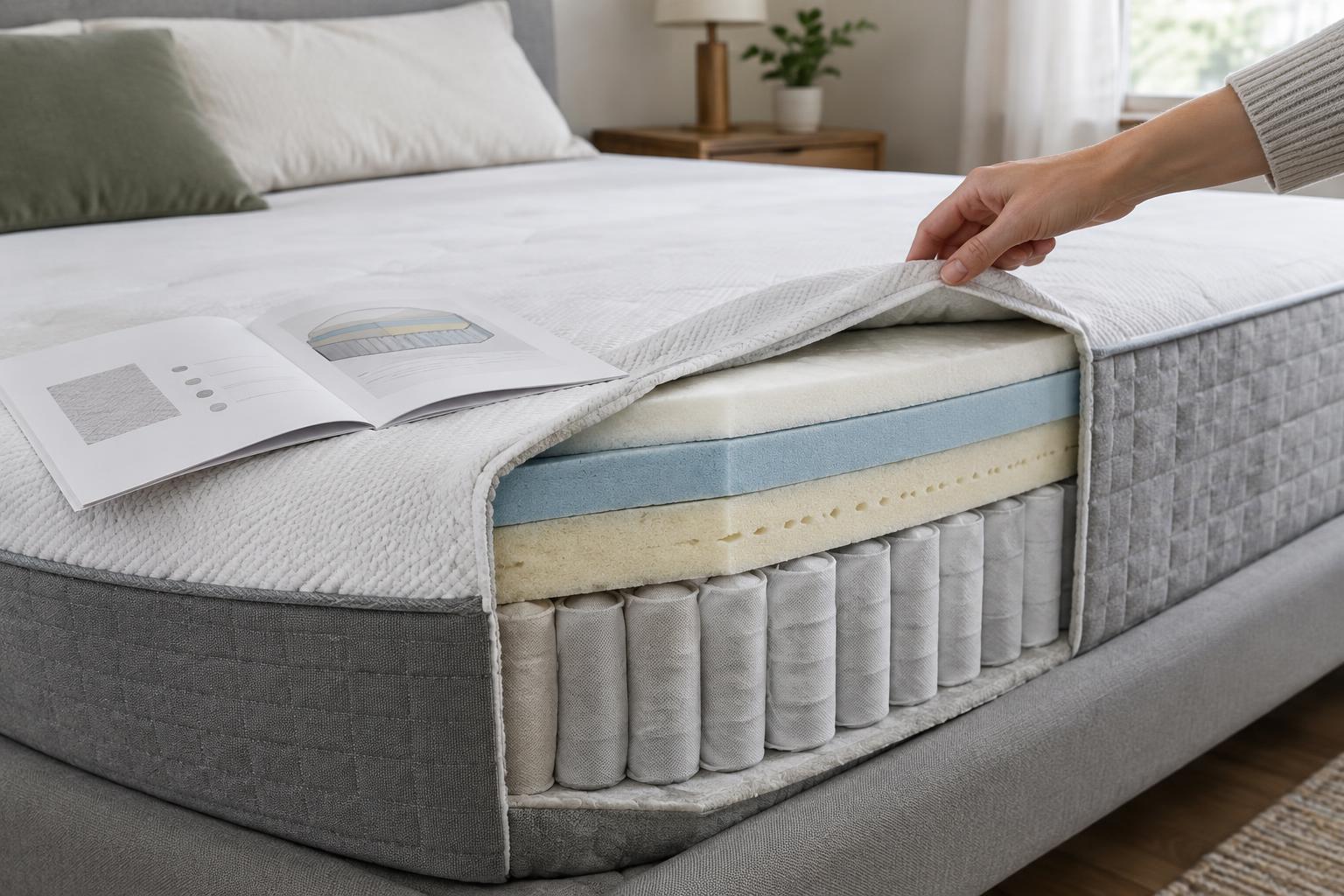
Pay attention to construction as well as firmness. Comfort layers affect the initial feel, while the support system influences how the bed responds under weight. Foam can absorb movement, which may appeal to a light sleeper, though some people dislike a close, conforming feel. Mattresses with coils can feel more responsive, but movement across the surface varies by design. These are useful tendencies for narrowing choices, not promises about every product.
Edge support also matters if both people use the full width of the bed. Sit and lie near the perimeter to see whether it feels stable enough for you. If space permits, a larger mattress can give each sleeper more room and reduce how often movement or changes in position disturb the other. Measure the bedroom and the route into it before assuming an upgrade will fit.
Consider separate comfort zones
When firmness preferences are far apart, look at mattresses designed with different feels on each side, or at two compatible mattresses placed together on one frame. Split arrangements let each sleeper choose a surface more independently. They may also suit adjustable bases when partners want different head or foot positions. Check the exact dimensions of the mattresses, base and bedding before buying; products described as “split” do not all use the same configuration.
A split setup has trade-offs. The join may be noticeable near the center, separate mattresses can shift if they are not well supported, and fitted sheets may take more planning. A topper can make a small adjustment to the feel of one side, but it cannot reliably correct a mattress that feels unsupportive underneath. If using two surfaces, compare their heights so one side does not sit much higher than the other.
Account for heat and everyday disturbances
Partners can disagree about temperature even when they agree on firmness. Mattress materials and construction affect airflow and how closely the surface surrounds the body, but bedding and room conditions also play a part. If one person sleeps warm, consider breathable bedding and separate blankets before treating a mattress as the only solution. Product descriptions that promise a consistently cool sleep should be viewed cautiously, since comfort depends on the person and the room.
Think about what actually wakes either sleeper. If it is movement, compare how much motion reaches the other side when one person gets in, turns over or gets out. If it is the pull of a shared duvet, separate covers may be a simpler fix. If it is a lack of space, changing materials alone may not solve the problem. Matching the purchase to the disturbance helps avoid paying for features neither person needs.
Shop as a team, then check the terms
Bring both priority lists to a store or use them to compare specifications online. Narrow the field to a few realistic options and have each person assess them independently before discussing favorites. Ask what the mattress is made of, whether its layers or sides differ, what base it requires and whether the chosen size will work with your existing frame. If you cannot try it together, be especially careful about the return terms.
Read the trial, exchange and warranty conditions before placing an order. Check how long you have to decide, whether a minimum use period applies, who pays any return or pickup costs, and what condition the mattress must be in. Confirm whether the policy changes for split mattresses, clearance items or adjustable bases. A sensible final choice is one both people can accept in daily use, with terms that leave room to correct a mismatch.