Start with comfort, not a perfect number
There is no single thermostat setting that feels comfortable to everyone. A reasonable starting point for many bedrooms is the mid-to-upper 60s Fahrenheit, or roughly 18–21°C, but treat that as a trial setting rather than a rule. Your bedding, sleepwear, mattress, room layout, and personal preferences all affect how warm or cool you feel. If that range feels unpleasant or impractical in your home, adjust it.
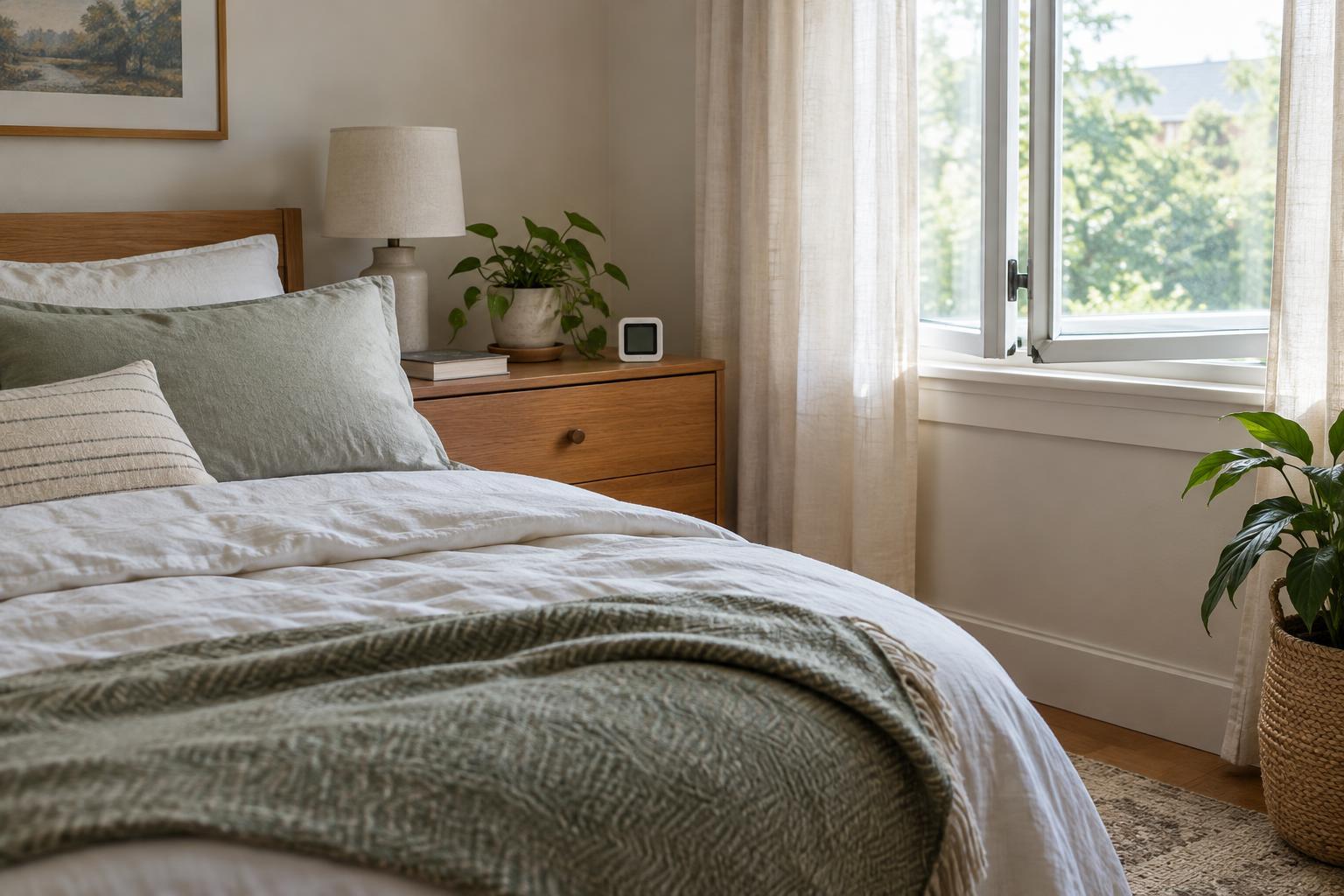
Change the setting a little at a time and notice how the room feels when you get into bed and when you wake up. The thermostat measures air near its sensor, which may not match the temperature beside your bed. Sunlight, exterior walls, closed doors, and nearby vents can create noticeable differences. A simple room thermometer can help you compare the bedroom with the thermostat display, but your experience of the whole sleep setup is the more useful guide.
Match the thermostat to your bedding
The temperature under a duvet is different from the temperature of the surrounding room. Before making a large thermostat change, consider whether your bedding suits the season. In a warm room, a lighter cover and breathable sleepwear may feel better than a heavy comforter. In a cool room, an extra blanket can add warmth without requiring you to heat the entire home to the same degree.
Think in layers that are easy to remove or add. A sheet, a lighter blanket, and a separate warmer layer offer more flexibility than one all-season cover that is either too much or too little. If two people share a bed but prefer different temperatures, separate covers can make adjustments easier. Mattress protectors and pads also vary in how much warmth they retain, so include them when evaluating your setup rather than assuming the thermostat is the only cause of discomfort.
Adjust for summer heat
In warmer months, begin with a setting your cooling system can maintain comfortably, then fine-tune the bed and airflow. Closing curtains before strong sun reaches the bedroom may limit daytime heat buildup. A fan can make the room feel more comfortable by moving air, although it does not lower the room’s temperature on its own. Position it so the breeze feels pleasant rather than disruptive.
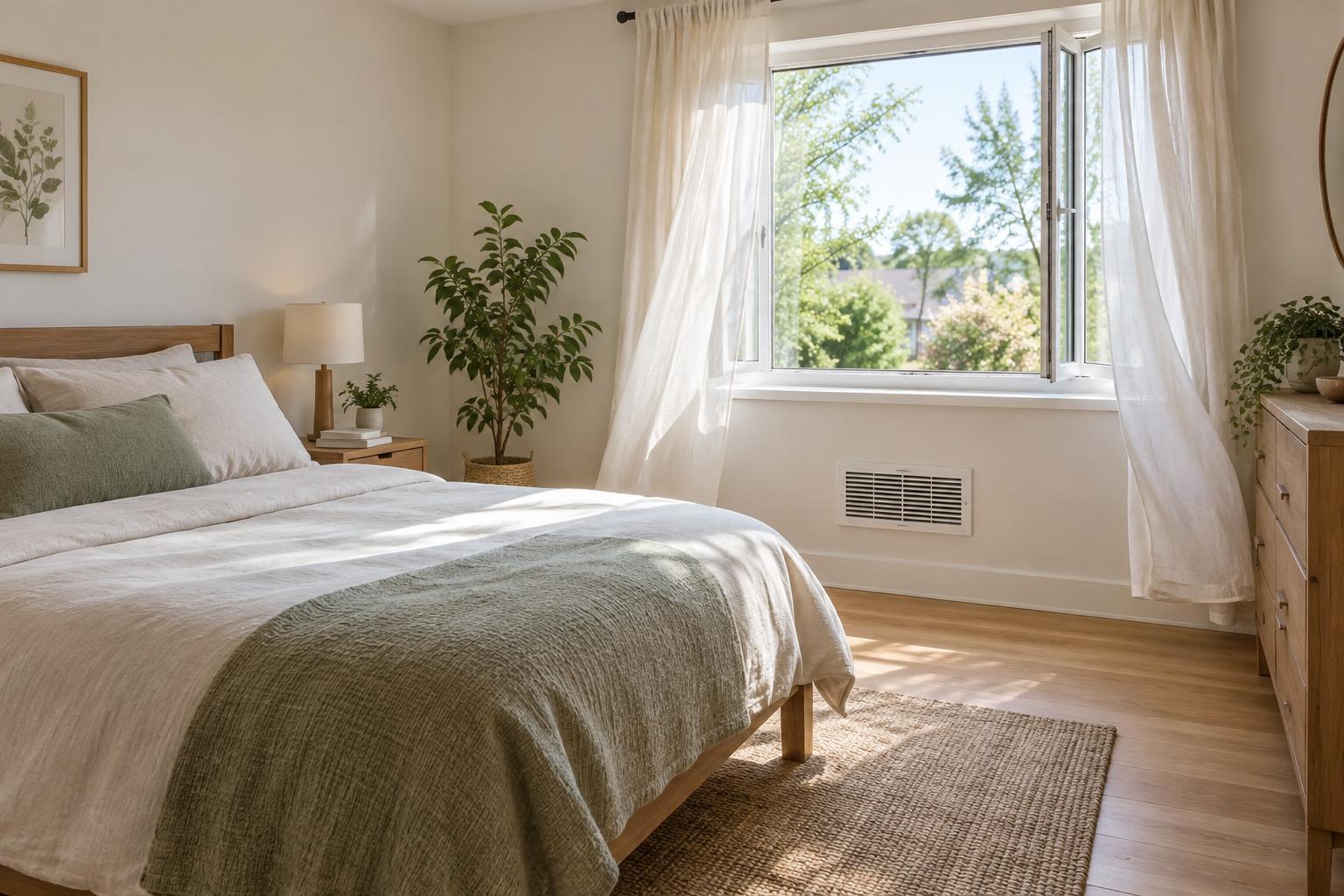
If the air outdoors is cooler than the air indoors, opening windows may help; close them again when outdoor heat rises or when noise, air quality, or security makes an open window unsuitable. Avoid judging a summer setting solely by how the room feels when you first walk in. Give the bedroom and bedding time to settle, then decide whether a small thermostat adjustment is needed.
Adjust for winter cold
In colder months, check for drafts and uneven heating before turning the thermostat much higher. A poorly sealed window, blocked vent, or bed placed against a cold exterior wall can make one part of the room feel cooler than the thermostat suggests. Curtains, an unobstructed heating vent, and a warmer bedding layer may improve comfort without a major change to the whole-house setting.
You can try lowering the thermostat modestly at night if your bedding keeps you comfortable, but do not treat a lower setting as a goal in itself. Homes and heating systems differ, and some occupants need a warmer room. Follow any safety guidance for your heating equipment, and use extra care when choosing settings for infants, older adults, or anyone who may have difficulty noticing or responding to uncomfortable temperatures.
Pay attention to humidity and consistency
Temperature is only part of the picture. Humid air can feel sticky in summer, while very dry air in winter may make a room feel less pleasant. If your home has a humidity reading, use it alongside your impressions rather than trying to reach an exact number. Ventilation, a dehumidifier, or a humidifier may help in some rooms; any device needs cleaning and use according to its instructions.
Once you find a comfortable combination, keep the routine simple. A programmable thermostat can make it easier to return to a preferred nighttime setting, while seasonally appropriate bedding gives you room to adapt without repeatedly changing the controls. Revisit the setup when the weather shifts, you change bedding, or the bedroom starts feeling different. The best setting is one that works with the room and the people using it, not a fixed number copied from another home.