Start with the height you actually sleep at
The best reference point for bedside table height is the top of your mattress when the bed is made, not the height of the bed frame. Measure from the floor to the mattress surface, including any topper you normally use. If you plan to change mattresses soon, remember that a thicker or thinner replacement could change how the table feels beside the bed.
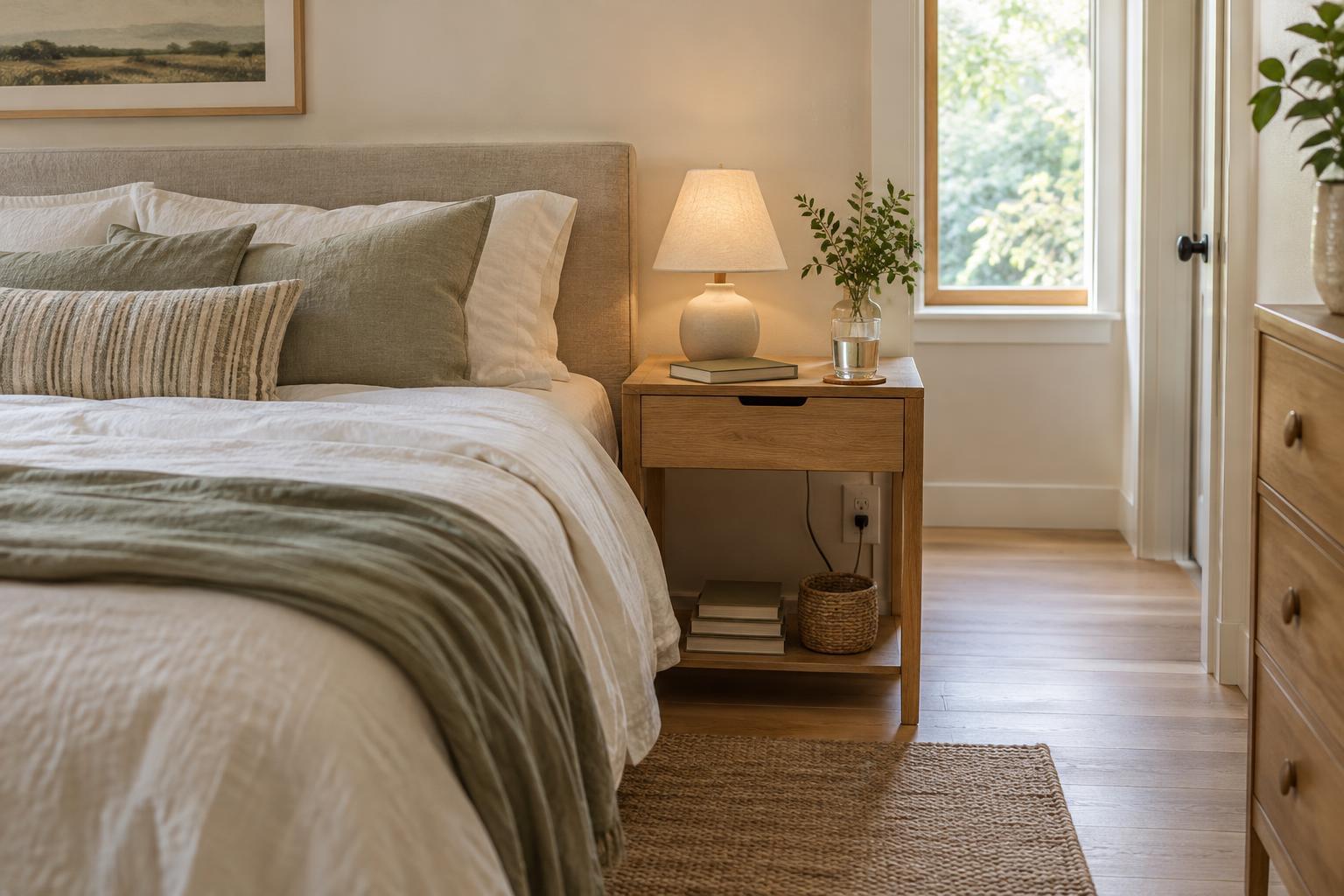
A table surface roughly level with the mattress top is a useful starting point. It lets many people set down a book or pick up a glass without reaching sharply upward or downward. It is not a fixed rule, though: a tall lamp, a deep drawer or the way you sit up in bed may make a slightly different height more convenient. Before buying, place a sturdy box or another temporary surface beside the bed and try reaching for it from your usual sleeping position.
Position it for the reach you use every day
Move the table close enough that you can reach its front edge without leaning far over the side of the mattress. Then check that it does not crowd your pillow, bedding or the path where you get in and out of bed. The ideal gap depends on the shape of the table and how much space you have, so test the position while lying down and while standing beside the bed.
Think about which hand you naturally use for your phone, water, glasses or light switch. Put the items you use most often toward the near side of the tabletop, leaving enough clear space to set something down without rearranging everything else. If two people share the bed, their tables need not match exactly. Each side can be arranged around its user's reach and available floor space.
Check clearance before choosing a table
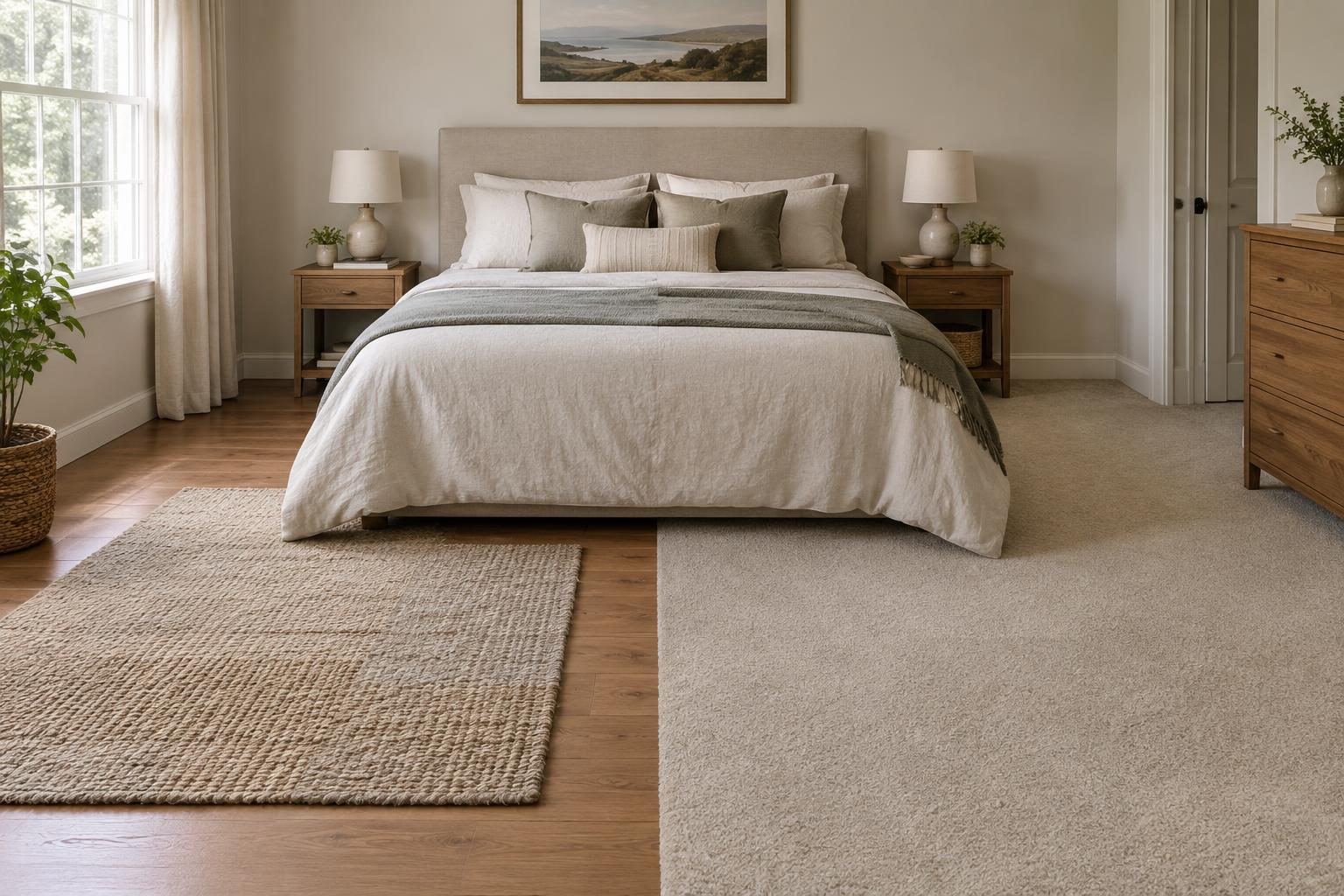
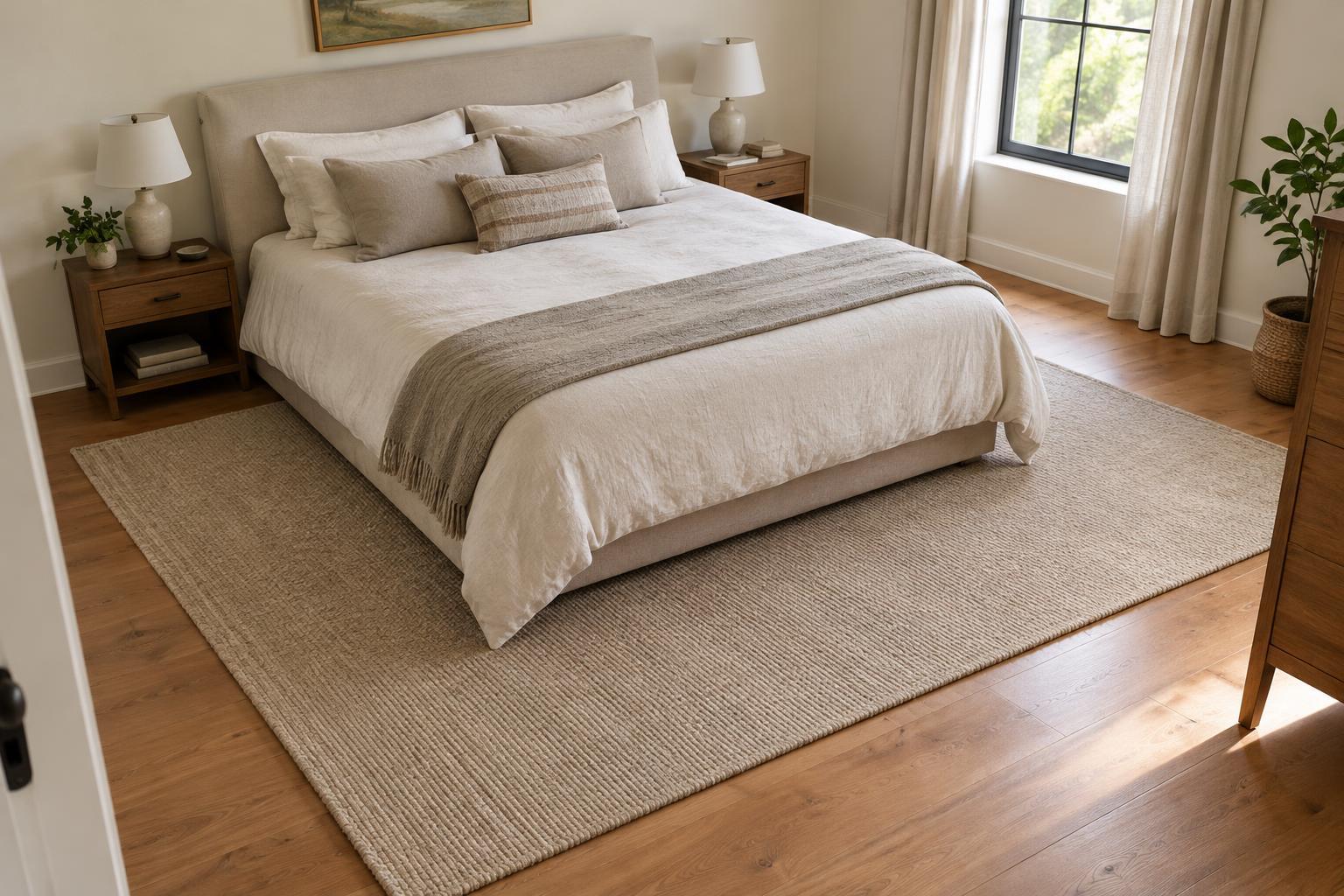
Measure the width and depth of the space beside the bed, not just the height. Allow room for drawers or cabinet doors to open, and check whether a closet door, bedroom door or curtain will cross the same area. A table that fits on paper may still make a narrow walking route awkward. If space is tight, a shallow table or wall-mounted shelf may provide a useful surface without taking up as much floor area.
Consider the table's shape as well as its footprint. Rounded corners can be less intrusive along a frequently used walkway, while a raised edge or tray can help keep small objects together. Check that the surface and construction are stable enough for what you intend to place on them, especially if you use a lamp. Avoid making an unstable table seem workable simply by pushing it against the bed.
Plan for lighting and cables
If the table will hold a reading lamp, try the lamp and table as a pair. The shade should direct light where you need it, and you should be able to operate the switch comfortably from bed. A lamp with a large base may leave little room for anything else, even on a table that looks generous in a product photo. Wall-mounted lighting can free up the tabletop, provided its controls are easy for you to reach.
Locate outlets before settling on a position. Charging cables and lamp cords should have a clear route that does not pull across a walkway or snag on a drawer. Keep cords tidy and follow the instructions for any electrical products you use. If an outlet is inconveniently placed, consider whether a different table location or lighting setup would be simpler than stretching a cord across the room.
Make a final bedside test
Once you have a likely size and location, recreate the setup as closely as you can before committing to it. Mark the table's footprint on the floor with removable tape, set a temporary surface at the proposed height, and place your usual essentials on it. Lie down, sit up, reach for each item and walk around the bed. This quick check can reveal a drawer that is hard to open or a surface that feels farther away than expected.
Revisit the arrangement after a few nights of normal use. A table that looks balanced in the room should also make small routines feel simple: turning off the light, finding your glasses and putting down a book. If those actions require an awkward stretch, adjust the placement or the items on top before assuming you need a different table.