Start with the view into your room
Daytime privacy depends on more than the window covering. Before choosing one, stand where a passerby or neighbor could reasonably look in. Consider windows across a courtyard, an elevated walkway and nearby upper floors, as well as the view from the street. Then check what is visible from inside the bedroom: a bed set back from the window may be less exposed than a desk placed directly beside it.
Light levels matter, too. A covering that obscures the room when daylight is brighter outdoors may reveal more when the bedroom is lit after sunset. If you want privacy both day and night, plan for a second, more opaque layer rather than expecting a sheer fabric or translucent film to do both jobs.
Sheer curtains soften the view
Sheer curtains diffuse daylight and make direct views into a bedroom less clear while preserving an airy appearance. Fabric weight, weave and color affect the result: a loosely woven sheer generally reveals more detail than a denser one. Curtains also move with drafts, so a panel that looks sufficient when still may leave a gap when a window is open.
For better coverage, choose panels wide enough to overlap when closed and hang them beyond the sides of the window where practical. A double rod lets you pair sheers with lined curtains or another opaque layer for nighttime. If your priority is an unobstructed view during the day, sheers may feel too constant; you can open them, but doing so also removes their privacy benefit.
Blinds offer adjustable coverage
Blinds give you more control over the balance between light, view and privacy. With slatted blinds, you can change the angle instead of fully opening or closing the window. The best angle depends on where people might be looking from, so check it from likely sightlines when possible. Slats can still leave visible gaps, particularly at the sides or around cords and other hardware.
Roller blinds are simpler to operate but usually provide less adjustment between fully raised and lowered positions. A light-filtering fabric can soften daylight, while an opaque fabric is a better choice when you need to block the view after dark. Check the dimensions carefully before ordering: a blind mounted inside the window recess may leave side gaps, while an outside mount can cover more of the surrounding area.
Window film protects selected sightlines
Frosted or patterned window film can obscure a clear view through the glass while admitting daylight. It is especially useful when the concern is a fixed sightline, such as a ground-floor window facing a path. Covering only the lower portion of the glass may give you privacy at standing or seated height while keeping a clear view of the sky. First check whether an elevated neighbor could still see over that covered area.
Film does not open and close like a curtain or blind, so decide whether you are comfortable giving up some of your view all day. Read the product’s guidance on glass compatibility, cleaning and removal before applying it, especially if you rent. Reflective film should not be treated as a dependable nighttime privacy solution: when the room is brighter than outdoors, its effect may change.
Choose a combination you will use
The most useful setup often combines two different functions. Film on the lower glass can screen a persistent daytime sightline, with curtains available when you want more coverage. Sheers paired with an opaque blind can offer soft daylight during the day and a stronger visual barrier at night. If you prefer one covering, decide which matters most: adjustable views, a softly lit room or consistently obscured glass.
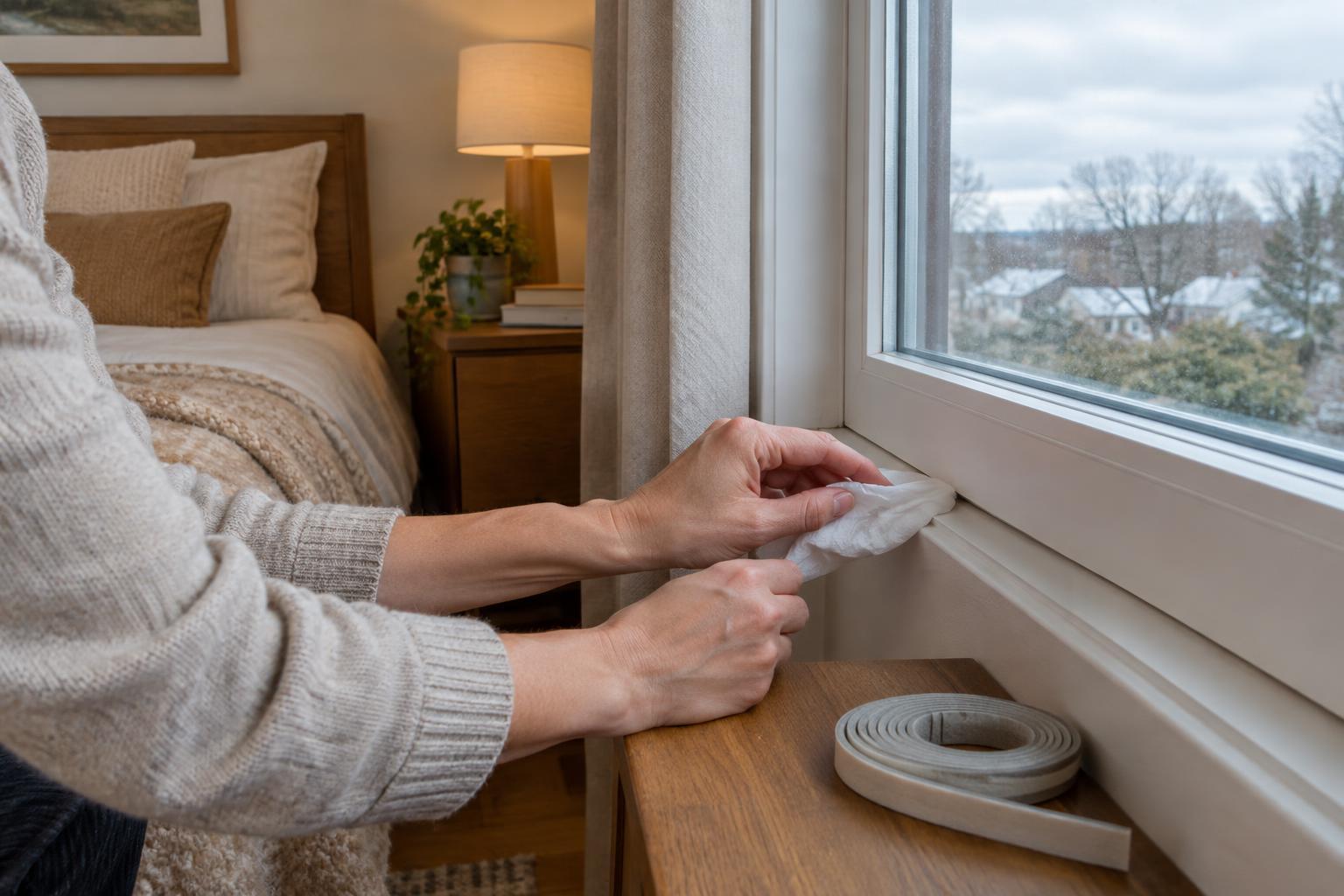
Before buying, note how the window opens, where handles sit and whether a curtain or blind will interfere with a radiator, furniture or airflow. Measure in several places and follow the chosen product’s fitting instructions. Finally, test the result from outside where it is safe and appropriate to do so, both in daylight and with the bedroom light on after dark. That simple check is more useful than judging privacy from inside the room alone.