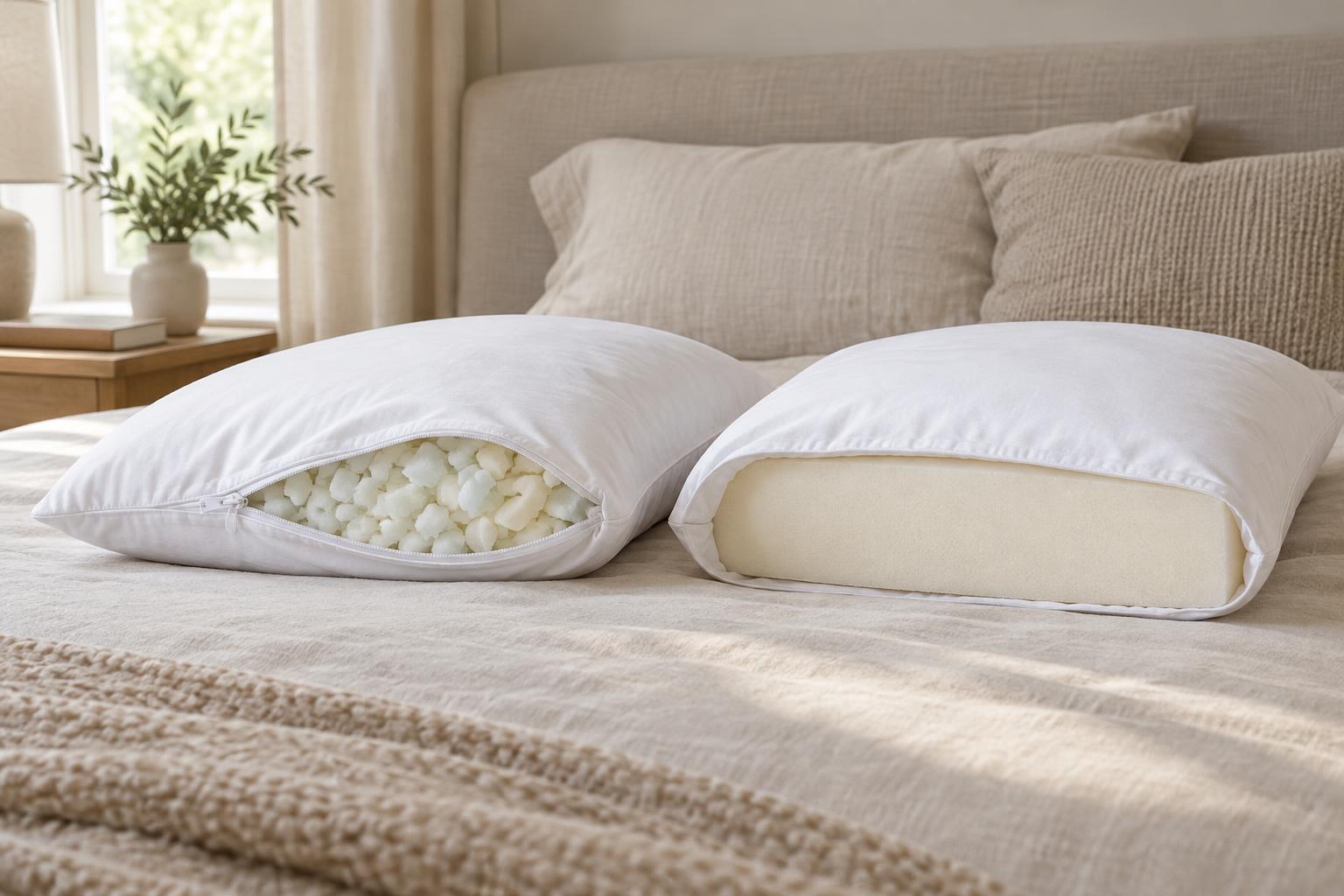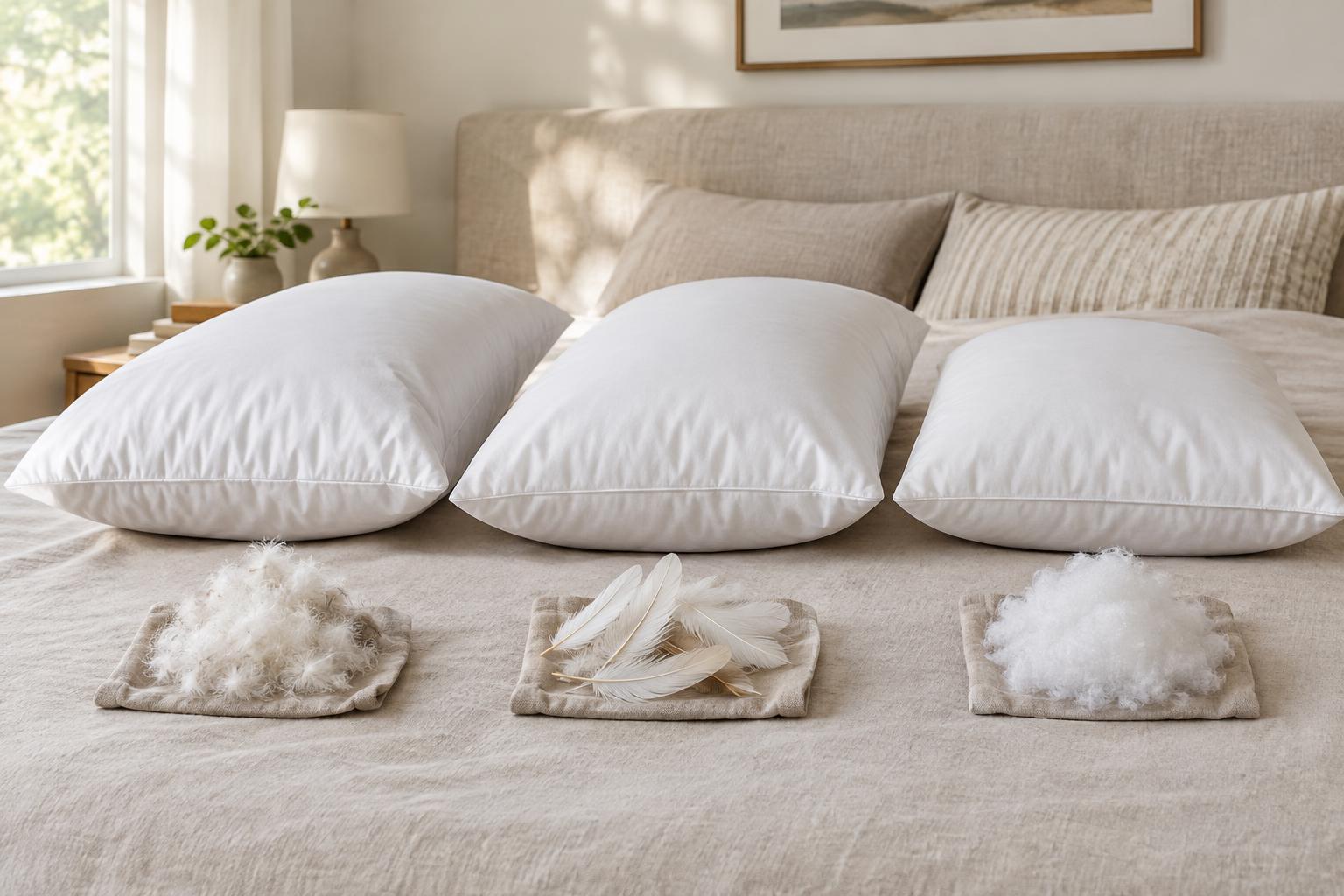
What is inside each type of pillow?
Down is the soft cluster found beneath the outer feathers of ducks and geese. It has no stiff central shaft, so a down pillow usually feels light, compressible and easy to shape. Feather fill comes from the birds’ outer plumage. Its firmer quills give a pillow more structure, although those quills can sometimes be felt through a thin cover. Many pillows blend down and feathers to balance softness with support.
Down-alternative is a broad label for fills designed to offer a soft, lofty feel without animal-derived down. Most use synthetic fibers, often polyester, arranged as loose clusters or as a continuous layer. They do not all feel alike: one may be springy and full, while another compresses quickly. The fill type is a useful starting point, but the amount of fill and the way the pillow is built matter just as much.
How do they compare for feel and support?
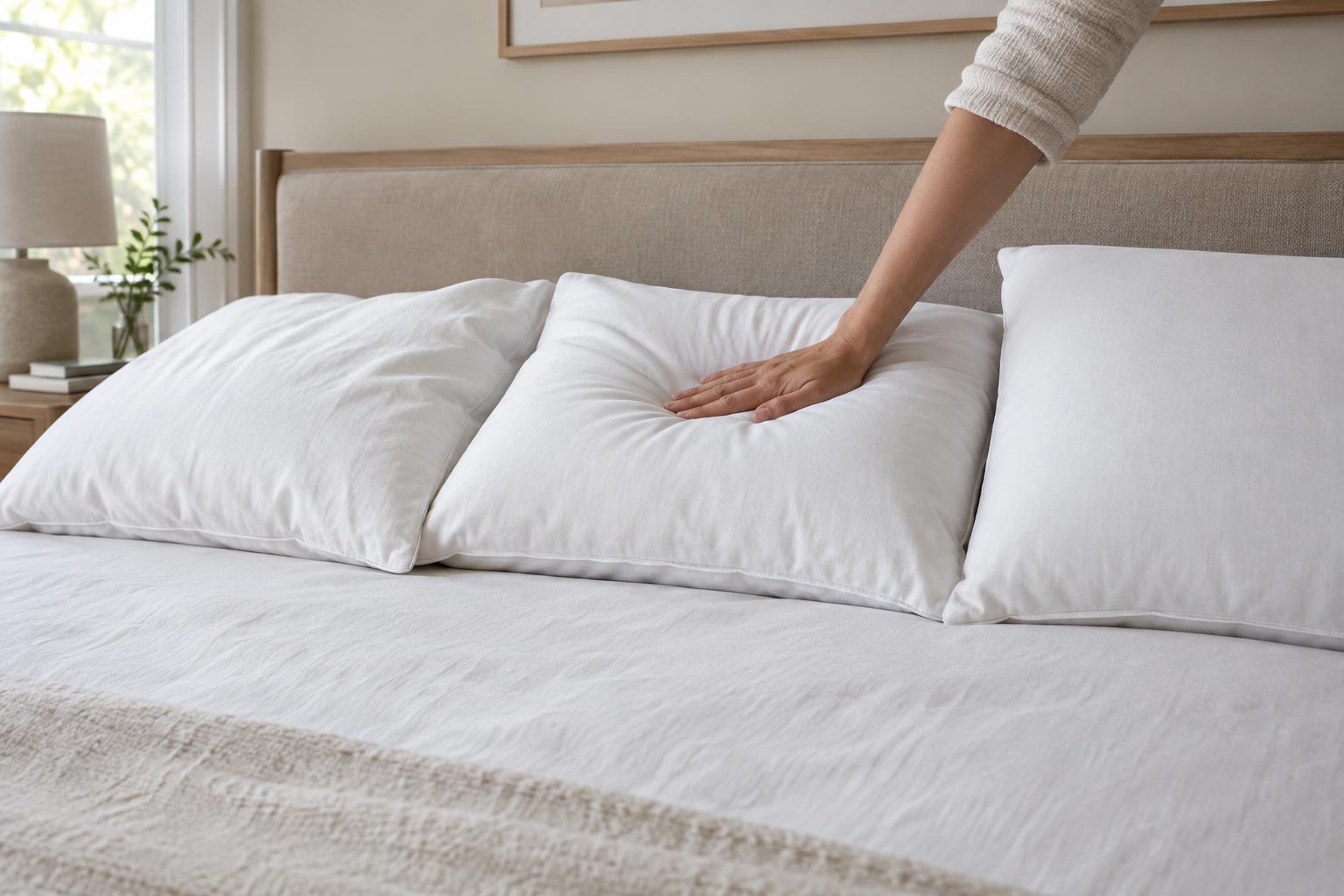
Down tends to yield readily under the head. That can be appealing if you like to scrunch a pillow into place, but a soft pillow may flatten too far for someone who wants steady height. Feather pillows often feel denser and can hold a shaped position better, though they may need regular fluffing. A down-and-feather blend can fall anywhere between those two experiences depending on its proportions and construction.
Down-alternative pillows vary widely. A generously filled one may feel firm at first, while a lightly filled one may feel closer to soft down. Synthetic fill can also clump or lose loft with use, so its initial height is not necessarily its lasting height. None of these fill labels guarantees the right support for a particular sleeper.
Think about the space between your head and mattress in your usual sleeping position. Side sleepers often need more pillow height than stomach sleepers, while back sleepers may prefer something in between. Mattress softness affects that space too: if your shoulder sinks deeply into the bed, you may need less pillow height than you would on a firmer surface. These are fitting guidelines, not rules; comfort is the deciding factor.
Construction details worth checking
The cover, also called the shell, helps determine how a pillow feels and how well it contains its fill. A tightly woven cover can reduce the chance of feather quills poking through. Look at the seams as well as the fabric, especially on a feather-filled pillow. A removable outer protector offers another layer between the pillow and its pillowcase and can be easier to wash regularly.
Some pillows have a chambered design, with one fill in the center and another around it. A feather core with a down outer layer, for example, aims to pair a more structured center with a softer surface. If a product lists a down percentage, check whether it describes the whole pillow or only one chamber. For down products, fill power describes how much space a given weight of down can occupy; it does not, by itself, tell you how high or firm the finished pillow will feel.
For a down-alternative pillow, check whether the fill is loose or formed into a fixed layer and whether the pillow can be opened to adjust the amount. Dimensions matter as well. A pillow labeled with a familiar bed size may still differ in finished height and density from another pillow of the same size.
Allergies, care and durability
If you avoid animal-derived materials, a synthetic down-alternative is the clearest of these choices, but confirm both the fill and cover materials. If allergies are a concern, do not assume that any fill is automatically suitable. Sensitivities differ, and dust and other irritants can accumulate in bedding regardless of fill. A washable protector and regular laundering of pillowcases can help keep the sleeping surface cleaner.
Always follow the pillow’s care label. Some down and feather pillows can be machine washed and thoroughly dried; others require different care. Damp fill can clump and develop odors, so complete drying is important whenever washing is permitted. Down-alternative pillows may be easier to launder, but repeated washing can change the shape or distribution of some synthetic fills. Gentle daily fluffing and occasional airing can help many pillows retain an even feel between cleanings.
No pillow stays supportive forever. Check whether the fill rebounds after you compress it, whether lumps persist after fluffing, and whether you find yourself repeatedly folding the pillow to get comfortable. Those signs are more useful than a fixed replacement schedule.
A practical way to choose
Start with the feel you want. Choose down if you value a light, moldable pillow and are comfortable with its potential to compress. Consider feather or a down-and-feather blend if you want more structure and do not mind occasional quills or fluffing. Consider down-alternative if you prefer a non-down fill, want to compare a range of firmness levels, or need care options that fit your laundry routine.
Before buying, read the fill breakdown, cover material, care instructions and return terms rather than relying on a single label such as “plush.” If you can try a pillow, rest on it in your usual sleeping position long enough to notice its settled height, not just its first impression. The best choice is the one that remains comfortable at that height and is practical for you to maintain.