What is inside each insert?
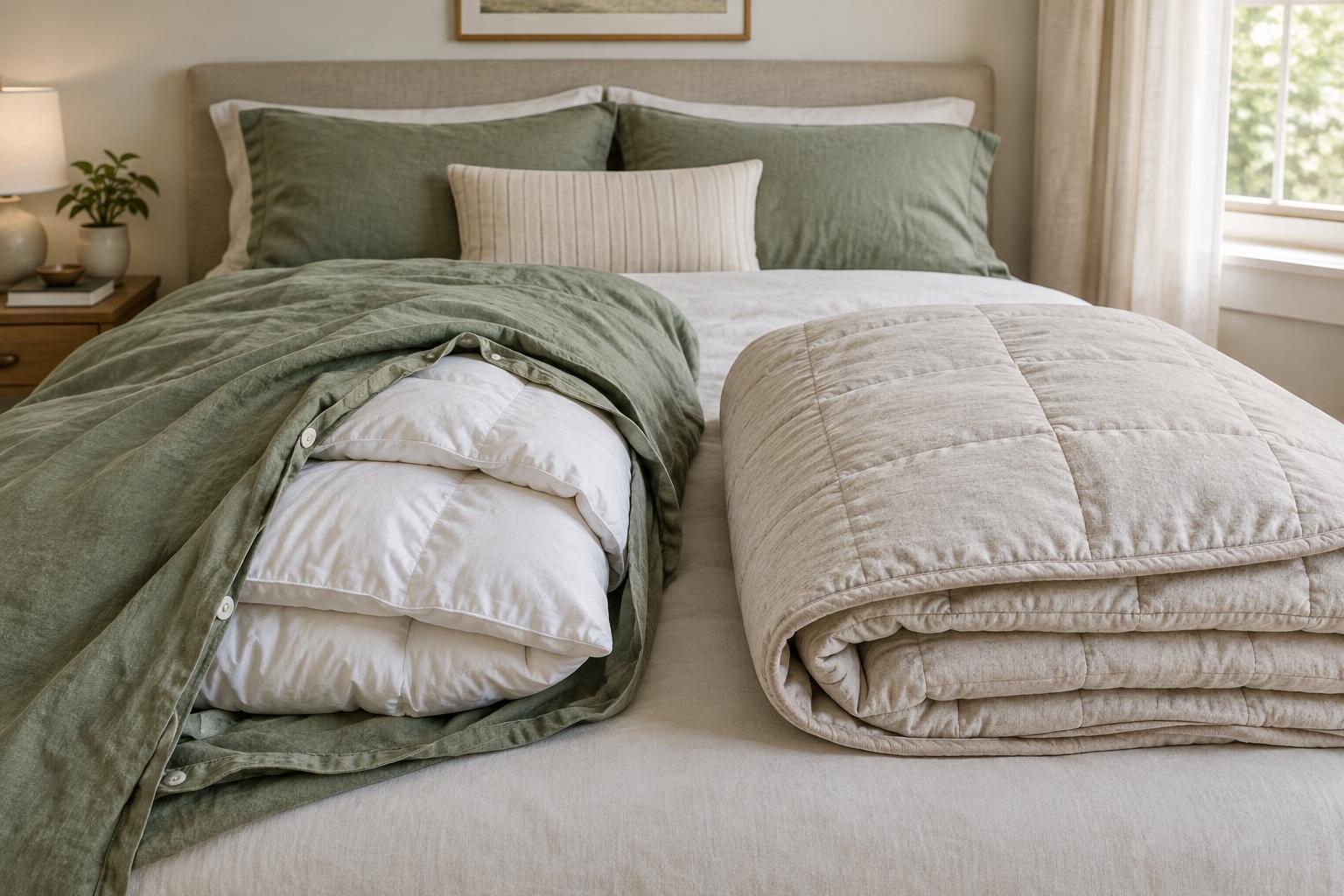
A duvet insert is the filled layer that goes inside a removable duvet cover. Down inserts contain the soft clusters found beneath the outer feathers of ducks or geese. Those clusters trap air, giving a well-made insert loft without requiring much weight. An insert labeled “down and feather” may feel different: feathers have firmer shafts and generally contribute less loft than down clusters.
Down-alternative inserts use manufactured fibers, most often polyester, arranged to imitate some of down’s softness and puffiness. They vary widely. Fine, loose fibers can feel airy, while denser fills may feel flatter or heavier. Neither name alone tells you how an insert will feel on your bed; the amount of fill, its construction and the outer fabric all matter. These are general material comparisons, not results from hands-on tests of particular products.
Warmth, weight and breathability
If you like a light covering that still feels warm, down is worth considering. Fill power describes how much space a given amount of down occupies; higher fill power generally indicates greater loft for the weight. It does not, by itself, tell you how warm the finished duvet will be. An insert with less high-loft down can be lighter than one packed with more lower-loft fill, even if both are intended for similar conditions.
Down-alternative inserts can be made for warm or cool sleepers, too, but achieving a puffy, warm feel may require more fill and therefore more weight. The shell fabric also affects how an insert feels: a tightly woven shell helps contain fill, while its texture and finish can change the sensation beneath a cover. If you tend to get too warm, compare stated warmth levels and overall weight rather than assuming one fill type will always suit you better.
Feel, construction and fit
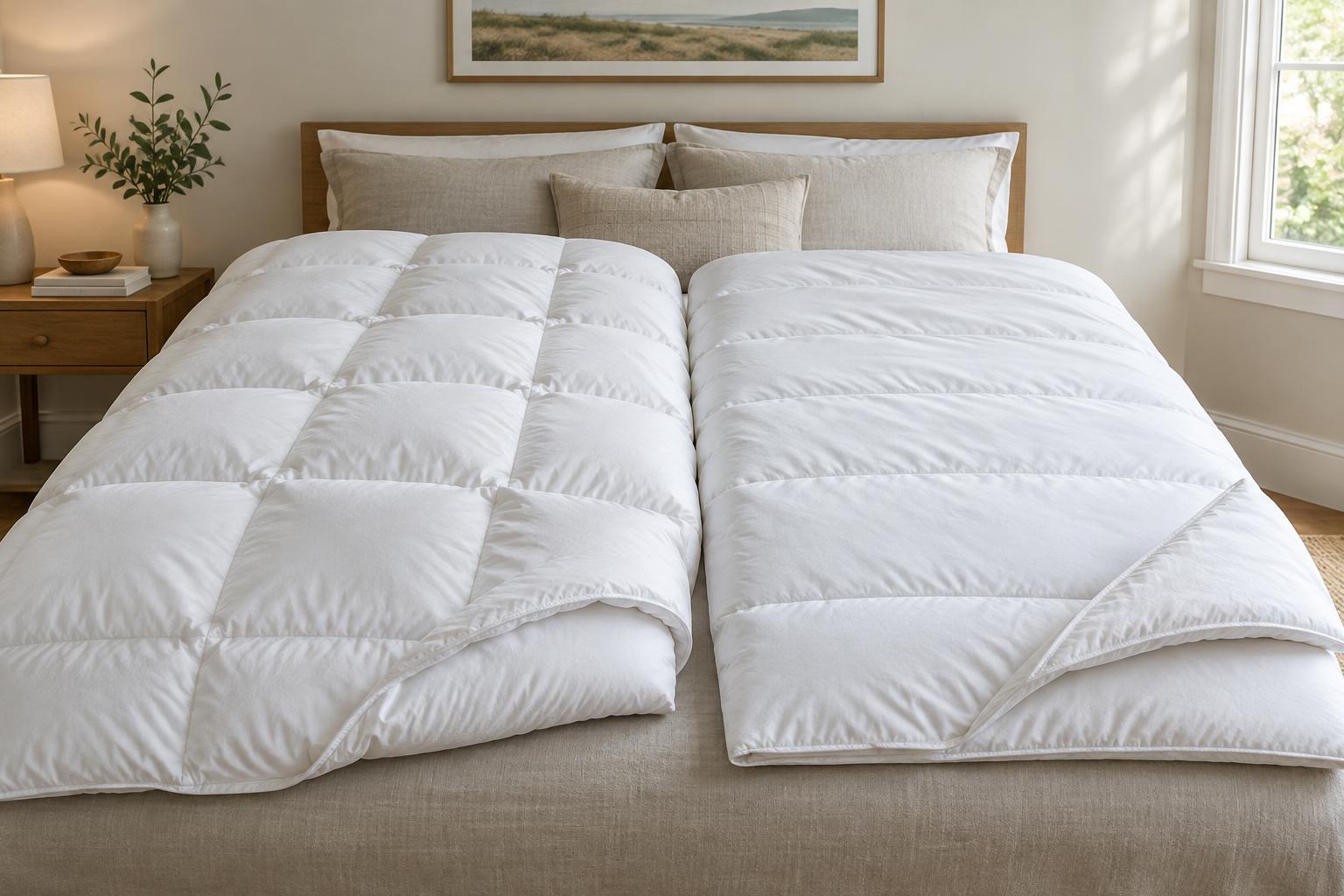
Construction helps keep warmth reasonably even across the bed. Box-style compartments limit how far filling can shift. Baffle-box construction includes fabric walls between the top and bottom of each compartment, allowing lofty fill room to expand; sewn-through stitching joins those layers directly and can create thinner spots along the seams. Check construction descriptions alongside customer-facing specifications rather than treating a single design term as a guarantee of quality.
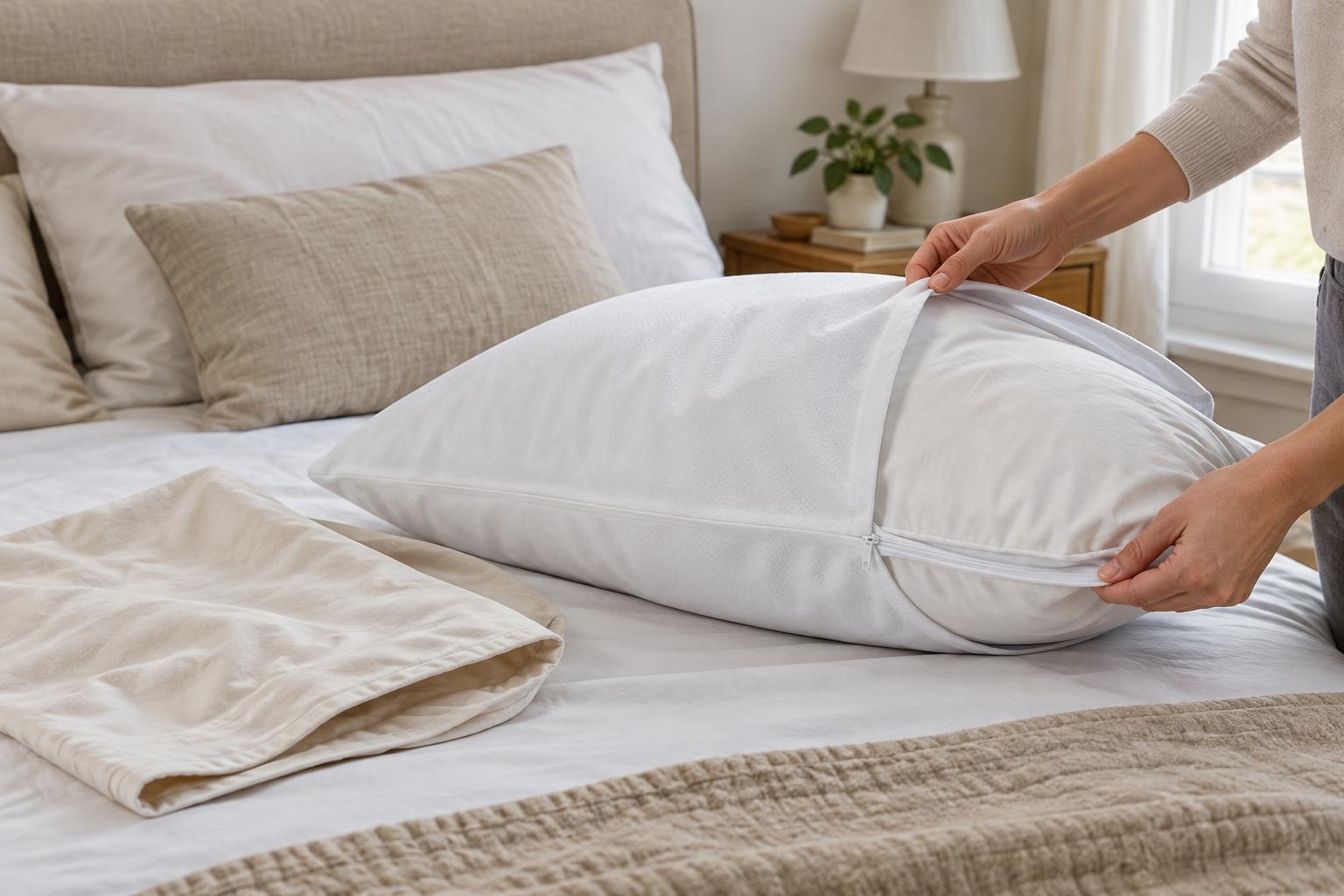
For down, a good shell and secure seams help keep clusters contained, though an occasional fine fiber escaping is not necessarily a defect. For down alternative, look for evenly distributed fill and stitching that prevents large clumps from moving around. Either type benefits from a duvet cover. Compare the insert’s actual dimensions with your cover and mattress, not just the “queen” or “king” label: sizes vary, and an insert that is too small can slide inside its cover. Corner loops and cover ties can help hold it in place.
Care, sensitivities and long-term cost
Read the care label before buying. Some inserts can be machine washed at home, while others need a large-capacity machine or a particular cleaning method. Thorough drying is especially important for a thick insert: trapped moisture can leave fill clumped or unpleasant-smelling. A washable duvet cover helps reduce how often the insert itself needs cleaning. Between washes, follow the maker’s guidance for airing and fluffing it, and store it only when fully dry.
Down-alternative inserts are often less expensive upfront and may be simpler to wash, but care requirements differ by product. Their fibers can compress or clump with use and laundering. Down can retain useful loft for a long time when it is well made and cared for, though its initial price is often higher. If sensitivities influence your choice, do not assume that “down alternative” automatically means no reaction or that down is always unsuitable. Consider the full bedding setup—including fabrics, dust and cleaning habits—and choose materials you can maintain comfortably.
A practical way to decide
Start with the sleep environment and the feel you want. For a cooler room and a light, lofty covering, compare down inserts by fill content, fill power, total fill weight and construction. For a lower initial budget, a preference for manufactured fill or easier routine laundering, compare down-alternative inserts by weight, warmth description, stitching and care instructions. In either category, an all-season label is only a starting point; your room temperature, cover and personal preference will affect comfort.
Before ordering, check the insert dimensions, shell material, cleaning instructions and return terms. If shopping in person, gently compress the insert and see how evenly it rebounds, while remembering that a showroom sample cannot predict years of use. The best choice is not the fill with the most impressive-sounding specification. It is an insert whose warmth, weight, upkeep and size work for your bed and your habits.