The basic difference
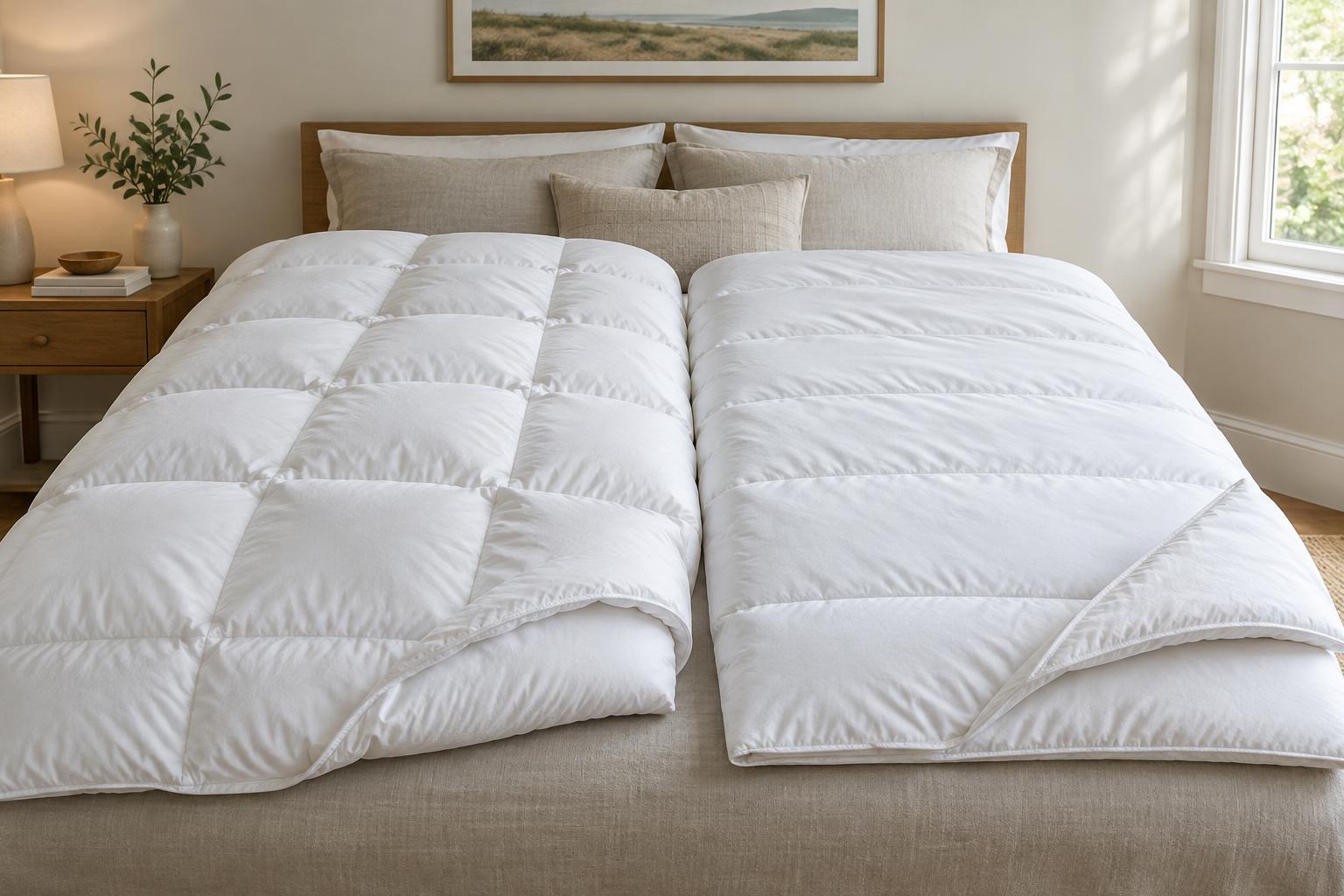
A duvet insert is a filled bed covering designed to go inside a removable duvet cover. A comforter is also a filled covering, but its outer fabric is generally intended to remain visible. Both can serve as the top layer on a bed, and both come in a range of weights, fills and finishes. The distinction is less about how warm they are and more about how they are used and cared for.
The terms are not always applied consistently by retailers. Some products labeled “duvets” are sold with a cover, while others are inserts only. Before buying, check what is included in the package and whether the item is meant to be used with a separate cover.
How construction affects everyday use
Both types have an outer shell that holds their fill. Stitching keeps that fill from shifting too far: sewn-through designs join the top and bottom fabrics along the stitch lines, while baffle-box designs use fabric walls between them to create separate compartments. Either construction may appear on an insert or a comforter. Look for evenly distributed fill and stitching that appears secure rather than assuming the product name tells you how it is made.
Duvet inserts are often made with a relatively plain shell because a cover supplies the visible color and texture. Some have corner loops or tabs that can be tied to a compatible cover to help limit shifting. Comforters commonly feature decorative fabric, quilting or trim as part of the finished look. They can go straight onto the bed, though you may need to fold or shake one out after washing to redistribute the fill.
Covers, cleaning and bed-making
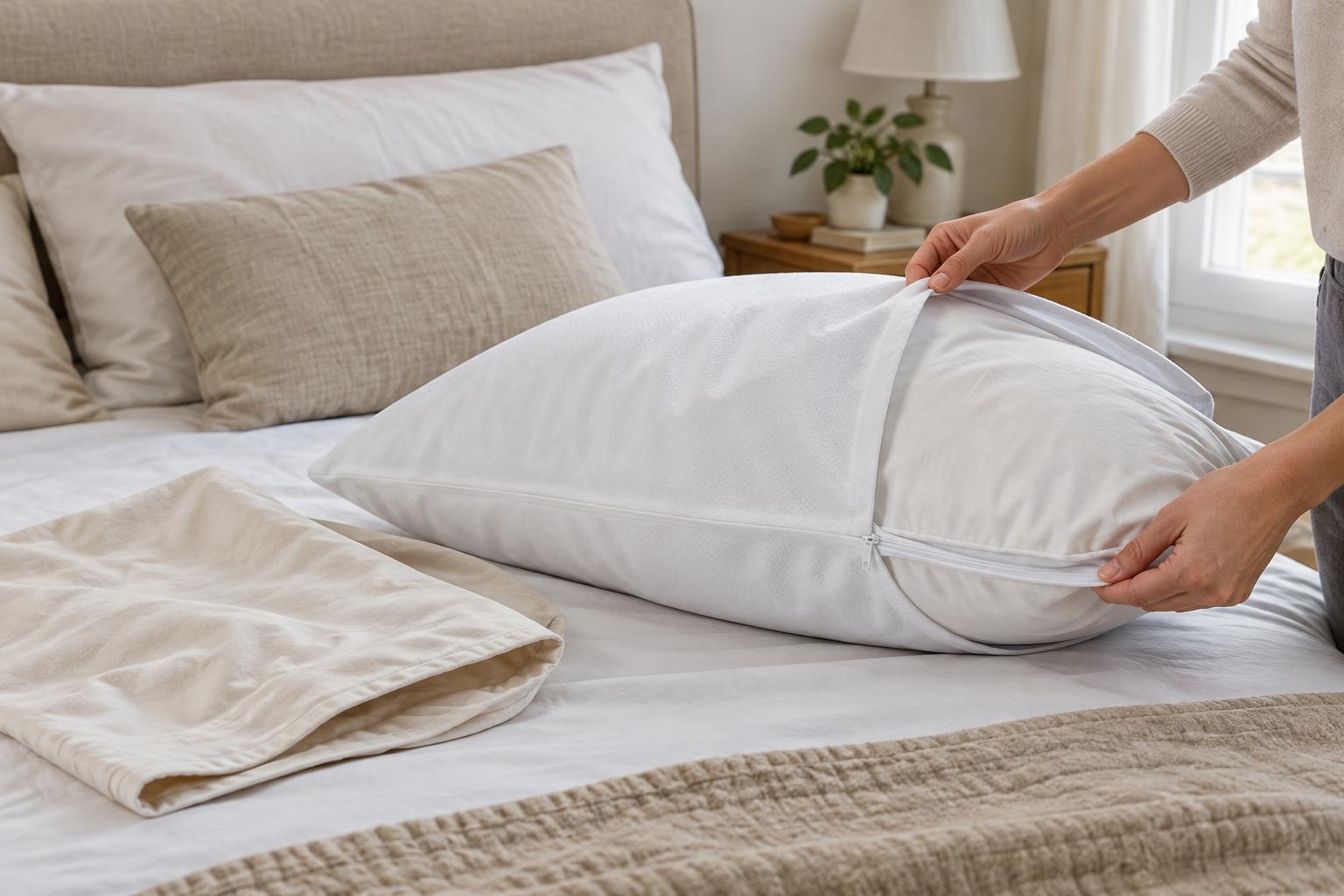
A removable cover is the duvet insert’s main practical advantage. You can wash the cover according to its care label without laundering the insert each time, and you can change the bedroom’s appearance without replacing the filled layer. The trade-off is the task of putting the cover on and keeping its corners aligned. Closures and internal ties can make that easier, but they do not guarantee the insert will never move.
A comforter avoids the cover-changing step. Making the bed can be as simple as spreading it out, and there is no separate cover to straighten. When the comforter itself needs washing, however, its size and construction may make laundering less convenient. For either option, read the care label before purchase, check whether your washer has enough room for the item to move freely, and follow the drying instructions carefully. If home washing is impractical, consider how you will clean the item before committing to it.
Warmth depends on more than the label
Neither a duvet insert nor a comforter is automatically warmer. Fill type, amount of fill, construction and shell fabric all affect how substantial a covering feels. Down and down-alternative fills can differ in loft and care needs; a heavier-feeling product is not necessarily the best match for every sleeper or season. Manufacturer warmth descriptions can be useful starting points, but they may not translate precisely to your bedroom.
Think about your usual room temperature, whether you tend to feel warm or cool under bedding, and what layers you already use. Someone who likes to adjust layers might prefer a lighter insert or comforter paired with a blanket. A duvet cover adds another fabric layer, though its effect will depend on the material and weave. If you are choosing a cover, consider how it feels against your skin as well as how it looks.
Choosing a setup that fits your routine
Start with the tasks you would rather do. If you enjoy changing colors or want a removable layer to wash regularly, an insert and cover may be a good fit. If you prefer fewer pieces to manage, a comforter may be simpler. Compare the total purchase, too: an insert and cover are separate items unless sold as a set, while a comforter may provide the finished appearance in one purchase.
Finally, check measurements instead of relying only on bed-size labels. Dimensions vary between products, and the amount of overhang you want depends on your mattress height and bed frame. For a duvet setup, compare the insert and cover measurements and look for matching attachment points if shifting concerns you. The most useful choice is the one that fits your bed, your cleaning options and the way you actually make it each day.