What masking can and cannot do
A fan or sound machine adds a steady background sound that may make a passing car, a hallway conversation or another brief disturbance less noticeable. It does not remove the original noise or soundproof the bedroom. Masking tends to be most useful when the unwanted sounds are intermittent and the added sound is comfortable enough to leave on for the time you need it.
Start by listening for the kind of noise that bothers you. Is it an occasional sound that stands out against a quiet room, or a continuous rumble already filling the space? Is it coming through a window, a door or a shared wall? If you can reduce it at the source, such as by closing a gap around a door or moving a rattling object, that may help more than turning up another device.
What a fan adds to the room
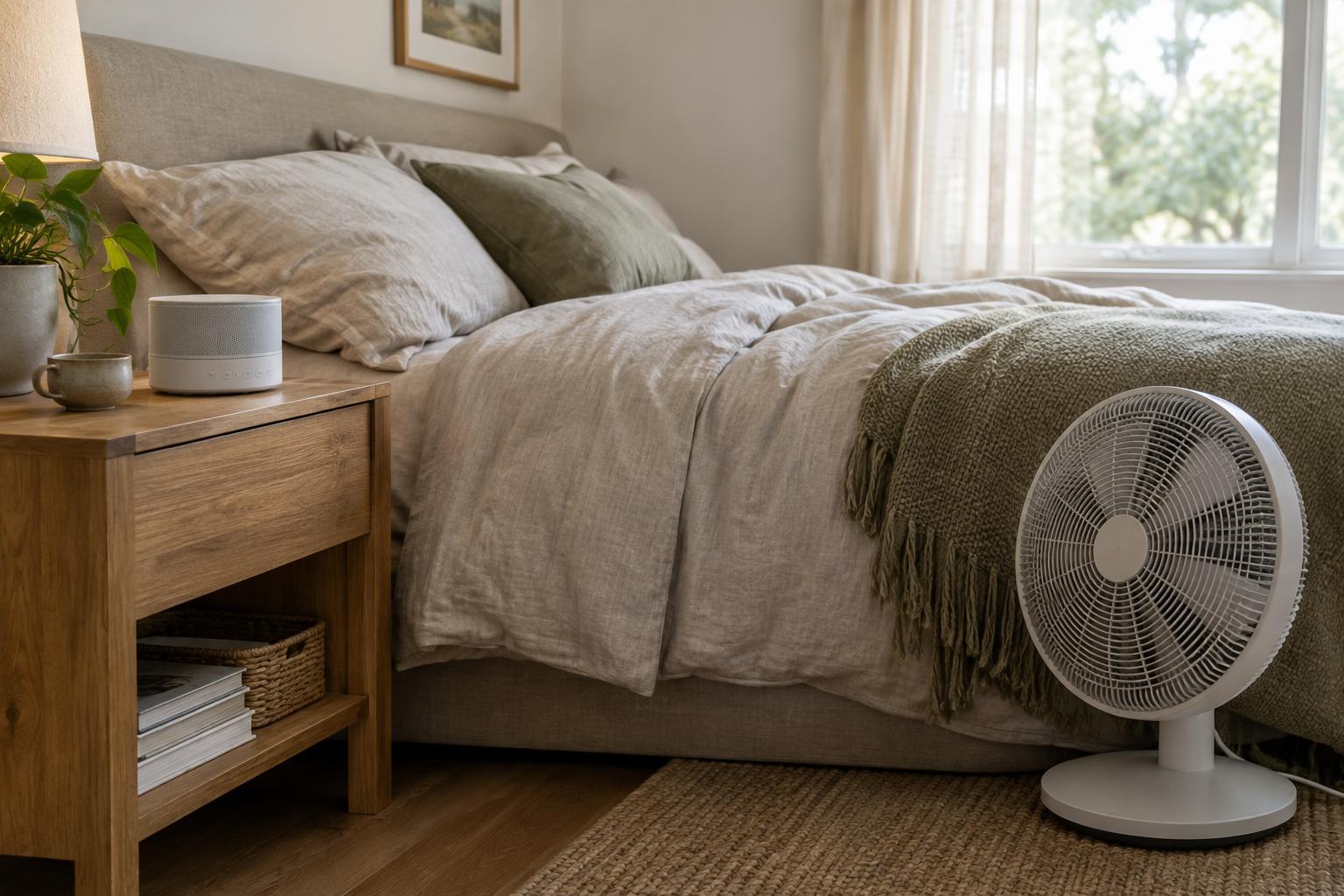
A fan provides two things at once: moving air and the sound of its motor and blades. That combination can be appealing in a warm or stuffy bedroom. Different designs make different sounds; some produce a smooth rush of air, while others add a hum, rattle or repeating rhythm. A fan that sounds unobtrusive across the room may be distracting beside the bed, so consider both its sound and its intended placement.
Airflow is also the main trade-off. If moving air feels chilly or dries out your eyes or mouth, a fan may not be comfortable all night, even if you like its sound. You can try pointing it away from the bed, but that may change what you hear. Keep its air path clear, place it on a stable surface and clean accessible grilles and blades according to its instructions; dust buildup and loose parts can make a fan noisier over time.
What a sound machine offers
A sound machine makes background sound without deliberately moving air. Depending on the model, it may offer a simple steady noise, recordings such as rain or a fan-like sound, or adjustable sound profiles. This gives you more choice when you want masking but not a draft. It can also make the bedroom sound more consistent when you do not want a fan running for temperature or comfort reasons.
More choices are not always better. Short recordings may have an audible loop, and sounds with sudden changes can draw attention rather than fade into the background. Controls, lights, timers and power options can matter as much as the sound library: a bright indicator or a device that stops unexpectedly may be unwelcome at night. Check whether you can set a comfortable level and keep the sound playing for as long as you intend.
How to compare them in your bedroom
Try a modest volume first and raise it only enough to soften the contrast between the room and the noises you want to mask. The aim is not to cover every sound. Place the device where it is clearly audible from the bed without putting it unnecessarily close to your ears. If practical, experiment with its position between the bed and the direction of the disturbance, then listen from your usual sleeping position.
Compare options at the time you would actually use them. Notice whether the sound remains pleasant after more than a few minutes, whether it lets you hear things you need to hear, and whether the controls are easy to manage in a dark room. If you share the bedroom, ask what the other person hears from their side of the bed. Personal preference matters here: a fan’s natural airflow sound may suit one room, while an adjustable sound machine may suit another.
A practical choice, not an either-or rule
Choose a fan when you welcome airflow and like the sound its particular motor and blades make. Choose a sound machine when you want a wider choice of sounds or need background noise without changing how the air feels. Neither type is automatically quieter, more effective or more comfortable; the specific device, settings, room and listener all affect the result.
Before buying anything, see whether an existing fan provides a sound you already like. If it does, there may be little reason to add another device. If it does not, look for a sound machine with straightforward volume controls and a sound you can tolerate over time. Whichever you choose, keep the level comfortable, maintain the device as directed and treat masking as one part of making the bedroom feel calm, not a substitute for addressing a noise you can fix.