Work out where the cold feeling comes from
A draft is moving air, but a cold window can make a bedroom feel uncomfortable even when no air is leaking. Start by noticing when and where you feel the chill. A narrow stream of air near a frame suggests a gap; a broader cool area beside the glass may be the effect of a cold surface. Check both while the window or door is closed and latched, since a loose latch can prevent a good seal.
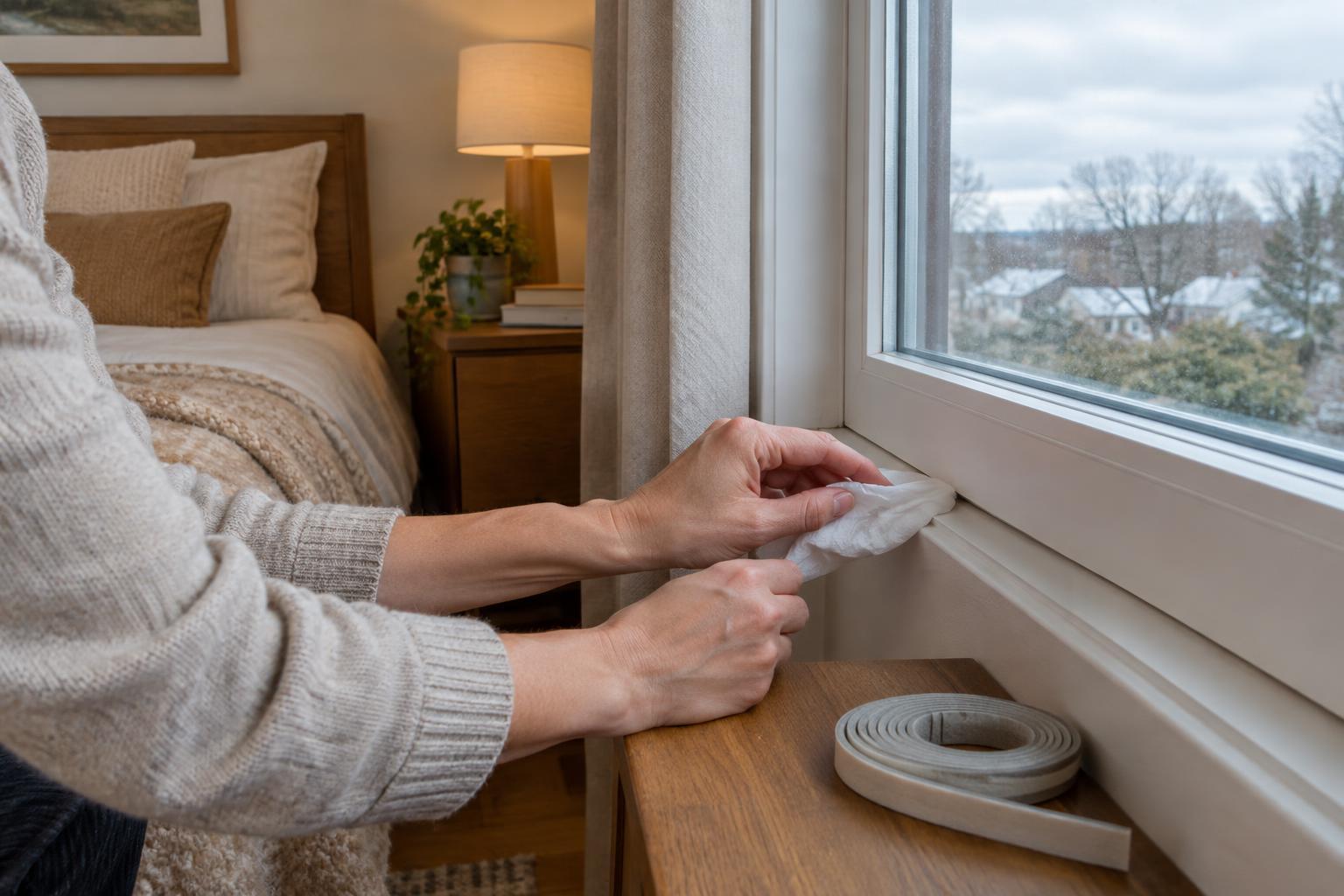
On a breezy day, slowly move the back of your hand around the edges of the window, along the trim, and across the threshold of the door. A lightweight tissue held near a suspected gap can help reveal air movement. Look for daylight around an exterior door, worn or flattened seals, cracked caulk, and curtains that shift when the window is shut. Avoid using a flame to hunt for leaks. Make a note of each spot so you can match the repair to the gap rather than sealing everything at once.
Check how the window is supposed to seal
Open the window and inspect the parts that meet when it closes. Dirt in a track, an obstruction, or a misaligned sash can leave an opening that sealant will not fix. Clean accessible tracks and check whether the window closes and locks without forcing it. If it has weatherstripping, look for missing sections, tears, or areas that no longer spring back.
Replace worn weatherstripping with a type suited to the window’s movement and the size of the gap. Adhesive-backed foam can be a straightforward option for some small, even gaps, though it may wear out where surfaces rub. Other seals are made to fit particular tracks or frame profiles. Measure before buying, follow the product directions, and test that the window still opens, closes, and locks properly. Do not seal a window shut or cover drainage openings in the frame.
Seal stationary gaps without trapping moisture
A gap between the window trim and the wall is different from a gap around a moving sash. Small, stationary interior cracks may be suitable for paintable caulk after loose material is removed and the surface is dry. For a larger or uncertain gap, first find out whether the surrounding trim or frame is damaged. Caulk over peeling paint, soft wood, or a damp patch may hide a problem without solving it.
Watch for condensation, staining, or a musty smell near the window. Moisture can have several causes, including indoor humidity or water getting in from outside, so a draft repair alone may not address it. If you find persistent dampness, rot, or a window that will not close squarely, seek a suitable repair rather than repeatedly adding sealant. Renters should check what changes they are allowed to make before removing trim or applying permanent products.
Give bedroom doors the same careful check
For a door that leads outdoors or to an unheated space, inspect the weatherstripping around the top and sides and the seal at the bottom. Replace damaged strips with material that compresses when the door shuts without making it difficult to latch. If light or air enters below the door, an appropriately sized sweep or threshold seal may help. Measure the gap at several points and check that the door can still move freely over the floor.
An interior bedroom door is different. The gap beneath it may help air circulate between the room and the rest of the home, especially when heating or cooling relies on shared airflow. A fabric draft stopper can be a reversible way to reduce a noticeable current, but avoid permanently blocking a gap without understanding its purpose. Never obstruct a required vent, and keep doors and windows usable as intended for safe exit.
Improve comfort after the leaks are addressed
Once you have repaired clear gaps, reassess the room before adding more seals. If the window area still feels cold but you cannot detect moving air, curtains or a well-fitted window covering may make the bedside area more comfortable. Keep fabric clear of heaters and other heat sources, and open coverings periodically so you can spot condensation rather than letting it go unnoticed.
Small fixes are most useful when they solve a specific problem: a worn seal, a stationary crack, or a poorly fitted sweep. If several windows leak, frames are damaged, or a door no longer sits properly in its opening, the lasting fix may involve adjustment or repair. Checking the seals as part of routine bedroom maintenance can help you catch wear before the next chilly night.