Start with feel, not the label
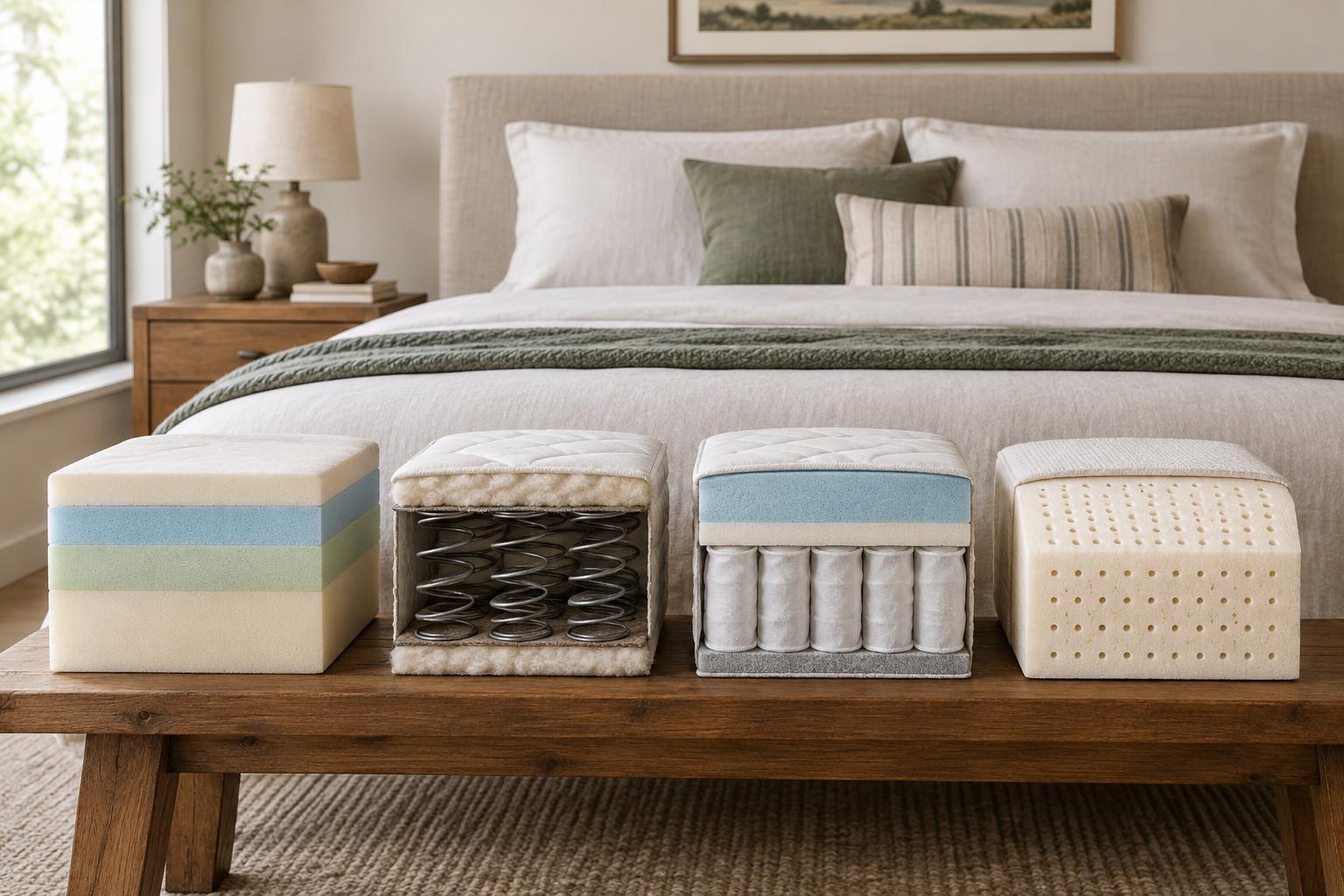
Foam, innerspring, hybrid and latex describe broad approaches to mattress construction. They do not tell you exactly how soft, supportive or durable a particular bed will feel. Layer thickness, foam density, coil design, upholstery and the firmness of the finished mattress can vary substantially within each category. Use the type as a starting point, then judge the specific model against your preferences.
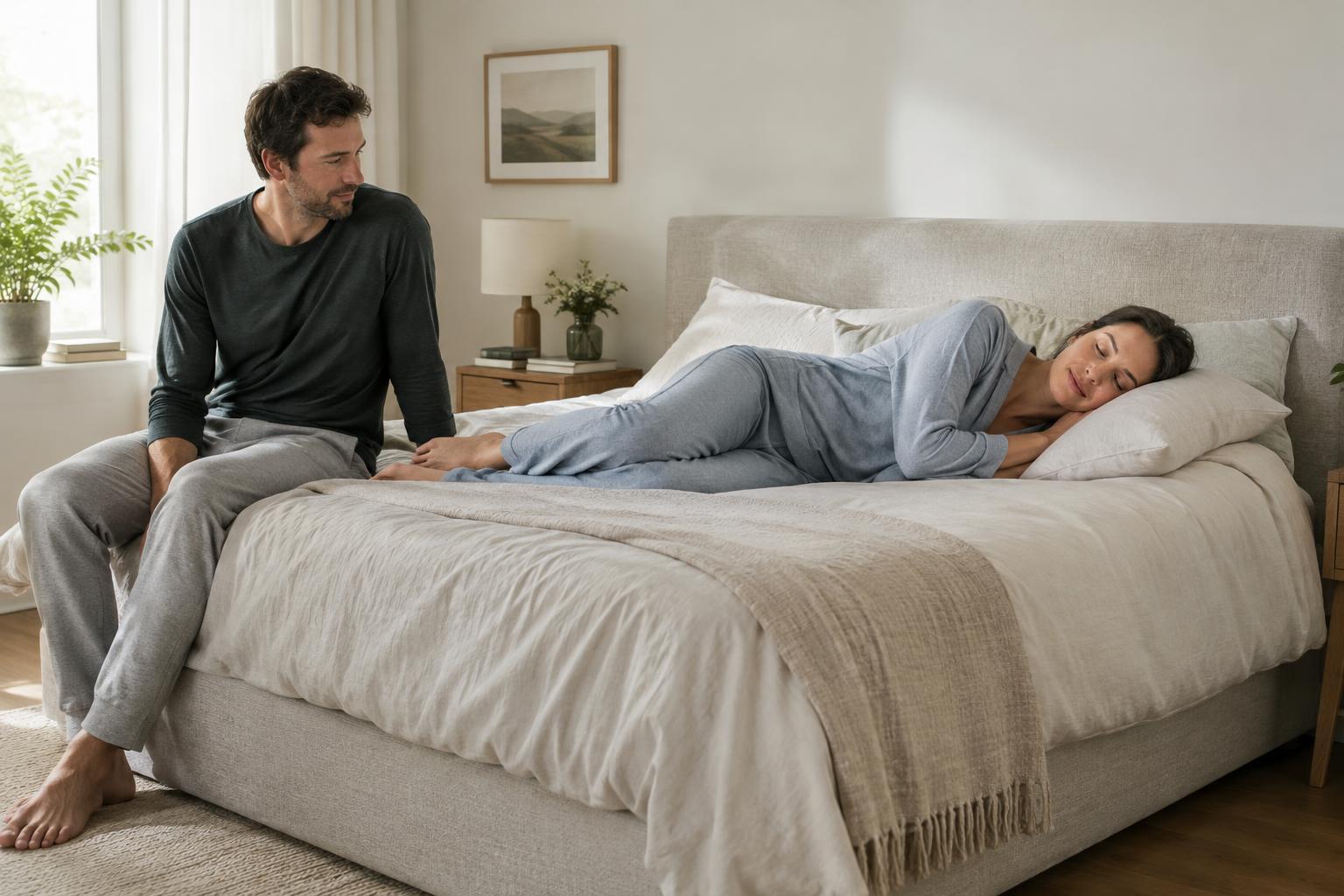
Think about whether you like to sink into a surface or rest more on top of it. Consider how easily you want to change position, whether a partner’s movements disturb you, and whether you tend to feel warm in bed. Your pillow, bed base and bedding also affect the result. A mattress that feels promising in isolation may feel different once it is part of your usual sleep setup.
Foam: close contouring with less bounce
All-foam mattresses combine layers with different jobs: a softer comfort layer near the surface and firmer foam beneath it for support. Memory foam often responds more slowly to pressure and can create a close, cushioned feel. Other foams may spring back faster. Because there are no coils, foam mattresses often limit the sensation of a partner moving across the bed, though performance depends on the particular design.
The trade-off is that some people find deep contouring restrictive when they turn over. Foam can also feel warmer to certain sleepers, especially in a thick, close-fitting comfort layer. Ventilation features and breathable covers may change the feel, but a cooling label alone is not a reliable guarantee. If you are considering foam, check the comfort-layer depth and try changing positions on the mattress rather than only lying still.
Innerspring: a buoyant, traditional feel
Innerspring mattresses use coils as their main support structure, usually with a relatively modest layer of cushioning above them. They commonly feel more buoyant and less enveloping than thick foam beds. Space within the coil unit can allow air to move through the mattress, although the cover and padding still influence how warm it feels. An innerspring may appeal if you prefer a firmer surface and easy movement.
Coil construction matters. Individually wrapped coils can respond more independently than connected coil systems, which may reduce how much movement is felt across the bed. The amount and quality of cushioning matter too: a thin comfort layer might not provide the pressure relief you prefer, while a plush top can change the feel considerably. Do not assume that every innerspring mattress is firm or that every coil bed transfers motion in the same way.
Hybrid and latex: two different ways to add responsiveness
A hybrid generally pairs a coil support unit with thicker foam or latex comfort layers. It can offer a middle ground between cushioning and bounce, but the word “hybrid” covers a wide range of designs. A thick memory-foam top may feel closer to an all-foam mattress; a thinner, springier top may make the coils more noticeable. Check what sits above the coils and how much of it there is.
Latex mattresses use latex foam in some or all of their layers. Latex usually feels springier and quicker to recover than traditional memory foam, making it an option for people who want cushioning without as much of a sinking sensation. Some latex mattresses contain coils, while others have an all-latex core. If materials matter to you, read the layer specifications: “latex mattress” does not necessarily mean every layer is latex, and natural-content claims should be checked against the product details.
Narrow your choice to a specific mattress
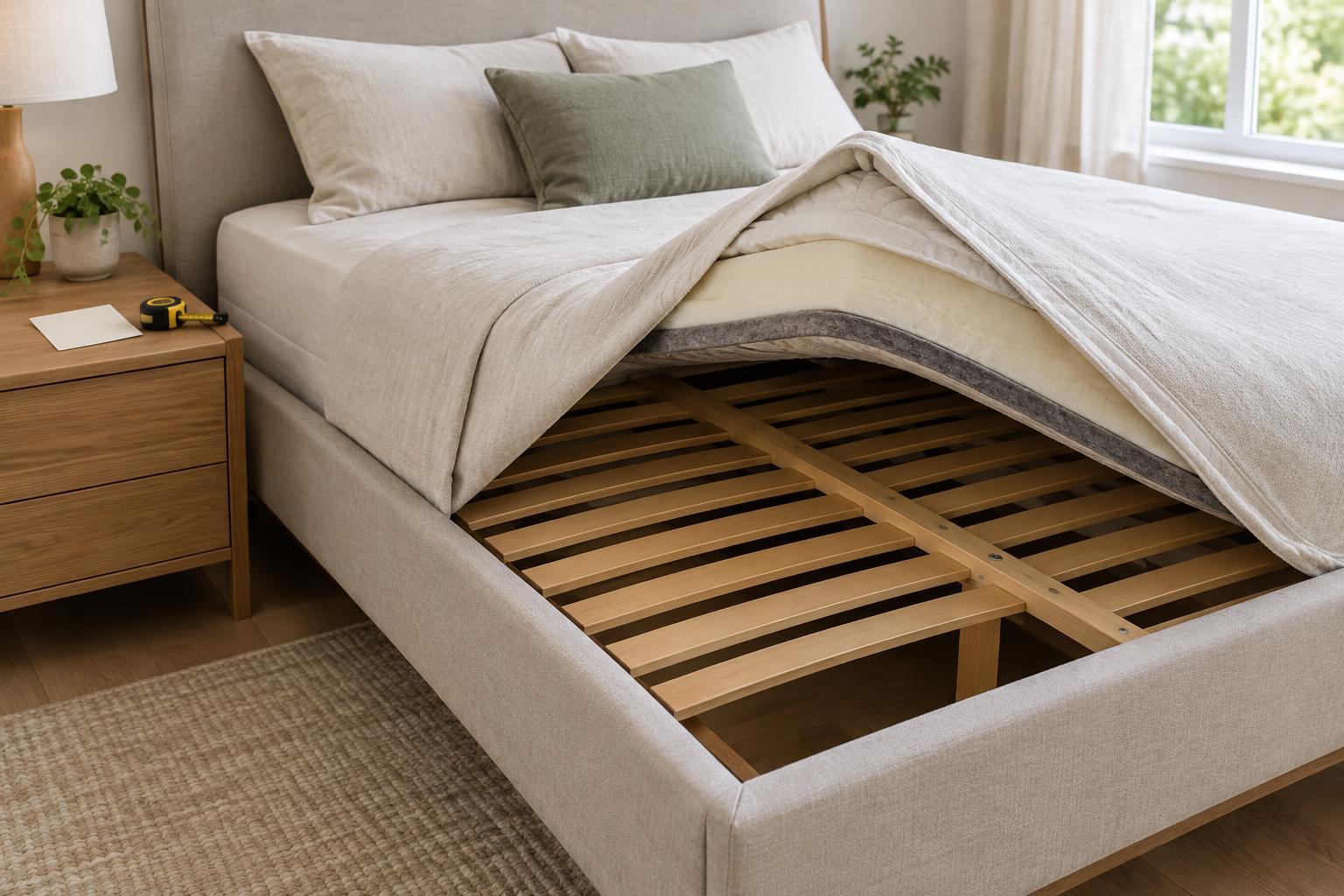
Once you have a likely type, compare models on the features you can actually evaluate. Look at the stated firmness, comfort-layer materials and thickness, edge feel, overall height and compatible bed bases. If you share the bed, consider motion transfer and whether both sleepers can move comfortably. If you sit or sleep near the edge, pay attention to edge support rather than assuming a construction type will provide it.
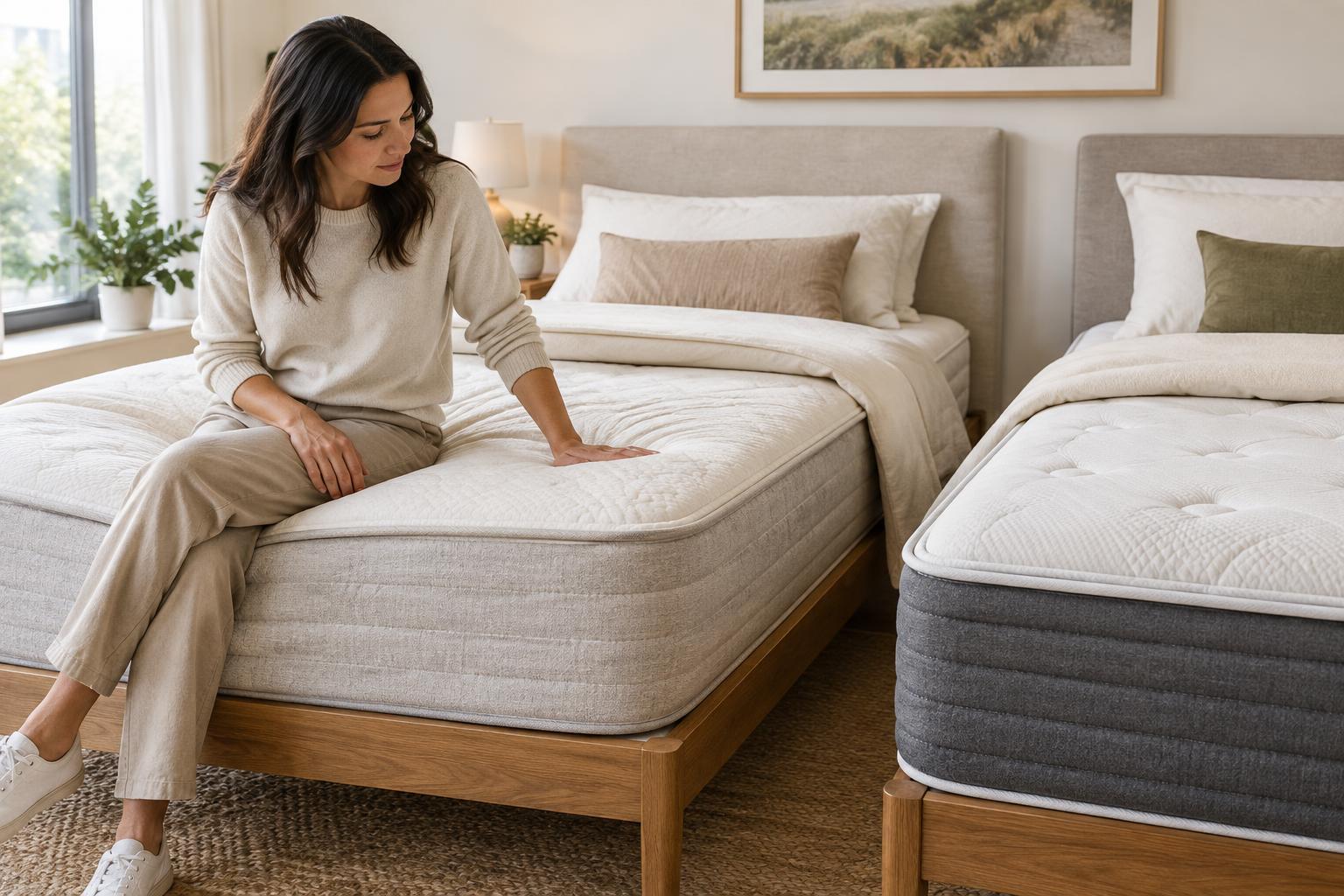
Whenever possible, spend enough time on a mattress to lie in your usual positions and turn over several times. For an online purchase, read the trial, return and warranty terms before ordering, including any fees or conditions. No material is the best choice for everyone. The useful choice is the model whose feel suits you, whose construction you understand and whose purchase terms give you a reasonable way to decide at home.