The height that matters is the finished bed
A frame’s listed height does not tell you exactly where you will sit. The finished height depends on the frame, any foundation or slats, the mattress and, to a smaller extent, any topper. A low platform with a thick mattress may end up higher than a taller-looking frame with a thinner mattress. When comparing options, measure from the floor to the top of the assembled mattress rather than relying on the frame dimensions alone.
The usable sitting height may also feel different from that measurement. A soft mattress edge can compress when you put your weight on it, while a firmer edge may hold closer to its unloaded height. If you are assessing a bed in a store or adjusting one at home, notice where you actually come to rest when seated at the edge.
What happens when you sit down and stand up
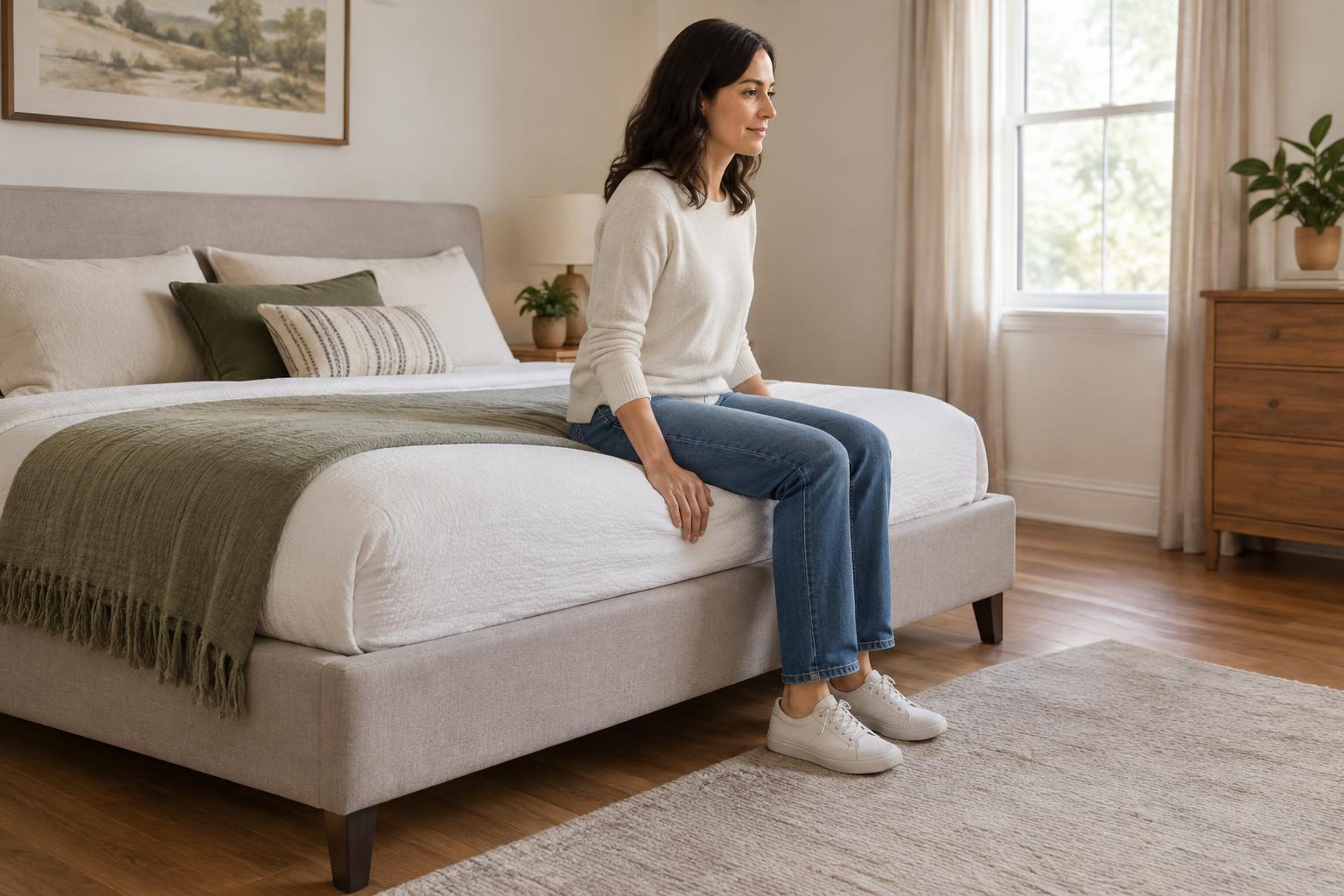
Getting into bed usually begins with turning toward the mattress and sitting on its edge. If the surface is very low relative to your legs, you may need to lower yourself farther before sitting and make a larger upward movement when standing. If it is very high, you may have to climb onto the edge rather than sit down in a controlled way. Either extreme can feel awkward, even when the bed is comfortable for sleeping.
As a starting check, sit at the edge with your feet on the floor. Notice whether you can settle onto the mattress without dropping heavily, and whether you can stand without having to push yourself up from an uncomfortable position. Your feet should have a dependable place to land before you shift your weight. This is a practical comfort check, not a universal rule: leg length, mattress compression and personal preference all affect the result.
Think about the full routine, too. You may need room to turn, move bedding aside and place both feet securely before standing. If a particular setup makes those movements difficult, changing the height is only one possible adjustment; the bed’s position and the space around it may matter just as much.
Frame design affects stability and access
Height is not the only frame feature to consider. A bed that shifts, rocks or creaks under ordinary movement can feel less secure when you sit on its edge. Check that the frame is assembled according to its instructions, that its supports are in place and that it stands evenly on the floor. The mattress should fit the frame as intended, without a gap or overhang that makes the edge hard to judge.
Look at the frame’s shape as well. A wide rail may make you sit farther from the mattress edge; a projecting footboard can complicate moving around the end of the bed. Under-bed drawers may be useful for storage but could limit where you can place your feet while standing. These details are easy to overlook when judging a frame from its overall appearance.
Before choosing a much taller bed to gain storage space underneath, consider how you will enter and leave it every day. Likewise, a low-profile frame can give a room an open look without being the easiest height for everyone to use. Treat appearance and storage as part of the decision, not substitutes for trying the movement.
How to check a new setup or adjust an existing one
Start by measuring your current floor-to-mattress height and noting what works and what does not. If you like how easily you sit and stand now, use that measurement as a reference when comparing frames, foundations and mattresses. For a new bed, add the listed component heights to estimate the finished height, then remember that the mattress edge may compress in use.
If the bed feels too high, check whether its current foundation is required and whether a compatible lower-profile option is available. If it feels too low, consider whether a compatible foundation or frame of a different height would help. Follow the mattress and frame makers’ support requirements rather than removing supports or stacking improvised materials. Any change should leave the bed stable and the mattress properly supported.
Finally, keep the path beside the bed clear and make sure you can reach the floor without stepping over stored items, cords or loose rugs. The most useful height is one that works with the whole bedroom: you can approach the bed, sit comfortably, and get up in a way that feels steady to you.