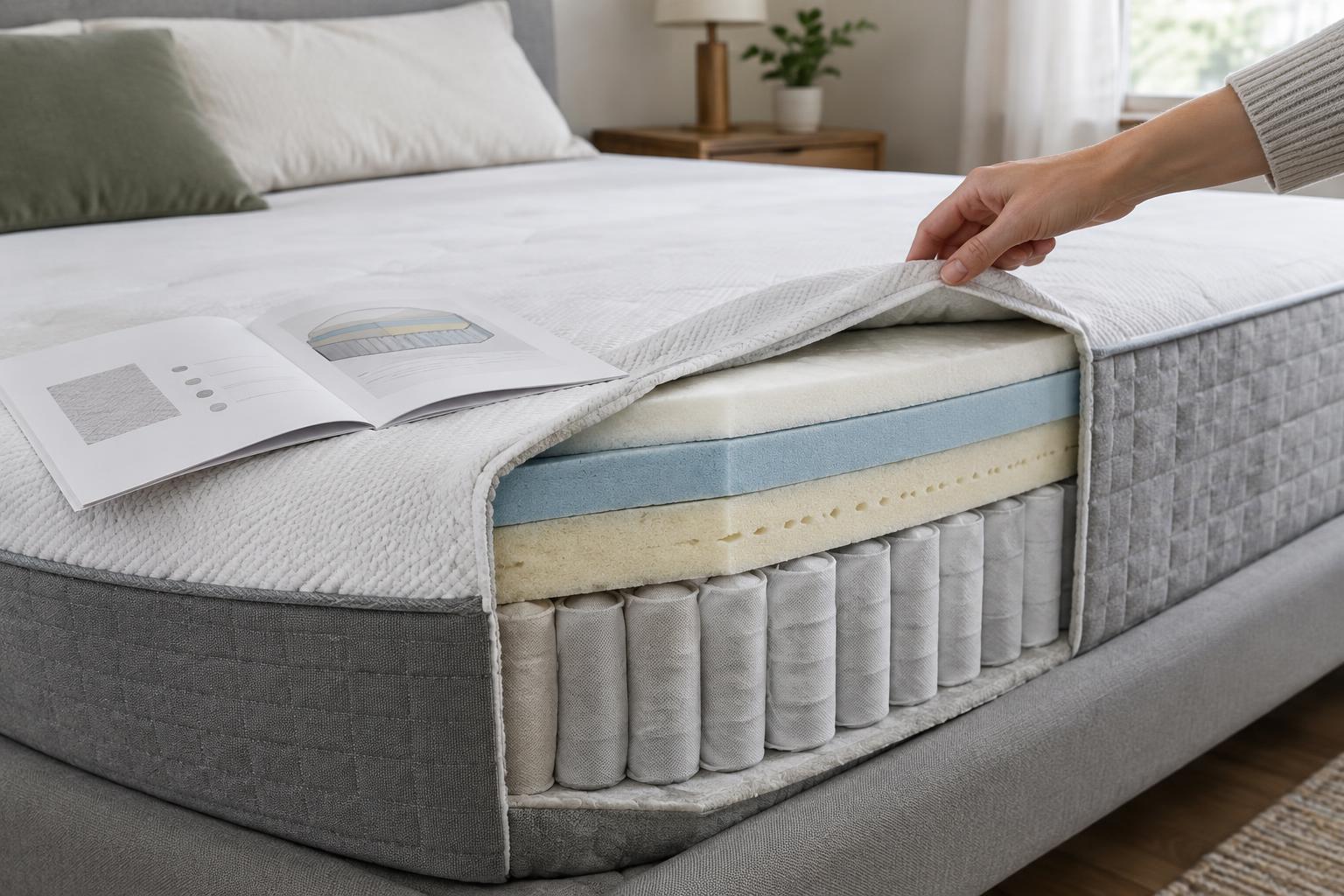
Start with the height of the whole bed
Mattress height, also called thickness or profile, is only one part of how tall a bed feels. A mattress sits on a foundation, platform or adjustable base, which may in turn sit inside a frame. A low-profile mattress on a tall foundation can place the sleeping surface higher than a thick mattress on a low platform. If you are comparing setups, measure from the floor to the top of the mattress rather than judging thickness alone.
To estimate a new bed’s height, add the height of the mattress to the height of the surface supporting it. If a mattress will sit inside a frame, check how far its support surface is recessed below the frame’s top edge. Allow for a mattress pad or topper, too. These measurements are especially useful when you plan to keep an existing frame or foundation.
Think about getting in and out of bed
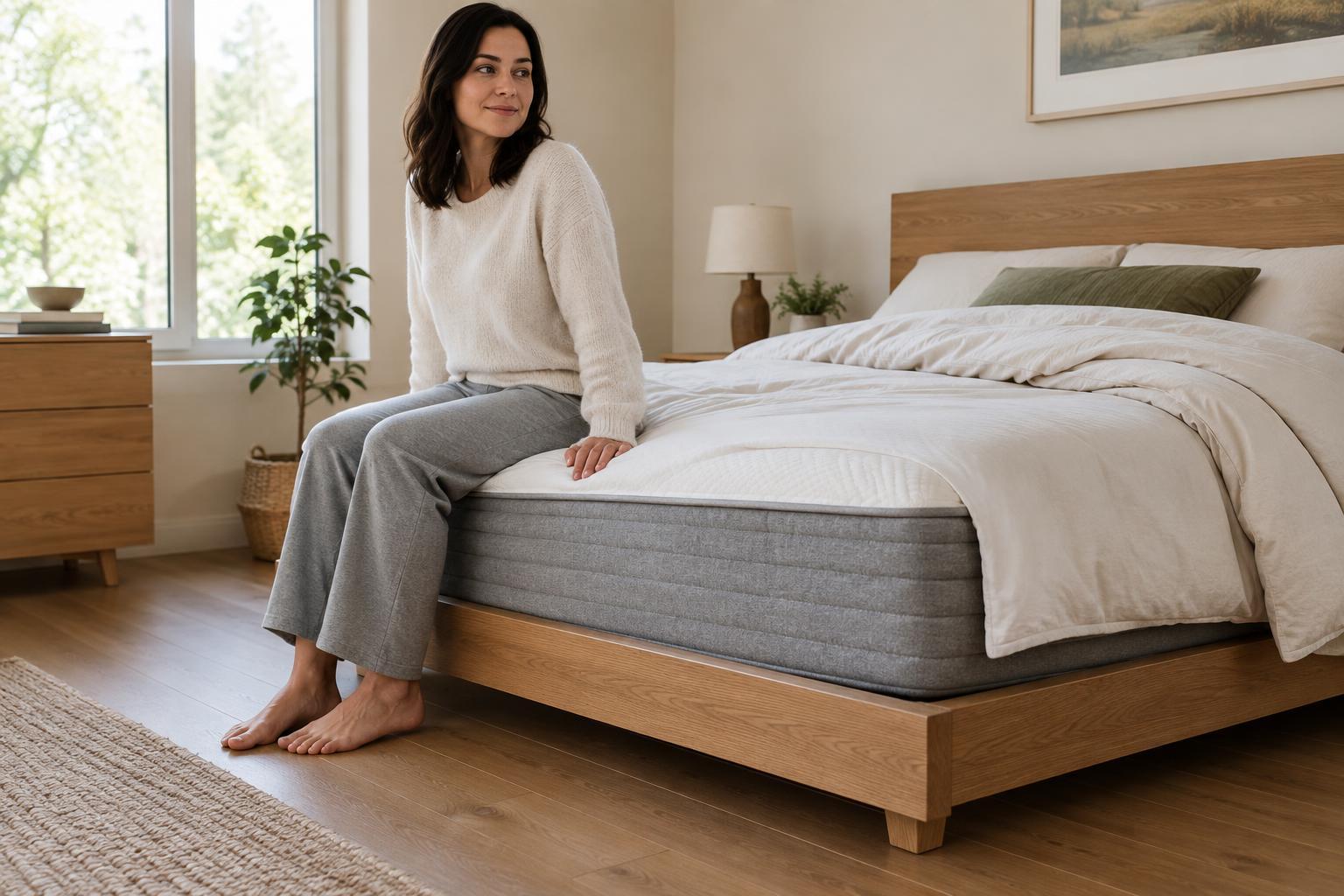
A comfortable bed height is personal. As a starting point, sit on the mattress edge and notice whether your feet can rest on the floor and whether standing up feels natural. A bed that is very high may require a climb, while a very low bed may require a deeper movement to stand. The way the mattress edge compresses under your weight also matters: two beds with the same measured height can feel different when you sit on them.
Consider everyone who regularly uses the bed, as well as ordinary tasks such as changing sheets. If getting into bed is awkward, changing the mattress is not the only possible fix. A lower foundation, different frame or removal of an unnecessary box spring may change the overall height. Before changing any support component, check the mattress maker’s requirements so the replacement still provides suitable support.
Check the frame, headboard and room
Mattress height can alter the proportions of a bed. A thicker mattress may cover more of a headboard or sit above the side rails, while a thinner one may look recessed in a deep frame. Measure the frame’s interior and support depth, and compare those dimensions with the mattress height you are considering. For a bed with tall rails, make sure the mattress will remain easy to reach and that making the bed will not be unnecessarily fiddly.
Look beyond the bed frame as well. In a room with a low ceiling, a tall setup can make the space feel crowded. On a bunk bed or loft bed, mattress thickness can affect the usable height of a safety rail; follow the bed maker’s mattress-height limit rather than relying on appearance. Nearby windowsills, bedside tables and under-bed storage may also influence which overall height is most convenient.
Plan for sheets and other bedding
A mattress’s profile affects fitted-sheet sizing. Check the stated mattress depth against the sheet’s pocket depth, allowing room for any protector or topper. A sheet with too little depth can pull off the corners, while a much deeper pocket may fit loosely. Mattress length and width still need to match the sheet size; pocket depth is a separate measurement.
Thickness can also change how a duvet or blanket hangs over the sides. If you prefer a generous drape, consider the distance from the mattress top to the point where you want the bedding to fall. A thicker mattress may leave less fabric hanging below its edge. These details are worth checking before replacing a mattress if you hope to keep bedding you already own.
Choose height for function, not as a quality shortcut
A taller mattress is not automatically more comfortable or better made. Height may come from extra comfort layers, a thicker support core or a particular construction, but the number alone does not tell you how the mattress will feel or hold up. Compare the layer descriptions, materials, firmness options and support requirements alongside the profile. If you use an adjustable base, confirm that the mattress is suitable for it rather than assuming thickness determines compatibility.
Before buying, record the height of your current setup and what you like or dislike about it. Then check the proposed mattress and base dimensions, the fitted sheets you intend to use, and any frame or safety limits. That short checklist turns mattress height from an isolated specification into a practical decision about how the whole bed will work in your room.