Start with moisture, not just the stain
Mold and mildew are commonly used to describe fungal growth associated with damp conditions. On a mattress, possible signs include a persistent musty odor, clusters of spots, discoloration that seems to spread, or a surface that feels damp. None of these signs alone proves what a mark is: spilled drinks, body oils, dye transfer and ordinary wear can also leave stains.
Ask where moisture could have come from. A spill that soaked through the cover, condensation beneath a mattress, a leak near the bed or bedding put away before it dried all warrant attention. Even if the visible mark is small, moisture may have reached layers you cannot see. If the mattress is wet now, stop using it while you investigate rather than covering it with fresh sheets.
Inspect the whole bed carefully
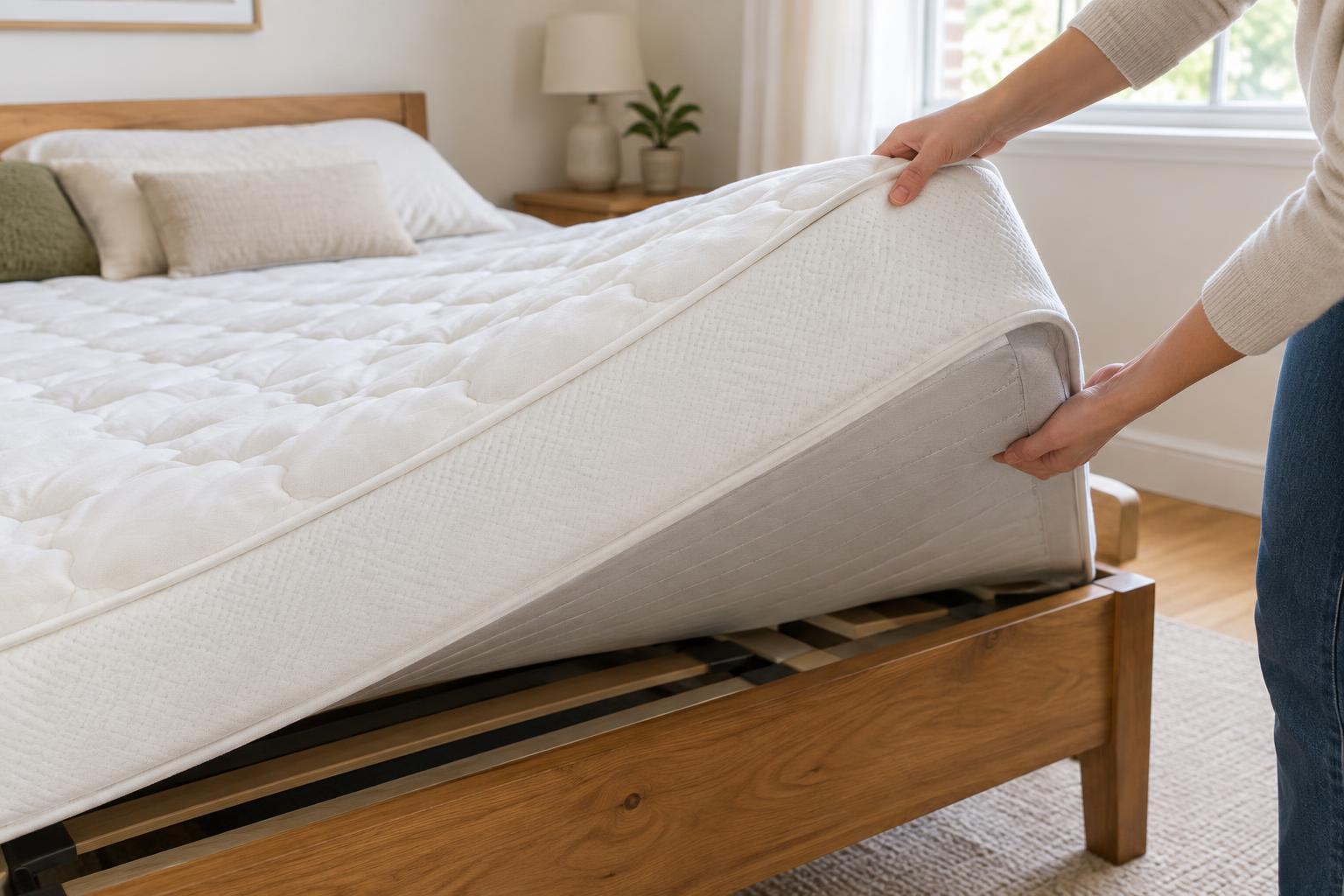
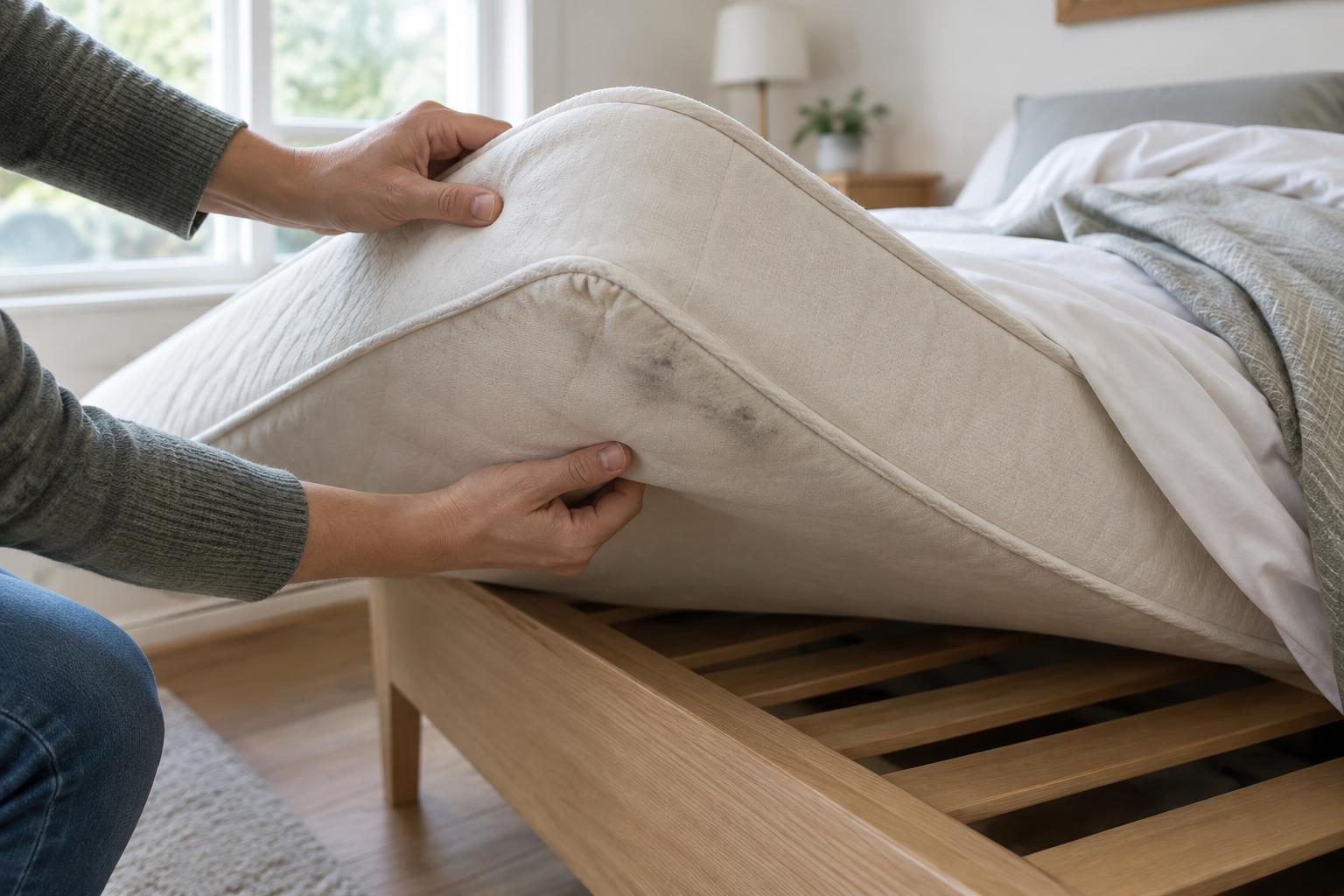
Strip off the bedding and look over the mattress in good light. Check the top, sides, seams, handles and underside, paying particular attention to areas near a wall or the floor. Note whether a suspicious patch looks like a surface stain or has a fuzzy or powdery appearance. Smell the mattress in several places without putting your face close to a suspect area. A musty odor that remains after the bedding is removed may suggest that the source is in or under the mattress.
Check the mattress protector, sheets, pillows, bed frame and nearby wall as well. A mark on the underside may point to trapped moisture where the mattress meets its support. Slats, a solid platform or a box foundation can all have damp spots worth investigating. If you find moisture nearby, addressing its source matters as much as deciding what to do with the mattress.
Avoid vigorous brushing or vacuuming a patch you suspect is mold. Disturbing it can spread material into the air or across the bed. If an inspection involves substantial growth, a leak or a damp room you cannot dry, pause and seek appropriate help with the moisture problem.
When cleaning may be reasonable
If the mattress is fully dry, there is no musty odor and a small mark has an obvious non-mold cause, follow the maker’s care instructions for spot cleaning. Use as little liquid as practical, blot rather than soak, and allow the area to dry completely before remaking the bed. Cleaning a removable cover may be possible if its label permits it; do not assume that removing the cover is safe or allowed on every mattress.
For a recent, limited spill without signs of growth, promptly removing wet bedding, blotting the surface and improving airflow may help the mattress dry. Check it again after drying, including underneath. Do not rely on fragrance or a clean-looking surface to confirm that inner foam or padding is dry. Steam cleaning or saturating a mattress can add moisture to materials that are difficult to dry thoroughly.
When replacement is the more sensible choice
Consider replacing a mattress if you can see apparent growth, smell persistent mustiness, find repeated dampness, or know that a spill or leak soaked deeply into it. Mattresses contain layered, porous materials, and cleaning the outside cannot reliably tell you what is happening inside. Extensive or recurring marks, especially on both sides or around seams, make a simple surface-cleaning approach less convincing.
You do not need to identify a particular type of mold to make a practical decision. If you cannot establish that the mattress is dry and free of the problem, replacement is generally the more cautious option. Take care when moving a suspect mattress: avoid shaking it, protect surrounding items from contact and check local disposal rules. If a household member has health concerns related to possible exposure, consult an appropriate healthcare professional rather than trying to judge health effects from the mattress’s appearance.
Keep the replacement or cleaned bed dry
Before putting any mattress back, fix leaks and dry the bed frame, floor and adjacent wall. Give the mattress suitable support and follow its manufacturer’s guidance on bases and airflow. A waterproof, washable protector can help contain future spills, but it does not resolve moisture already trapped in a mattress.
Wash and fully dry damp bedding, clean up spills promptly, and periodically look beneath the mattress when changing sheets. If the underside repeatedly feels damp or develops an odor, investigate the room and bed setup rather than treating each mark in isolation. The goal is not a perfect-looking mattress; it is one that stays dry and is practical to keep clean.