Find the noise before reaching for a tool
A squeak does not always mean the whole bed frame is loose. It may come from a rail joint, a slat moving in its holder, a headboard touching the wall, or a bed leg shifting on the floor. Pinpointing the sound first can save time and help you avoid tightening parts that are already secure.
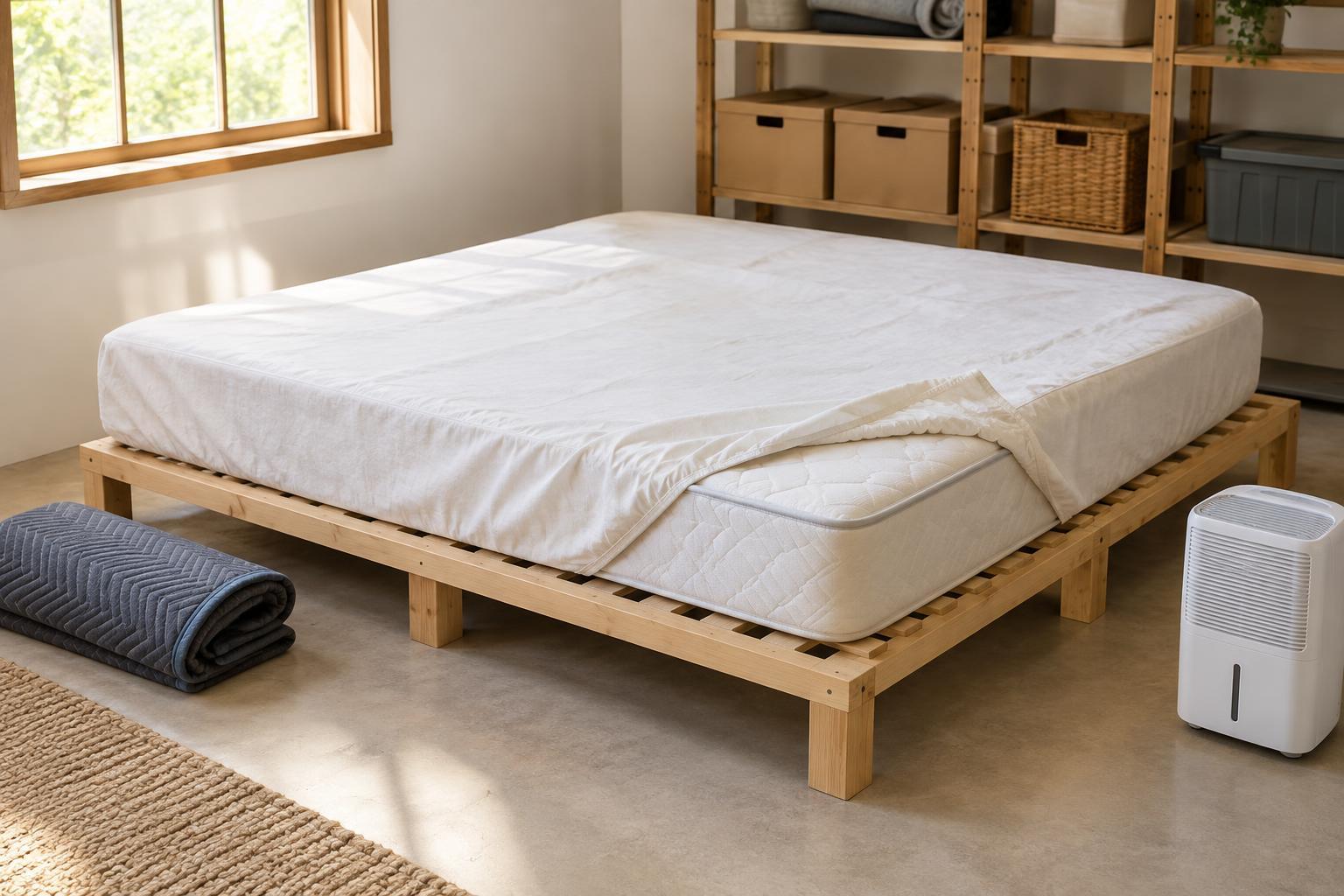
Remove the bedding and press gently on different areas of the mattress while someone listens, if help is available. Then lift the mattress off and repeat with careful pressure on the frame, slats, and headboard. A large mattress may take two people to move safely. If the noise happens only when the mattress is in place, check whether the mattress or foundation has its own moving parts before blaming the frame.
Inspect the frame and prepare to tighten it
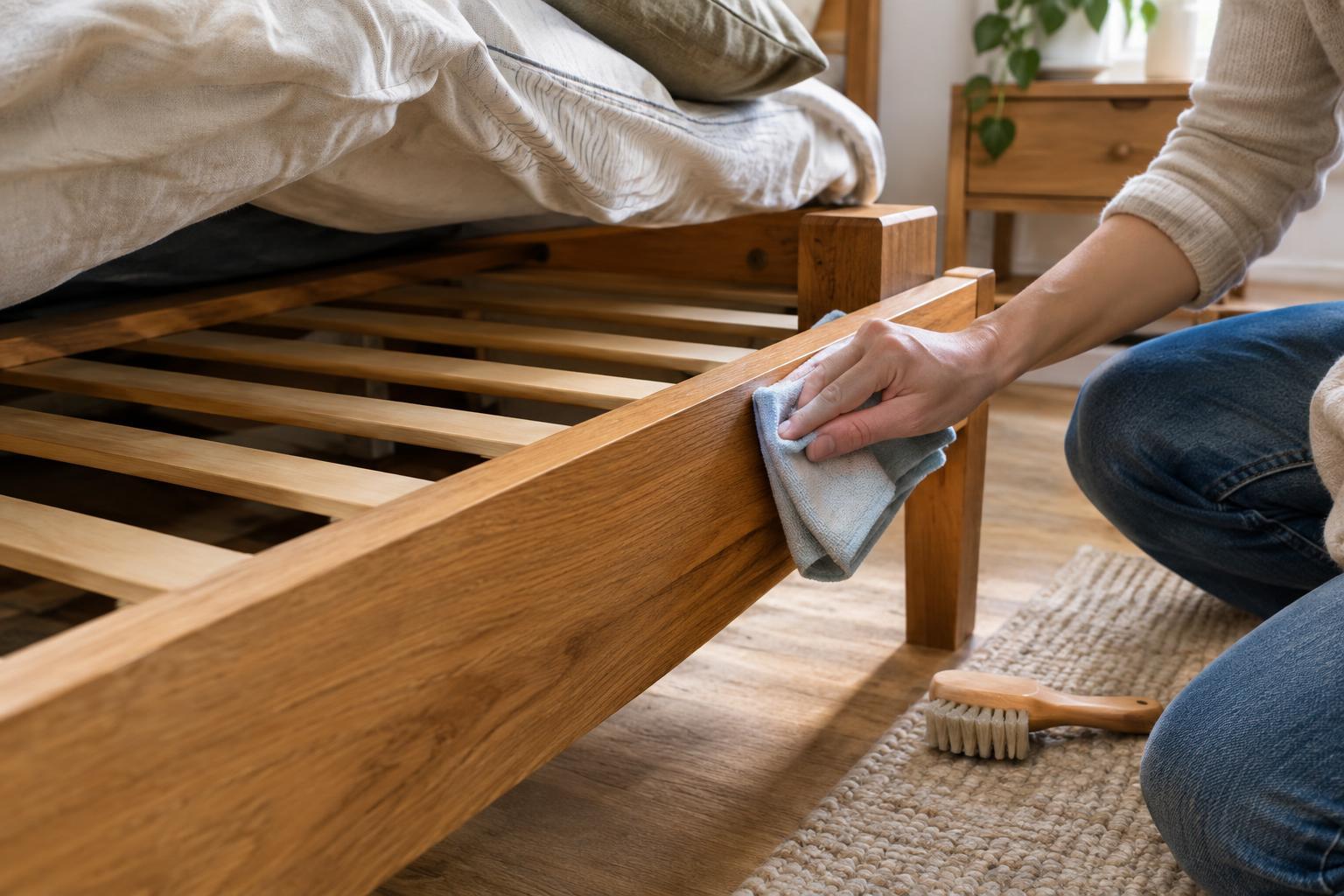
With the mattress out of the way, look over every accessible connection: side rails, corner brackets, center supports, legs, headboard mounts, and slat holders. Check for fasteners that are visibly backed out, gaps at joints, cracked wood, bent metal, or missing pieces. Confirm that each leg rests firmly on the floor and that any center support reaches the floor as intended.
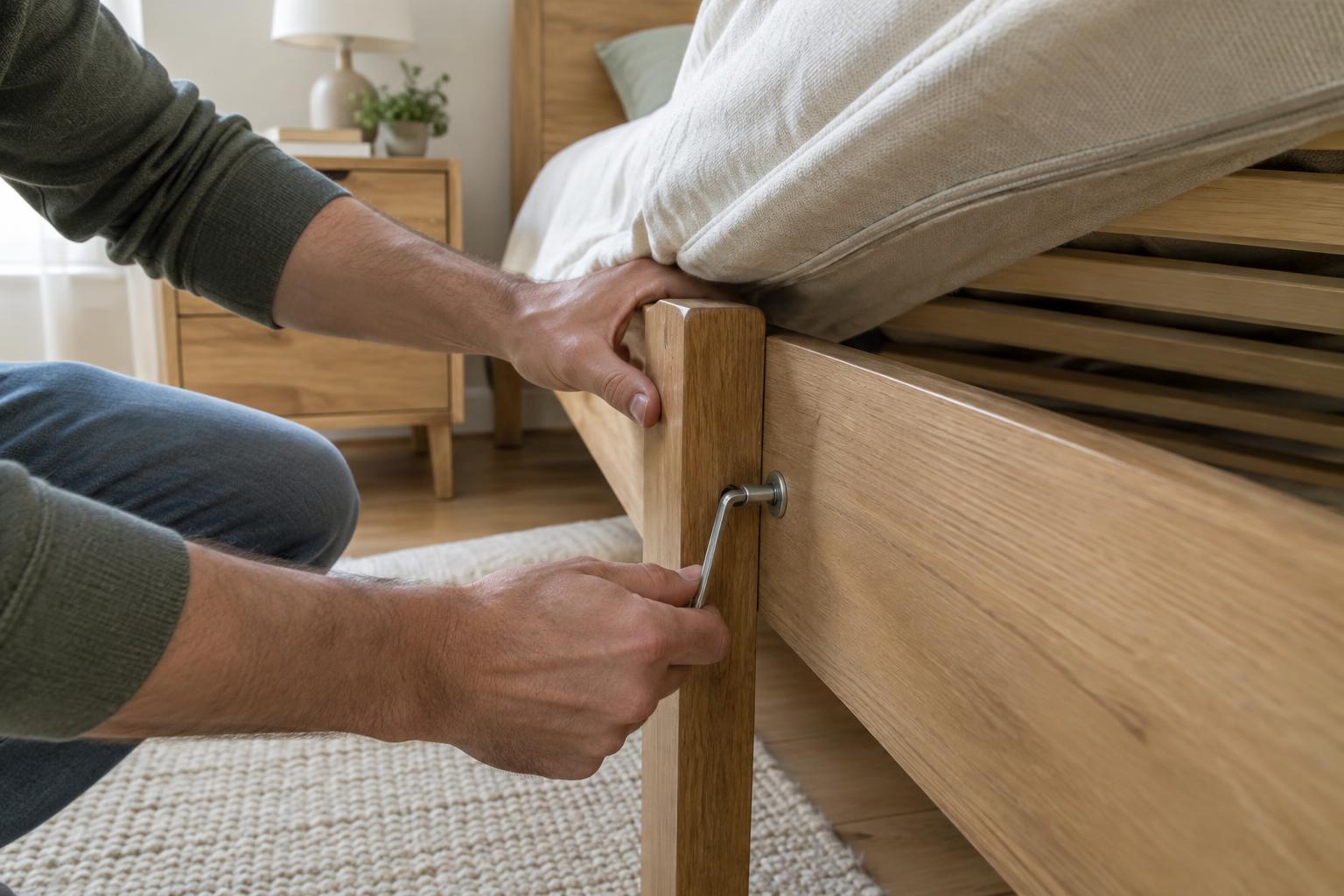
Gather the tool that fits each fastener, such as an Allen key, screwdriver, or wrench. A well-fitting tool is less likely to strip a screw head or bolt. If you have the frame’s assembly instructions, use them to identify the intended fasteners and any tightening guidance. Keep small hardware in a container if you need to remove a piece for inspection.
Tighten joints without overdoing it
Work around the frame one connection at a time. Hold joined pieces in their proper position, then tighten the fastener until the joint feels secure. If a bolt passes through a bracket and is secured with a nut, hold one side steady while turning the other. Check opposing corners as you go so the frame remains aligned rather than pulling to one side.
Stop if a fastener spins without gripping, a wood joint begins to split, or metal bends as you turn it. More force will not fix a stripped hole or damaged component. Use the correct replacement hardware if a nut or bolt is missing, and follow the maker’s guidance for damaged parts. Avoid adding a random longer screw where it could protrude through the frame.
Address rubbing, shifting, and floor contact
If the fasteners are snug but the bed still squeaks, press on individual slats and rails to find surfaces that rub. Make sure slats sit fully in their supports and that any supplied caps or holders are in place. Do not permanently fasten slats unless the frame’s design calls for it; some need room to flex. A worn or broken slat should be replaced with a suitable part rather than hidden beneath extra bedding.
Check whether the headboard taps the wall or a leg rocks on an uneven floor. Moving the bed slightly away from the wall or placing a suitable furniture pad at the contact point may help. For an uneven leg, use a stable furniture-leveling solution appropriate to the floor and frame. Avoid makeshift stacks that can slip. Be cautious with lubricants: they can stain fabric or flooring, and some finishes or plastic components may not tolerate them.
Test the repair and know when to stop
Put the mattress back in place and apply gentle pressure in the spots that squeaked before. Listen again while sitting and changing position normally. If the sound remains, repeat the location check rather than tightening every fastener harder. The remaining noise may be coming from the foundation, mattress, or contact between the bed and another surface.
Recheck accessible hardware periodically, especially after moving or reassembling the bed. A joint that repeatedly loosens may need the manufacturer’s specified replacement part or a closer look at the connection. If you find a cracked rail, failing support, or unstable leg, stop using the frame until the damaged part is repaired or replaced. A quiet bed matters, but a secure one comes first.