Start with the mattress maker’s support requirements
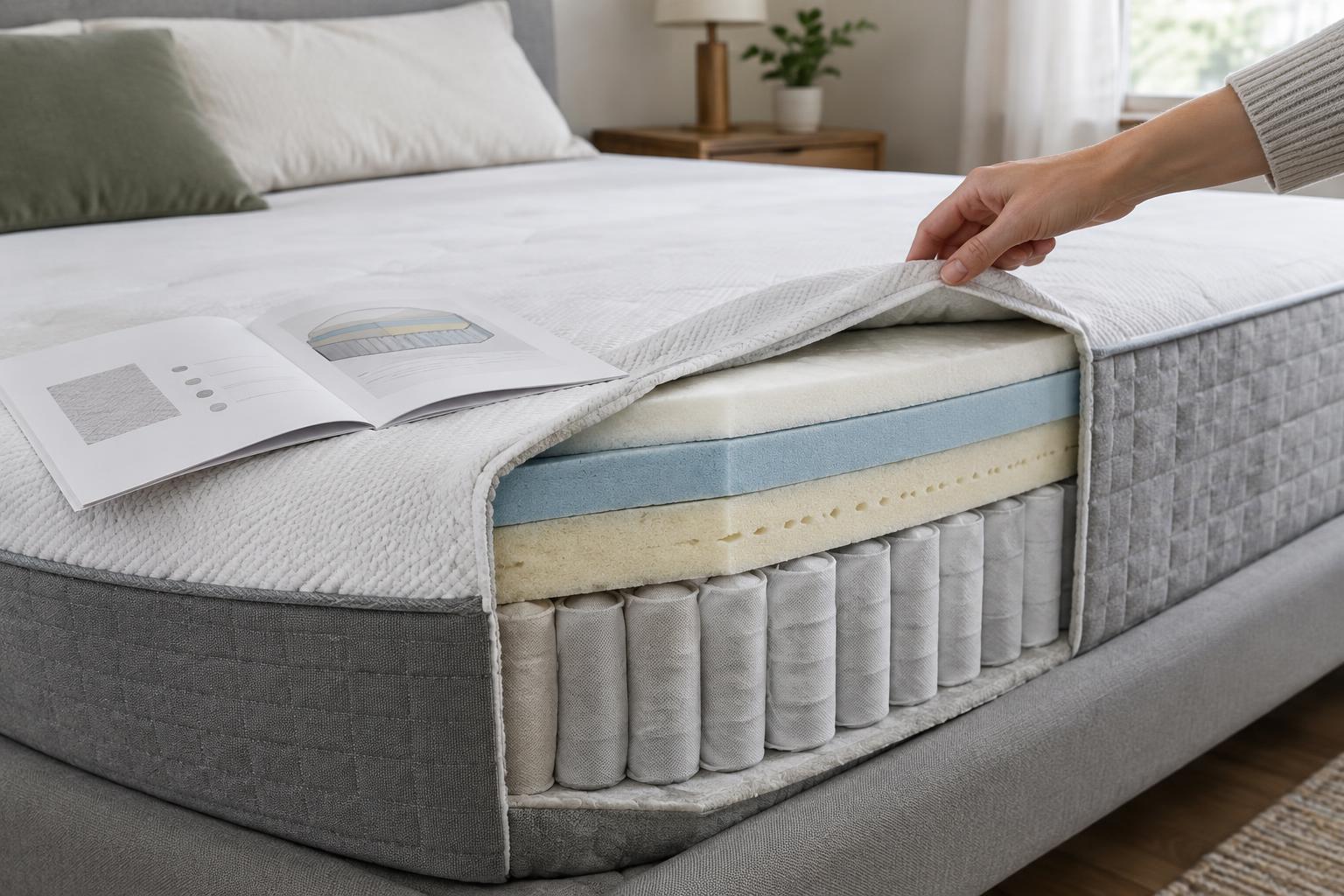
A bed frame and a mattress may share a size label but still be a poor match. The first check is the mattress manufacturer’s guidance for acceptable support. Look for requirements covering slat spacing, center support, foundation type, and weight capacity. These details matter especially if you want to use an existing frame: an unsupported span or a foundation the maker excludes could affect how the mattress performs and whether a warranty applies.
Keep the terms separate as you shop. A bed frame is the structure that holds the bed; a foundation is the surface directly beneath the mattress. A platform bed may serve both roles. Other frames need a separate foundation, such as a rigid base or a traditional box spring. Do not assume those products are interchangeable. Some mattresses are intended for firm, even support, while others may be approved for particular spring-based foundations. Follow the requirements for your specific model rather than a general rule for its material.
Measure the fit, not just the size label
Confirm the mattress and support surface are the same nominal size, then compare their actual measurements. Frames with raised edges, inset platforms, or tightly fitted headboards can leave less usable space than their outside dimensions suggest. Measure the area where the mattress will sit, including its length, width, and any lip around the edge. A mattress should lie flat without being squeezed against the frame or left with an unexpectedly large gap.
Check height as well as footprint. Add the heights of the frame, foundation, and mattress to estimate the finished bed height. Consider whether you can sit on the edge comfortably, whether under-bed drawers can open, and how much of a headboard will remain visible. If a frame has side rails, verify that the mattress or foundation will be held securely rather than perched on a narrow ledge.
Inspect the support surface
For a slatted base, check that the slats are sound, secured, and evenly spaced. Measure the largest open gap between them and compare it with the mattress maker’s stated maximum; there is no single spacing limit that suits every mattress. Flexible slats may also feel different from a rigid platform, so check whether that type of base is permitted. Replace broken, bowed, or missing slats before putting a new mattress on the bed.
Larger bed sizes often need support down the middle as well as around the perimeter. Inspect any center rail and its legs, making sure they reach the floor on an even surface and remain steady under load. Check the stated weight capacity for the complete setup, including the mattress and sleepers, and be alert to a weak link such as a lightweight foundation on an otherwise sturdy frame.
A solid platform can provide even support if it is flat and strong enough, but airflow is worth considering. Bedding, room humidity, and the design of the base can all affect moisture buildup beneath a mattress. If you plan to place a mattress directly on the floor or on a solid board, check the maker’s instructions and consider how you will inspect and air the underside.
Check special frames and foundations
If you have an adjustable base, confirm that the mattress is explicitly approved for use on one. It must be able to bend as the base moves without damaging its construction. Also check the mattress height and the base’s movement clearance: a thick mattress, close-fitting frame, footboard, or nearby furniture may interfere with adjustment. For split setups, verify the exact mattress sizes and how each side will be supported and controlled.
With an older box spring or foundation, inspect its condition rather than judging by appearance alone. Squeaks, sagging, loose joints, or an uneven top can undermine a new mattress. If you are replacing a mattress but keeping the rest of the bed, ask for the new model’s foundation specifications before assuming the old base is suitable. The same caution applies to bunk beds and storage beds, where guardrail height, mattress thickness limits, or opening mechanisms may impose additional constraints.
Do a final compatibility check before ordering
Write down the mattress model and size, its approved support types, maximum slat gap, and any center-support or weight requirements. Compare that list with measurements and photos of your current bed. If a specification is unclear, ask the seller or manufacturer about that exact pairing and keep the response with your purchase records.
Before delivery, tighten frame connections, level the bed, and clear enough space to place the mattress without bending it beyond the maker’s handling guidance. Once installed, check that it sits evenly, does not shift excessively, and has no unsupported edges. A few careful checks can help you avoid buying a mattress that fits the room but not the bed beneath it.