Start with the bed as you use it
If a mattress feels uneven, note where you notice it: under a hip, in the middle of the bed, along an edge, or between two sleepers. Then remove the pillows and top bedding and look at the mattress in good light. A dip that is obvious while someone lies on the bed may be less visible when it is empty. Both observations are useful, but they tell you different things.
Check whether the uneven feeling changes when you sleep in a different position or on another part of the mattress. Also consider the layers above it. A compressed mattress topper, bunched mattress protector, or unevenly tucked bedding can create a low spot without a problem in the mattress itself. Remove these layers before judging the surface.
Look for impressions and measure any visible dip
Some mattress materials develop shallow body impressions where people usually sleep. An impression is a visible change in the surface; sagging is commonly used to describe a deeper or more persistent loss of even support. Appearance alone cannot tell you exactly how a bed will feel, and a mattress can feel unsupportive without showing a clear dip when empty.
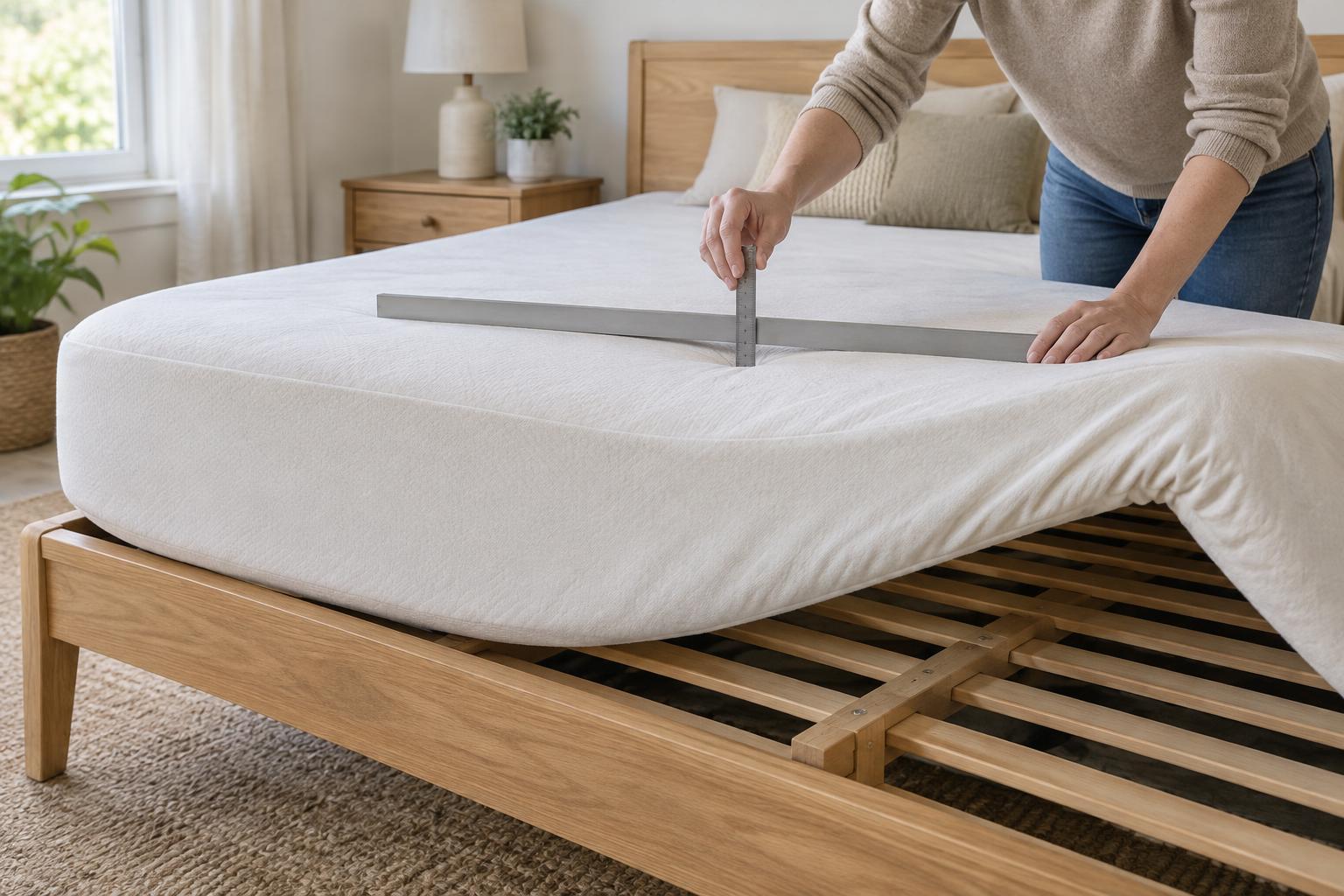
To make a simple check, place a straight, rigid edge across the suspected low area on the uncovered, unoccupied mattress. Do not press it down. If there is a gap, measure vertically from the underside of the straight edge to the lowest point you can see. Repeat the check in a few places and record where you measured. This is a rough home measurement, not a test of how the mattress supports a person’s weight.
Take clear photos from the side and above if you may need to compare the surface later. Include the straight edge in a photo, but avoid treating a single image as conclusive: lighting, camera angle, quilted covers, and soft top layers can all affect how deep a dip appears. If you are checking a warranty, follow the manufacturer’s stated measurement method rather than assuming your home method matches it.
Inspect the foundation and bed frame
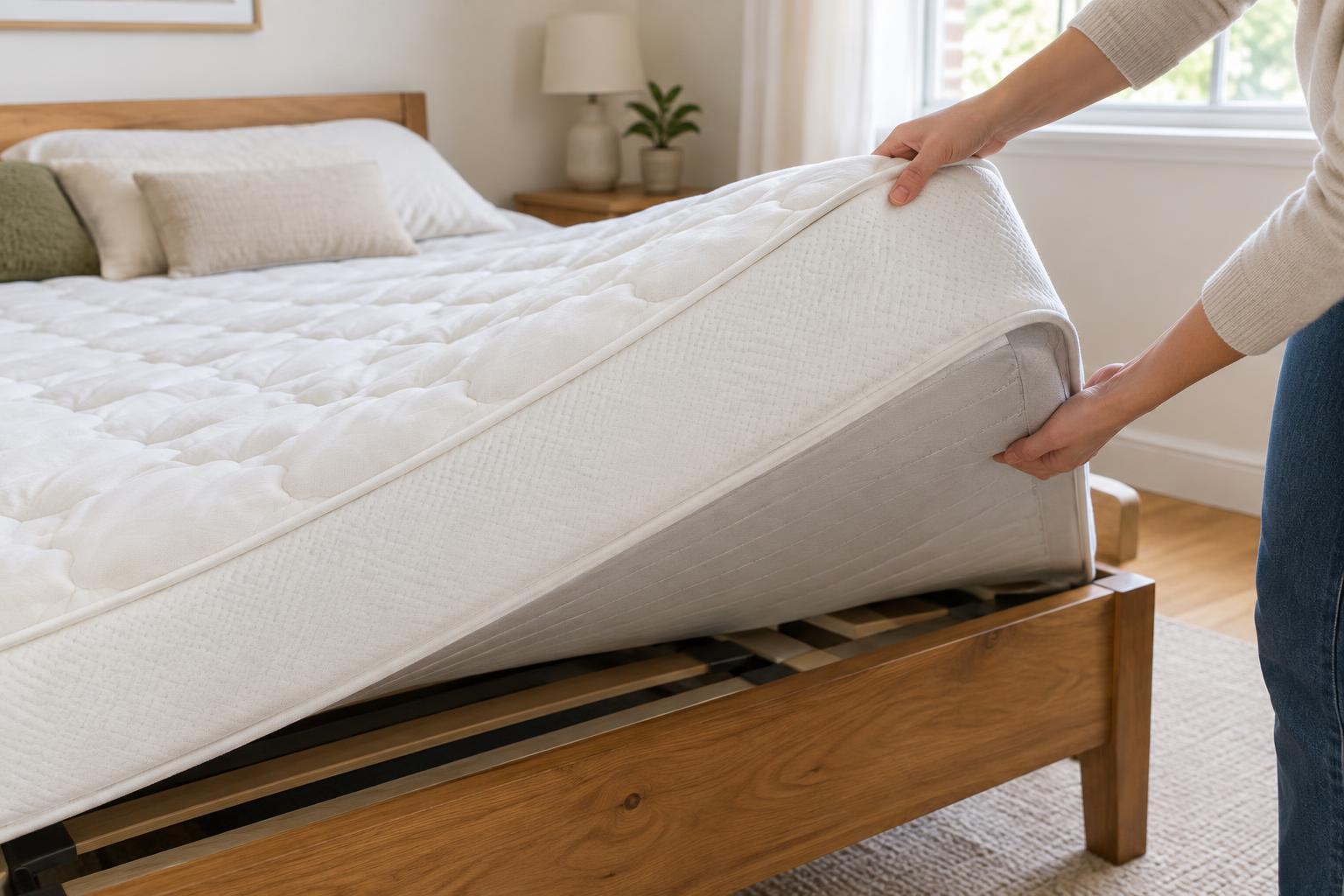
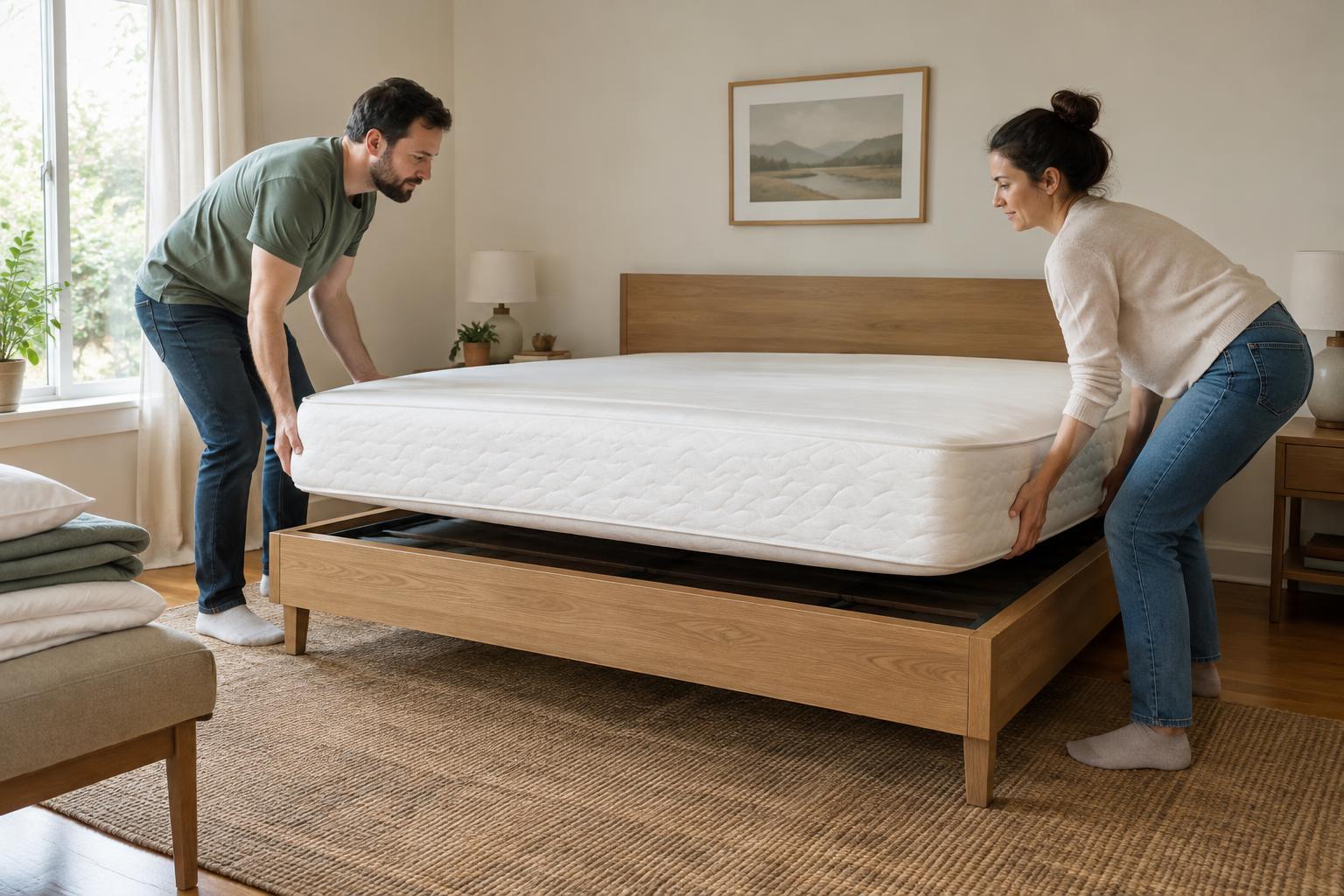
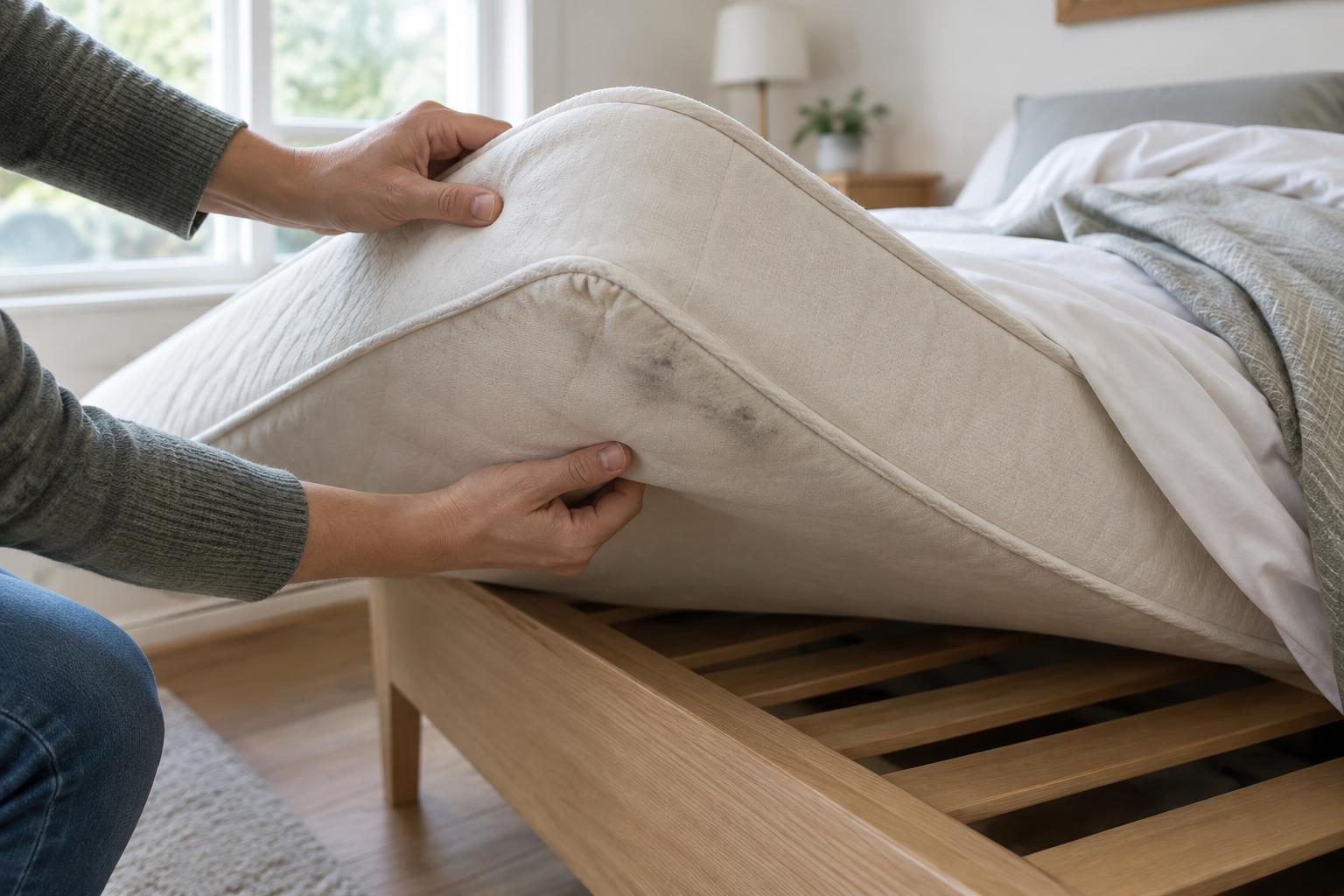
A mattress depends on what sits beneath it. Remove the mattress if you can do so safely, and check for bowed or broken slats, loose fasteners, missing center supports, and legs that do not reach the floor. On a platform bed, look for an uneven panel or a gap between components. A base that bends under load can make the mattress feel as though it sags, even when its surface looks fairly level on its own.
Check that the mattress size fits the frame and that the support surface meets the mattress maker’s requirements, if those are available. Pay particular attention to slat spacing and center support on larger beds. A quick check of an empty frame may not reveal movement, so listen and look for shifting when weight is applied carefully. Tightening a loose connection or replacing a damaged support may address the cause without changing the mattress.
Compare conditions before drawing a conclusion
If it is practical, compare how the mattress feels on its usual base with how it feels on another firm, level support surface that is suitable for the mattress. Follow the manufacturer’s guidance; not every mattress should be placed directly on a floor, and moving a heavy mattress can be difficult. If the uneven feeling changes substantially with the support beneath it, the base deserves closer attention.
Check whether the mattress is sitting flat and centered, with nothing trapped underneath. If its care instructions allow rotation, rotating it may help distribute future wear, though it will not repair damaged materials. Do not flip a one-sided mattress unless its instructions say it is designed for flipping. Avoid trying to hide a pronounced dip with a soft topper before identifying the cause; the added layer may change the feel without restoring support.
Decide what to document and what to do next
Keep notes on the location of the low spot, what you felt, what you measured, and what you found under the bed. If the frame is damaged, repair or replace the affected support and reassess the mattress. If the mattress remains uneven on an appropriate base, check its care information and warranty terms. These may distinguish between visible, unloaded impressions and changes in comfort, and they may require particular photos or proof of an approved foundation.
A single measurement is less useful than a clear picture of the whole setup. Checking the bedding, mattress surface, and base in order can help you avoid replacing the wrong component. If you cannot safely move the mattress or inspect the frame, ask someone for help rather than straining to complete the check alone.