Start by identifying what the limit covers
A published mattress weight limit may refer to one sleeper, the entire mattress, or the mattress together with other loads. Those figures are not interchangeable. For a shared bed, look for both a per-sleeper limit and a total limit. If a product page gives only one number, ask the seller or manufacturer what it means before relying on it.
Check whether the stated limit includes the mattress’s own weight. Also ask how the limit applies when weight is concentrated in one area, such as when someone sits on the edge. A specification may describe an approved use condition without telling you much about how the mattress will feel or wear over time. Treat it as a boundary to verify, not a promise of comfort or a prediction of lifespan.
Leave room for ordinary use rather than choosing solely because your expected load falls just below a stated maximum. If the manufacturer does not explain how its limit is defined, record that uncertainty alongside the price and other specifications. A clear, documented limit is more useful for comparison than an impressive figure with no explanation.
Separate support from firmness
Firmness describes how a mattress feels when you lie on it; support describes how its construction responds to a load. A firm-feeling surface is not automatically better suited to a higher load, and a softer surface is not automatically unsuitable. Comfort also depends on sleeping position, body shape, and preferences, which a weight rating alone cannot capture.
When comparing mattresses, note the materials and construction beneath the surface. For a foam mattress, look for the type and thickness of the comfort and support layers; if foam density is published, make sure you know which layer it describes. For an innerspring or hybrid mattress, note the coil system and whether the maker provides meaningful details about its design. These specifications can help you ask better questions, but none offers a simple, universal durability score.
Edge support deserves separate attention if you frequently sit on the side of the bed or need the full sleeping surface. Look for a description of any reinforced perimeter, then check the return and trial terms rather than assuming a construction label guarantees a particular feel. Editorial comparisons can organize published specifications, but they should not be mistaken for hands-on performance tests.
Check the whole bed, not just the mattress
The mattress rests on a foundation, platform, adjustable base, or bed frame. Each component may have its own capacity and installation rules. Confirm the stated load limit for the complete frame or base, including sleepers, mattress, and bedding as directed by its maker. The usable limit of the setup depends on components being used within their respective specifications.
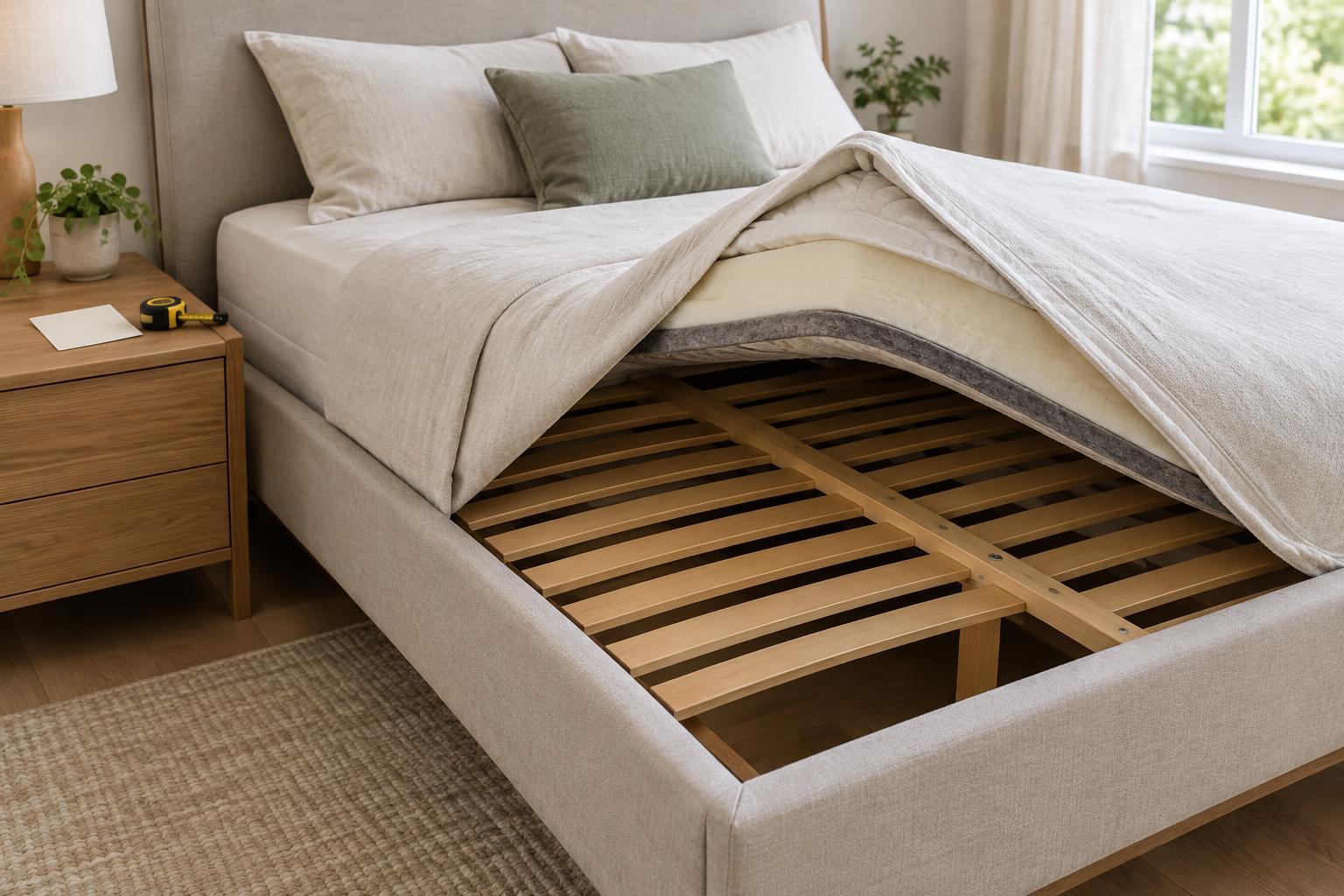
Read the mattress maker’s foundation requirements as carefully as its weight rating. Pay particular attention to permitted slat spacing, whether a center support is required, and whether the support surface must be flat. Requirements can vary by mattress and size. A frame advertised as sturdy may still be unsuitable if its slats are spaced more widely than the mattress maker allows or its center support is missing.
If you plan to use an adjustable base, verify that the mattress is approved for one and that the base supports the combined load. Check the frame or base manual for assembly and placement instructions, too. Correct setup matters: a stated capacity assumes the product is assembled and used as specified.
Read the warranty and trial terms alongside the specifications
A mattress warranty may set conditions for the type of foundation used, acceptable slat spacing, and documentation of the setup. These conditions are separate from the advertised weight limit. Review them before purchase, especially if you intend to keep an existing frame. Save the relevant product specifications and purchase documents so you can refer to the requirements when setting up the bed.
Also check what the warranty actually covers. A weight rating does not mean every change in feel or appearance will qualify for a remedy. Likewise, a sleep trial offers a way to assess comfort at home, but its return rules may include waiting periods, handling requirements, or other conditions. Read the written terms rather than relying on a brief summary in an advertisement.
If specifications on the retailer’s page, product label, and manufacturer’s materials differ, seek clarification in writing. Note the exact mattress model and size when asking; closely related models may not share every requirement.
Use a short checklist before deciding
For each mattress on your shortlist, write down its per-sleeper and total weight limits, what each limit includes, and whether the figures come from the manufacturer. Add the required foundation type, maximum slat spacing if specified, center-support requirements, and adjustable-base compatibility. Then compare those requirements with the documentation for your actual frame or base.
Next, record construction details, warranty conditions, and trial rules. Mark any item the maker does not publish rather than filling the gap with an assumption. If a limit or support requirement remains unclear after you ask, consider a model with clearer documentation. The goal is not to find the largest number on a product page; it is to choose a mattress and bed setup whose stated requirements you can understand, meet, and maintain.