Start with your bedroom, not the label
The right duvet insert helps you stay comfortable through the night without repeatedly throwing the covers off or pulling them back on. Before comparing ratings, consider how warm your bedroom usually feels while you sleep. A room that stays cool calls for a different insert than one that remains warm, even if both shoppers are buying for the same season.
Your preferences matter just as much. Some people like a light covering and add a blanket when needed; others prefer a loftier duvet on its own. If you share a bed, ask whether both sleepers tend to feel similarly warm. When preferences differ, separate duvets can offer more control than trying to find one insert that suits everyone.
Think about the whole bed, too. Flannel sheets, a thick duvet cover, and an extra blanket can make a setup feel warmer than smooth, lightweight bedding around the same insert. Choose for the combination you intend to use, rather than treating the duvet rating as a decision in isolation.
Understand what warmth ratings can and cannot tell you
Some duvet inserts have a tog rating, which describes thermal insulation: a higher tog generally means a warmer duvet. Tog can help you compare inserts that use the same rating system, but it does not tell you how heavy, breathable, or pleasant a duvet will feel. Retailer labels such as “light,” “medium,” and “extra warm” are less precise and may not be consistent across brands.
Other listings emphasize fill weight, often given as grams per square meter. This describes how much fill is present, not warmth by itself. A heavier fill may make an insert warmer within one product line, but different fills can behave differently. For down products, you may also see fill power, a measure associated with the loft of the down. A high fill power does not automatically make a duvet warmer: the amount of fill and the finished construction still matter.
For the most useful comparison, look at several details together: the stated warmth level, fill type and amount, and whether the maker explains the conditions for its recommendation. If two products use different labeling systems, avoid assuming their numbers are interchangeable.
Factor in fill and construction
Down can provide substantial loft without as much weight as some alternatives. Feather blends may feel heavier, while synthetic fills vary widely in loft, weight, and washability. Wool and other natural fills have their own feel and care requirements. No fill is automatically best for every sleeper; decide whether you value a puffy feel, a reassuring weight, easy laundering, or a particular fiber.
Construction affects how consistently an insert keeps you warm. Sewn-through stitching joins the outer fabric layers and holds fill in place, but the stitched lines can have less insulation. Baffle-box construction uses internal walls to give fill room to loft and may reduce thin spots. Box size, fill distribution, and the quality of stitching also influence whether warmth stays even across the bed.
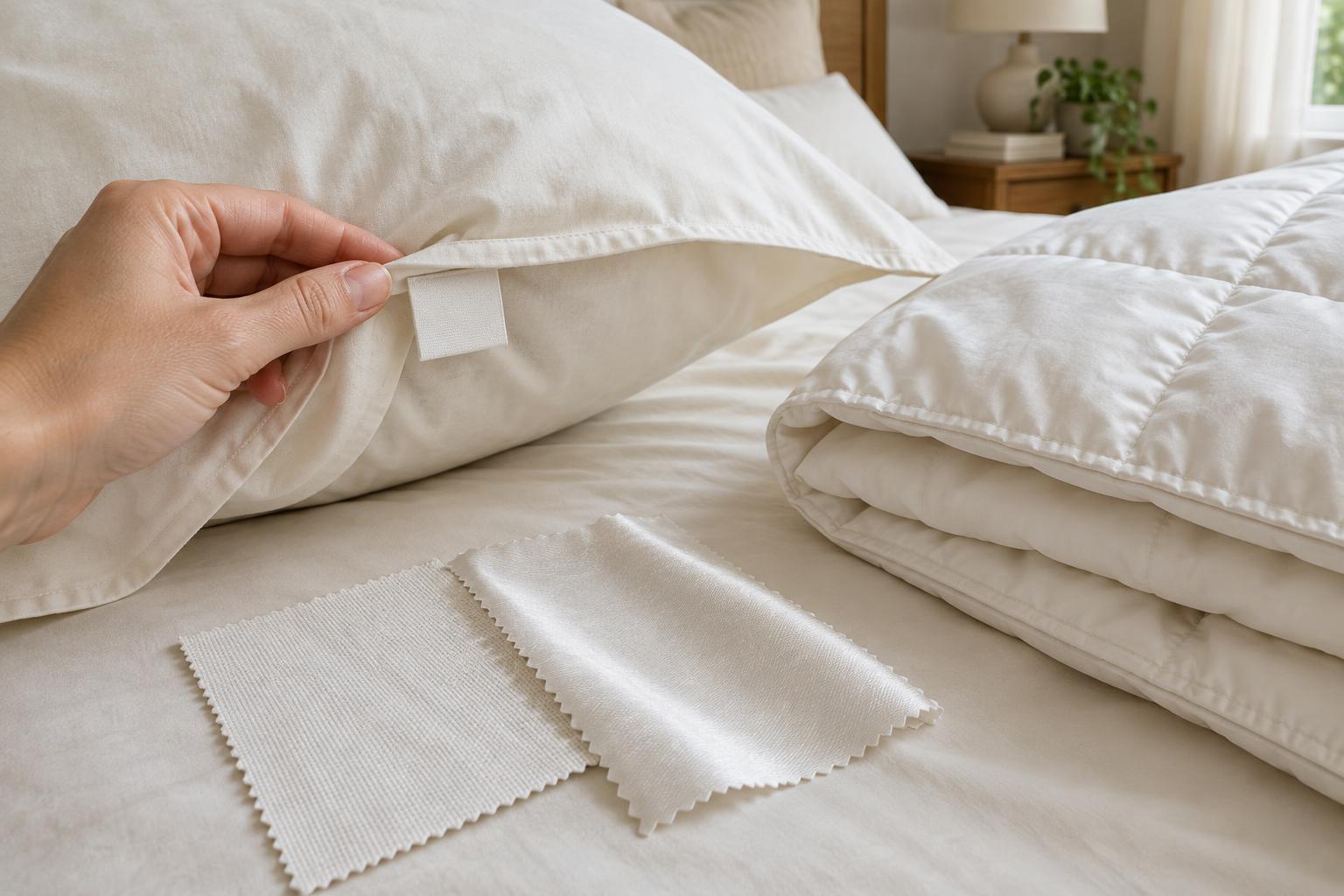
Check the shell and duvet cover as well. Tightly woven fabric helps contain loose fill, while a cover changes the texture against your skin and can slightly change the overall feel of the bedding. If a cover is part of your plan, compare inserts with that extra layer in mind.
Choose a flexible setup
If your bedroom changes noticeably over the year, one insert may not be comfortable in every season. A lighter duvet paired with a removable blanket gives you more ways to adjust. Another option is to keep separate lighter and warmer inserts and swap them as conditions change. This can be more useful than buying the warmest insert available and hoping it works year-round.
Check dimensions before you buy. An insert that is too small for its cover may bunch up or leave empty edges; one that is too large may be difficult to spread evenly. Bed size alone is not enough, because covers and inserts labeled for the same bed can differ in their actual measurements. If you want more drape along the sides, compare the listed dimensions with your mattress and cover.
Finally, read the care label. An insert that needs special cleaning or is too bulky for your available washer may be less convenient than it first appears. Regular airing, prompt attention to spills, and following the maker’s cleaning instructions can help keep the fill distributed and the duvet comfortable. A sensible warmth choice is one that fits both your sleeping environment and the way you will maintain it.