Start with the people who use the bed
A mattress should fit the sleepers first and the room second. Think about how many people regularly use the bed, their height, and whether they prefer to spread out or sleep close together. Occasional guests, children who climb in during the night, and pets that stay on the bed can change how much space feels comfortable. A larger mattress is not automatically better, though: it may leave too little room to walk around, open drawers or reach a closet.
For one adult, a twin can work when floor space is tight, but a full offers more room to change positions. A queen is a common choice for two adults because it provides more width than a full while fitting in many bedrooms. A king gives two sleepers more personal width; a California king trades some of that width for extra length. If one sleeper is tall, compare mattress length with their height rather than choosing by the size name alone.
Compare dimensions, not just size names
In the United States, typical mattress dimensions are approximately 38 by 75 inches for a twin, 38 by 80 for a twin XL, 54 by 75 for a full, 60 by 80 for a queen, 76 by 80 for a king, and 72 by 84 for a California king. These figures describe mattress width by length, not the outside dimensions of a bed frame. Sizes can vary slightly by manufacturer, and naming conventions differ between countries, so check the specifications of the mattress you intend to buy.
Width often matters most for people sharing a bed. A full mattress gives each of two sleepers less width than a twin would give one person. A queen adds space, while a king provides substantially more separation. Length matters, too: a twin XL, queen and standard king are typically 80 inches long, while a California king is typically 84 inches long. Leave room beyond a sleeper’s height for pillows and a comfortable sleeping position.
Measure the room with the bed in place
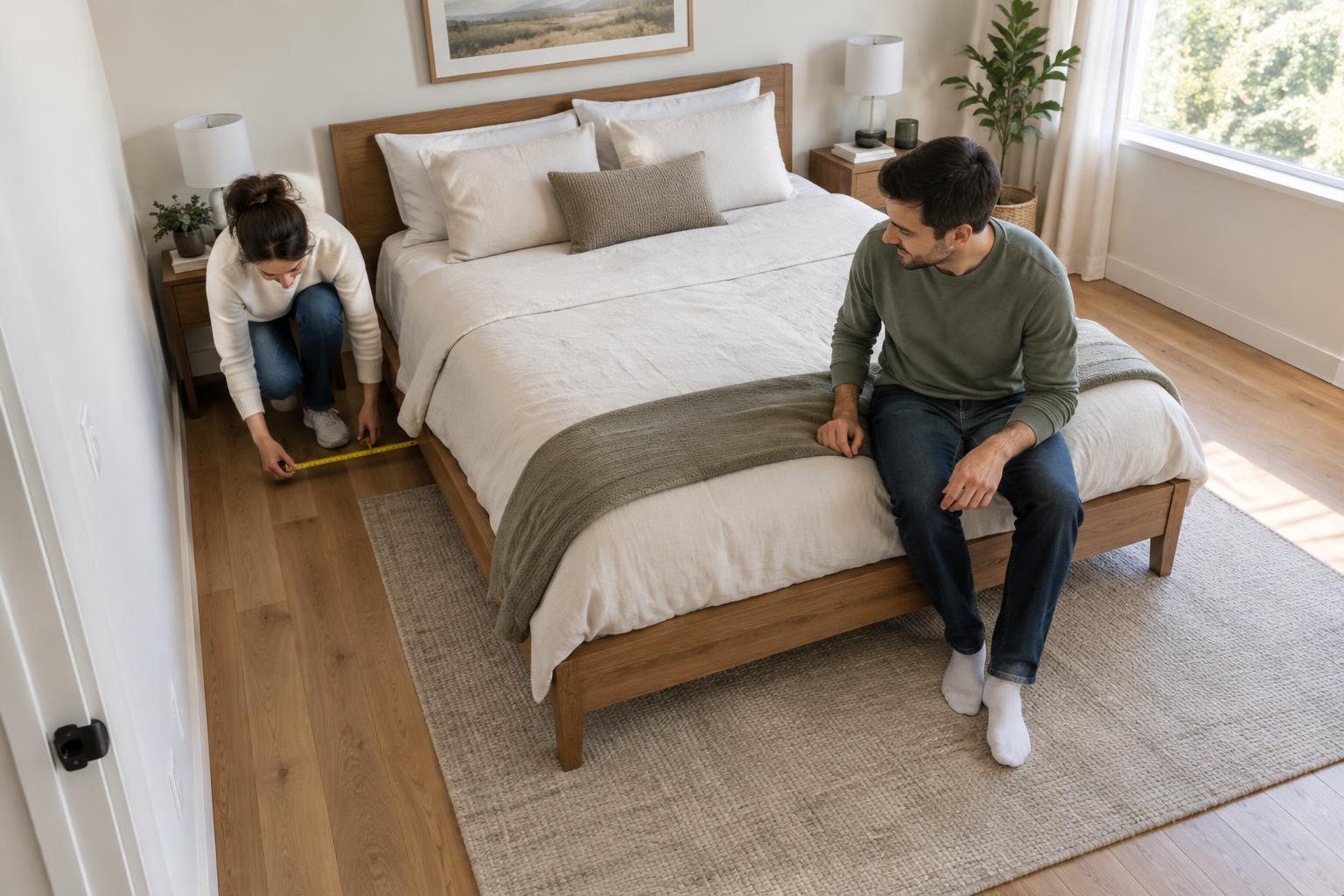
Measure the usable floor area, then sketch where the mattress and frame will sit. Include nightstands, doors, dresser drawers, closet access and any space needed to make the bed. A clearance of around 24 to 30 inches along accessible sides can be a useful planning target, but the right amount depends on the room and how you move through it. If the bed must sit against a wall, consider whether both sleepers can get in and out comfortably.
Check the complete bed frame dimensions before committing to a size. Headboards, footboards and platform edges can add inches beyond the mattress. Painter’s tape on the floor can help you picture the footprint, though it will not show how a tall bed affects the room visually. Also measure doorways, stairs, hall turns and elevators on the delivery route. A mattress that fits the bedroom still needs a practical way to get there.
Match the size to the bed setup and bedding
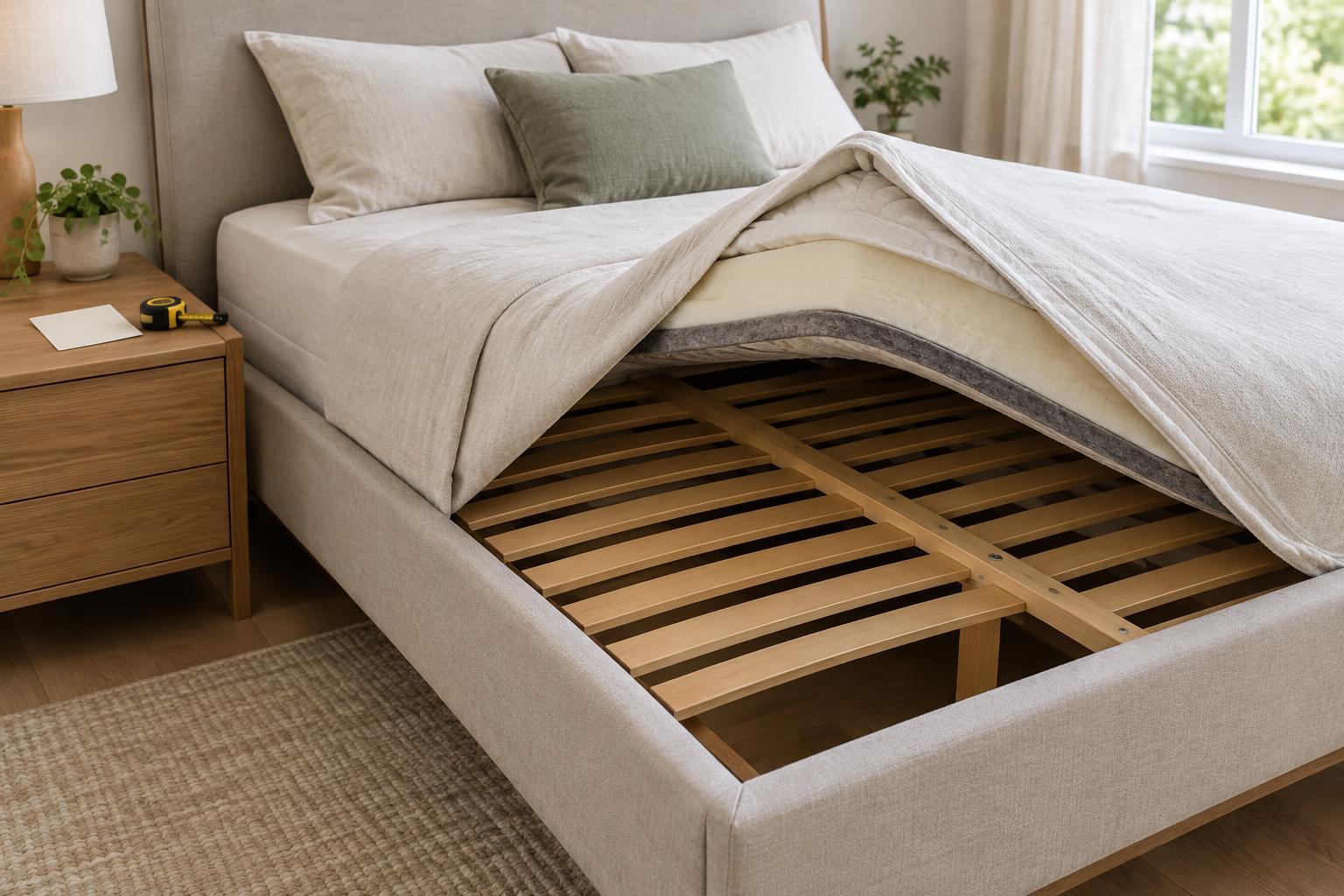
If you already own a frame or foundation, confirm its stated mattress size and any support requirements. Do not assume that similar-sounding sizes are interchangeable: a king and a California king differ in both width and length. Adjustable beds may also affect your options. A split king usually consists of two twin XL mattresses placed side by side, allowing each sleeper to use a separate adjustable base, but it creates a seam between the mattresses.
Budget for the whole setup, not only the mattress. Larger or less common sizes may call for a new frame, mattress protector, sheets and comforter. Check fitted-sheet depth as well as width and length, especially for a thick mattress or one with a topper. If you plan to reuse bedding, verify its measurements before treating that as a saving.
Make the final choice with real measurements
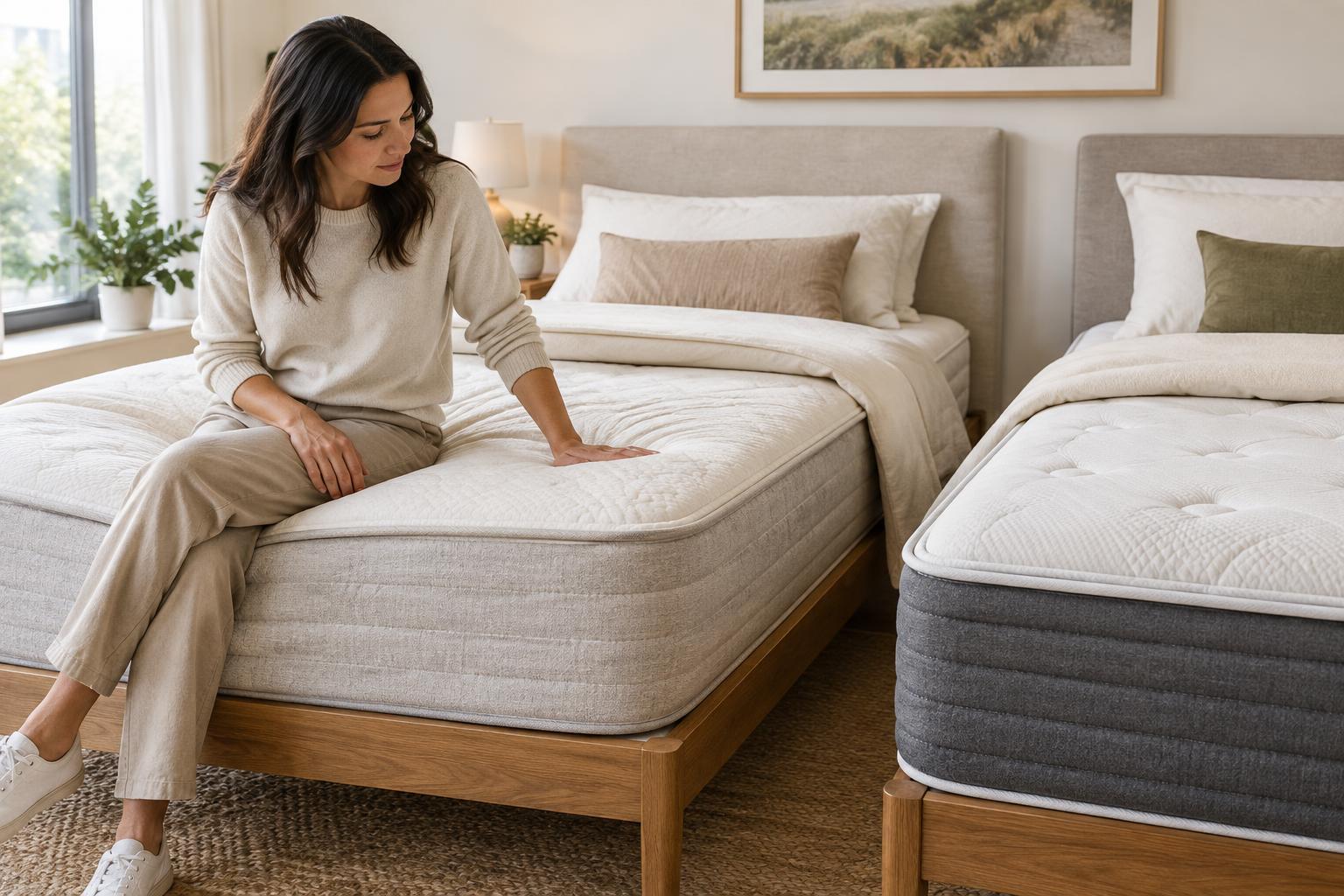
Narrow your options to sizes that suit the sleepers, then rule out any that make essential parts of the room difficult to use. Compare the exact dimensions of shortlisted mattresses and frames rather than relying on showroom impressions or size labels. If possible, lie down in the positions you normally use, with your usual sleeping partner, to judge whether the width feels adequate.
A practical choice balances sleeping space, access around the bed and the cost of everything that must fit it. For a small room used by one person, that might be a twin XL or full; for two people, it might be a queen or king. Choose the smallest size that gives the sleepers enough room without making the bedroom harder to live in.