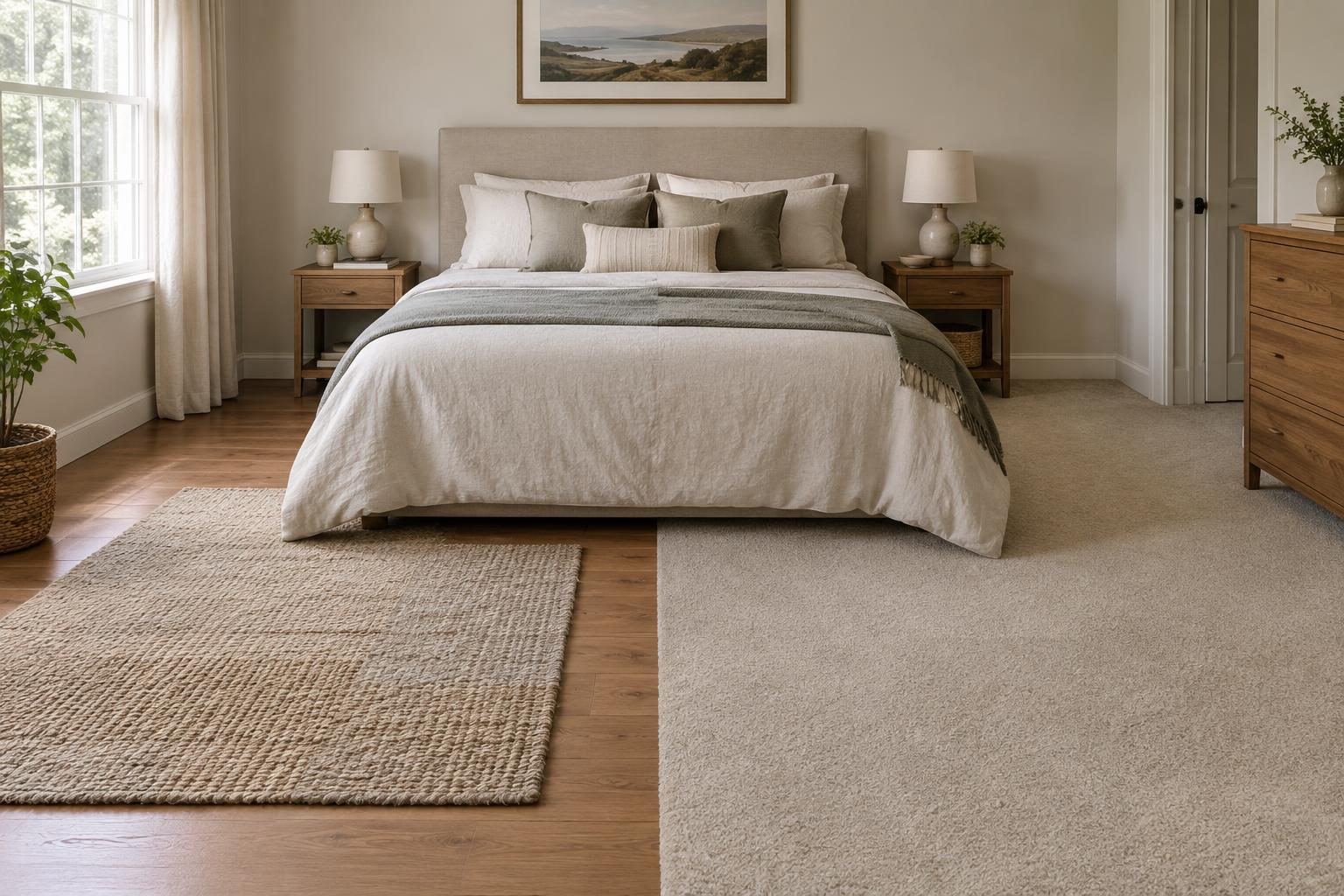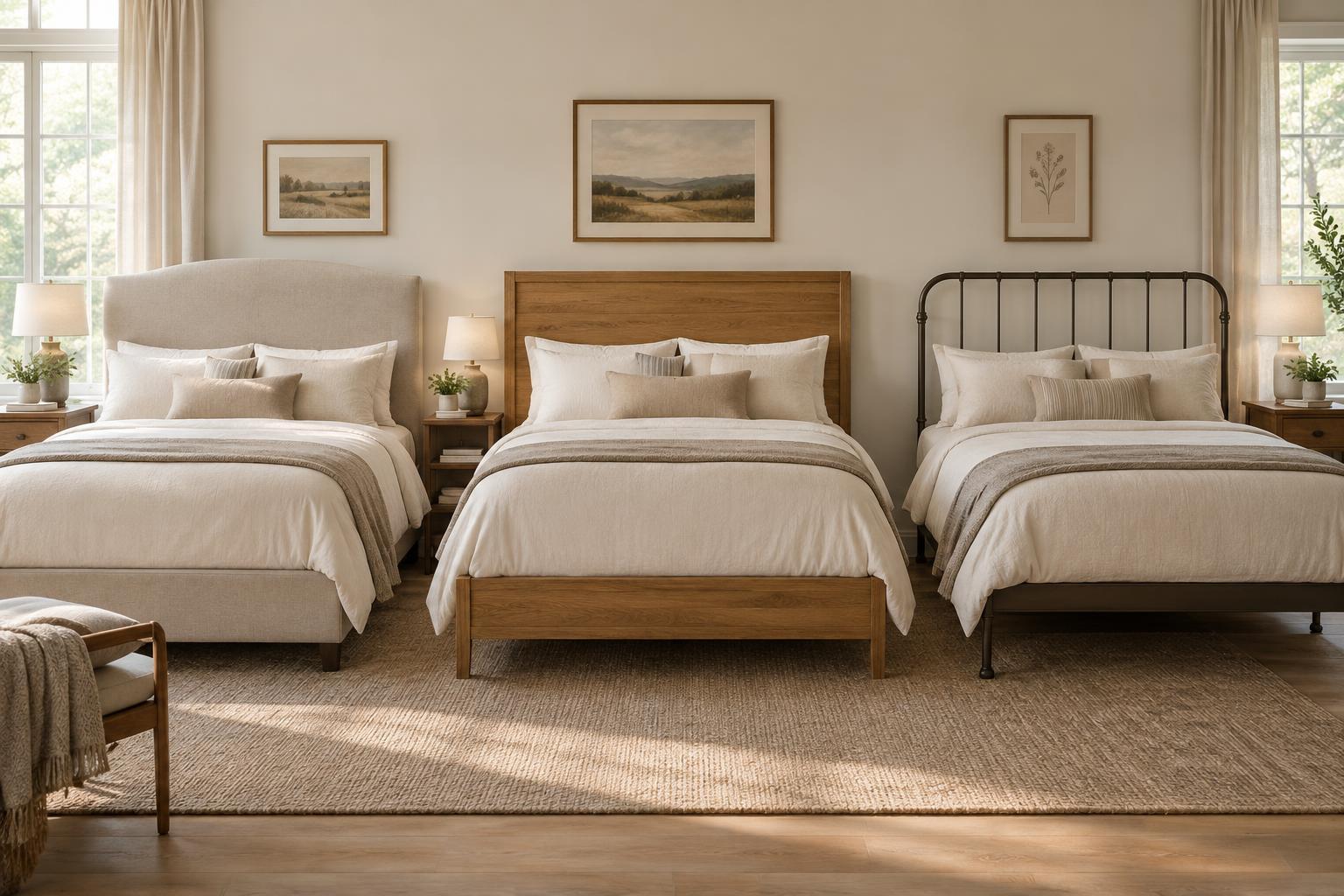
Start with the space beside the bed
The most useful bedroom rug is not necessarily the largest one that fits. Start by deciding where you want a soft surface: beside the bed when you get up, at the foot of the bed, or across most of the room. That choice will help you judge rug dimensions more reliably than bed size alone.
Measure the bed frame, including any parts that extend beyond the mattress. Then measure from each side of the frame to nearby walls, dressers and doors. Mark the proposed rug edges on the floor with removable painter’s tape, and walk around the room as you normally would. Check that the rug will not catch a door, block a drawer or leave an awkward narrow strip of flooring along a main walkway. If the bed is off-center because of a window or closet, plan around its actual position rather than trying to make the rug perfectly symmetrical.
Choose how much of the bed sits on the rug
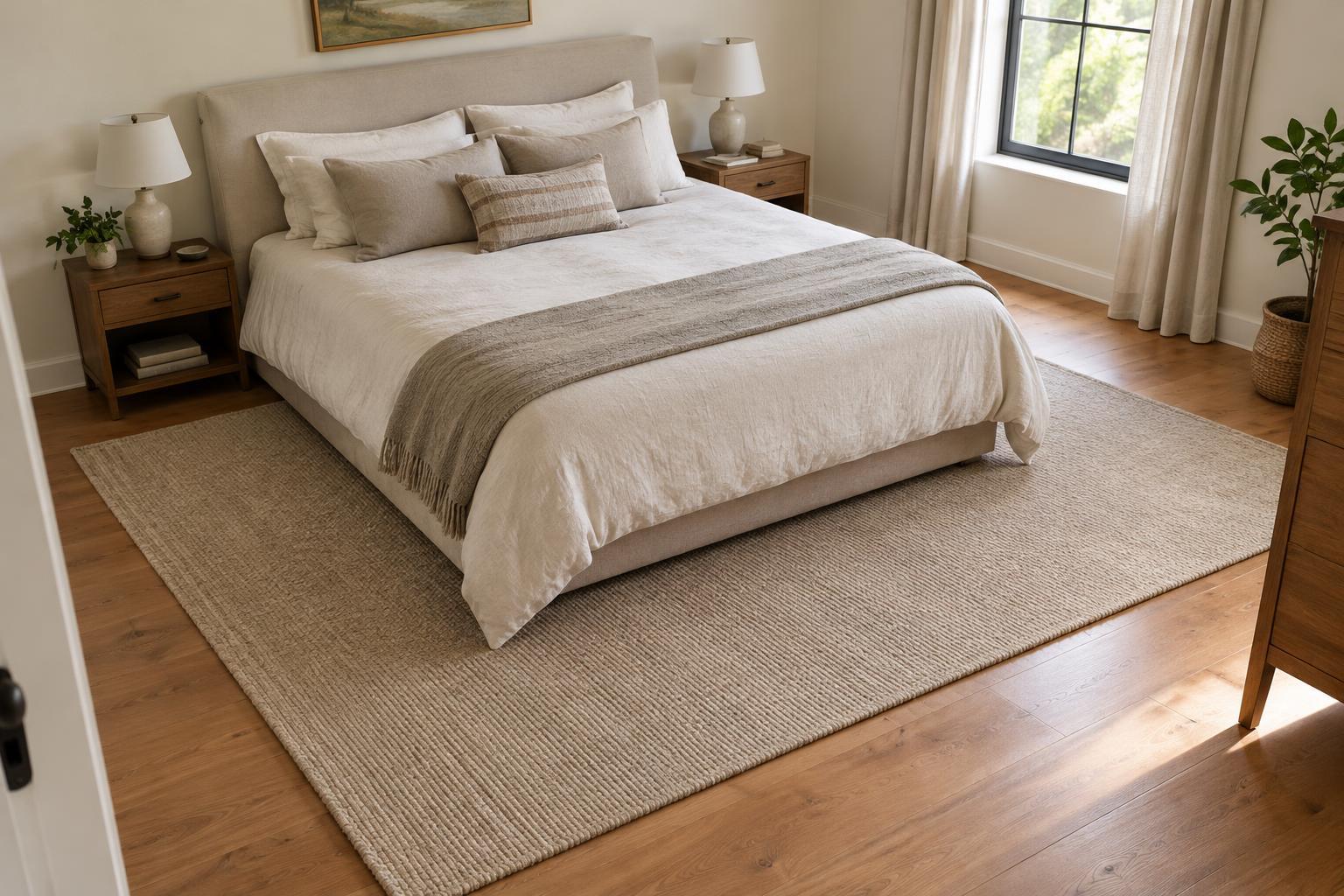
Placing the rug beneath the lower portion of the bed is a flexible arrangement. It can extend beyond the foot and both sides while leaving the headboard area clear. This often works well when bedside tables sit close to the bed: they can remain on the floor, and you can pull out the rug for cleaning without moving every piece of furniture.
A rug that extends beneath the entire bed can give the room a more continuous look, especially if it also reaches under the bedside tables. Before choosing this layout, check that each table will sit fully on the rug or fully off it. A table with only some legs on the rug may wobble. If you prefer a smaller rug at the foot of the bed, make sure it reaches a spot where you will actually stand; otherwise, it may serve mainly as a visual accent.
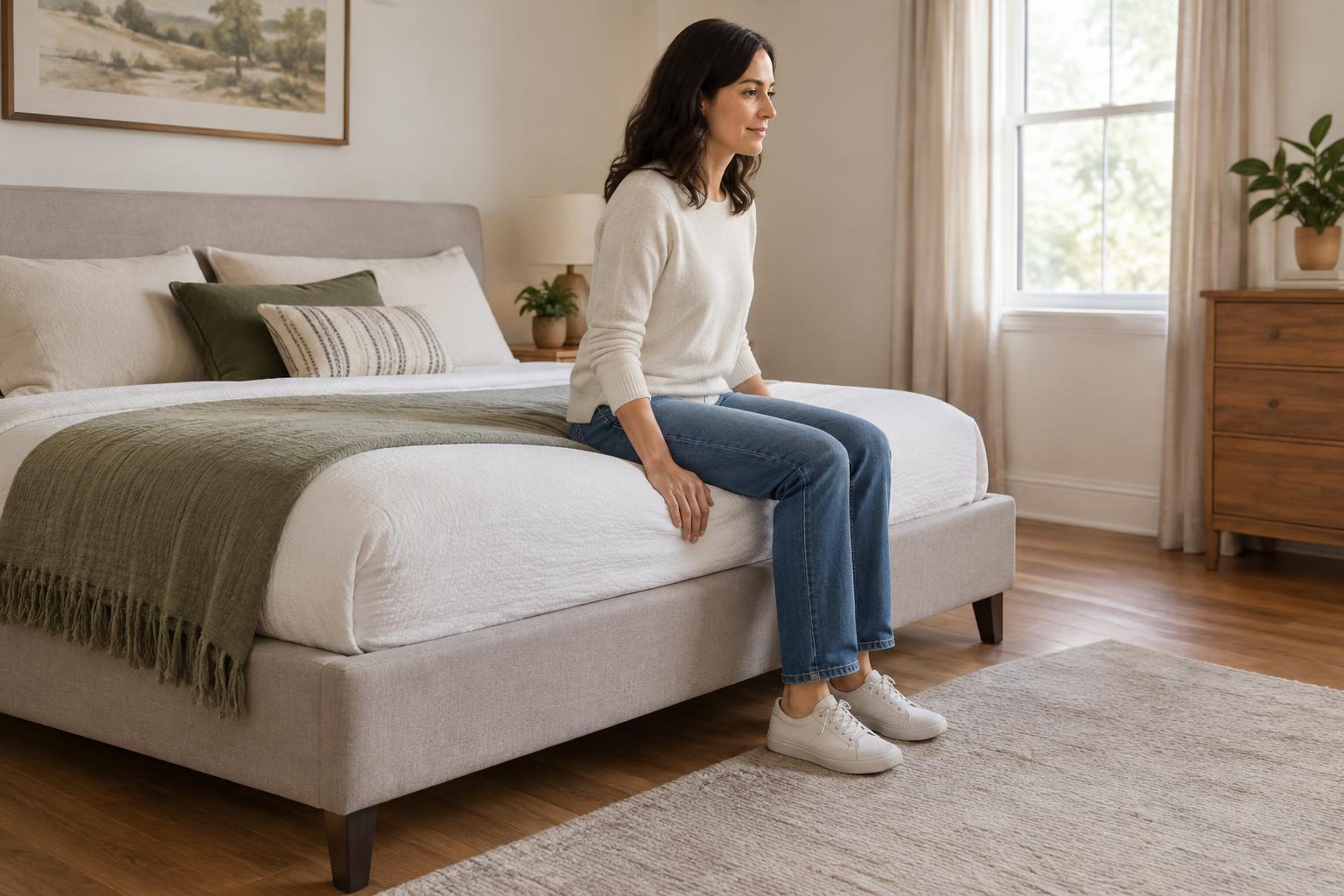
There is no required amount of rug to show around a bed. As a practical test, stand where you usually get in and out: both feet should land on the rug if that is the comfort you want. Leave enough visible rug at the foot for the placement to look intentional rather than barely peeking out.
Adapt the layout to the room
In a narrow bedroom, a single large rug may extend too far into a tight passage. Two runners, one on each accessible side of the bed, can put softness where it matters while keeping more floor clear. They do not have to match exactly, but similar lengths and a deliberate alignment can make the arrangement feel cohesive. If one side of the bed is against a wall, a runner on the open side may be all you need.
For a bed placed in a corner or beneath a sloped ceiling, avoid forcing a centered layout that does not suit how the room is used. Try a rug partially beneath the bed, shifted toward the open walking area. In a room with a bench at the foot, decide whether the bench should sit on the rug with all its legs supported or beyond the rug with a visible gap. Also consider how the rug relates to other furnishings: it can define the bed area without having to cover every piece of bedroom furniture.
Match the rug to everyday use
Pile height affects more than appearance. A thicker rug may feel plush underfoot, but it can make it harder to slide a chair, open a low door or move furniture for cleaning. A lower-pile or flatwoven rug is often simpler to vacuum and may be easier to fit into a compact room. Texture, color and pattern also influence how the rug looks between cleanings; consider your usual footwear, pets and the amount of floor traffic rather than choosing by appearance alone.
Check the rug’s care instructions before buying, particularly if it will sit partly beneath a heavy bed. Think about whether you can reach the exposed edges with a vacuum and whether moving the rug occasionally will be manageable. A suitable rug pad can help keep a rug in place and protect the floor, but choose one compatible with both the rug and the flooring. Keep edges flat and avoid loose corners in routes used at night.
Test the footprint before you commit
Rug labels give dimensions, but the taped outline on your own floor tells you more. Live with that outline for a day or two if you can. Open doors and drawers, walk around the bed, and notice where your feet land. If the proposed rug feels too wide, try shifting its position before choosing a smaller one; if the sides feel bare, compare a wider rug with separate runners.
Finally, look at the rug from the bedroom doorway. A balanced placement should support the way the room functions as well as the way it looks. When the rug gives you a comfortable landing, leaves practical access to furniture and stays clear of troublesome edges, you have a useful size and position—even if it differs from a standard layout.