Start with the mattress, not the sheet label
A sheet set marked queen, king or twin is a useful starting point, but the label alone cannot tell you whether the fitted sheet will fit well. Mattresses with the same size name can differ slightly in their finished dimensions, and their heights can differ considerably. Before shopping, measure the mattress across its width, from head to foot, and from the top surface down to the bottom edge. If a topper will stay on the bed beneath the sheet, include it when measuring the total height.
Measure the mattress itself rather than the bed frame. A frame may be wider than the mattress, while a rounded mattress corner can make an edge-to-edge measurement less obvious. Hold the tape measure straight and check more than one spot if the sides appear uneven. Write down the three measurements so you can compare them with a brand’s size chart instead of relying only on a familiar size name.
Pay particular attention to easily confused sizes. Twin and twin XL, for example, differ in length; a sheet that matches the width but not the length may be hard to pull over the corners. If you have two separate mattresses side by side, check whether they need individual fitted sheets rather than one sheet spanning the whole bed.
Understand what pocket depth describes
Pocket depth generally describes how far the corner of a fitted sheet is designed to wrap down the side of a mattress. It is not a measure of the mattress’s width or length, and it does not guarantee a snug fit on every mattress of the stated height. Labels such as “deep pocket” and “extra deep pocket” are not a substitute for a measurement: check the stated pocket depth or recommended mattress-height range on the packaging or product page.
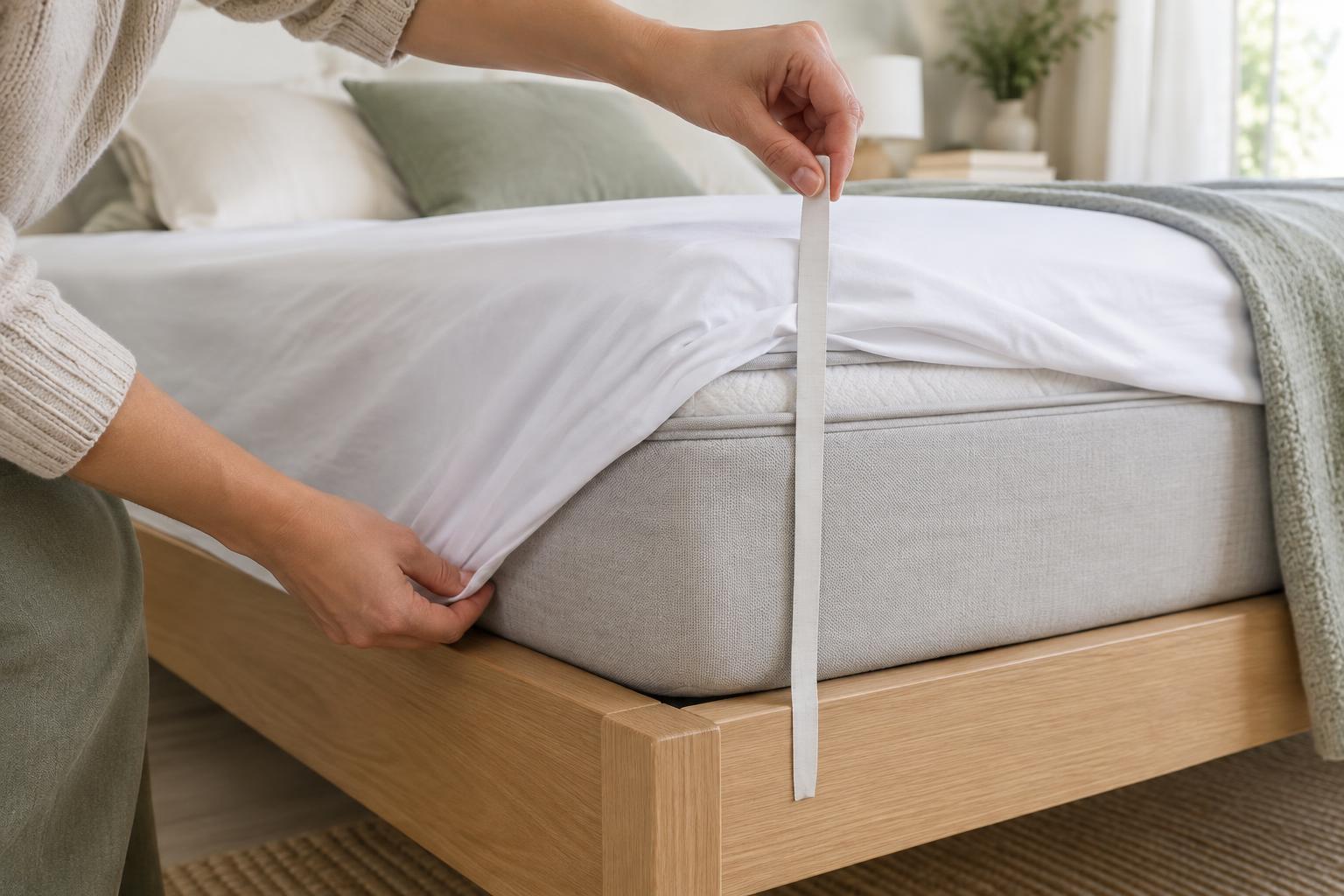
The sheet needs enough depth to reach under the mattress so its elastic can hold the corners in place. A pocket that barely reaches the bottom edge may work loose when the bed is used. On the other hand, a pocket much deeper than the mattress can leave fabric to bunch on top or at the sides, especially if the elastic is weak. Look for a stated fit range that includes your measured mattress-and-topper height, allowing a little room to tuck the sheet beneath the edge.
Construction matters alongside the number. Some fitted sheets have elastic only at the corners; others have it around the entire edge. Fabric stretch, corner shape and the strength of the elastic can all affect how securely a sheet sits. These features are worth checking when two sheets advertise the same pocket depth.
Account for every layer that stays under the sheet
A thick mattress protector or topper changes the height the fitted sheet must cover. Measure with those layers in place if that is how you normally make the bed. A thin protector may make little practical difference, while a substantial topper can move your bed into a different pocket-depth range. Also consider whether the topper has rounded or square corners; a tight fitted sheet may pull upward over a bulky corner even when its stated depth sounds sufficient.
If you alternate between using a topper and sleeping directly on the mattress, one fitted sheet may not fit both arrangements equally well. Choose for the setup you use most often, or keep separate sheets for each configuration. Before buying, check whether the maker gives both a pocket-depth measurement and a recommended maximum mattress height. The latter can be especially helpful because some fabric must extend under the mattress to stay put.
Check the rest of the set for a usable fit
Fitted-sheet fit is only part of the decision. Confirm that the flat sheet gives you enough fabric to tuck in, if you prefer a tucked bed, or enough overhang if you do not. A taller mattress can use up more of a flat sheet’s width at the sides. Check pillowcase dimensions as well, particularly if your pillows are larger or smaller than the cases typically bundled with your mattress size.
Material and care can affect fit over time. Some fabrics may change size after washing, so follow the care label and look for any sizing guidance from the maker. If you are between fit ranges, do not assume that choosing the deepest pocket will solve every problem: compare the stated dimensions, fabric stretch and elastic design. Keeping the product measurements handy also makes it easier to replace a sheet that already fits well.
Test the fit when you make the bed
Put the fitted sheet on all four corners and smooth it across the surface. The corners should cover the mattress without excessive pulling, and the elasticized edge should sit underneath rather than riding up the sides. If the sheet repeatedly pops off, recheck both the width and length as well as the height. If it stays on but gathers into large folds, the pocket may be too deep or the overall sheet may be too loose.
For a purchase you have not yet used, review the seller’s size chart and return conditions before washing it. Once you find a comfortable fit, note the sheet’s dimensions and your bed’s full height with its usual layers. Those details are more reliable for your next purchase than a size name or a “deep pocket” label alone.