Identify the materials before you add water
The safest cleaning method starts with the care label, not the appearance of the topper. A topper may have a washable fabric cover around a core that cannot go in a machine. Check the instructions for each part, including limits on water temperature, detergent, spin speed and tumble drying. If the label is missing, use a cautious spot-cleaning approach rather than assuming the entire topper is washable.
Look at both the fill and the construction. Memory foam, other polyurethane foams and latex are usually best cleaned in place. Fiberfill, down and some wool toppers may be machine washable, but only when their labels say so and the washer has enough room for the topper to move. A waterproof layer, quilted backing or adhesive inside the topper may also restrict washing even when the surface fabric seems sturdy.
Before cleaning, remove sheets and any detachable cover. Vacuum the topper gently with an upholstery attachment to lift surface dust and debris, working across the top and around seams. Treat a fresh spill promptly by blotting with a clean, absorbent cloth. Press rather than rub, and avoid pushing liquid deeper into the fill.
Spot-clean memory foam and other polyurethane foam
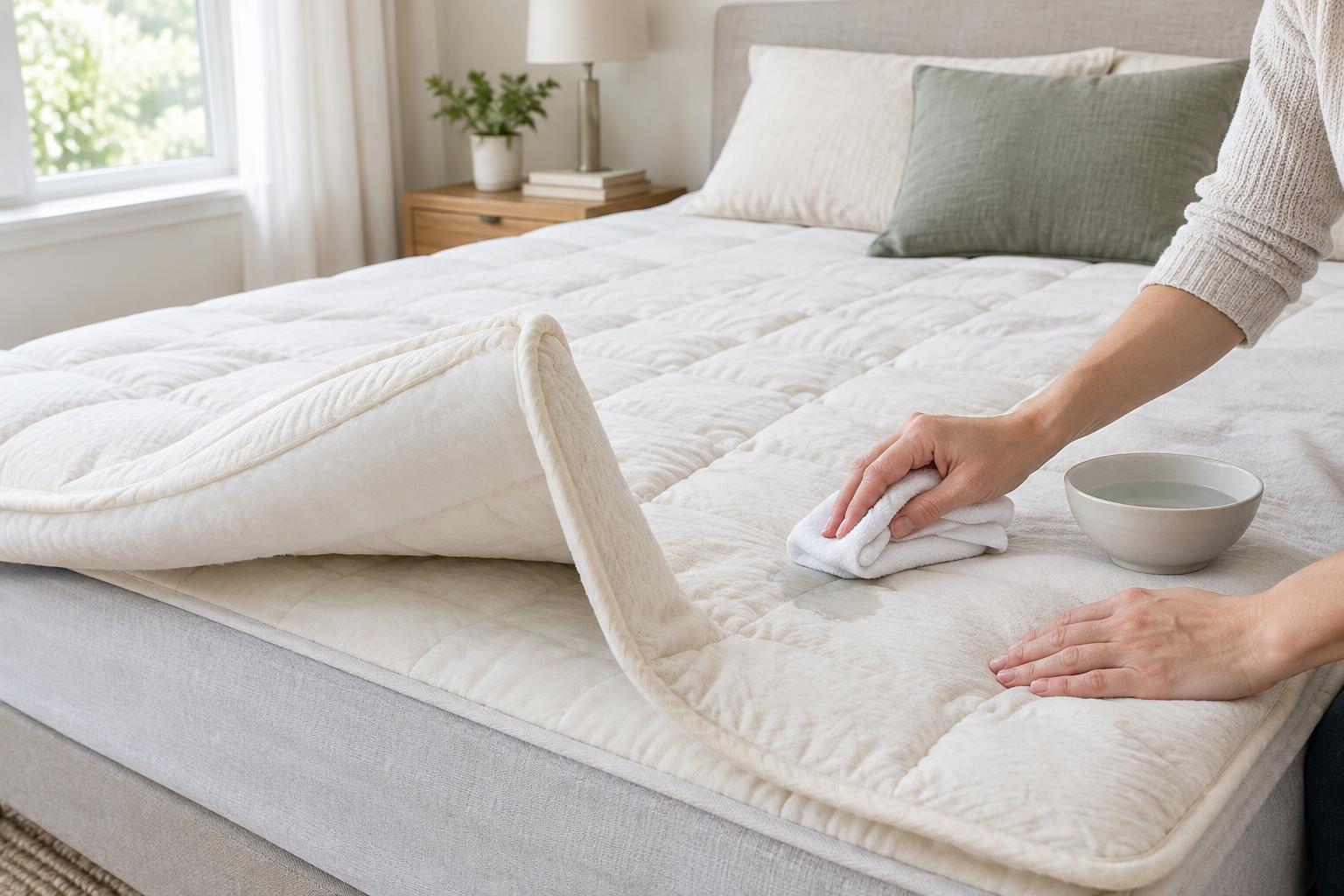
Foam can hold moisture deep inside, making thorough drying difficult. Unless the manufacturer specifically allows it, do not put a foam topper in a washing machine, submerge it or use a steam cleaner. For a small mark, test an inconspicuous area first. Then use a cloth lightly dampened with water and a small amount of mild detergent to dab the affected surface. Follow with a second, barely damp cloth to remove detergent residue.
Keep the foam as dry as the task allows. If a spill has soaked through more than a small surface area, blot both sides if accessible and give the topper ample time to air-dry. Stand or position it so air can reach the affected area without sharply bending or compressing the foam. A fan and good room ventilation can help. Do not put the topper back on the bed while it feels damp, even if the surface looks dry.
For a lingering odor, start with fresh air and a clean, dry cover. If the care instructions permit it, a light application of baking soda to the surface can be vacuumed away after it sits for a while. Avoid saturating foam with fragranced sprays: masking an odor is not the same as removing its cause.
Handle latex gently and limit sun exposure
Latex toppers also call for restrained use of water. For routine care, vacuum the fabric cover or exposed surface gently. To address a stain, blot it with a cloth lightly dampened with mild soapy water, then remove residue with another lightly dampened cloth. Follow any more specific directions supplied with the topper, especially if its cover and core have different instructions.
Let latex dry completely in a ventilated area before remaking the bed. Avoid high heat and prolonged direct sunlight, which may damage some latex products. Do not twist or wring a latex topper to remove water; its weight and flexibility can make it awkward to handle and may strain the material.
Wash fiberfill, down or wool only when permitted
A fiberfill or down topper may be washable, but size matters as much as the fabric label. Crowding a washer can prevent a thorough rinse and put stress on seams. If the topper does not fit with room to move, use a suitably sized machine or follow the label’s alternative cleaning instructions. Choose the specified cycle and a modest amount of suitable detergent; excess detergent can be difficult to rinse from thick fill.
Drying is especially important for filled toppers. Follow the label’s heat setting, and make sure the fill is dry throughout rather than judging only by the outer fabric. Pause to redistribute clumps by hand if the instructions allow. Down that remains damp can develop an unpleasant smell, while trapped moisture in any thick topper can create problems when it is covered by bedding.
Wool needs particular caution because heat, agitation and unsuitable detergent can cause shrinkage or matting. Some wool toppers allow gentle washing; others call for spot cleaning or professional cleaning. Follow the individual label instead of applying a general machine-washing rule. Air out a wool topper when practical, and spot-clean minor marks without soaking the fill.
Keep the topper cleaner between washes
A washable mattress protector can reduce how often the topper itself needs cleaning. Choose one that fits the combined height of the mattress and topper, and launder it according to its own label. Wash sheets regularly, and address spills as soon as practical so they are less likely to reach the topper.
When you change bedding, check the topper for damp patches, stains and compressed areas. Rotate it if its manufacturer recommends rotation, but do not flip a topper built with a designated sleeping side. Before storing it, clean it as directed and let it dry fully. Store it in a clean, dry place without folding or tightly compressing it unless the manufacturer permits that. These simple checks are often easier than trying to clean a deeply soiled topper later.