Check the frame before you clean
A bed frame collects dust along the headboard, rails, joints and slats, but cleaning it rarely calls for a strong product. Start by checking any care instructions from the maker. Solid wood, wood veneer and painted or stained surfaces can look similar while responding differently to moisture and cleaners. If you do not know what the finish is, use the gentlest method first and test any new product on a small, inconspicuous area.
Look for loose veneer, flaking paint, cracks or areas where the finish has worn away. Water can soak into exposed wood or an open veneer edge, so avoid wet cleaning those spots. A dry, soft cloth is the safer starting point. If the damage is extensive or the frame is an antique, it may be worth asking a furniture-restoration specialist before attempting a deeper clean.
Prepare the bed and remove loose dust
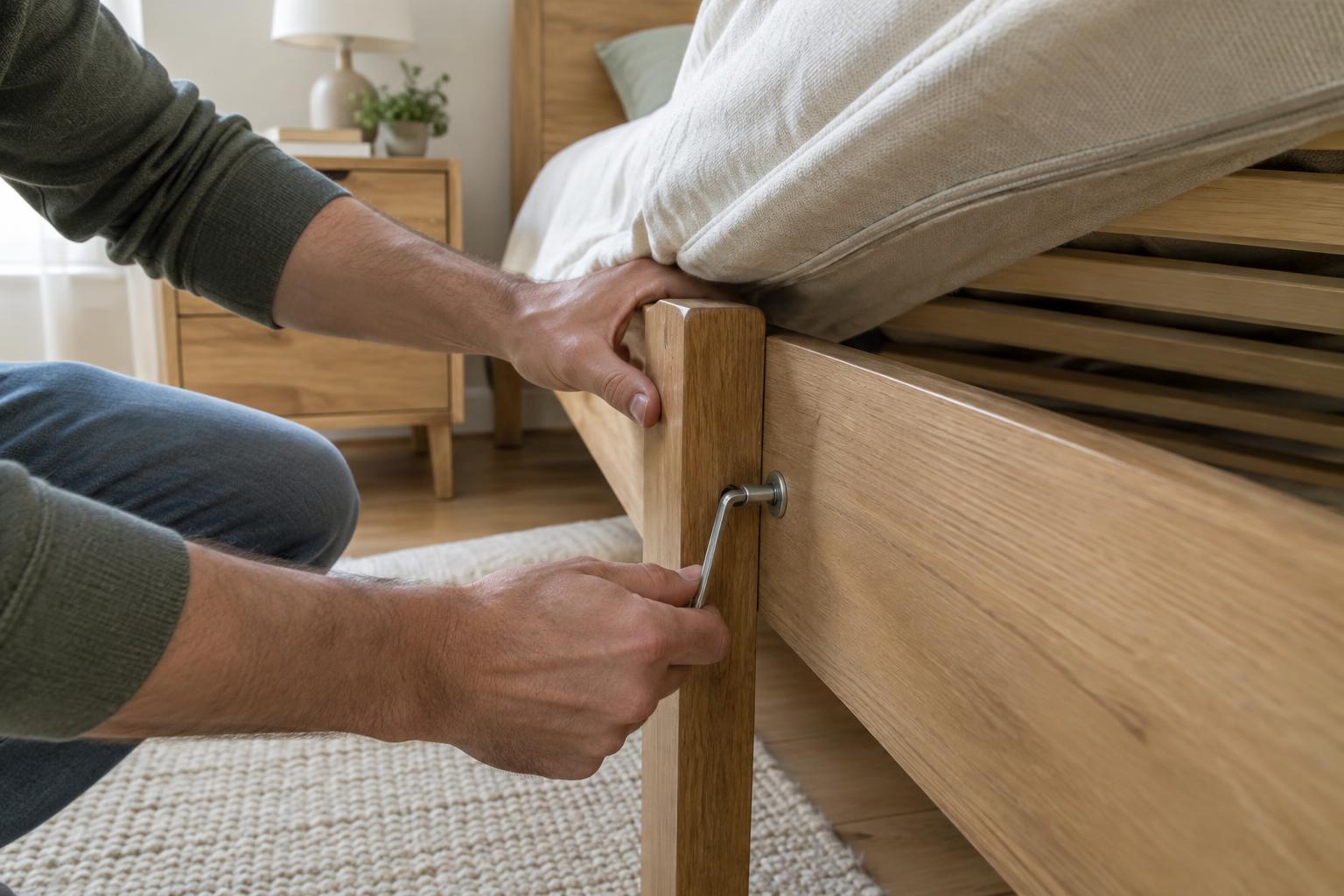
Strip the bedding so dust cannot fall onto clean sheets. If you want to clean the slats and the inside of the rails, move the mattress to a safe, dry place first. A mattress can be awkward to lift; get help if needed, and avoid leaning it where it could fall. Take a moment to inspect the frame for loose fasteners or damaged supports, but do not overtighten hardware just to make it feel secure.
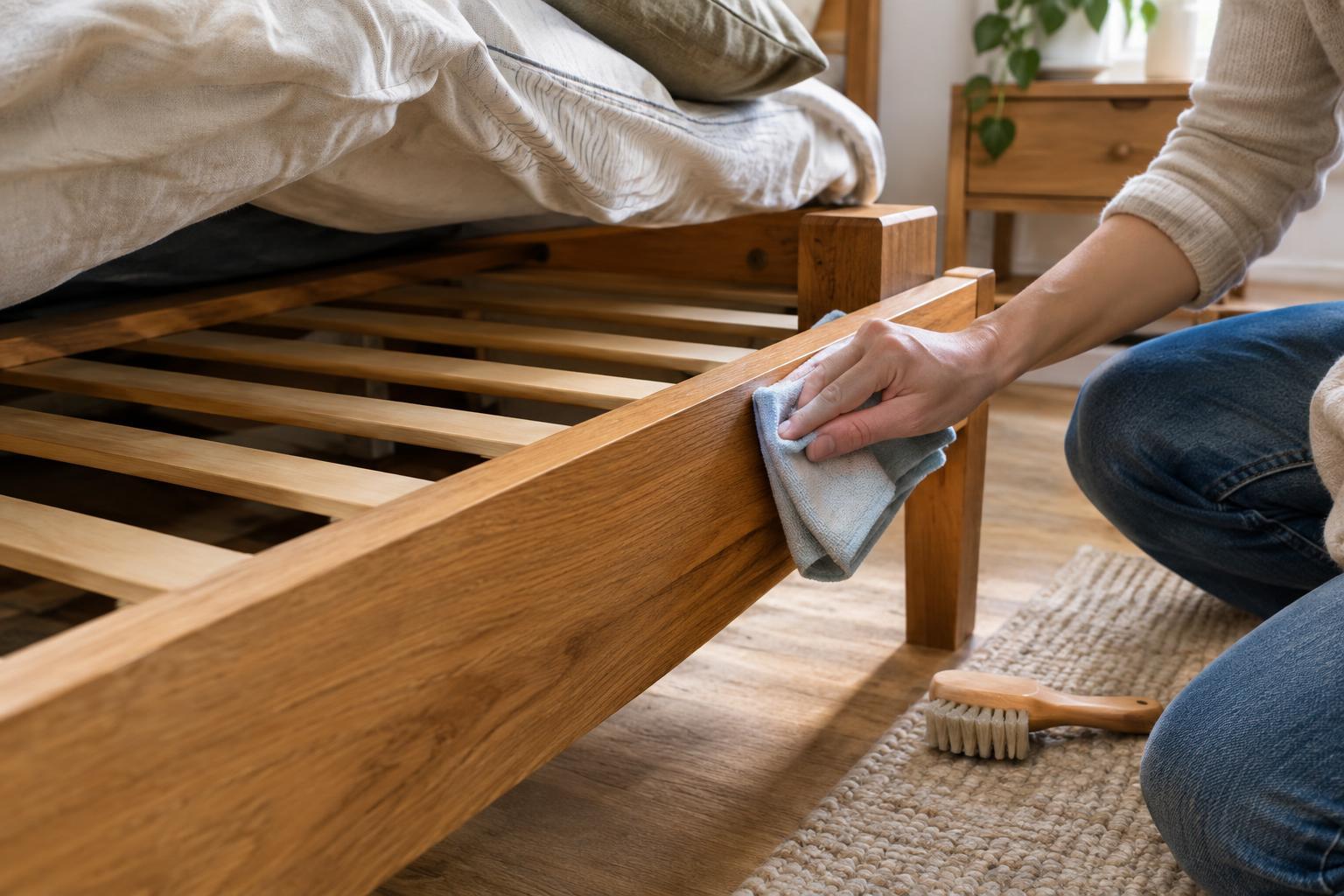
Use a clean microfiber cloth or another soft, lint-free cloth to dust broad surfaces. Work from the headboard downward, then move along the rails and slats so you do not repeatedly dust the same areas. For corners, carved details and joints, try a soft brush or a vacuum with a soft brush attachment on low suction. Keep hard vacuum parts from scraping the finish. Dusting first matters because grit trapped under a damp cloth can leave fine scratches.
Wipe finished wood with minimal moisture
For an intact, sealed finish, dampen a soft cloth with water and wring it out thoroughly. It should feel barely damp, not drip. Wipe a small area at a time, following the grain where it is visible, and dry it promptly with a second clean cloth. Do not spray liquid directly onto the frame: it can collect in seams, hardware recesses and the ends of slats.
If a lightly damp cloth does not remove ordinary grime, a small amount of mild dish soap diluted in water may help on many sealed finishes. Test it first, use as little solution as possible, and follow with a barely damp cloth to remove residue. Dry the area immediately. Avoid soaking the wood, using a steam cleaner or scrubbing with abrasive pads. Also be cautious with vinegar, alcohol, bleach and all-purpose sprays; their suitability depends on the finish, and some may dull or damage it.
Handle sticky spots and hard-to-reach areas
For a sticky mark, hold a barely damp cloth against it briefly, then wipe gently rather than scraping with a hard edge. Repeat if needed instead of applying more water or pressure. If the mark remains, consult the frame’s care instructions before trying a furniture cleaner. Choose a product labeled for the relevant finish, follow its directions and test it out of sight. Oils and polishes are not routine cleaning essentials; they can leave residue and may not suit every surface.
Joints and slat supports deserve attention because dust can gather where surfaces meet. Use a soft brush to loosen debris, then collect it with a vacuum attachment or cloth. Keep liquids away from unfinished slat ends and gaps between boards. If the frame has fabric, leather, metal or plastic parts, clean those components according to their own care instructions rather than treating the whole bed as wood.
Let the frame dry and keep up a simple routine
Before replacing the mattress and bedding, check that the rails, slats and joints feel dry. Give the frame time to air out if you used a damp cloth, especially in corners with limited airflow. If you notice a musty smell, persistent dampness or visible growth, do not cover the area with the mattress and assume it will dry; identify and address the moisture source first.
Regular dusting helps prevent buildup without repeated wet cleaning. When changing sheets, a quick pass over exposed rails and the headboard is often enough. Clean slats and hidden areas when you move the mattress for routine bedroom care. The safest approach is consistent and modest: remove dust gently, use minimal moisture only where the finish allows it, and dry every cleaned surface before making the bed.