Prepare the space before reaching underneath
The aim is to collect dust, not sweep it into the room. Start by removing anything stored beneath the bed. Pull boxes out slowly, set them on a wipeable surface, and clean their tops before opening them. If you shake out a blanket or empty a dusty container beside the bed, you may undo much of the careful cleaning that follows.
Make a clear path around the bed and check for power cords, loose items, and sharp frame hardware before using a tool underneath. You usually do not need to move the bed. If moving it is necessary, avoid dragging a heavy frame across the floor or trying to lift it alone. A flashlight can help you see where dust has gathered, especially along baseboards and around bed legs.
Put bedding out of the way so a dusty tool cannot brush against it. A lightly dampened microfiber cloth is useful for reachable surfaces, while a vacuum with a narrow attachment can handle tight gaps. Keep a bag or bin nearby for debris. The goal is an orderly sequence: remove objects, clean the exposed floor, then return only what you want to store.
Capture dust instead of pushing it around
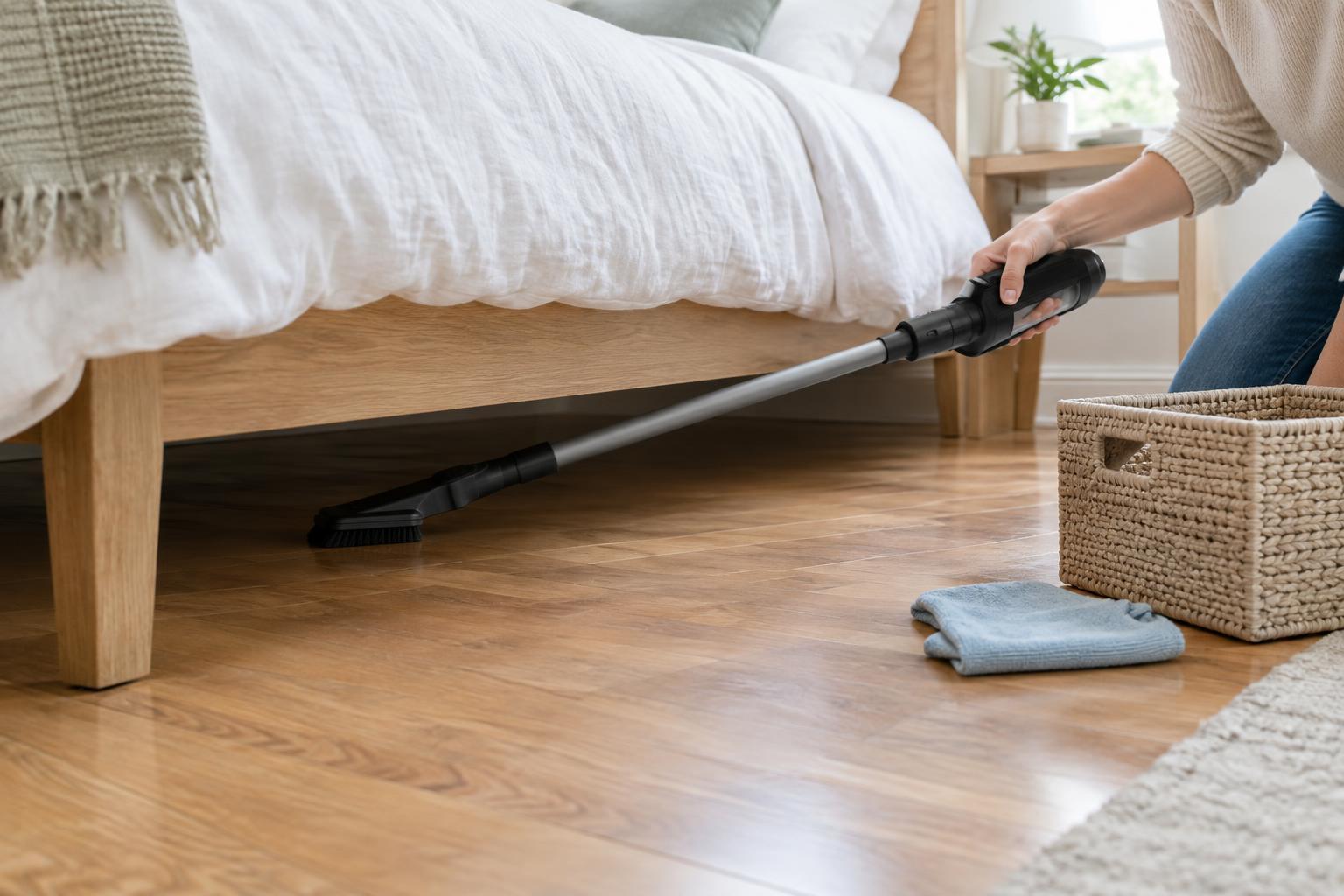
Begin at the far side of the bed and work toward the edge you can reach. On carpet, use a vacuum attachment that fits without scraping the bed frame. Move slowly enough to pick up dust and small debris rather than making quick passes. If your vacuum has a suitable filter and a sealed dust container or bag, maintain them according to the manufacturer’s directions; a full container can make cleaning less effective.
On hard flooring, a microfiber mop or flat duster with a slightly damp, washable pad can gather loose dust. The pad should be damp, not dripping. A dry broom may send fine dust into the air, particularly in a cramped space. If a vacuum works well on your floor, you can use it first, then make a light pass with the damp pad for what remains.
Do not force a tool into a gap too low for it to fit. A slim, flexible duster may reach farther, but check its head as you go and change or rinse the pad when it becomes dirty. Otherwise, you risk spreading collected dust across the next section of floor.
Clean the edges and the items you store
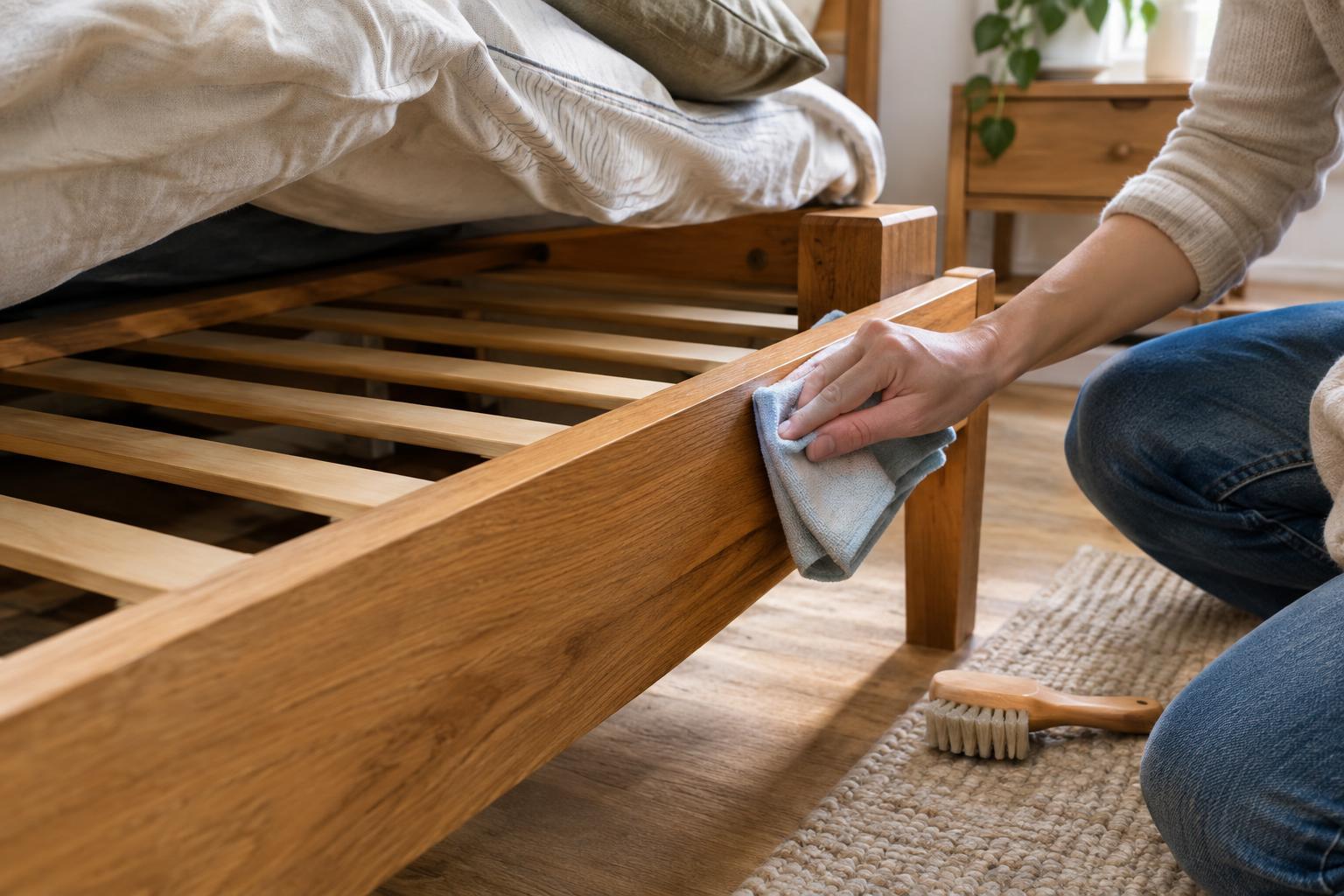
Dust tends to remain where the floor meets the wall, around bed legs, and behind storage containers. Use a crevice tool or cloth on these spots after covering the broad area. Wipe accessible frame rails and the outside of storage bins as well. Cleaning only the center of the floor leaves plenty of dust to be disturbed the next time you pull something out.
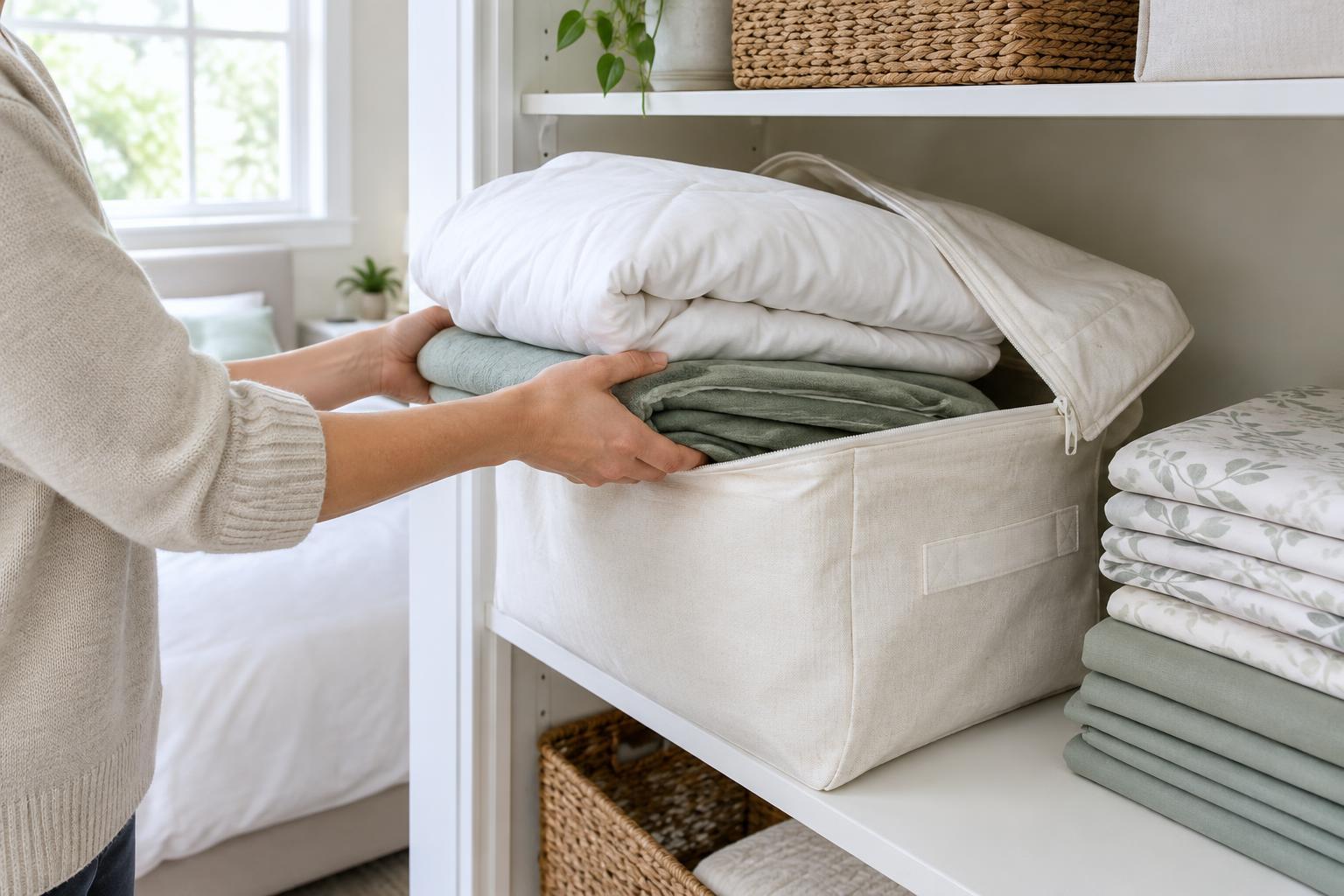
Before returning items, consider whether they belong under the bed. Closed containers are generally easier to wipe than open baskets or loose piles of fabric. Leave enough room to reach around them with a cleaning tool. For fabric items, follow their care labels rather than assuming they can all be washed the same way. Let washed items dry fully before storing them.
Match your method to the floor and frame
Carpet, wood, laminate, and tile do not respond identically to cleaning. Avoid saturating any floor beneath a bed: moisture can be hard to spot and slow to dry in a low-airflow space. Follow the flooring maker’s guidance for cleaning products, and test an unfamiliar product in an inconspicuous place. For wood or laminate, a barely damp pad is often a more cautious choice than a wet mop.
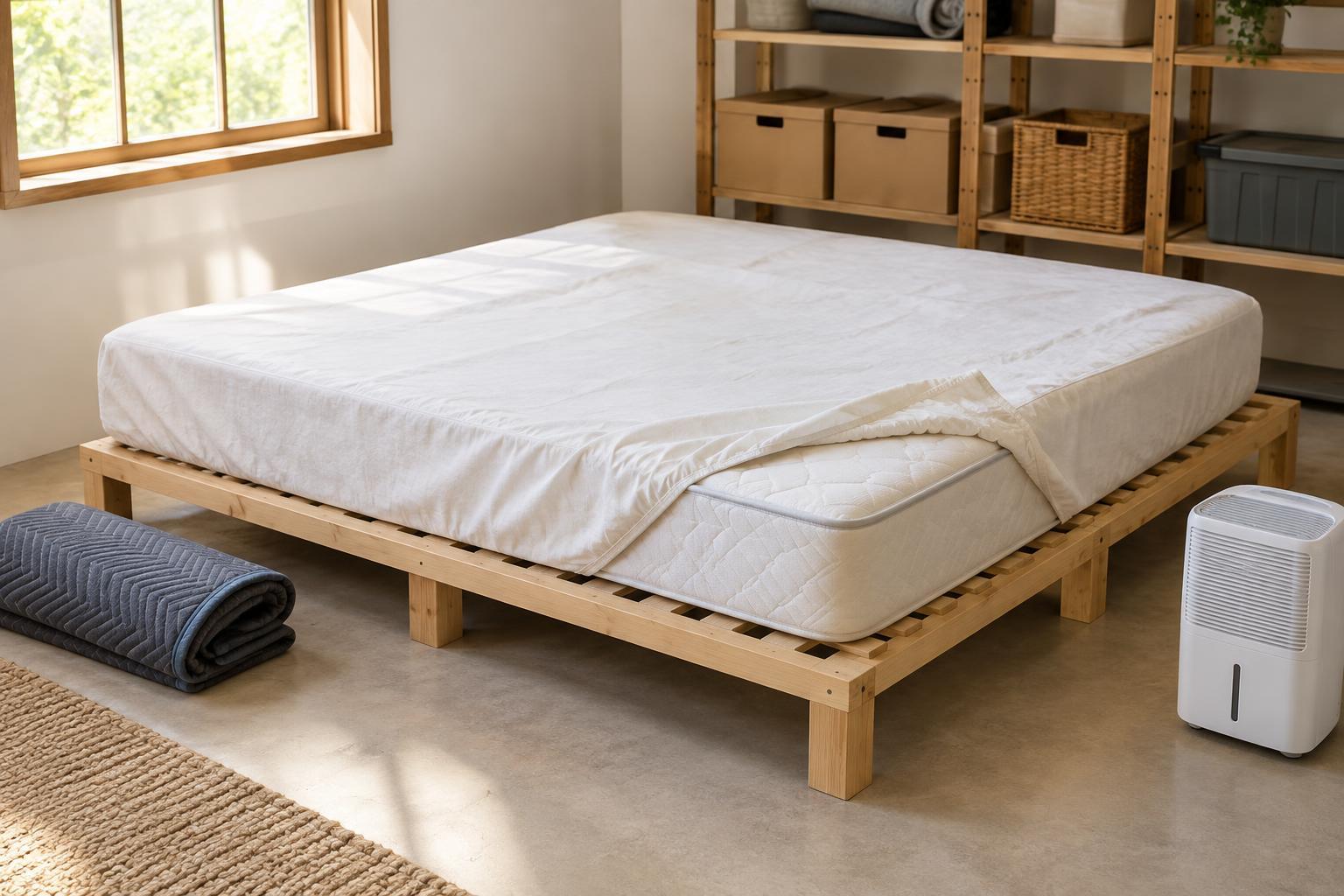
Bed frames also change what is possible. A platform bed with very little clearance may require moving it occasionally to reach the entire floor; a taller frame may allow routine cleaning without moving anything. Keep tools clear of fabric-covered bases so you do not drag floor dirt across the upholstery. If the bed has electrical or adjustable components, follow its instructions before moving it or cleaning near its mechanisms.
Make the next clean easier
A quick pass under the reachable edges during regular floor cleaning can prevent a larger buildup. The right interval depends on how quickly dust collects in your room, whether the space is used for storage, and how easily your tools fit. You can use what you see on the pad or in the vacuum as a practical guide rather than following a rigid schedule.
Keep the area simple: fewer loose objects mean fewer surfaces to dust and fewer things to move. When you change bedding, take a moment to check that nothing has fallen behind the bed or gathered around its legs. Cleaning beneath a bed does not have to be a disruptive project. Working slowly, using tools that hold onto dust, and keeping the floor accessible make the task more manageable.