Start with what “cooling” means to you
Mattress cooling is not one feature. A bed may feel cool to the touch, allow air to move through its layers, or make it easier for moisture to escape. Those qualities can affect comfort in different ways. A cool first impression in a showroom does not necessarily tell you how the mattress will feel after hours under a duvet.
Before comparing products, identify the problem you want to solve. Do you dislike the warm feeling where your body meets the mattress, or does your whole bedroom feel stuffy? Do you wake up uncomfortable only with certain sheets or a heavy comforter? Your answers will help you separate mattress features from conditions a new mattress may not change.
Look past the cooling label to the construction
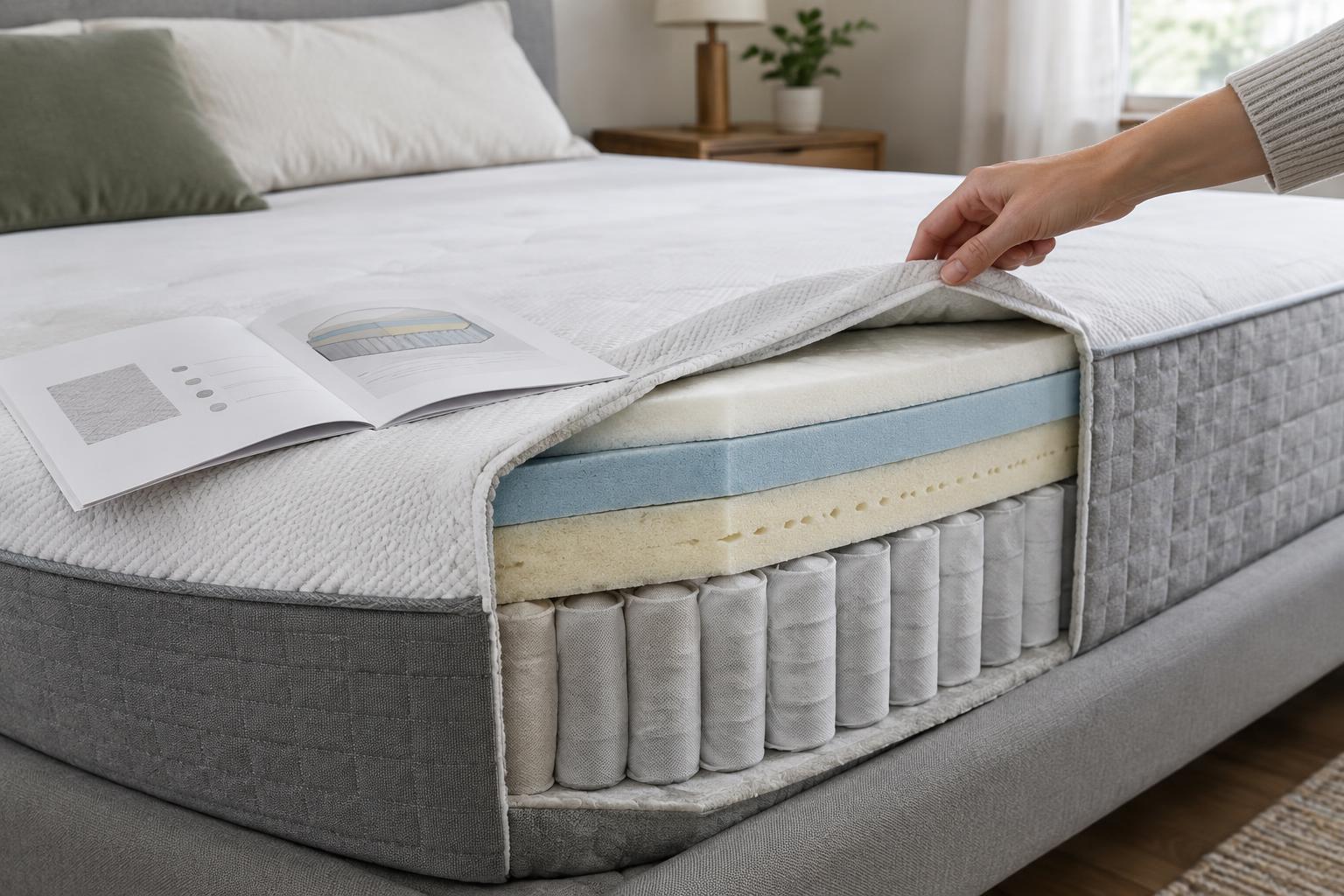
Ask what each advertised feature is made of, where it sits in the mattress and what it is meant to do. A cool-touch cover may change the initial surface feel. A layer beneath the cover may have a different purpose, such as allowing more air to pass through the bed. These are useful distinctions even if a listing calls both features “cooling technology.”
Construction matters as much as a named ingredient. A thick, closely contouring comfort layer creates a different sleeping surface from a thinner one that lets you rest more on top of the bed. Foam beds, latex beds and hybrids can all be built in warmer- or cooler-feeling ways; the material category alone is not a verdict. Coil spaces may permit airflow within a hybrid, but the layers above them still shape what you feel at the surface.
Treat temperature claims as questions, not proof
Terms such as “breathable,” “gel-infused” and “temperature regulating” are starting points for questions. What part of the mattress contains the feature? Is the explanation about initial touch, airflow or moisture handling? Is the claim about the full mattress or just its cover? A clear description of the build is more useful for comparison than a long list of cooling terms.
Be careful with rankings, too. An editorial comparison may organize specifications and explain likely trade-offs, but it is not a hands-on test unless the reviewer says what they tested and how. Even a genuine comfort test cannot guarantee your experience: body position, bedding and room conditions differ. When reading reviews, give more weight to specific descriptions of construction and use conditions than to an unexplained “coolest mattress” label.
Include bedding and the room in your comparison
A mattress does not work in isolation. A waterproof protector, thick topper or plush pad can change the feel of its cover and the airflow near your body. Sheets and a duvet also affect how much warmth you notice. If you are evaluating a mattress for temperature comfort, try to keep your usual bedding in mind rather than judging the bare mattress alone.
The bed setup deserves a look as well. Follow the mattress maker’s support requirements when choosing a foundation or frame; an incompatible setup can cause problems unrelated to cooling. Room temperature, ventilation and seasonal bedding choices may be easier to adjust than the mattress itself. If your main complaint changes with the weather, consider those factors before paying extra for a cooling feature.
Shop for a comfortable whole mattress
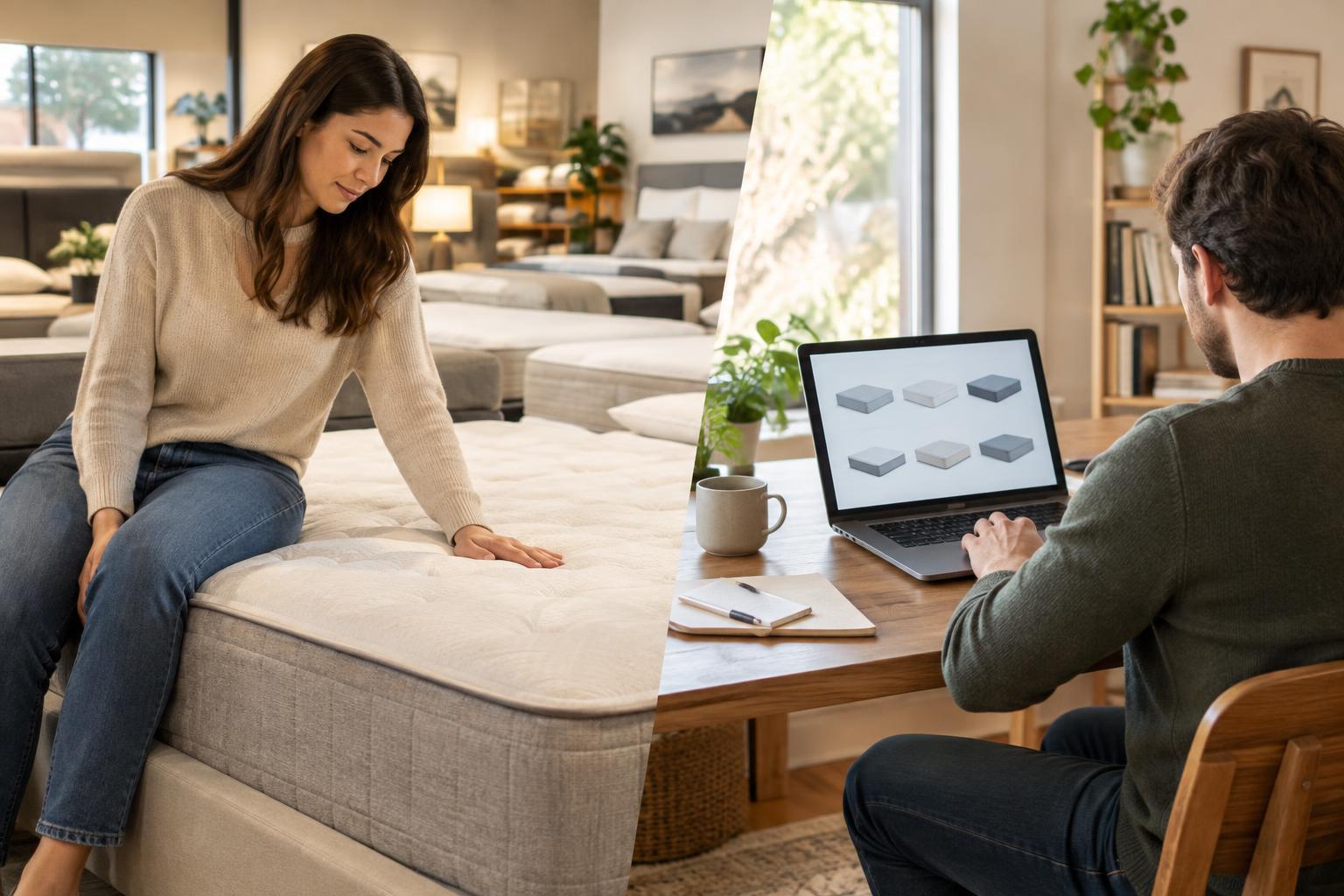
Cooling should be one criterion alongside firmness, pressure comfort, ease of movement, edge feel and support. A mattress that feels cooler but leaves you uncomfortable in your usual sleeping position is unlikely to be a satisfying choice. If you can try a bed in person, spend enough time in your normal positions to notice more than its first-touch feel, while recognizing that a short visit cannot reproduce a full night.
For online purchases, read the trial and return terms before ordering, including any conditions attached to a return. Compare models using a short list: layer construction, cover details, compatible foundation, overall feel and total cost. Once the mattress arrives, use it with the bedding you normally sleep under and follow its care instructions. That gives you a more practical basis for deciding whether its cooling features improve your comfort.