What motion isolation means
Motion isolation is a mattress’s ability to limit the movement one sleeper feels when another person changes position, gets up or returns to bed. It matters most when you share a bed with someone who moves often, keeps a different schedule or is easily disturbed by movement. It is not the same as firmness: a mattress can feel soft yet transmit movement, or feel firm while containing it well.
Product descriptions may use phrases such as “minimal motion transfer” or “undisturbed sleep,” but those claims rarely tell you exactly what was measured. Even a mattress that limits a small movement may feel different when someone sits heavily on its edge. Treat motion isolation as a comparison point, not a promise that you will never notice your partner moving.
Look beyond the material label
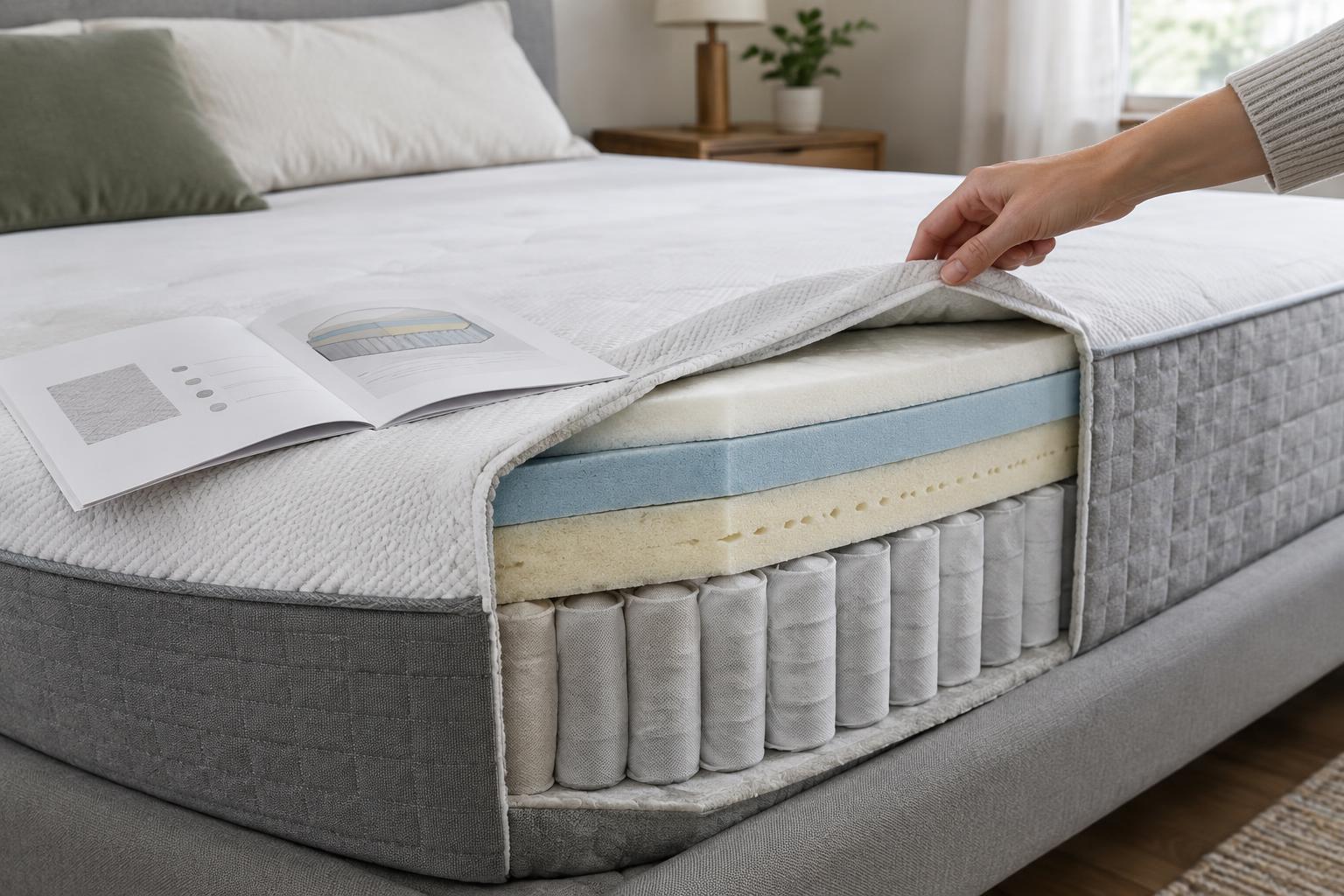
Foam mattresses often limit motion because their layers compress near the point of pressure rather than moving as one connected surface. Slow-responding memory foam can absorb movement particularly well, though some sleepers dislike the sensation of sinking into it. Latex generally responds more quickly and can feel springier; how much motion it passes along depends on the layer thickness, firmness and rest of the construction.
Innerspring and hybrid mattresses vary widely. Individually wrapped coils can move more independently than coils linked together, but a bouncy comfort layer above them may still make movement noticeable. A thick foam comfort system may reduce what reaches the other side of the bed. When comparing models, read the full layer description rather than assuming every foam bed isolates well or every coil bed transfers motion.
Also consider the bed as a whole. A flexible base, loose frame or headboard can shake when someone moves, regardless of the mattress. If a showroom mattress feels unusually stable or unstable, check what supports it before attributing the result entirely to its construction.
Read claims and comparisons carefully
A useful motion isolation claim should identify the mattress model and explain how the conclusion was reached. A description based only on materials can suggest how a mattress might behave, but it is not a hands-on result. Likewise, an editorial comparison of construction details should not be mistaken for testing. If a review reports a test, look for a clear method and consider whether that method resembles the movements that disturb you at home.
Ratings are easiest to use when they compare mattresses under the same conditions. A numerical score without a method may be less helpful than a plain account of whether rolling over, sitting down or leaving the bed was noticeable on the other side. Reviews from individual owners can highlight patterns, but their experiences depend on body size, bed frame, mattress age and sensitivity to movement. Look for consistent, specific observations rather than relying on one dramatic comment.
Try movements that match your nightly routine
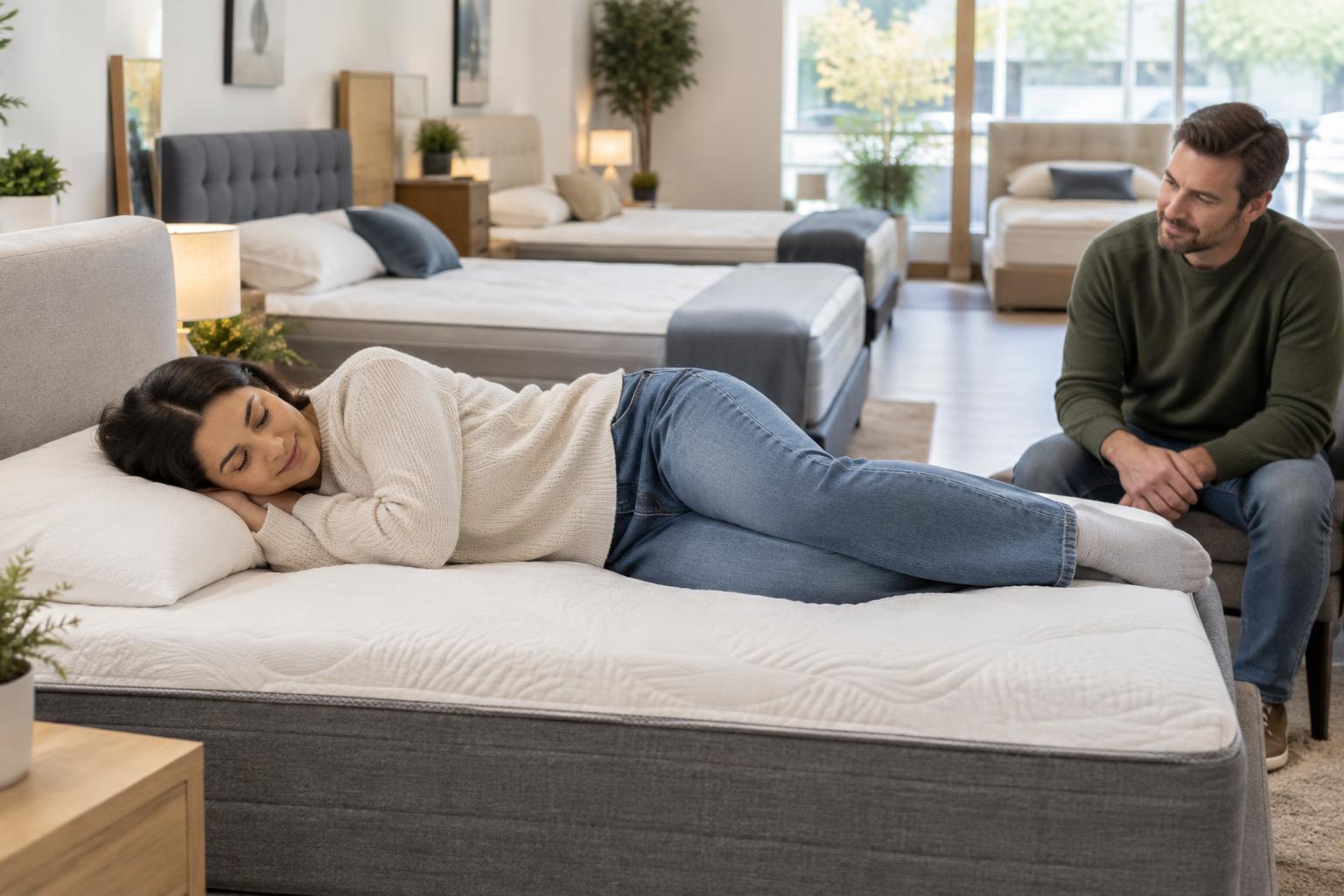
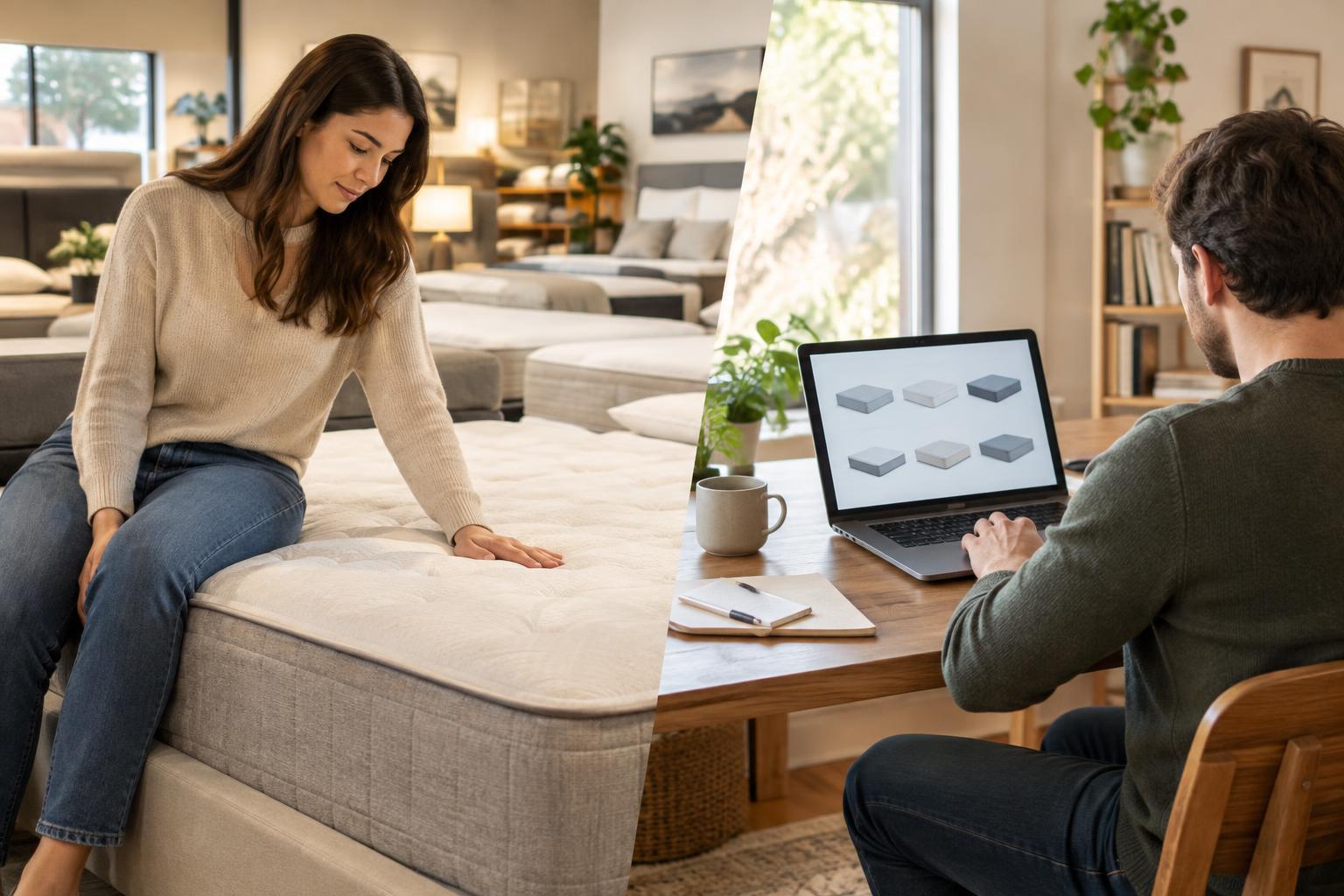
If you can visit a store with your sleeping partner, test mattresses together. Have one person lie in a usual sleeping position while the other rolls over, changes position and gets out of bed. Switch roles. Spend enough time on each mattress to separate the movement you feel through the surface from noise or shaking in the display frame. A solo shopper can press and release different parts of the bed, but that check cannot fully reproduce two people sleeping on it.
For an online purchase, check the trial terms before ordering. Find out how long you have to assess the mattress at home, whether a break-in period applies, and what a return may cost. Use your own frame or foundation as intended by the manufacturer, then pay attention to the movements that actually wake or bother you. A trial is more informative than a general claim because it includes your partner, room and bed setup.
Balance isolation with other needs
The mattress that transmits the least movement is not automatically the most comfortable choice. Deeply conforming layers may make changing position harder for some people, while a more responsive surface may be easier to move on but pass along more motion. Edge support also matters if either sleeper regularly sits or sleeps near the side; movement near a weak edge can feel different from movement in the center.
To narrow your choices, decide which disturbances matter most, then compare construction, clearly described evidence and return terms. Keep firmness, temperature feel and preferred sleeping positions in the decision. If motion isolation is a high priority, testing with your partner or using a home trial can help you judge the tradeoffs more reliably than a single marketing label.