Start with the care label and the fabric
The simplest way to limit shrinkage is to follow the sheet’s care label, especially its drying instructions. Heat and tumbling can change how some fabrics feel and fit, while drying too slowly can leave them smelling stale. The right approach depends on the fiber, the weave and how the fabric was finished, so treat general advice as a starting point rather than a replacement for the label.
Cotton sheets may shrink, particularly if they have not been preshrunk. Linen can also change size and often feels crisp after air-drying, though it tends to soften with use. Polyester and many polyester blends are usually less prone to shrinkage but can hold wrinkles if left in a dryer after the cycle ends. Sheets made with rayon or viscose, including some sold as bamboo-derived, may need especially gentle handling. If the label calls for low heat or air-drying, avoid turning up the temperature just to finish faster.
Prepare sheets so they can dry evenly
Before drying, shake out each sheet and untwist any corners. A sheet balled around smaller items can stay damp in the middle while the exposed fabric becomes hot and dry. Give large sheets room to move, and consider drying them separately from towels, which are heavier and may need more time. If your dryer is crowded, splitting the load can be more effective than extending one long cycle.
Stiffness does not always start in the dryer. Too much detergent or a poor rinse can leave residue that makes fabric feel less flexible. Use a suitable amount of detergent for the load and washer, and check that sheets can circulate freely during washing. If they regularly feel coated or rough after laundering, review your wash routine before adding products to the drying cycle.
Use moderate heat and stop before overdrying
For sheets whose labels permit tumble drying, a low or moderate setting is a cautious choice when shrinkage is a concern. High heat may speed up a cycle, but it gives less margin if the sheets dry before the timer ends. An automatic moisture-sensing cycle can help, though thick hems and fitted-sheet corners may still need checking by hand.
Take sheets out when they are dry or just slightly damp, rather than leaving them in a hot drum long after they are ready. Smooth and fold flat sheets promptly, or put them back on the bed once they are fully dry. If a hem or corner is still damp, give it a little more drying time. Storing damp fabric can lead to unwanted odors, so the goal is to avoid excess heat without putting sheets away wet.
Dryer balls may help separate a load, but they are not a fix for an overfilled drum. If sheets repeatedly wrap around themselves, pause the cycle to untangle them. For fitted sheets, check the elastic and any special care instructions; prolonged heat may be harder on elastic than on the main fabric.
Air-dry without creating a rigid finish
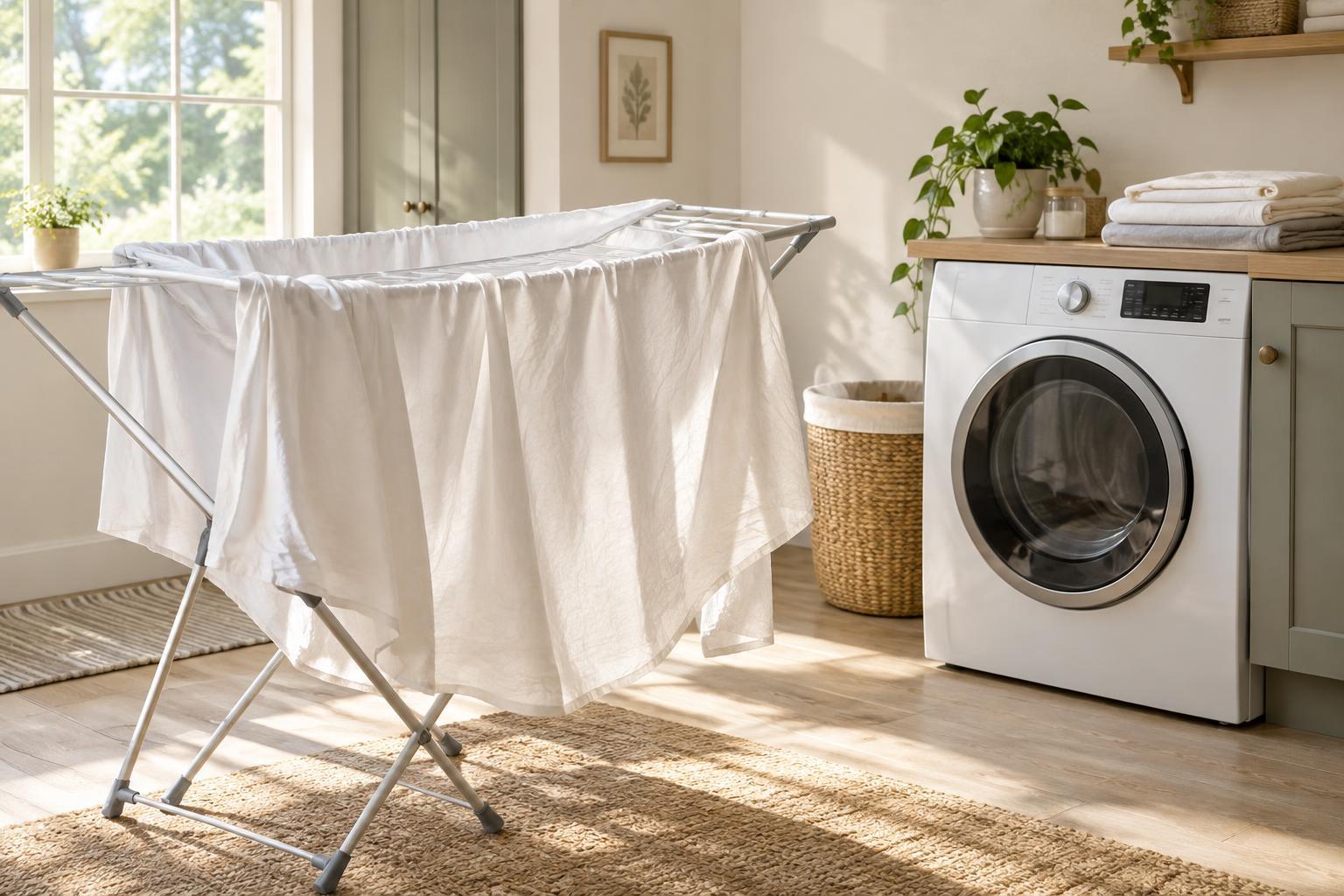
Air-drying avoids dryer heat and can be useful for sheets with restrictive care labels. Hang sheets with space for air to reach both sides, spreading the fabric rather than bunching it over a narrow rail. In a humid room, ventilation matters: a fan or open window, when practical, can help moisture escape. Bring sheets in only when seams and folded edges are fully dry.
Line-dried sheets may feel firmer than tumble-dried ones because they have not been flexed as they dry. Shake them before hanging and again when taking them down. If the label allows tumble drying, a brief low-heat or no-heat tumble after air-drying may soften the feel. Outdoor drying can be convenient, but prolonged direct sun may fade some colors; choose shade or bring colored sheets in once dry.
Adjust the routine to the result
If sheets seem smaller after laundering, compare the care label with your wash and dry settings. A cooler wash and lower drying temperature may help limit further change, although they cannot reliably reverse shrinkage that has already happened. If sheets are stiff, try improving rinsing, leaving more space in the washer and dryer, or removing them sooner. Fabric softener may alter the feel, but check the care label before using it and remember that added products can leave residue.
A dependable routine is straightforward: sort by care needs, untangle the sheets, dry them with enough room, and check them near the end of the cycle. Small adjustments are easier to judge when you change one step at a time. The best method is the one that leaves your particular sheets fully dry, comfortable and fitting the bed.