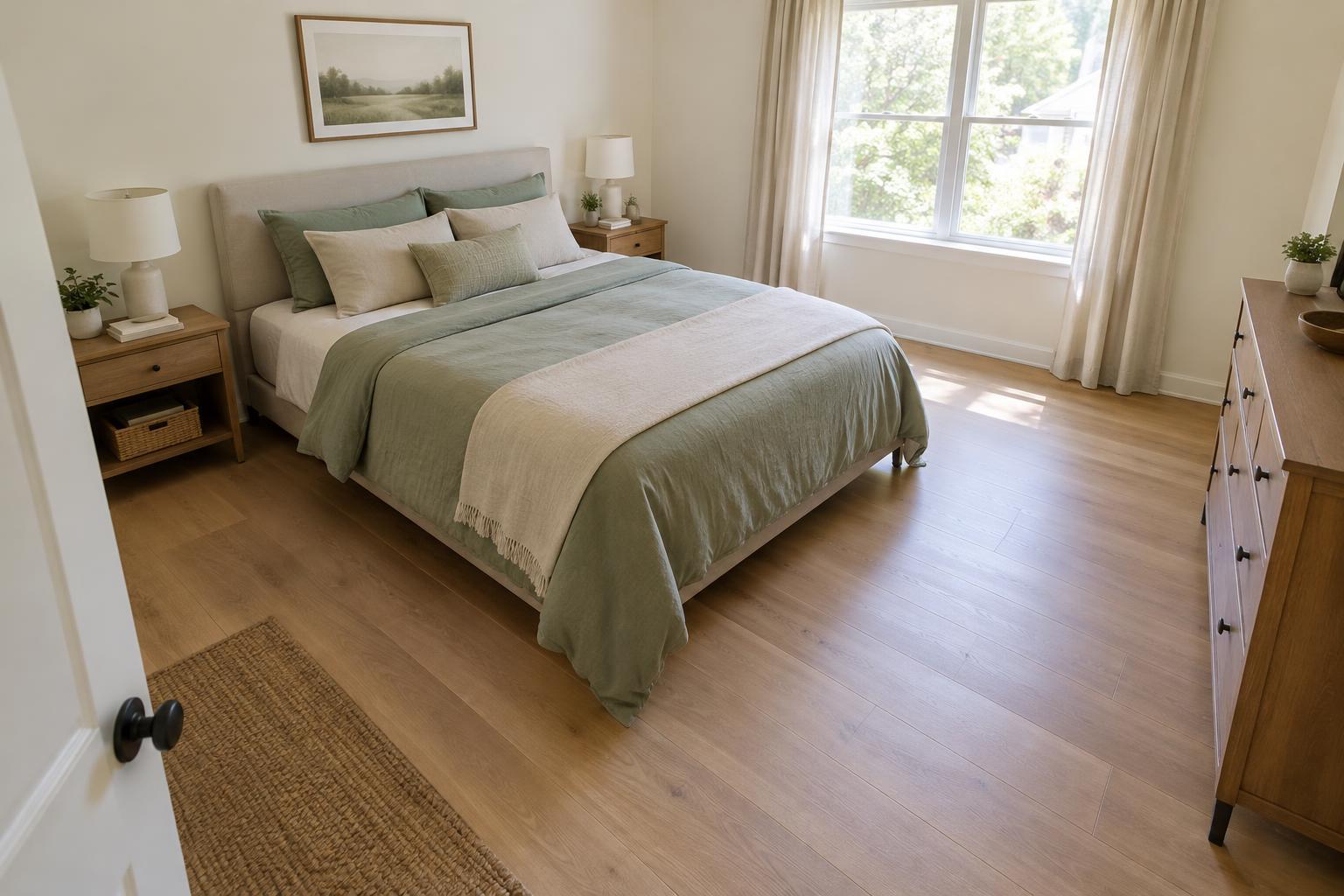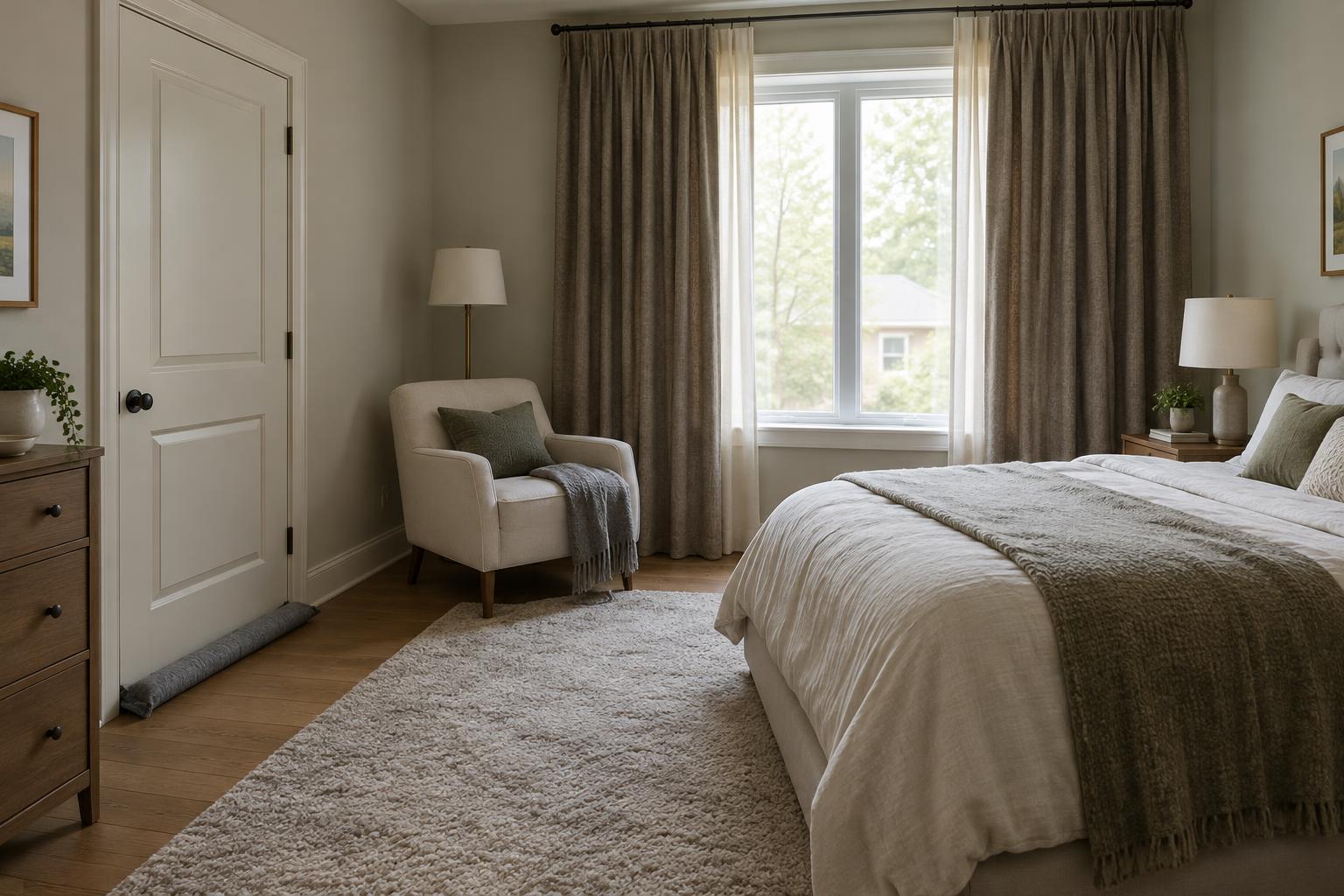
Start with what you do in the room
Before choosing fixtures, list the ways you use your bedroom. You might get dressed, read in bed, work at a small desk or move through the room at night. Each activity calls for light in a different place. A single bright ceiling fixture can illuminate the floor, but it may leave a wardrobe dark and create glare when you are lying down.
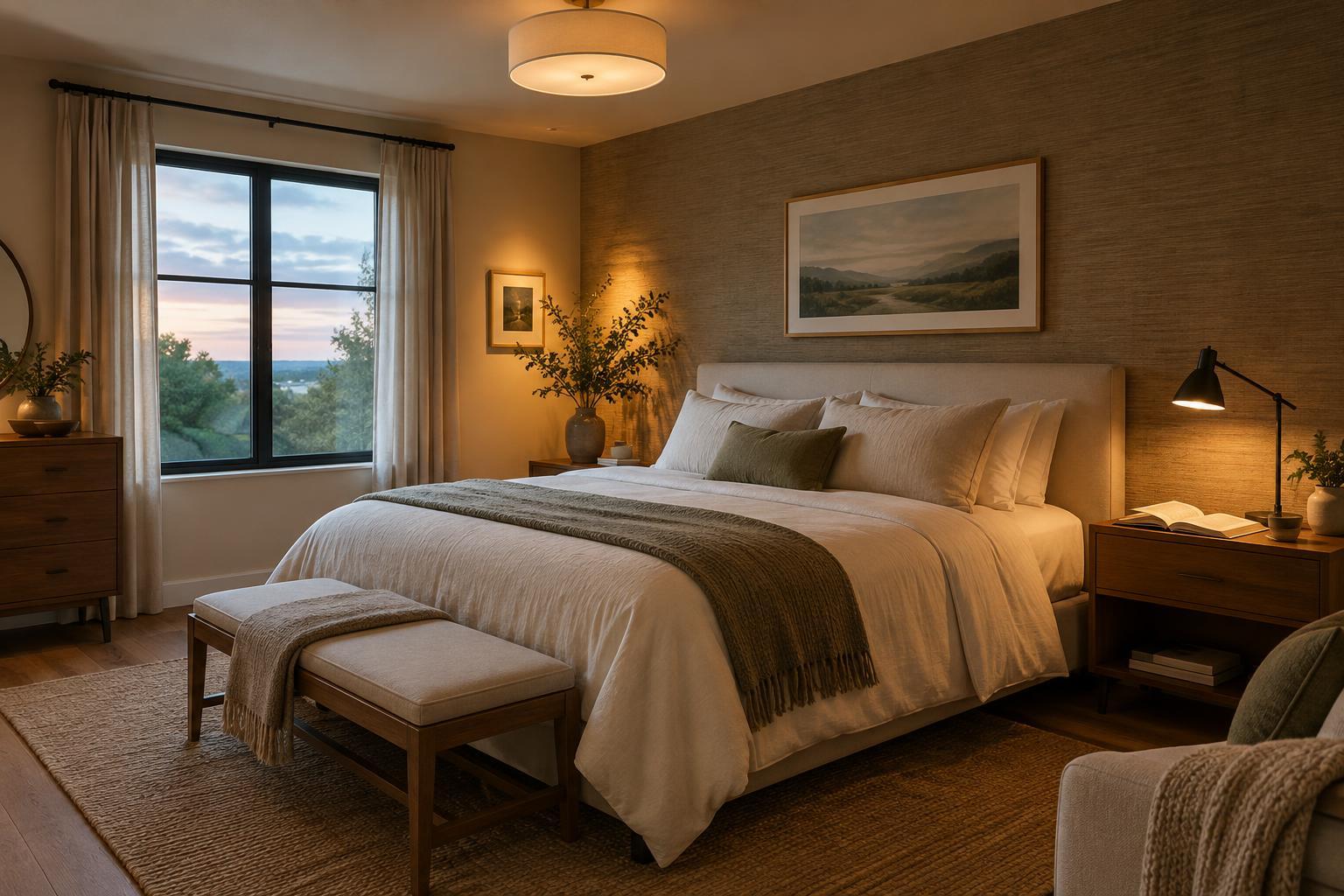
Sketch the room and mark the bed, doors, storage, mirrors and seating. Note where daylight enters and which areas remain dim. Then plan three layers: ambient light for general visibility, task light for activities that need focused illumination, and accent light for visual depth. These layers do not all need to be on at once. The goal is to give yourself useful choices rather than make every corner equally bright.
Build a flexible ambient layer
Ambient lighting lets you move around and see the room as a whole. A ceiling fixture, recessed lights or a pair of wall-mounted fixtures can provide it. In a small bedroom, a well-placed ceiling light may be enough for this layer. In a larger or irregular room, more than one source can help avoid a bright center and gloomy edges.
Think about how the fixture looks from the bed. A bare bulb or an exposed, downward-facing light can be uncomfortable to look toward while resting. A shade or diffuser can soften the appearance of the light. If you use several ceiling fixtures, consider whether they can be controlled separately so you do not have to illuminate the whole room for a quick trip to the closet.
A dimmer can make general lighting more adaptable, provided it is compatible with the fixture and bulbs. It can lower the light for a quiet evening without removing the brighter setting you may want while cleaning or sorting clothes.
Put task light where the work happens
Task lighting should reach the activity without forcing you to brighten the entire bedroom. For reading in bed, consider an adjustable wall light, a clip-on light or a bedside lamp. Position it so it lights the page while keeping the bulb out of your direct line of sight. If two people share the bed, separate lights and switches let each person choose their own setting.
A dressing area benefits from light that helps you see into drawers and across clothing. At a mirror, lighting from the sides can be more useful than a single light directly overhead, which may cast shadows on your face. A desk or vanity may need its own movable lamp, especially if the main room light is behind you when you sit down.
Check the placement before installing permanent fixtures. Sit, stand and lie where you normally would, and look for shadows and glare. Also make sure lamps do not crowd bedside surfaces or leave cords across a walking route.
Use accent lighting with a purpose
Accent lighting adds interest rather than serving as the main source of visibility. It might highlight a picture, illuminate a shelf or wash a wall behind the headboard. A low-level light along a clear route can also help you find your way without turning on the brightest fixture.
Keep this layer restrained. A small bedroom does not need a light on every feature, and a decorative lamp can become distracting if it shines toward the bed. Look at accent lights from your usual resting position, not just from the doorway. If a fixture draws your eye when you would rather have a calm view, try a lower output, a different angle or a shade.
Choose bulbs and controls that work together
Bulb packaging can help you compare choices. Lumens describe light output; a higher number generally means a brighter bulb. Color temperature describes whether the light appears warmer or cooler. Many people prefer a warm-looking light in a bedroom, but the useful choice depends on the fixture, wall colors and tasks. Where lights are visible together, similar color temperatures can make the room feel more consistent.
Plan switches around how you enter and leave the room. An easily reached switch near the door handles general lighting, while bedside controls are convenient for reading lights and any ambient light you use after getting into bed. Test dimmable bulbs with the intended controls, since not every combination works smoothly.
Finally, choose fixtures suited to their location and follow the manufacturer’s guidance for bulbs, installation and clearances. With a usable ambient layer, well-placed task lights and a few considered accents, the bedroom can adapt to different activities without relying on one harsh or inconvenient source.